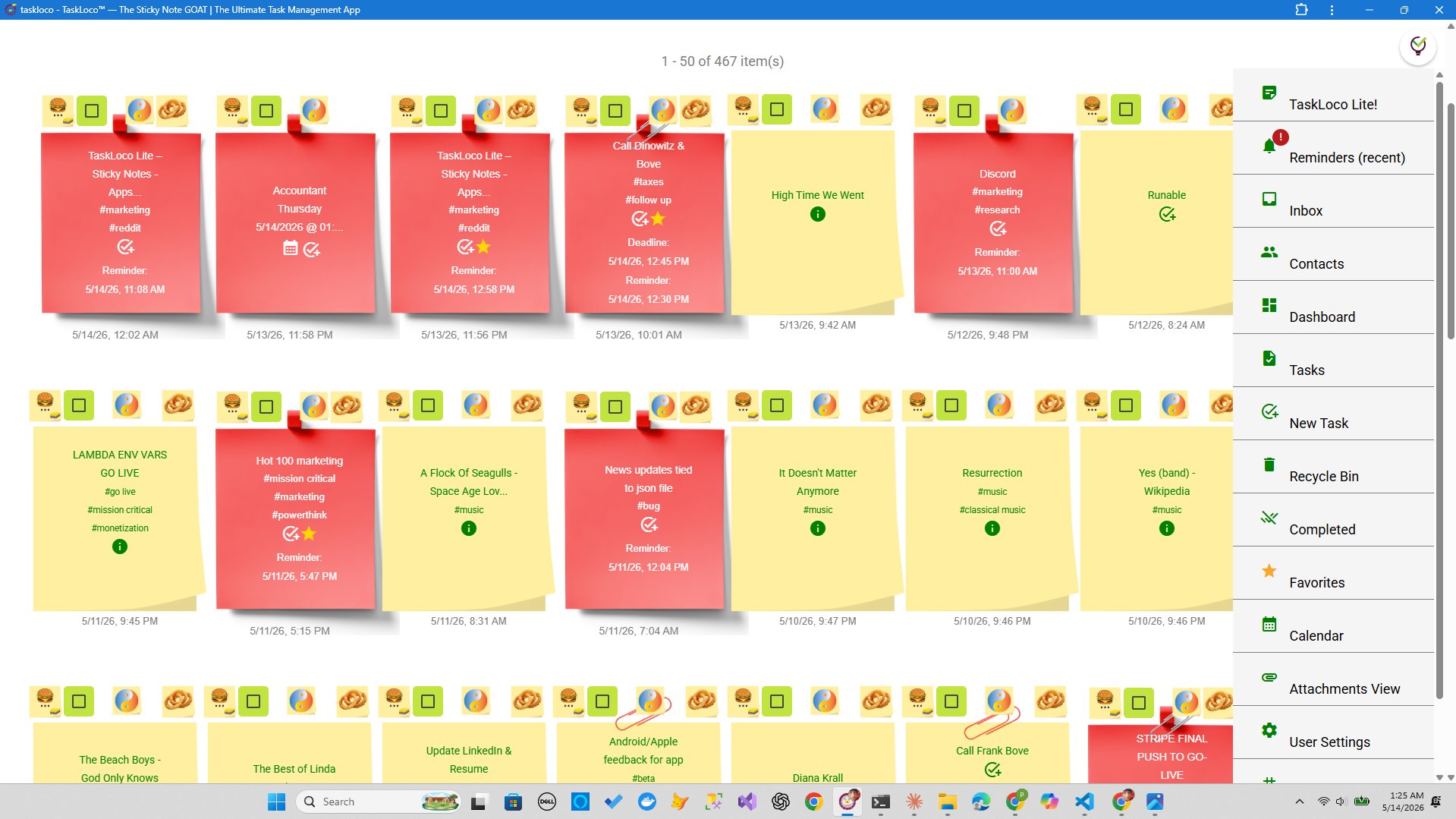
Every novelist hits the same wall — not writer's block, but structure panic. You have fifty scenes in your head, three timelines overlapping, a subplot that might be eating the main arc, and a character whose motivation stopped making sense around chapter nine. A linear outline in a word processor can't show you any of that. What you need is a wall: a place where every scene is a card, every arc is a column, and you can see the whole story at once.
The visual plot wall is how working novelists — and screenwriters, game designers, showrunners — have organized complex narratives for decades. Physical cork boards, index cards, and colored string are the analog version. The digital version lets you do the same thing without running out of wall space, losing cards behind furniture, or rephotographing your board every time you leave the house. This guide covers what a visual plot wall actually is, the criteria that matter when choosing a tool to build one, and how TaskLoco's wall makes it practical for a working writer.
What to Look for in a Visual Plot Wall Tool
A visual plot wall tool is any application that lets you place, label, move, and group cards or notes in two-dimensional space — so you can see relationships between story elements rather than reading them in a list. It exists somewhere between a whiteboard and a task manager, and it serves a very specific creative need: making structure visible.
Writers use plot walls to map acts and chapters, track multiple POV characters across a shared timeline, identify pacing problems (too many quiet scenes in a row, a climax that arrives too early), and hold research and character notes close to the scenes they belong to. The tool doesn't write the novel. It holds the architecture so your brain can focus on the prose.
When choosing one, three criteria actually matter:
- Spatial freedom vs. imposed structure. Some tools want you to fill in their templates — three-act tables, beat sheets, rigid column systems. If your story fits those shapes, great. If it doesn't, the template becomes a cage. The best tools give you open canvas space and let you impose your own structure, whether that's a hero's journey, a five-act structure, a braided multi-POV narrative, or something you invented yourself.
- Note depth. A card that holds only a title is fine for a first pass. But a scene card that can hold a synopsis, character notes, embedded images, and attached research documents — without forcing you to open a separate app — keeps your wall self-contained. You want to click a card and find everything relevant to that scene in one place.
- Sync and accessibility. You plot at your desk, get an idea in the shower, and revise on the train. A plot wall that lives only on one device or requires you to export and reimport every time you switch is a friction tax on your creativity. Cross-device sync isn't a luxury; it's the baseline.
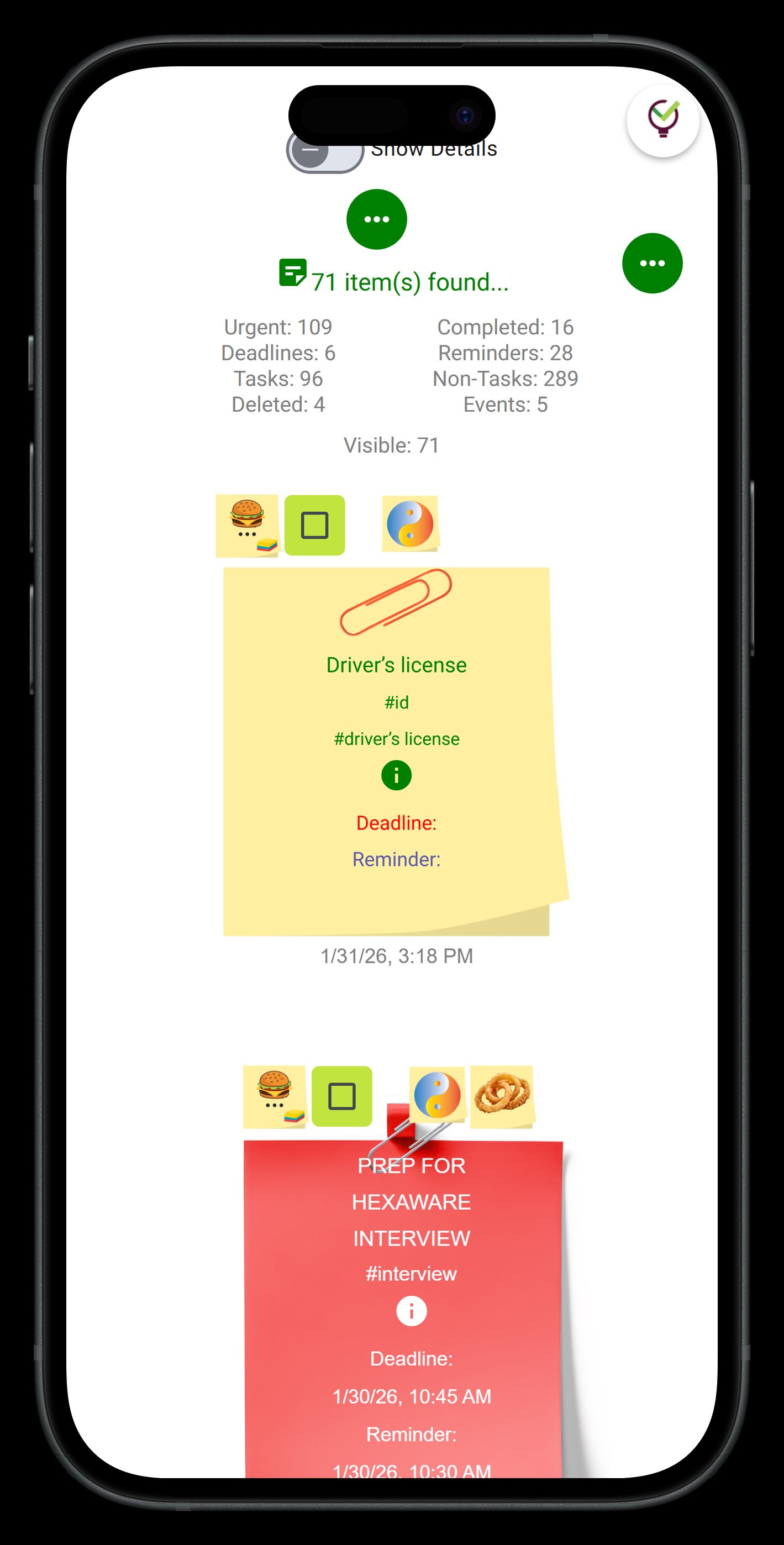
How to Build Your Plot Wall: The Method
Before you touch any tool, the method matters. A plot wall works because it separates the unit of story (the scene) from its position in the narrative — you can move scenes around without rewriting an outline. Here's how to set one up in a way that actually helps you write.
Step 1: One card per scene. Each note or card represents a single scene — not a chapter, not a vague idea, but a discrete unit of action with a beginning, middle, and end. Write the scene's core event on the card: not "Chapter 4" but "Marcus confronts his brother at the diner and the truth about the money comes out." Specificity is what makes the wall useful.
Step 2: Columns as acts or timeline sections. Create vertical columns for your acts, or for chronological periods if you're writing non-linearly. Place each scene card in its column. Don't worry about order within the column yet — just get everything on the wall.
Step 3: Color-code by thread. Use note colors (or tags) to identify which storyline or POV a scene belongs to. Your protagonist's arc might be one color, the antagonist's another, the subplot a third. Now you can scan the wall and immediately see whether Act Two is dominated by one thread and starved of another.
Step 4: Move until it breathes. This is the whole point of the wall. Drag a scene from Act Two to Act Three. See what that does to the tension. Notice that three quiet scenes now cluster in Act One and you need to inject conflict. The visual layout makes these structural problems obvious in ways a linear document never could.
Step 5: Attach depth to each card. Once structure is roughed in, go back to each card and add what you need inside it: a longer synopsis, character motivation notes, a reference image for the setting, a link to a research article. The card becomes a scene bible, not just a label.
Why TaskLoco Works for a Novel's Plot Wall
TaskLoco was built on the premise that a sticky note should be able to hold a universe. The wall view is the natural home for a novelist's plot map: notes arranged in open space, grouped into columns by act or arc, color-coded by thread, and searchable across everything you've written inside them.
There's no template forcing you into a structure you didn't choose. You create the columns, name them whatever your story calls for — "Before the Inciting Incident," "The Lie the Hero Believes," "Everything Falls Apart" — and populate them with scene cards that you can move freely. The wall responds to your story's logic, not the other way around.
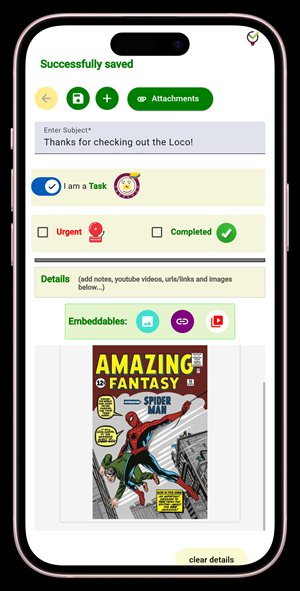
Where TaskLoco separates itself for writers is in note depth. Every Premium note can hold unlimited text, embedded images, and up to 10GB of file attachments. That means a scene card for a battle sequence can contain your synopsis, a reference map of the terrain, a character sheet for the commander, and a PDF of the historical research you pulled. Everything relevant to that scene lives inside the card — no jumping between apps, no broken links to external documents.
Reminders in TaskLoco are delivered as push notifications to your phone and computer, and each one deep-links directly back to the original note. Set a reminder on a scene card you know needs reworking, and when it fires, one tap takes you straight back to that scene — not to a generic dashboard. Optional email and SMS notifications are available as additional channels. For a novelist juggling a day job and a manuscript, that kind of pinpoint navigation is genuinely useful.
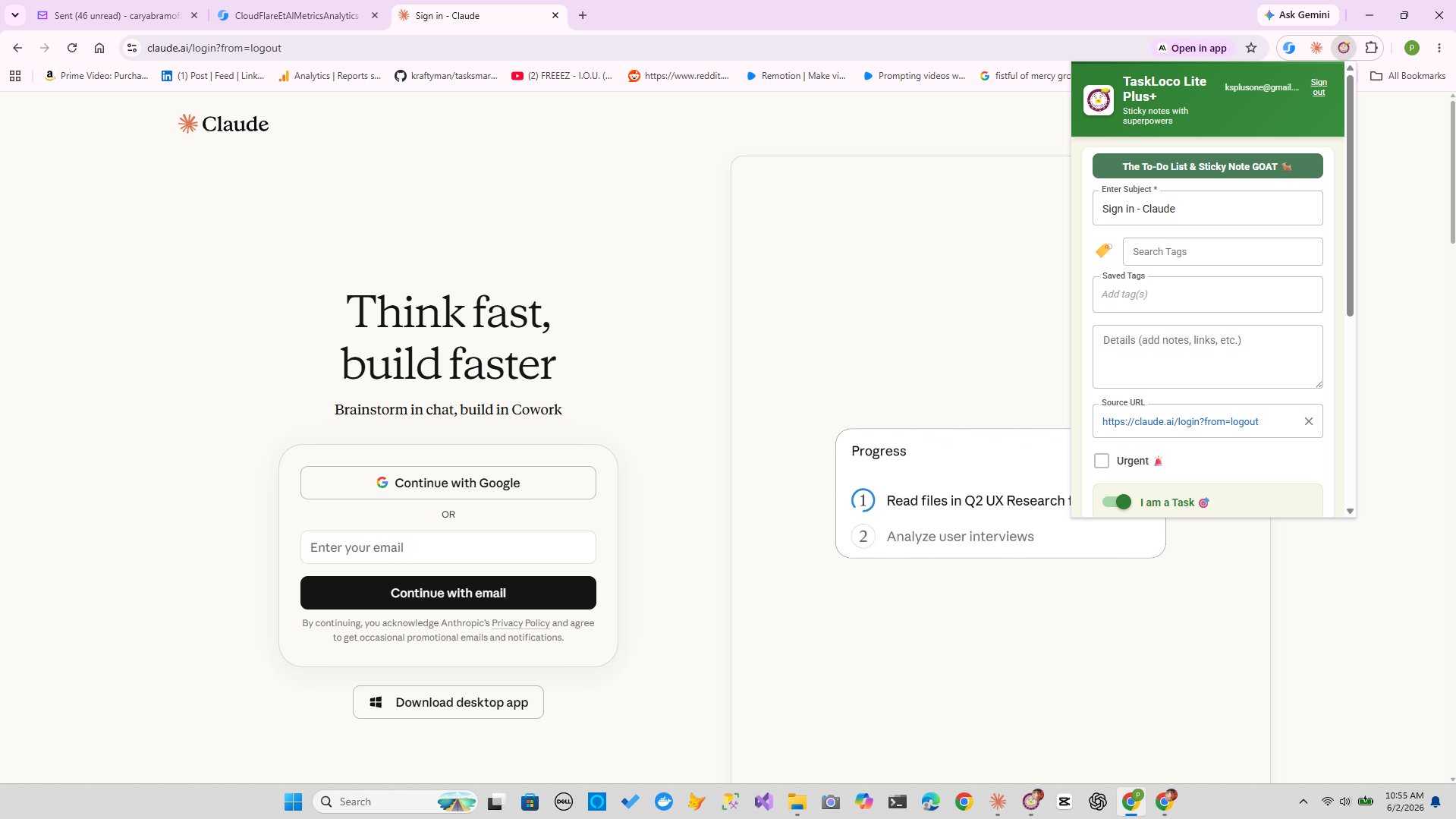
The Chrome extension captures any webpage in one click and drops it into a note. Research articles, character inspiration, location photos, historical references — clip them from the browser and they arrive in your plot wall already attached. And Lite Plus+ users get the extension free, with sync across all their devices, before they ever pay anything.
Research, Files, and the Living Wall
A plot wall for a serious novel is never just scene cards. It's also where you store the world. Character backstories, location descriptions, timeline documents, maps, cover inspiration — this material needs to live close to the story, not buried in a folder three levels deep in your file system.
TaskLoco Premium's 10GB file storage means you can attach the actual files to the notes they belong to. A note for your fictional city holds the hand-drawn map. A character note holds the reference photo and the voice memo you recorded when you figured out her backstory on a walk. An act-one card holds the beat sheet you imported from your outline tool. The wall becomes a living document, not a static diagram.
For writers who work across multiple devices — desktop for deep work, phone for capturing ideas, tablet for review sessions — Lite Plus+ syncs across all devices through the browser at no cost. Premium extends that with unlimited notes, reminders, and file attachments. There's no version of the wall that traps your work on one machine.
Extra storage is available as an add-on if 10GB isn't enough — tiers at 10GB, 50GB, 200GB, and 1TB, stackable to 100x. For a novelist with years of research, visual references, and draft fragments, that headroom matters.
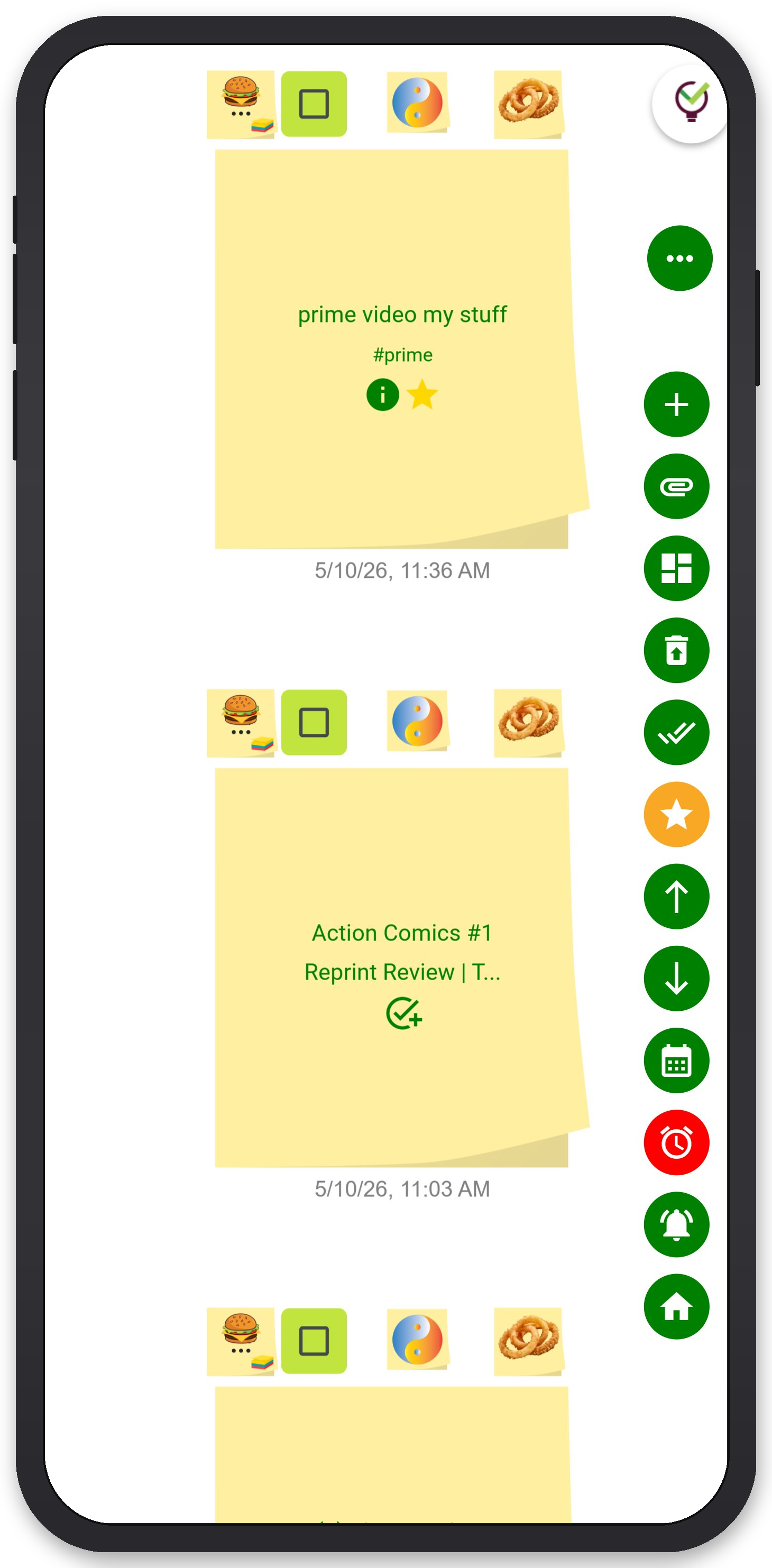
TaskLoco Premium is regularly $9.99/month per person. Right now, charter members can lock in 50% off the regular price — forever. That means $4.99/month per person today. And if our price ever goes up, you still pay half. Always.
Code CHARTER50 auto-applies at checkout. First 500 spots only — once they're gone, this offer is gone permanently. Act fast while spots last.
Every Premium subscription includes unlimited notes, 10GB file storage, reminders, calendar, and team sharing. Each team member requires a separate subscription. 7-day free trial — no charge until day 8. Cancel anytime.
Free Options: TaskLoco
TaskLoco Lite
- Native iPhone & Android app
- Completely anonymous — no sign-in
- Data stays on your device
- Up to 20 notes
- Free forever
TaskLoco Lite Plus+
- Web app + Chrome extension
- Sign in with Google
- Wall syncs across all devices
- Up to 30 notes
- Free forever
Lock In 50% Off — Forever
7-day free trial. No charge until day 8. CHARTER50 auto-applies at checkout.
🔒 Lock In My Charter SpotSee TaskLoco in Action
Frequently Asked Questions
What is a visual plot wall for a novel?
A visual plot wall is a two-dimensional arrangement of cards or notes — one per scene — organized into columns by act, timeline, or storyline. It makes a novel's structure visible at a glance, so you can spot pacing problems, track multiple threads, and move scenes around without rewriting a linear document. Writers have used physical cork boards for this for decades; digital tools replicate that flexibility with the added benefit of sync, search, and attachments.
How do I organize a plot wall by act?
Create one column per act — or per major structural beat, depending on your framework. Place each scene card in the column where it currently belongs. Color-code cards by POV character or storyline so you can scan for thread imbalance. Then move cards freely until the distribution of tension, quiet, and escalation feels right across the whole wall. The goal is to see the whole story at once, not to read it sequentially.
What should I put on each scene card?
At minimum: the core event of the scene, stated specifically ("Lena discovers the letter and realizes Marcus has been lying since page one" — not "Chapter 7"). From there, add as much as the card needs: a longer synopsis, character motivation notes, the emotional shift from scene-start to scene-end, location details, and any research or reference images. The more useful information lives on the card, the more the wall becomes a self-contained story bible rather than just a diagram.
Can I use TaskLoco for free to map my novel?
Yes. TaskLoco Lite Plus+ is free, syncs across all your devices through the browser, and includes the Chrome extension for clipping research with one click. It supports up to 30 notes. For a novel with more than 30 scene cards — or for file attachments, reminders, and unlimited notes — TaskLoco Premium is the step up. $9.99/month per person (currently $4.99/month per person for first 500 charter members with code CHARTER50)
How does TaskLoco handle research attached to scene cards?
TaskLoco Premium includes 10GB of file storage. You can attach documents, images, PDFs, and other files directly to any note. That means a scene card can hold its own synopsis, reference images, character sheets, and source documents — all in one place. Additional storage is available as an add-on in tiers up to 1TB, stackable to 100x, so research-heavy projects aren't constrained.
How do reminders help during novel revision?
TaskLoco's reminders fire as push notifications to your phone and computer, and each one deep-links back to the specific note that triggered it. Set a reminder on a scene card you flagged for rework, and when the notification arrives, one tap takes you directly to that scene — not to a home screen where you have to hunt for it. Optional email and SMS notifications are available as additional channels.
Is TaskLoco's plot wall available on mobile?
TaskLoco Lite is a native iPhone and Android app available in the App Stores — it stores up to 20 notes on your device with no sign-in required, and is a great way to capture ideas on the go. TaskLoco Lite Plus+ and Premium run as a web app, accessible on any phone's browser, with full cross-device sync. They are not native apps, but they work smoothly in mobile browsers and keep your wall in sync wherever you are.
Born in Brooklyn. Powered by AWS. Your data stays yours.
TaskLoco is available on iPhone, Android, Chrome, and every web browser.