Every productivity book eventually tells you to wake up at 5am, meditate for 30 minutes, journal, exercise, and eat a perfect breakfast before you open your laptop. And then you try it for three days and collapse. Micro habits exist because that model fails most people — not because of weak willpower, but because large behavior changes require cognitive overhead that busy schedules simply don't leave room for.
A micro habit strips a behavior down to its irreducible minimum: two minutes of stretching instead of a 45-minute workout. One sentence in a journal instead of a full entry. A single glass of water when you sit down at your desk. The goal isn't to do less forever — it's to make the behavior automatic first, then expand it later. What makes micro habits particularly powerful for people with packed calendars is that they lower the activation cost of starting, which is the real obstacle for most habits that die in week two.
What Makes a Good Micro Habit System
Before any app enters the picture, it helps to understand what separates a micro habit that sticks from one that evaporates after a week. Three criteria actually matter — and they apply regardless of what tool you use to track them.
1. Specificity of trigger. A habit without a trigger is just an intention. The best micro habits are anchored to something that already happens reliably in your day: after you pour your morning coffee, when you sit down at your desk, right before you close your laptop for the night. Vague habits like "drink more water" fail because there's no clear moment to do them. "Drink one glass of water when I open my first meeting" is a real habit.
2. Frictionless tracking. If logging the habit takes longer than doing it, you'll stop logging — and tracking is what tells you whether you're actually building the behavior or just thinking about it. The system needs to be faster than your resistance to using it.
3. Visible progress. Humans are motivated by streaks, accumulation, and visible momentum. A habit that lives only in your head has no feedback loop. Even a simple sticky note with a tally mark does more psychological work than you'd expect, because it makes invisible effort visible.
The Best Micro Habits for People Who Have No Time
These aren't inspirational platitudes. They're specific behaviors, field-tested, that take under three minutes each and have documented compounding effects on focus, health, and output.
The one-sentence morning intention. Before you check your phone, write one sentence about what would make today a success. Not a to-do list — one sentence. This keeps your brain from getting hijacked by other people's priorities first thing in the morning. It takes 30 seconds.
The two-minute end-of-meeting capture. After every meeting, write down the single most important thing you need to act on. Not notes — one action. People who do this consistently have dramatically lower meeting-induced anxiety because nothing gets lost in the fog between calls.
The 5-4-3-2-1 breath reset. Once per hour, take five slow breaths. That's it. The research on brief breathing interventions and cortisol reduction is real, and five breaths take less than 45 seconds.
The one-tab close rule. Every time you open a new browser tab, close one. This is absurdly simple and almost immediately reduces the cognitive load that comes from 40 open tabs you're never going back to anyway.
The three-item tomorrow prep. At the end of your workday, write exactly three things you want to accomplish tomorrow — not everything, three. This prevents the paralysis of a 30-item list and makes it easier to start the next morning without re-deciding your priorities from scratch.
The gratitude micro-note. Before you sleep, write one specific thing that went well today. Not "had a good day" — something concrete. This habit has the highest research-to-simplicity ratio of almost anything in the behavior change literature.
Why TaskLoco Is the Ideal Micro Habit Companion
Most habit-tracking apps ask you to build a new relationship with a new tool. TaskLoco works differently — it's already where your notes and tasks live, so adding habit tracking doesn't require opening a separate app, learning a new system, or maintaining another login.
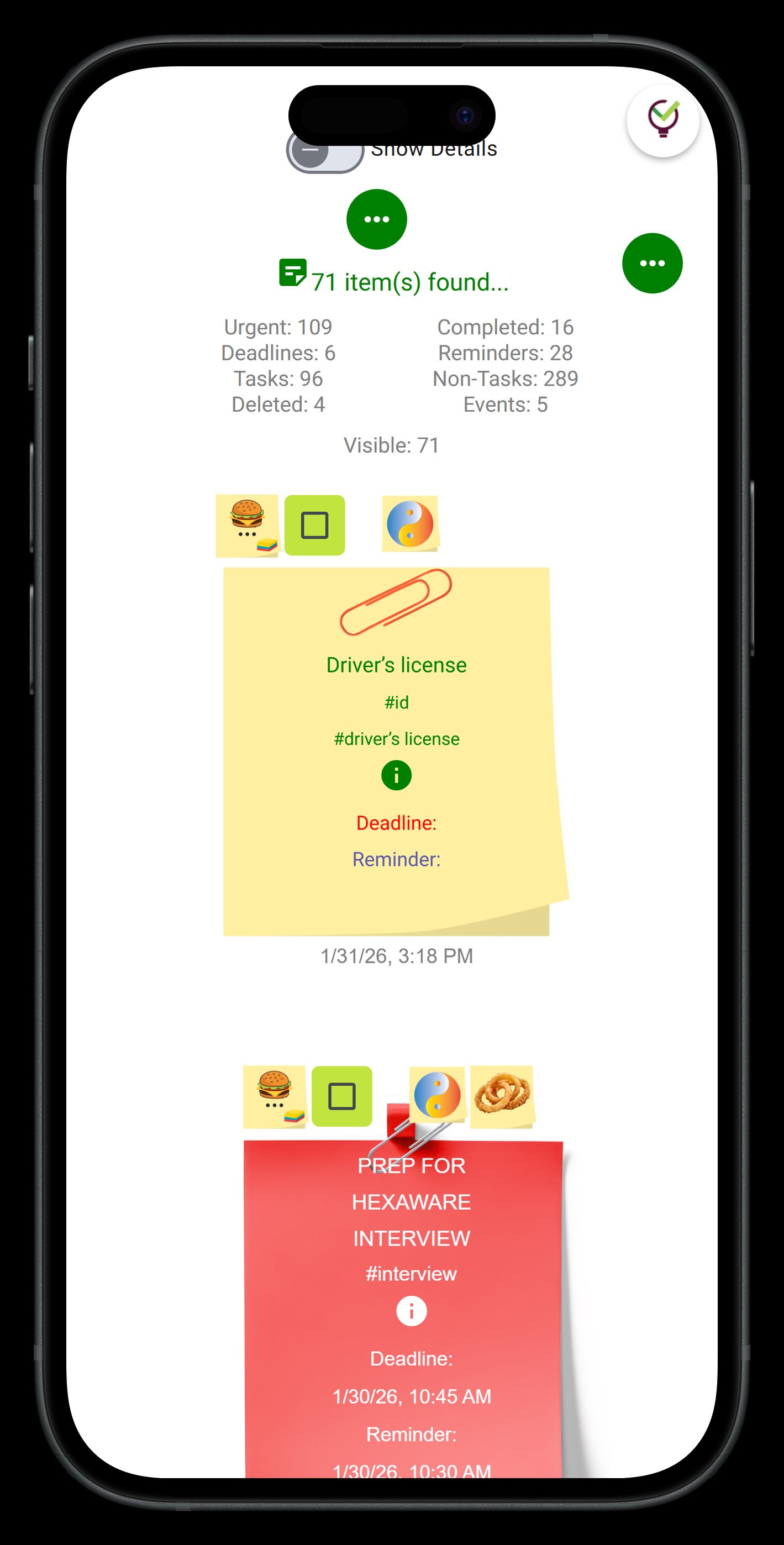
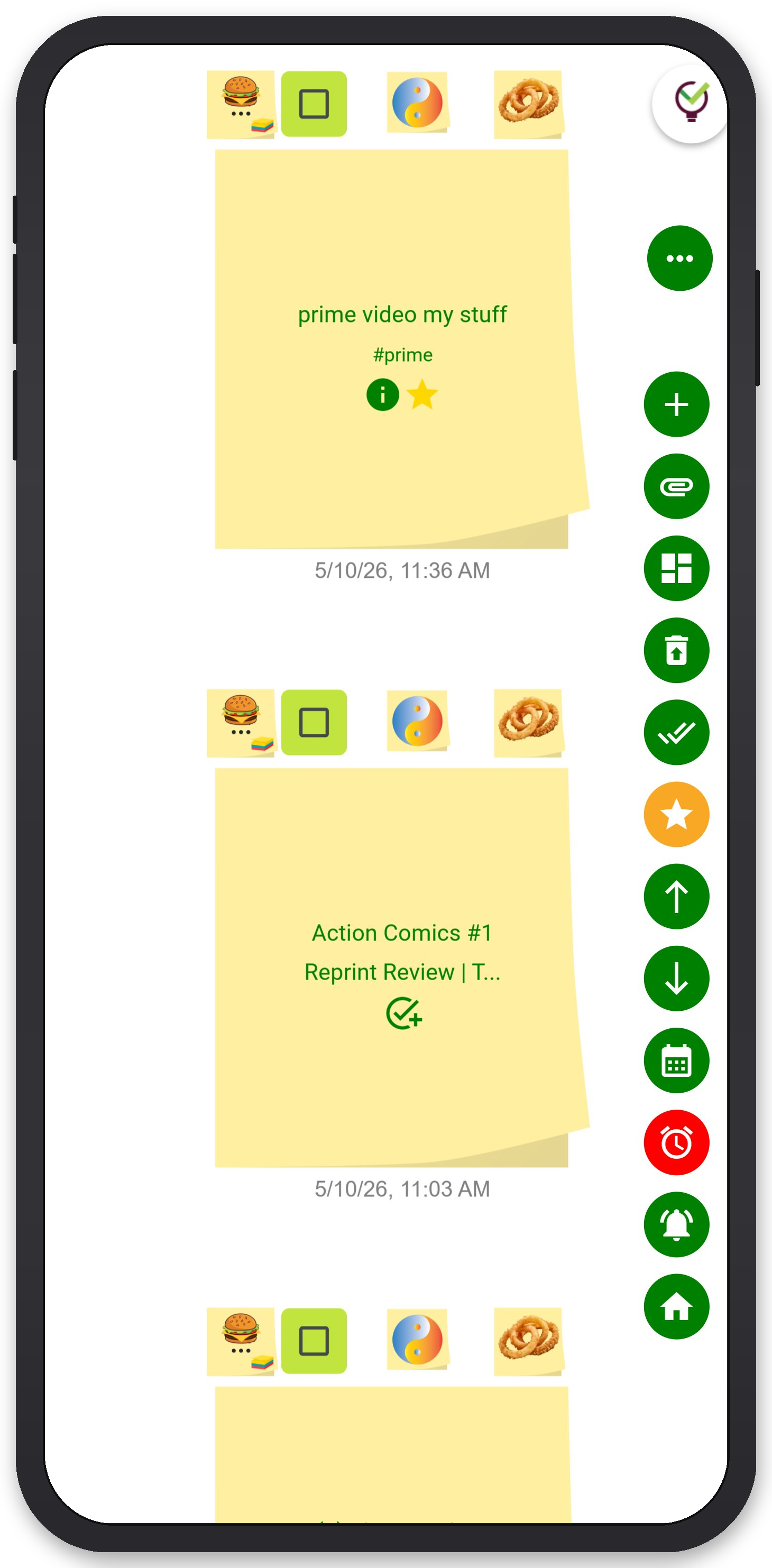
The sticky note model maps naturally to micro habit tracking. Each habit gets its own note. You can keep all your habits on one visual wall and see them at a glance without clicking into submenus or dashboards. That visual immediacy matters more than it sounds — when your habits are visible every time you open TaskLoco, the behavioral cue is built in.
Push notification reminders are the real game-changer. TaskLoco Premium delivers reminders as push notifications directly to your phone and computer — and each reminder deep-links straight back to the note it's attached to. So when your "3pm breathing reset" reminder fires, one tap takes you directly to that note. Optional email and SMS channels are also available if you want additional coverage. For micro habits specifically, a reminder that removes the "where was that note again?" friction is worth more than any motivational feature.
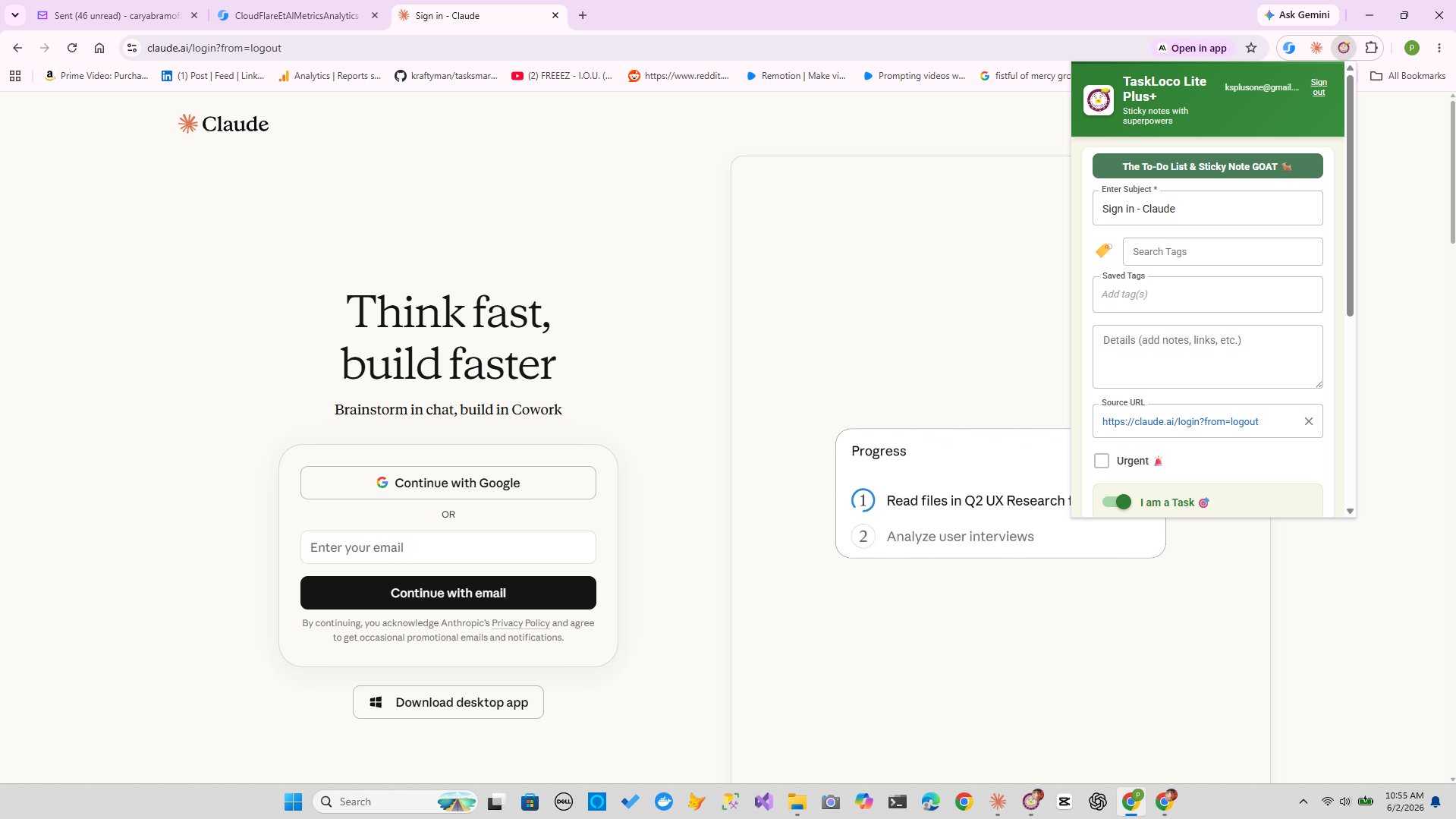
The Chrome extension closes the loop for browser-based habits. If part of your system involves capturing articles, ideas, or tasks from the web, the Chrome extension grabs any page in one click and turns it into a note — instantly synced to your wall. No copy-pasting, no tab-hoarding, no "I'll deal with this later" that turns into never.
Team sharing for accountability habits. If you've ever tried to build habits with a partner — a colleague who checks in on your writing habit, a friend who tracks workouts with you — TaskLoco's team sharing works like sharing a note by email. The recipient clones it and makes it their own, no complex permissions needed. Shared accountability is one of the most effective behavior change interventions that exists, and TaskLoco makes it frictionless.
Building Your Micro Habit Stack in TaskLoco
A "habit stack" in TaskLoco is simple: create one note per habit, title it with the trigger and the behavior ("After coffee → write one sentence"), and pin the habits you're actively building to the top of your wall. That's your daily dashboard.
For tracking, keep a tally directly in the note body. Day 1, Day 2, Day 3 — plain text works. You can also attach a simple chart or photo if visual proof motivates you; the 10GB storage that comes with Premium means you're not going to run out of space on a text-heavy habit log.
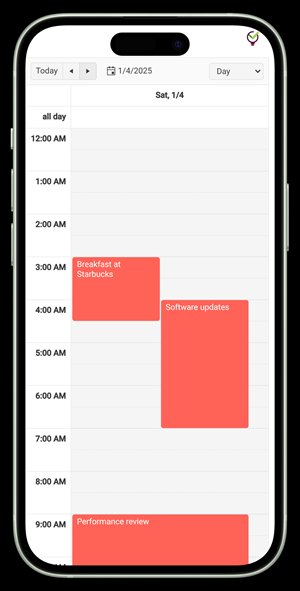
< That reminder deep-links back to the note, which means your daily check-in is one tap away. The calendar view in Premium lets you see which days you've been active, which is a lightweight streak tracker without needing a dedicated app for it.As habits graduate from "I'm working on this" to "this is just what I do," archive the note or move it to a different section of your wall. That movement is satisfying — it's visible proof that you've actually built something. Over months, your archived habit notes become a record of genuine behavior change, not just intentions.
The whole system takes about five minutes to set up and under two minutes per day to maintain. That's exactly the overhead a micro habit system should have.
TaskLoco Premium is regularly $9.99/month per person. Right now, charter members can lock in 50% off the regular price — forever. That means $4.99/month per person today. And if our price ever goes up, you still pay half. Always.
Code CHARTER50 auto-applies at checkout. First 500 spots only — once they're gone, this offer is gone permanently. Act fast while spots last.
Every Premium subscription includes unlimited notes, 10GB file storage, reminders, calendar, and team sharing. Each team member requires a separate subscription. 7-day free trial — no charge until day 8. Cancel anytime.
Free Options: TaskLoco
TaskLoco Lite
- Native iPhone & Android app
- Completely anonymous — no sign-in
- Data stays on your device
- Up to 20 notes
- Free forever
TaskLoco Lite Plus+
- Web app + Chrome extension
- Sign in with Google
- Wall syncs across all devices
- Up to 30 notes
- Free forever
Lock In 50% Off — Forever
7-day free trial. No charge until day 8. CHARTER50 auto-applies at checkout.
🔒 Lock In My Charter SpotSee TaskLoco in Action
Frequently Asked Questions
What exactly is a micro habit?
A micro habit is a behavior stripped down to its smallest possible version — so small that doing it requires almost no motivation or willpower. Two minutes of stretching instead of a workout. One sentence of journaling instead of a full entry. The goal is to make the behavior automatic first, then expand it over time. The size is the feature, not a limitation.
How long does it take for a micro habit to become automatic?
The popular "21 days" number is a myth — it originated from a misreading of a 1960s self-help book. Research from University College London puts the actual average closer to 66 days, with a range of 18 to 254 depending on the person and the behavior. The more consistent your trigger and environment, the faster the habit forms. Tracking your streak — even with a simple tally — measurably speeds up the process.
What's the best app to track micro habits?
The best tracker is the one you'll open every day without friction. Dedicated habit apps add a new tool to your routine; TaskLoco integrates habit tracking into the same place you're already managing notes and tasks. Each habit gets its own sticky note, reminders fire as push notifications that deep-link directly back to the note, and your entire habit stack is visible on one wall. No new app to learn, no separate login to maintain. $9.99/month per person (currently $4.99/month per person for first 500 charter members with code CHARTER50)
How many micro habits should I start with?
One. Seriously. The instinct is to build a whole system on day one, but habit research consistently shows that starting with a single behavior and reinforcing it for two to three weeks before adding another produces far better long-term results than stacking multiple habits at once. Once the first habit is genuinely automatic — meaning you do it without thinking — add the second. The method is sequential, not parallel.
Do micro habits work for productivity specifically?
Yes — and productivity is arguably where they shine most. Large productivity systems (GTD, time blocking, full weekly reviews) require sustained effort to maintain and often collapse under workload pressure. Micro habits survive because they're too small to skip. The two-minute end-of-meeting capture, the three-item tomorrow prep, and the one-sentence morning intention are all micro habits that directly reduce cognitive load and missed follow-through without requiring a system overhaul.
Can I use TaskLoco to track habits on my phone?
Yes. TaskLoco Lite is available as a native app on iPhone and Android — free, no sign-in required, stores up to 20 notes on your device. For habit tracking with reminders, file attachments, and sync across all your devices, TaskLoco Premium runs through your phone's browser and delivers reminders as push notifications directly to your phone, with each reminder deep-linking back to the specific habit note. $9.99/month per person (currently $4.99/month per person for first 500 charter members with code CHARTER50)
What's the difference between a micro habit and a regular habit?
Scale and activation cost. A regular habit — say, "exercise every morning" — requires significant motivation to initiate, especially when you're tired or busy. A micro habit — "do five squats when I make my morning coffee" — costs almost nothing to start. The underlying mechanism is the same: trigger, behavior, reward. But micro habits eliminate the high-effort activation that causes most habits to fail. They're not a lesser version of habits; they're a smarter entry point into the same behavioral loop.
Born in Brooklyn. Powered by AWS. Your data stays yours.
TaskLoco is available on iPhone, Android, Chrome, and every web browser.