Everyone has had a week where everything clicked. Tasks got done early, ideas kept flowing, and starting the next thing felt automatic. That wasn't motivation — motivation is an emotion and emotions are unreliable. What you were riding was momentum: the compounding effect of small completions that makes the next one easier than the last.
The problem is most productivity systems are designed for planning, not for sustaining motion. They're great at capturing what needs to happen and terrible at making you want to go do it right now. This article is about the mechanics of momentum — how it forms, how it breaks, and how a dead-simple sticky-note workflow can keep it humming longer than any motivational podcast ever will.
What Momentum Actually Is (And Why It Beats Motivation Every Time)
Motivation is the desire to start. Momentum is the force that makes stopping feel like the weird choice. They sound similar but they operate on completely different timescales. Motivation arrives in bursts — usually after a podcast, a good night's sleep, or a fresh Monday. Momentum is quieter. It builds through repetition and dies through interruption.
The neuroscience here is well-established: completing a task, even a tiny one, releases a small pulse of dopamine. That pulse lowers the activation energy for the next task. Do three small things in a row and your brain starts to expect a fourth. That expectation — that low-level anticipatory pull — is momentum in action.
When people say they're "not motivated," they usually mean they haven't done anything yet today. The fix isn't to find motivation first. It's to do one small thing and let the chemistry do the rest. This is why the first task of the day matters so much — not because it's the most important, but because it starts the chain.
Three things determine whether momentum builds or stalls: visibility (can you see your next action without digging?), friction (how many clicks or decisions stand between you and starting?), and feedback (do you feel the completion when it happens?). Any productivity system worth using has to get all three right.
The Visibility Problem: Why Most To-Do Apps Kill Momentum
Here's the irony of most productivity software: the more powerful it gets, the worse it is at sustaining daily momentum. Features pile up. Projects nest inside portfolios. Tasks get tagged, filtered, assigned to sprints, and hidden behind five sidebar clicks. By the time you've navigated to what you were supposed to do, the urge to do it has already evaporated.
This is the visibility problem. If your next action isn't immediately obvious when you open your workspace, you've added a micro-decision — "where was I?" — that costs you more than it seems. Every micro-decision is a small friction. Small frictions compound. Enough of them and you're "not in the mood" before you've done anything.
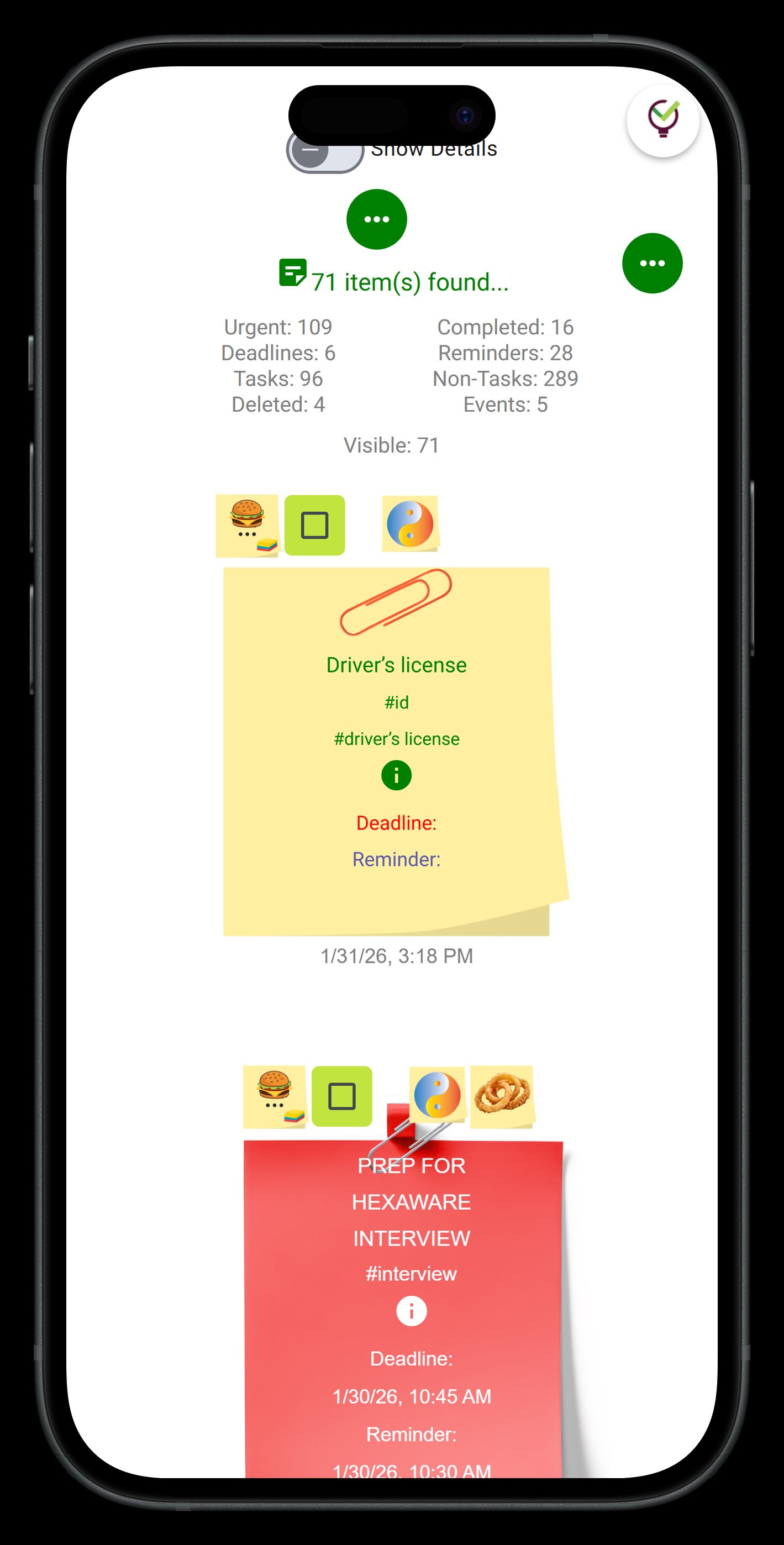
Sticky notes solve this at the design level. A note is inherently surface-area. It doesn't hide. You pin it, you see it, you do it, you pull it down. That physical metaphor — even in a digital workspace — engages a different part of how the brain processes tasks. It feels more like a commitment than a list item.
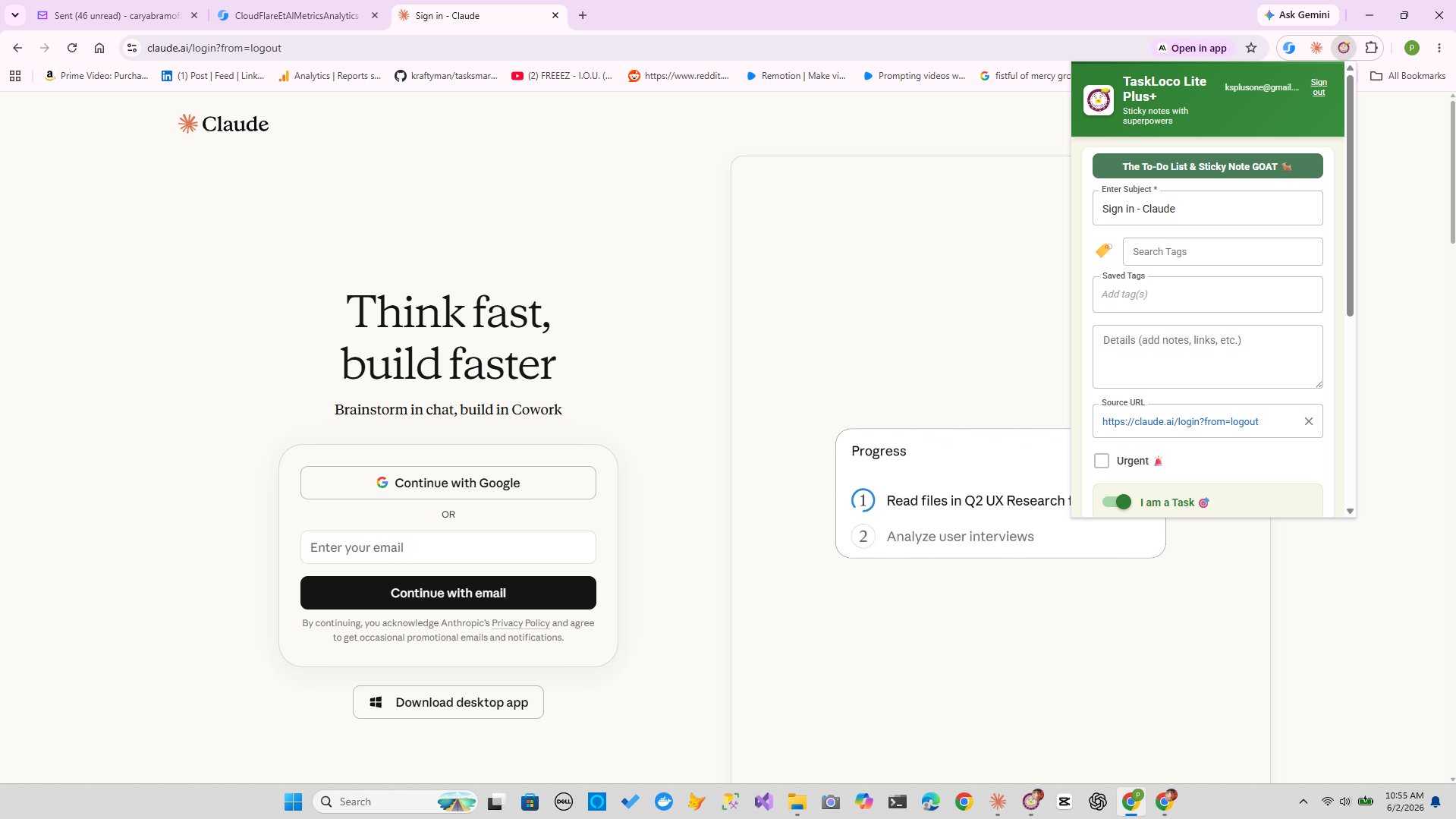
The Chrome extension takes this further. When you're browsing and something catches your attention — an article you need to reference, a product you want to evaluate, a thread you need to follow up on — one click captures it as a note. No tab-hoarding, no mental bookmark that you'll forget by tomorrow. The thought is captured before momentum has a chance to fragment.
Building a Momentum Workflow With Sticky Notes
A good momentum workflow has three zones: what you're doing today, what's coming next, and what's done. That's it. Anything more complex and you've built a planning system, not a momentum system.
In TaskLoco Premium, the wall is your canvas. The habit that works: every morning, spend three minutes pulling out three to five notes for the day — not your whole backlog, just what's actually happening today. Place them where you can see them. As you finish each one, archive it. That archive is your momentum record. The visual thinning of the wall as the day progresses is feedback your brain responds to even if you don't consciously notice it.
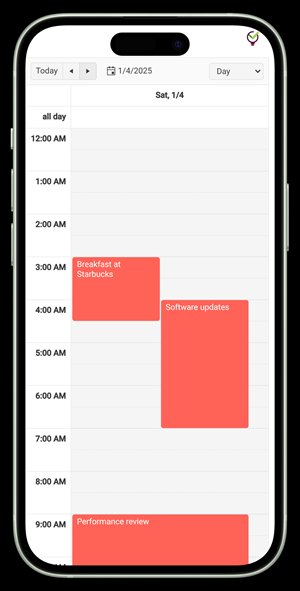
Reminders are the glue between sessions. When you know you'll need to pick up a task at a specific time, set a reminder directly on the note. TaskLoco delivers it as a push notification to your phone and computer — tap it and you're taken straight back to the original note. No hunting, no re-orientation. The context is already there. Optional email or SMS notifications are available if you want an extra channel, but the push notification is what actually pulls you back into flow without friction.
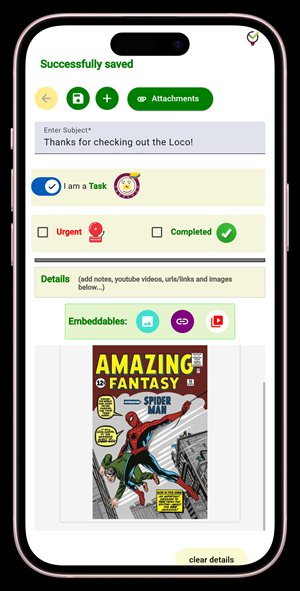
For anything that requires supporting material — a PDF, a screenshot, a voice memo, a contract — Premium's 10GB file storage means the attachment lives on the note itself. When the reminder fires and you tap back in, the file is right there. You don't break momentum searching for it somewhere else.
Teams benefit from this same structure. TaskLoco's sharing model works like email: you share a note and the recipient can clone it and make it their own — no permissions to configure, no access levels to manage. A team lead can push a note to the whole team and each person owns their own copy from that point forward. That's accountability without micromanagement, which is exactly what a momentum-first team culture needs.
Protecting Momentum: The Habits That Make It Last
Momentum is easier to kill than to build. The most common killers aren't big disruptions — they're small defaults. Checking email before you've done your first task. Opening a news app when a note loads slowly. Leaving your workspace cluttered with 40 notes when you only need to see five today. Each of these bleeds a little momentum before the day has really started.
A few habits that actually hold up over time:
- Start with a win, not a review. Do one small thing before you look at messages or plan your day. The dopamine from that first completion changes the whole morning.
- Cap your daily visible notes. TaskLoco's wall is flexible — use it to enforce the rule that only today's tasks are surfaced. Archive everything else. Fewer notes visible means fewer decisions, which means less friction per task.
- End each session by setting tomorrow's first note. Before you close the app, write tomorrow's first task and make it embarrassingly small. "Send the email." "Open the file." "Write one sentence." The goal is to make refusing it harder than doing it.
- Use reminders as reentry points, not guilt trips. A reminder that deep-links back to the note isn't nagging — it's a door that's already open. Walk through it.
The deeper principle behind all of this is that momentum is a design problem, not a willpower problem. If your system requires you to feel motivated to use it, you'll abandon it on exactly the days you need it most. A good system runs when you're flat. It gives you the first small win that generates the next one. TaskLoco is built around exactly that idea — the note is always there, the next action is always visible, and the barrier to starting is always low.
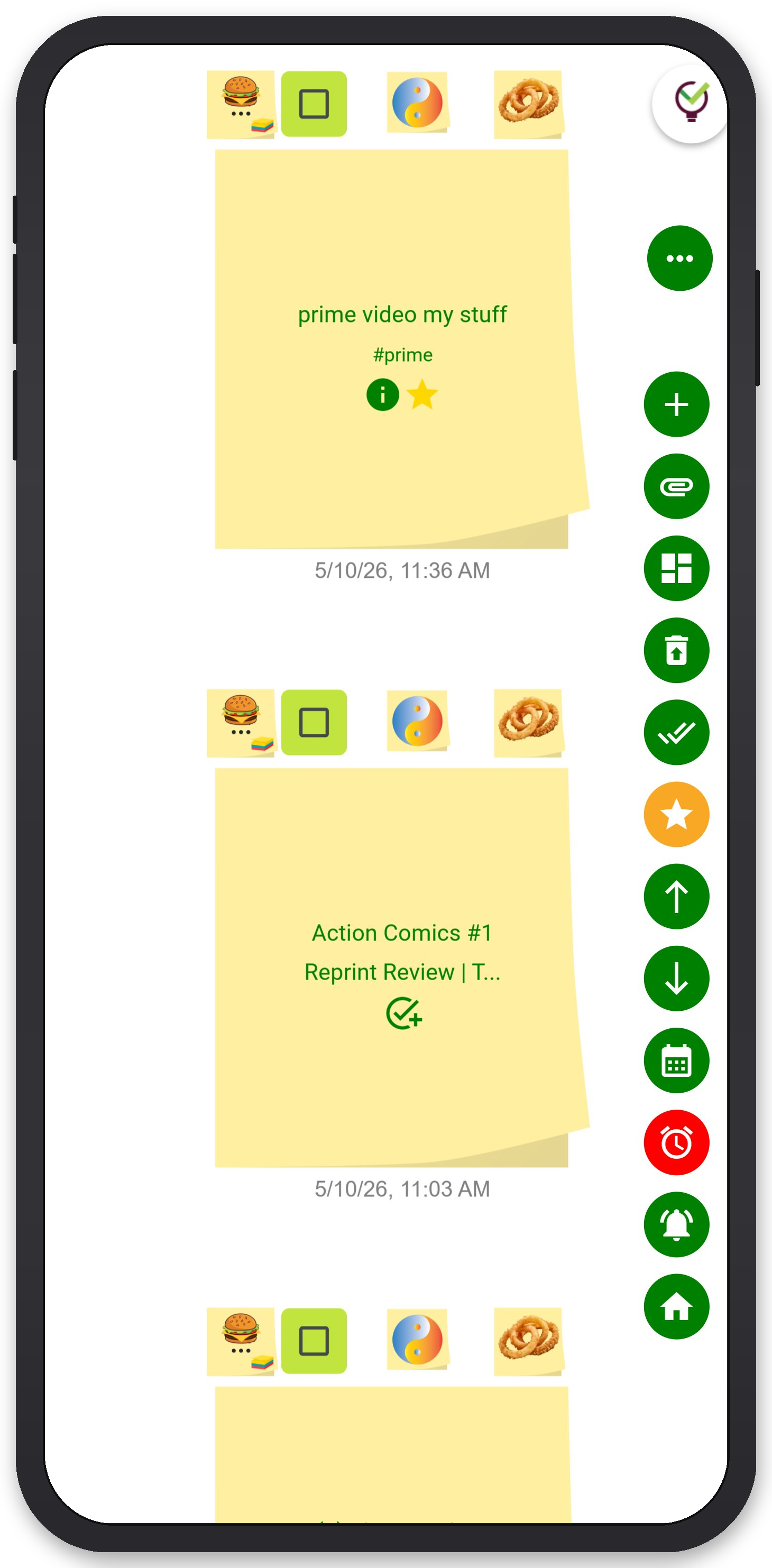
TaskLoco Premium is regularly $9.99/month per person. Right now, charter members can lock in 50% off the regular price — forever. That means $4.99/month per person today. And if our price ever goes up, you still pay half. Always.
Code CHARTER50 auto-applies at checkout. First 500 spots only — once they're gone, this offer is gone permanently. Act fast while spots last.
Every Premium subscription includes unlimited notes, 10GB file storage, reminders, calendar, and team sharing. Each team member requires a separate subscription. 7-day free trial — no charge until day 8. Cancel anytime.
Free Options: TaskLoco
TaskLoco Lite
- Native iPhone & Android app
- Completely anonymous — no sign-in
- Data stays on your device
- Up to 20 notes
- Free forever
TaskLoco Lite Plus+
- Web app + Chrome extension
- Sign in with Google
- Wall syncs across all devices
- Up to 30 notes
- Free forever
Lock In 50% Off — Forever
7-day free trial. No charge until day 8. CHARTER50 auto-applies at checkout.
🔒 Lock In My Charter SpotSee TaskLoco in Action
Frequently Asked Questions
What's the difference between motivation and momentum?
Motivation is the desire to start — it's emotional and unreliable. Momentum is the compounding effect of completions that makes the next task easier than the last. Motivation is something you feel; momentum is something you build through action. The practical implication is that you don't need to feel motivated to get moving — you need one small completion to trigger the next.
How do sticky notes help build momentum?
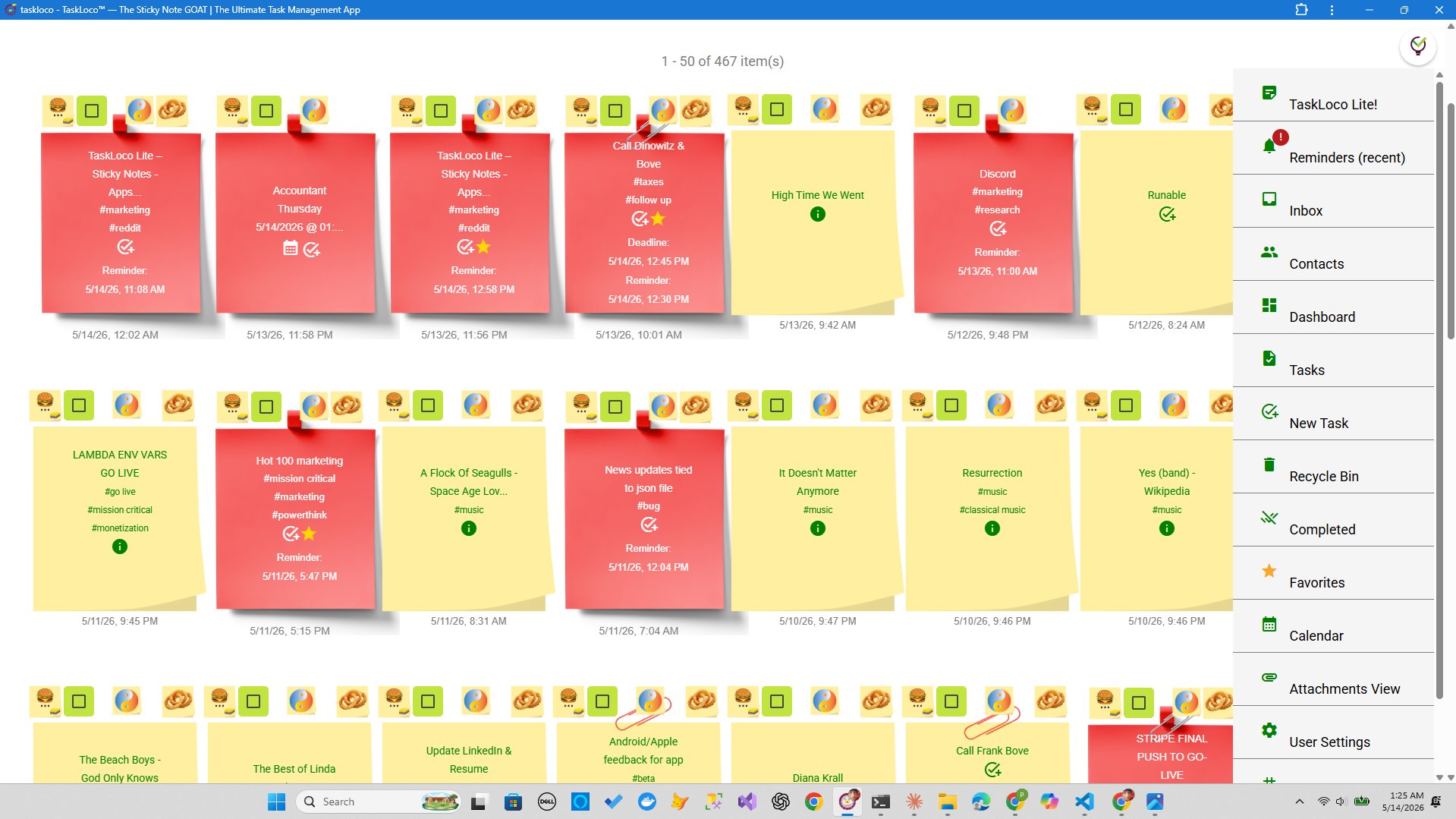
Sticky notes work because they're inherently visible — they sit on the surface of your workspace instead of hiding inside folders or filtered views. That visibility eliminates the micro-decision of 'where was I?' which is one of the most common momentum-killers. In a digital workspace like TaskLoco, the wall view means your next action is always in front of you when you open the app.
How many tasks should I put on my daily note wall?
Three to five is the range that works for most people. Fewer than three and you lose the chain effect — there's no second win to build on the first. More than seven or eight and you're looking at a list, not a commitment, and cognitive overload starts to eat your momentum. Pull out only what's happening today and archive everything else.
Does TaskLoco have reminders to help me stay on track?
Yes. TaskLoco Premium includes reminders that are delivered as push notifications to your phone and computer. The key feature is that each reminder deep-links back to the original note — tap the notification and you're already in context, ready to act. Optional email notifications and an SMS add-on are also available.
What is TaskLoco and which version do I need for a momentum workflow?
TaskLoco has three tiers. Lite is a free native iPhone and Android app — anonymous, no sign-in, up to 20 notes stored on the device only, no sync. Lite Plus+ is free via the web app and Chrome extension — sign in with Google, up to 30 notes synced across devices, but no reminders or file attachments. For a full momentum workflow — reminders, file attachments, unlimited notes, calendar view, and team sharing — you want TaskLoco Premium. $9.99/month per person (currently $4.99/month per person for first 500 charter members with code CHARTER50)
How does the TaskLoco Chrome extension help with momentum?
The Chrome extension lets you capture any webpage as a sticky note in one click. Instead of hoarding browser tabs or making a mental note to come back to something, you turn it into an actual note immediately. That keeps your mental workspace clean and ensures the context lives where your work lives — not scattered across 20 open tabs.
Can teams use TaskLoco for shared momentum workflows?
Yes. TaskLoco Premium includes full team sharing. The sharing model works like email — you share a note and the recipient can clone it and make it their own copy. There are no permissions to configure or access levels to manage. Each team member handles their own copy of the note, which creates accountability without overhead. Each team member requires their own individual Premium subscription. $9.99/month per person (currently $4.99/month per person for first 500 charter members with code CHARTER50)
Born in Brooklyn. Powered by AWS. Your data stays yours.
TaskLoco is available on iPhone, Android, Chrome, and every web browser.