You've felt it before — that surge of motivation after watching an inspiring video or setting a new goal. You're fired up, ready to change everything. Then three days later, you're back to old habits, wondering where all that energy went.
The truth is motivation and discipline serve different purposes. One is an emotion that sparks action. The other is a system that sustains it. Understanding when to rely on each — and how to build both — determines whether your goals become reality or just good intentions.
What Motivation Actually Is (And Why It Fails)
Motivation is emotional fuel. It's that feeling you get when you imagine your future self — fitter, more productive, more successful. It's powerful because it connects your current actions to your deeper values and dreams.
But motivation has a fatal flaw: it's completely unreliable. It shows up when you feel good, when things are going well, when you've had enough sleep and your stress is low. The moment life gets messy — which it always does — motivation disappears.
Think about the last time you felt incredibly motivated to start exercising. That feeling probably lasted a few days, maybe a week. Then you had a rough day at work, stayed up too late, or dealt with family stress. Suddenly, the gym felt like the last place you wanted to be.
This is why relying on motivation alone leads to the start-stop cycle that drives people crazy. You begin projects with enthusiasm, then abandon them when the feeling fades. The problem isn't that you lack willpower — it's that you're using the wrong tool for the job.
How Discipline Actually Works
Discipline isn't about forcing yourself to do things you hate. Real discipline is about building systems that make the right choices easier, even when you don't feel like making them.
Discipline is what gets you to the gym when motivation has left the building. It's the habit of laying out your workout clothes the night before. It's having a simple routine that doesn't require decision-making when your willpower is low.
The key insight: discipline isn't about being tough. It's about being smart with your environment and systems. Instead of relying on daily decisions, you create structures that guide behavior automatically.
For example, instead of deciding each morning whether to exercise, you schedule it like an appointment. Instead of hoping you'll remember to work on important projects, you set up reminders that surface them at the right time. Instead of trusting your future self to make good choices, you remove the choice altogether through smart systems.
The Smart Way to Use Both
Here's what most productivity advice gets wrong: you don't choose between motivation and discipline. You use them together, at the right times, for the right purposes.
Use motivation for direction. When you feel that spark of excitement about a goal or project, don't waste it on the work itself. Use it to design the systems that will carry you forward when the feeling fades. Use motivated moments to set up your environment, create reminders, and remove friction from future actions.
Use discipline for execution. Once your systems are in place, discipline is what shows up day after day. It's following the plan you made when you felt motivated, trusting the process even when you don't feel like it.
This is where smart tools make a huge difference. TaskLoco helps bridge the gap by capturing motivated thoughts when they strike, then surfacing them as actionable reminders when discipline needs to take over.
Building Systems That Actually Stick
The difference between people who achieve their goals and those who don't isn't talent or willpower. It's systems. But not all systems are created equal — most are too complex, too rigid, or too disconnected from daily reality.
Effective systems have three characteristics: they're simple enough to follow on bad days, flexible enough to adapt when life changes, and visible enough that you can't ignore them.
Simple means you can explain your system in one sentence. "I work on my book for 30 minutes before checking email." "I review my priorities while my coffee brews." "I capture all thoughts in one place, then deal with them during my weekly review."
Flexible means your system works whether you have 10 minutes or an hour, whether you're at home or traveling, whether you're feeling great or struggling. Rigid systems break the moment life gets unpredictable.
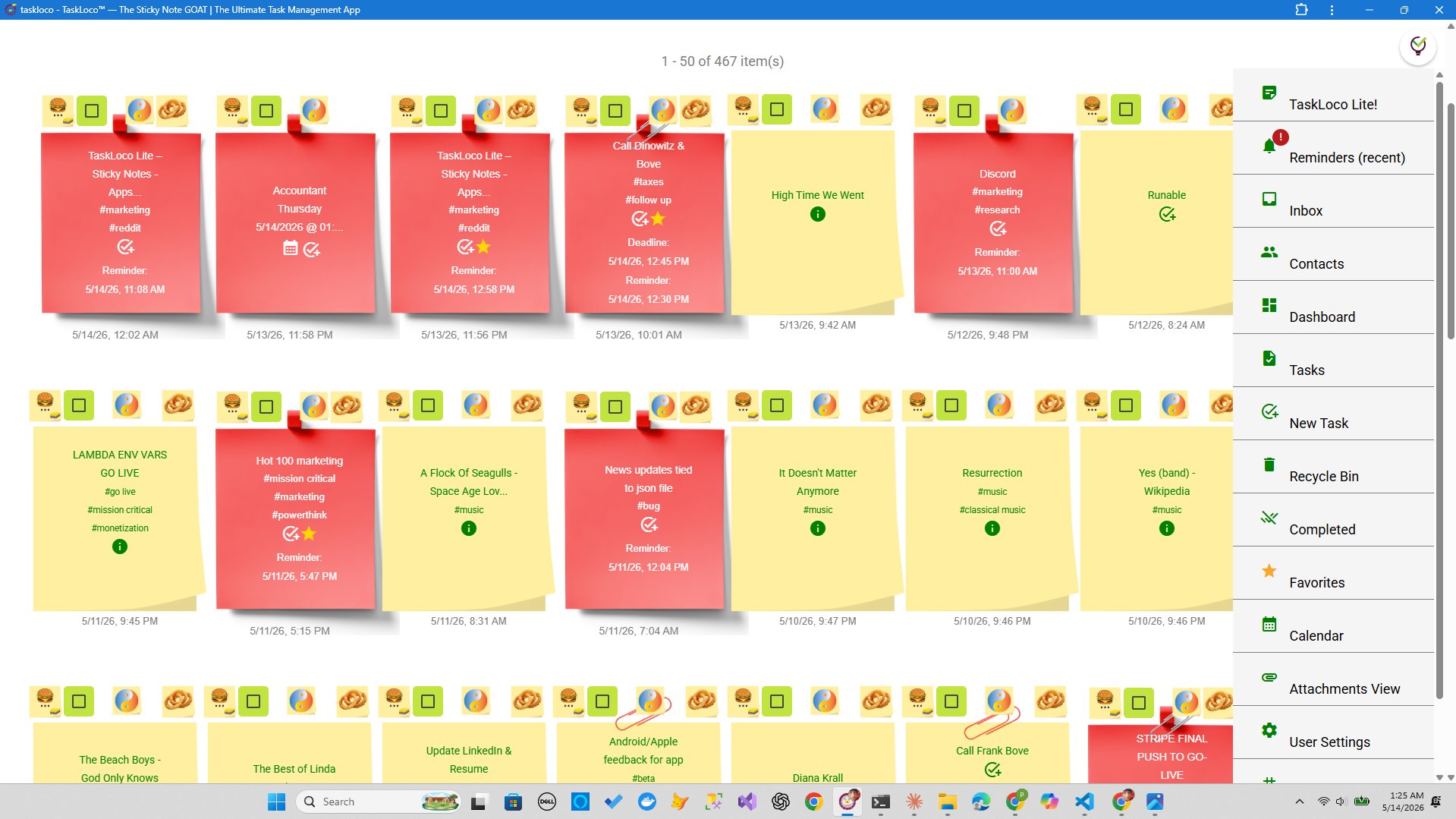
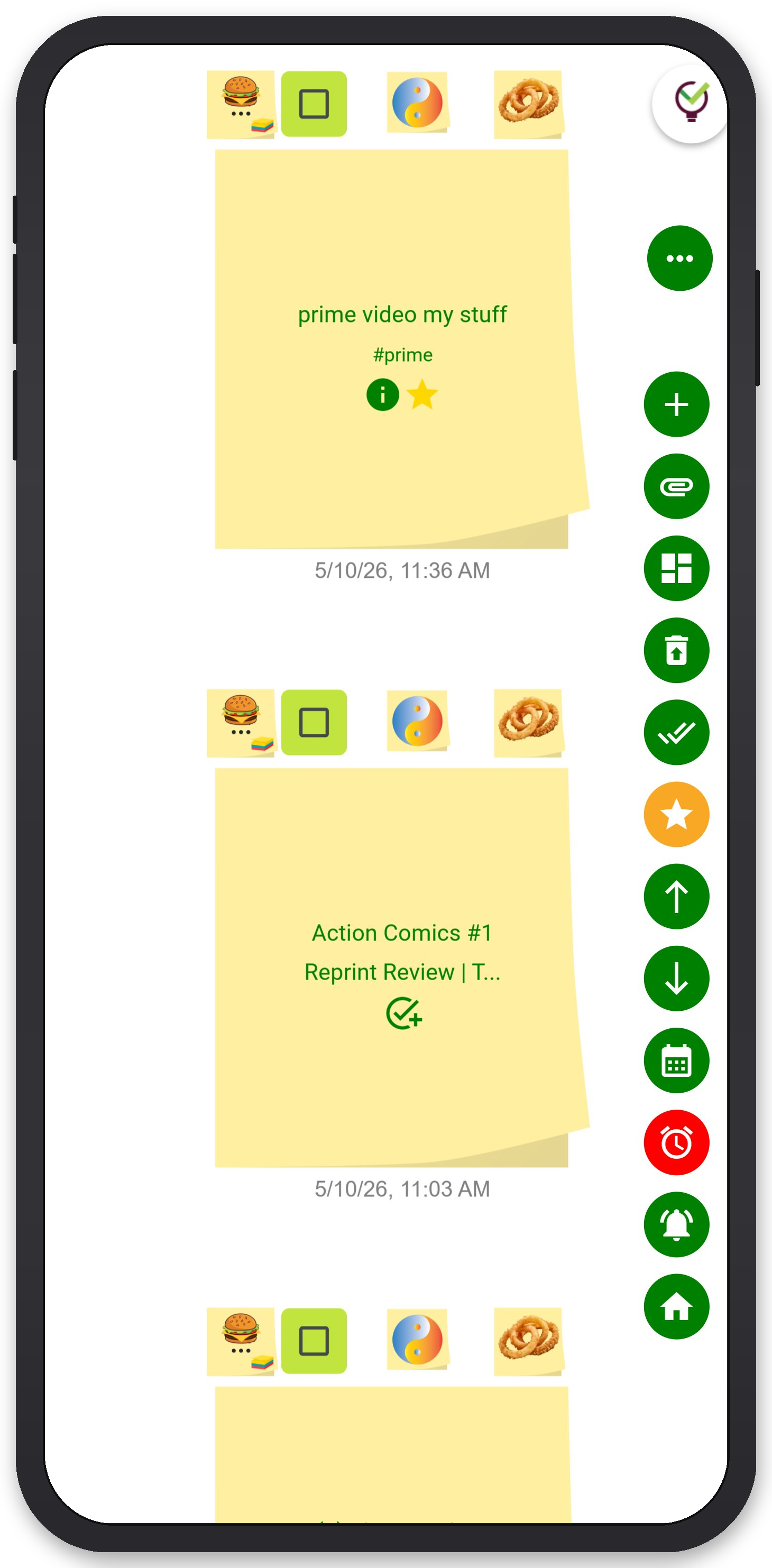
TaskLoco's visual wall approach solves the visibility problem. Instead of tasks hidden in lists, everything important stays visible on your screen. Reminders surface at the right moment. Files stay attached to the tasks that need them. It's designed to work with how your brain actually operates, not against it.
TaskLoco Premium is regularly $9.99/month per person. Right now, charter members can lock in 50% off the regular price — forever. That means $4.99/month per person today. And if our price ever goes up, you still pay half. Always.
Code CHARTER50 auto-applies at checkout. First 500 spots only — once they're gone, this offer is gone permanently. Act fast while spots last.
Every Premium subscription includes unlimited notes, 10GB file storage, reminders, calendar, and team sharing. Each team member requires a separate subscription. 7-day free trial — no charge until day 8. Cancel anytime.
Free Options: TaskLoco
TaskLoco Lite
- Native iPhone & Android app
- Completely anonymous — no sign-in
- Data stays on your device
- Up to 20 notes
- Free forever
TaskLoco Lite Plus+
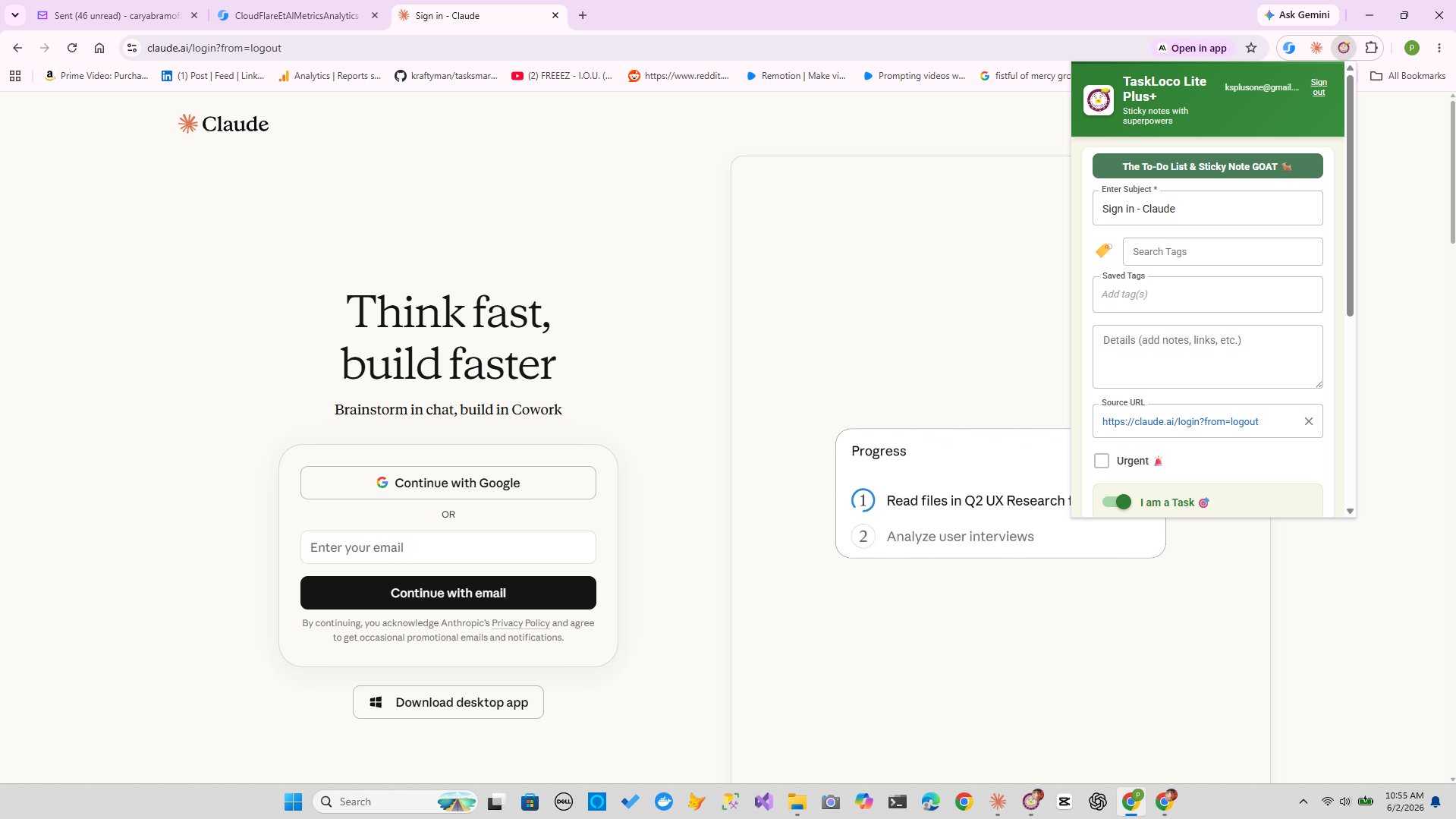
- Web app + Chrome extension
- Sign in with Google
- Wall syncs across all devices
- Up to 30 notes
- Free forever
Lock In 50% Off — Forever
7-day free trial. No charge until day 8. CHARTER50 auto-applies at checkout.
🔒 Lock In My Charter SpotSee TaskLoco in Action
Frequently Asked Questions
Is motivation or discipline more important for achieving goals?
Both serve different purposes. Motivation provides direction and helps you design systems, while discipline executes those systems consistently. You need motivation to get started and discipline to keep going. The key is using each at the right time rather than relying on one alone.
How do I stay disciplined when motivation disappears?
Build systems during motivated moments that work even when you don't feel like it. Set up your environment to make good choices easier, use reminders to surface important tasks, and keep your systems simple enough to follow on bad days. $9.99/month per person (currently $4.99/month per person for first 500 charter members with code CHARTER50)
Why does motivation fade so quickly?
Motivation is an emotion tied to how you feel in the moment. It fades because emotions are temporary and influenced by sleep, stress, energy levels, and daily circumstances. This is normal and expected — the problem isn't that motivation fades, it's relying on it for daily execution instead of using it to build better systems.
Can you build discipline if you're not naturally disciplined?
Yes, because discipline isn't a personality trait — it's a set of systems and habits. Start small with one simple routine, make it easier than you think it should be, and focus on consistency over intensity. Use tools and reminders to reduce the mental load, and gradually build more complex systems as simple ones become automatic.
What's the biggest mistake people make with motivation and discipline?
Trying to use motivation for daily execution instead of system design. People wait to feel motivated before taking action, then wonder why they can't sustain momentum. The smarter approach is using motivated moments to set up systems, then relying on those systems when motivation inevitably fades.
How do you maintain long-term motivation for big goals?
Break big goals into daily systems and track progress visibly. Long-term motivation comes from seeing consistent progress, not from trying to stay excited about distant outcomes. Focus on building habits that compound over time, celebrate small wins, and keep your goals visible in your daily environment.
What tools help bridge motivation and discipline?
The best tools capture motivated thoughts and surface them when discipline needs to take over. Look for systems that let you set reminders, attach relevant files to tasks, and keep important items visible rather than buried in lists. $9.99/month per person (currently $4.99/month per person for first 500 charter members with code CHARTER50)
Born in Brooklyn. Powered by AWS. Your data stays yours.
TaskLoco is available on iPhone, Android, Chrome, and every web browser.