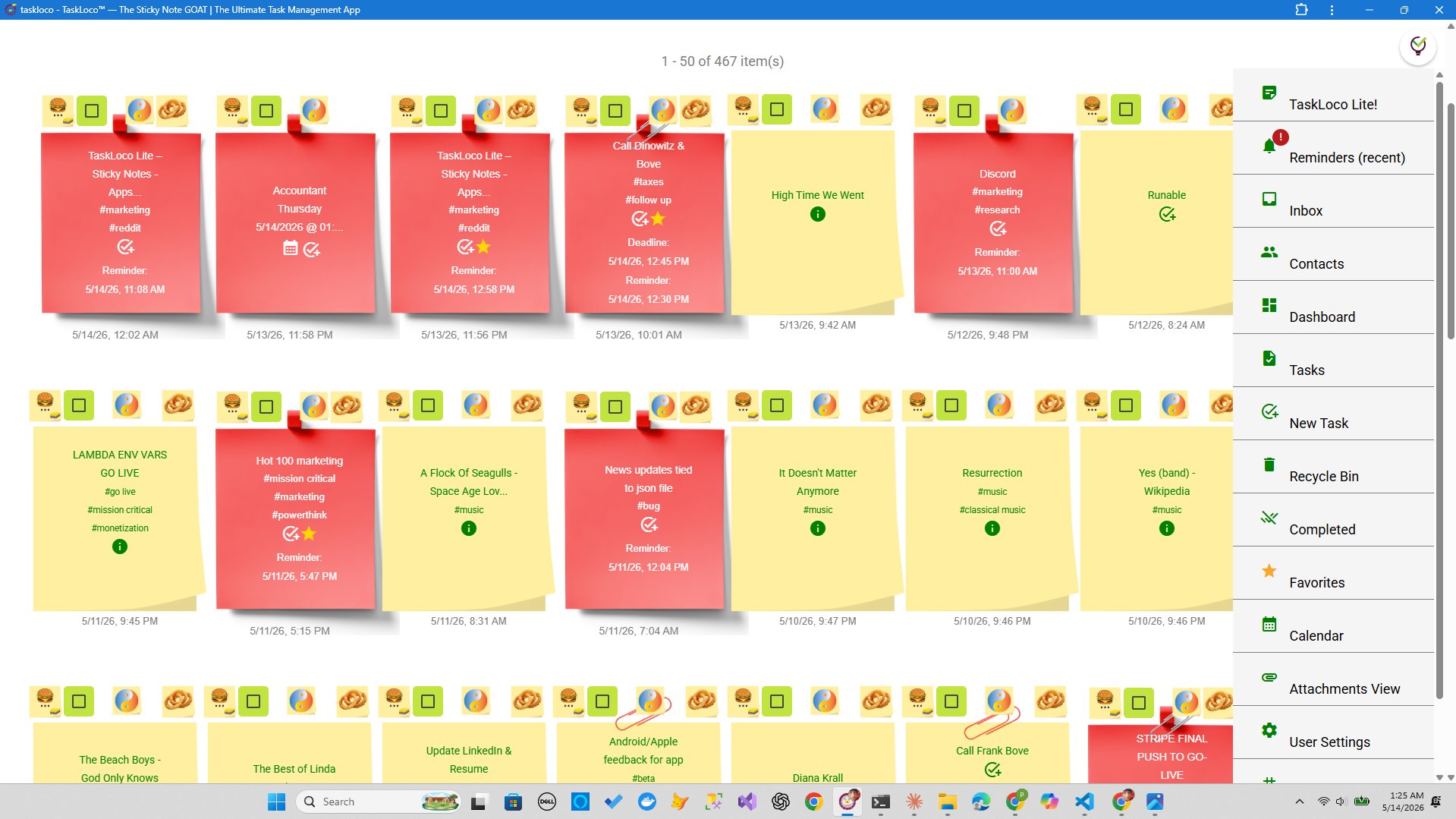
Notion and Trello solve completely different problems. Notion builds elaborate databases, wikis, and documentation systems. Trello creates visual Kanban boards for project tracking. Neither one does what TaskLoco does — turn your screen into a digital sticky note wall.
Notion costs $10/month per user for its Plus plan. Trello charges $5/month per user for Standard features. Both require you to fit your workflow into their specific structure. TaskLoco lets you organize however makes sense to you, with unlimited notes that work exactly like physical sticky notes.
TaskLoco Premium is regularly $9.99/month per person. Right now, charter members can lock in 50% off the regular price — forever. That means $4.99/month per person today. And if our price ever goes up, you still pay half. Always.
Code CHARTER50 auto-applies at checkout. First 500 spots only — once they're gone, this offer is gone permanently. Act fast while spots last.
Every Premium subscription includes unlimited notes, 10GB file storage, reminders, calendar, and team sharing. Each team member requires a separate subscription. 7-day free trial — no charge until day 8. Cancel anytime.
Free Options: TaskLoco vs Trello and Notion
TaskLoco Lite
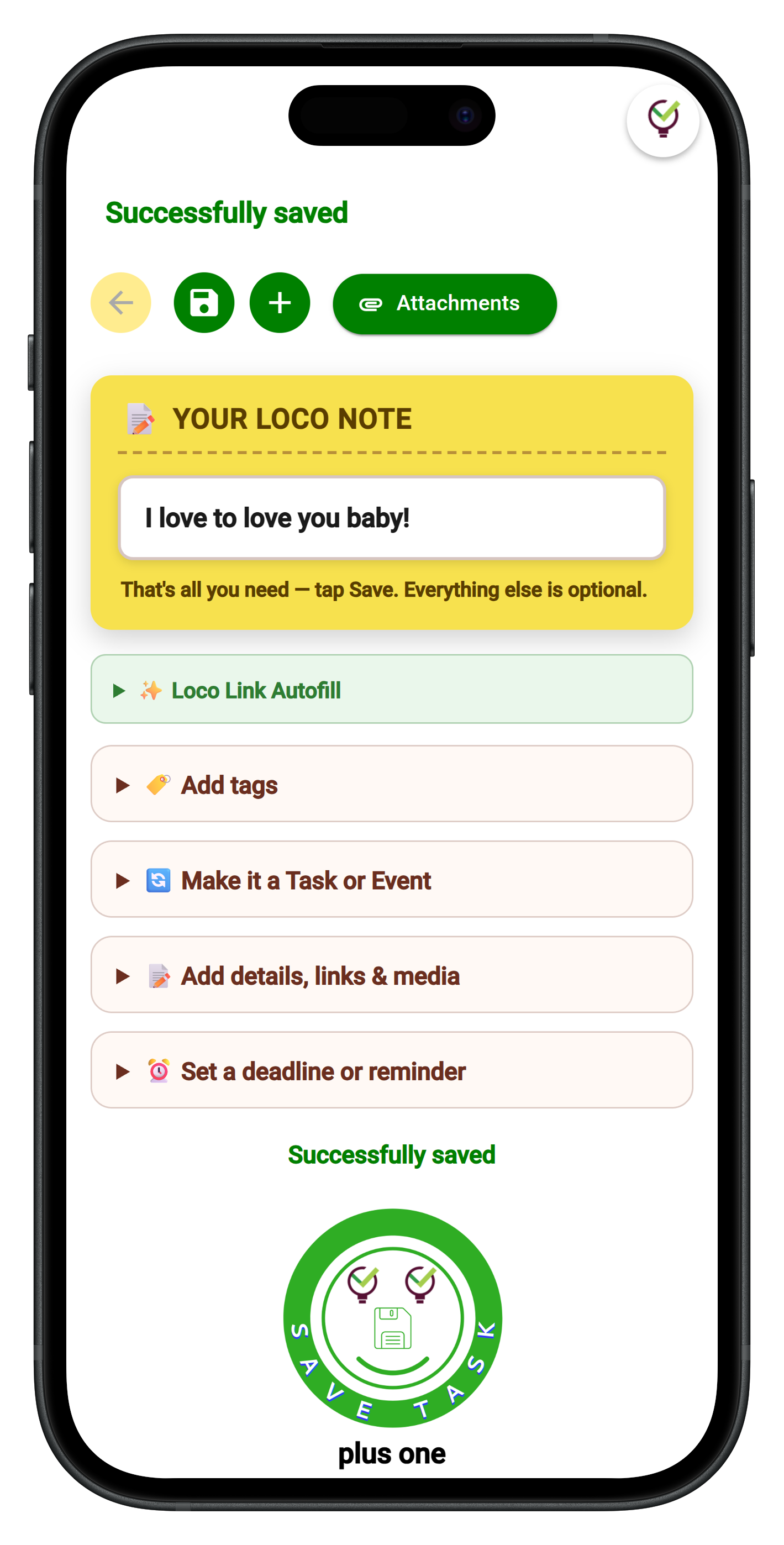
- Native iPhone & Android app
- Completely anonymous — no sign-in
- Data stays on your device
- Up to 20 notes
- Free forever
TaskLoco Lite Plus+
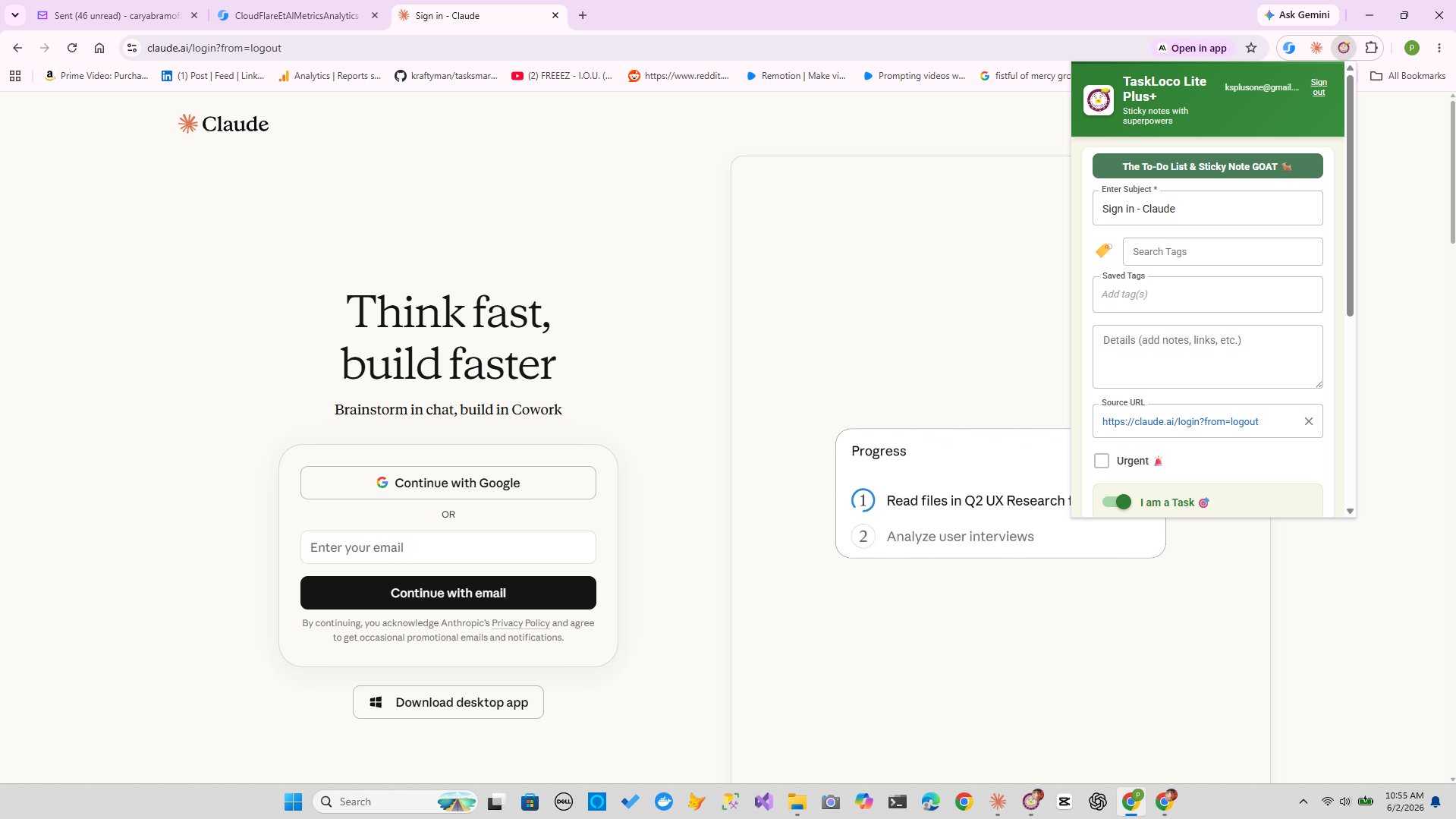
- Web app + Chrome extension
- Sign in with Google
- Wall syncs across all devices
- Up to 30 notes
- Free forever
The Core Difference: Structure vs Freedom
Notion forces everything into databases, pages, and blocks. You build elaborate systems with relations, formulas, and templates. It's powerful but requires significant setup time and ongoing maintenance. Teams often spend weeks building their perfect workspace, then months tweaking it.
Trello locks you into the Kanban board format. Cards move through columns from 'To Do' to 'Done.' It works great for linear workflows but breaks down when you need flexibility. Adding a simple reminder requires upgrading to Power-Ups.
TaskLoco takes the opposite approach. Create notes anywhere on your screen. No columns, no databases, no forced structure. Just like physical sticky notes on a wall. Need a reminder? Click and set one. Need to attach a file? Drag and drop. Need to share with your team? One click enables sharing.
File Storage and Attachments
Notion includes file storage in all paid plans, but you're limited by their block-based system. Every file becomes a block in a page or database. You can't just attach a quick photo to a simple note — you need to create a page structure around it.
Trello requires Power-Ups for meaningful file attachments. The free version only allows 10MB attachments. Standard plan gives you 250MB per file but costs $5/month per user.
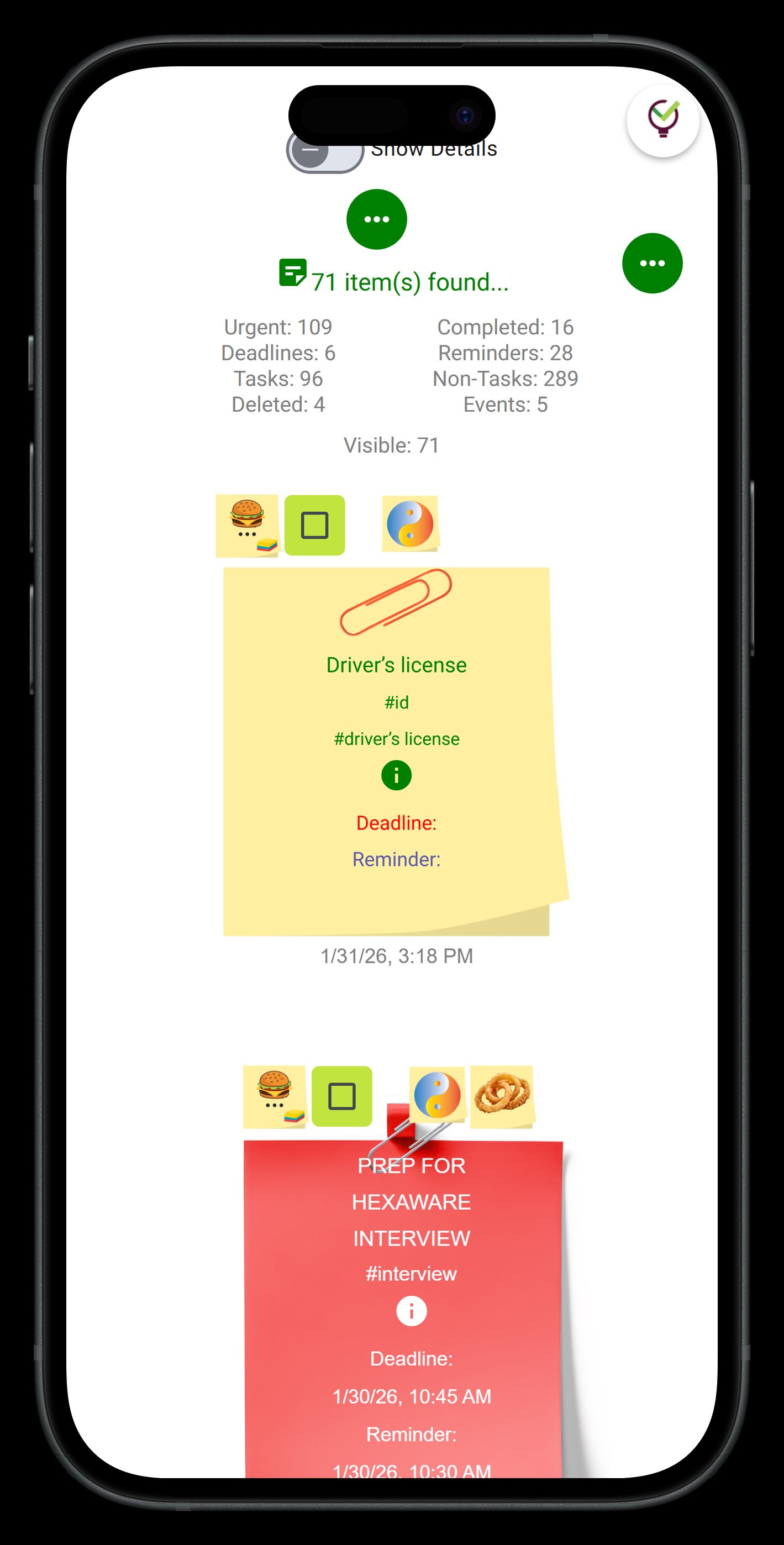
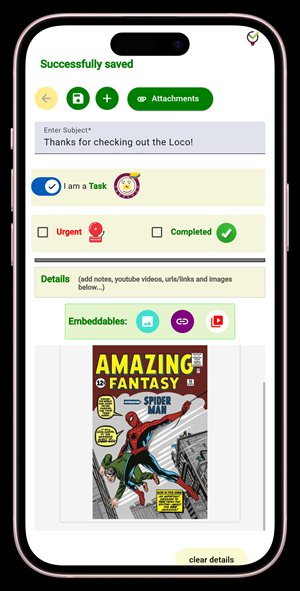
TaskLoco includes 10GB of file storage with Premium. Drag any file directly onto a note — photos, PDFs, documents, whatever. No Power-Ups needed. No block structures required. Files live with the note that needs them.
Team Collaboration Reality
Notion collaboration happens inside their workspace structure. Team members edit databases, comment on pages, and navigate through hierarchical information. New team members need training on your specific Notion setup. Everyone must learn your custom database schemas and page templates.
Trello collaboration centers on board permissions and card assignments. Team members get assigned to cards, leave comments, and move items through workflows. Simple to understand but limited to the board metaphor.
TaskLoco team sharing works like handing someone a sticky note. Share individual notes or entire walls. Team members see updates in real-time. No training required — if they understand sticky notes, they understand TaskLoco. Email notifications keep everyone informed without overwhelming inboxes.
Pricing and Value Comparison
Notion Personal Pro costs $4/month for individuals, but teams need the Team plan at $8/month per user. The Plus plan runs $10/month per user for advanced features like unlimited file uploads and 30-day page history.
Trello Standard costs $5/month per user and includes calendar view, unlimited Power-Ups, and larger attachments. Premium jumps to $10/month per user for timeline view, dashboard view, and advanced checklists.
$9.99/month per person (currently $4.99/month per person for first 500 charter members with code CHARTER50)
The Honest Comparison
| Feature | TaskLoco | Trello and Notion |
|---|---|---|
| Free tier | Two free tiers — Lite (20 notes, offline) and Lite Plus+ (30 notes, synced) FREE | Notion: Personal plan for individuals only. Trello: 10 boards with basic features |
| Core approach | Sticky notes placed anywhere on screen — complete freedom | Notion: Database/page structure. Trello: Kanban boards only |
| File attachments | 10GB included with Premium — drag and drop to any note | Notion: Included in paid plans but within page blocks. Trello: Power-Up required |
| Reminders | Built-in with Premium — click and set | Notion: No native reminders. Trello: Butler automation required |
| Offline access | TaskLoco Lite works completely offline — no account needed FREE | Notion: Limited offline. Trello: No offline access |
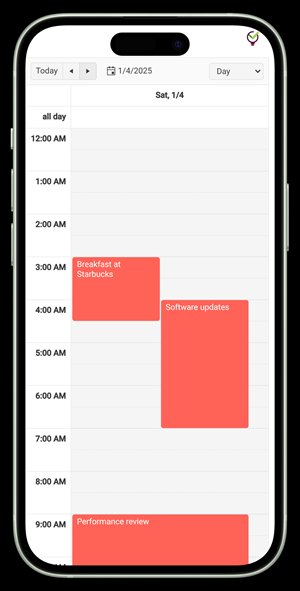
| Calendar view | Built-in calendar with Premium | Notion: Database calendar views. Trello: Calendar Power-Up |
| Database functionality | None — focuses on simple notes | Notion: Advanced databases with relations. Trello: Basic card properties |
| Templates | No templates — create notes from scratch | Notion: Extensive template library. Trello: Board templates |
| Search | Full-text search across all notes and attachments | Notion: Powerful search with filters. Trello: Basic card search |
| Mobile apps | Native iPhone and Android apps FREE | Notion: Mobile apps available. Trello: Mobile apps available |
| Learning curve | Instant — everyone knows sticky notes | Notion: Steep learning curve. Trello: Easy Kanban concept |
| Team permissions | Simple sharing — individual notes or entire walls | Notion: Granular page/database permissions. Trello: Board-level permissions |
| Project dependencies | None — notes are independent | Notion: Relations between database items. Trello: No dependencies |
| Workflow automation | No automation — manual organization | Notion: No built-in automation. Trello: Butler automation included |
| API access | No public API | Notion: Full API available. Trello: REST API available |
| Web clipper | Chrome extension — one-click capture to notes FREE | Notion: Web clipper available. Trello: No web clipper |
| Pricing transparency | Single per-person price with charter discount | Notion: Multiple tiers $4-15/user. Trello: $5-10/user |
| Setup time | Zero setup — start creating notes immediately | Notion: Significant setup for databases. Trello: Quick board setup |
Who Should Use Each
Use TaskLoco if…
- You want the simplicity of sticky notes without giving up digital features like reminders and file attachments
- Your team needs to collaborate without learning complex database structures or board methodologies
- You prefer organizing information spatially rather than in rigid hierarchies or columns
- You need offline access for basic note-taking when internet isn't available
- You want one simple pricing tier instead of navigating multiple subscription levels
Use Trello and Notion if…
- You need to build complex databases with relationships, formulas, and custom properties (choose Notion)
- Your workflow fits perfectly into the Kanban board methodology (choose Trello)
- You're building a company wiki or knowledge base with extensive documentation (choose Notion)
- You need advanced automation and Power-Ups for specialized workflows (choose Trello)
- Your team requires API integrations with other business tools (choose either Notion or Trello)
Lock In 50% Off — Forever
7-day free trial. No charge until day 8. CHARTER50 auto-applies at checkout.
🔒 Lock In My Charter SpotSee TaskLoco in Action
Frequently Asked Questions
Is TaskLoco cheaper than Notion and Trello?
$9.99/month per person (currently $4.99/month per person for first 500 charter members with code CHARTER50)
Can TaskLoco replace Notion for project management?
TaskLoco works differently than Notion. While Notion builds structured databases and pages, TaskLoco provides a flexible sticky note wall. If your projects need database relationships and complex templates, . If you prefer spatial organization with simple notes, reminders, and file attachments, TaskLoco offers a refreshing alternative.
Does TaskLoco have Kanban boards like Trello?
No. TaskLoco doesn't force you into board columns or card structures. Instead, you arrange notes anywhere on your screen like physical sticky notes. This gives you more flexibility than Kanban boards but requires you to create your own organizational system.
Can I import my data from Notion or Trello to TaskLoco?
TaskLoco doesn't offer direct import from Notion or Trello. You'll need to manually recreate important notes, but this often helps you eliminate unnecessary complexity that built up in your old system. The fresh start can be liberating.
Does TaskLoco work offline like Notion?
Yes, but differently. TaskLoco Lite works completely offline with no account required — perfect for basic note-taking when you have no internet. TaskLoco Premium requires internet for syncing and team features. Notion offers limited offline access to previously loaded content.
Which is better for team collaboration?
Depends on your team's working style. Notion excels at structured collaboration through databases and pages. Trello works well for teams that think in terms of workflows and boards. TaskLoco offers the simplest collaboration — sharing notes is as easy as handing someone a physical sticky note.
Can TaskLoco handle large teams like Notion and Trello?
TaskLoco works for any team size, but each person needs their own subscription. Notion and Trello offer similar per-user pricing. The difference is approach: TaskLoco's spatial organization works well for teams that prefer flexible, visual organization over structured databases or board workflows.
Born in Brooklyn. Powered by AWS. Your data stays yours.
TaskLoco is available on iPhone, Android, Chrome, and every web browser.