You took the notes. You know they exist. But come exam week, you're spelunking through a graveyard of "Lecture 4 FINAL v2" Word docs and half-finished Google Docs that haven't been opened since October. The problem isn't discipline — it's structure. Most note-taking advice skips the most important part: the retrieval system matters more than the capture system.
Organizing lecture notes isn't about finding the perfect app. It's about building a habit light enough to actually stick, and a structure visual enough that you always know where something lives. This guide breaks down what actually matters when choosing a system, then shows you exactly how TaskLoco's sticky-note approach solves the retrieval problem that kills every other method.
What to Look for in a Lecture Note System
Before you pick a tool, get clear on what actually makes a note system work for students. Most people focus on the capture side — how fast they can get ideas down — but the retrieval side is where systems live or die. A note you can't find in 30 seconds is a note that doesn't exist come finals week.
There are three criteria that actually matter:
- Visual organization at a glance. You should be able to see every class, topic, or project without clicking into nested folders. If your system requires you to remember the folder path, it will break down the moment life gets busy.
- Full-text search that actually works. Tags help, folders help, but nothing replaces the ability to type one word and find every note that contains it — across every class, every semester. This alone eliminates most paper and folder-based systems.
- Low friction to add a note. If creating a new note takes more than two taps or clicks, you will stop using the system mid-semester. Capture has to feel as fast as scribbling on paper.
Secondary criteria worth considering: the ability to attach files (lecture slides, syllabi, photos of whiteboards), reminder functionality so deadlines don't get buried inside a note you never reopen, and cross-device sync so your notes are on your laptop in class and on your phone on the bus home.
The Sticky-Note Wall: Why It Works for Lecture Notes
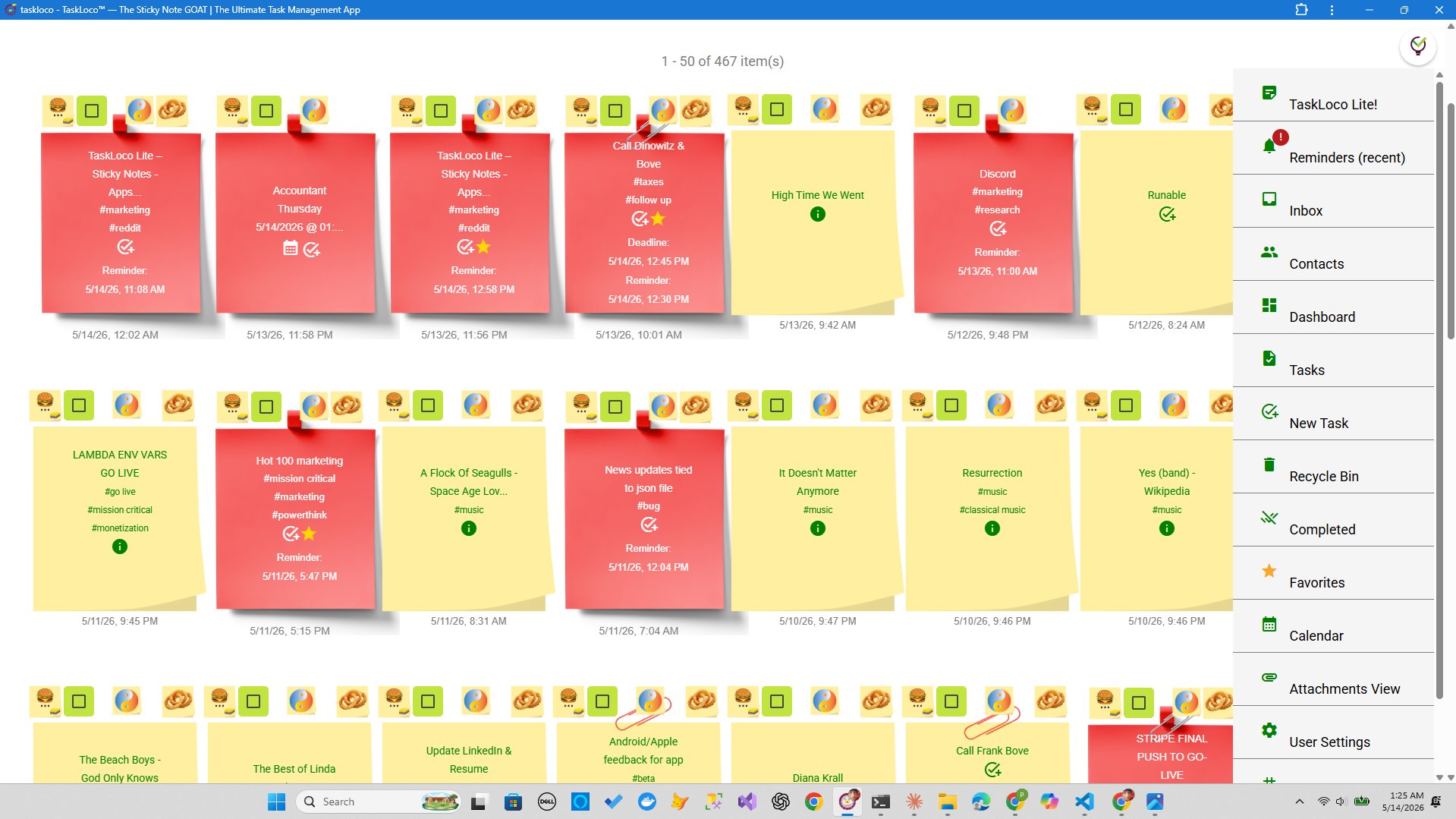
Sticky notes have worked for decades not because they're simple, but because they're spatial. When every note lives on a visible wall, your brain builds a mental map — that assignment lives in the top-left cluster, those bio lecture notes are mid-wall. You don't have to remember; you recognize. Digital folder trees destroy that spatial awareness and replace it with a memory problem.
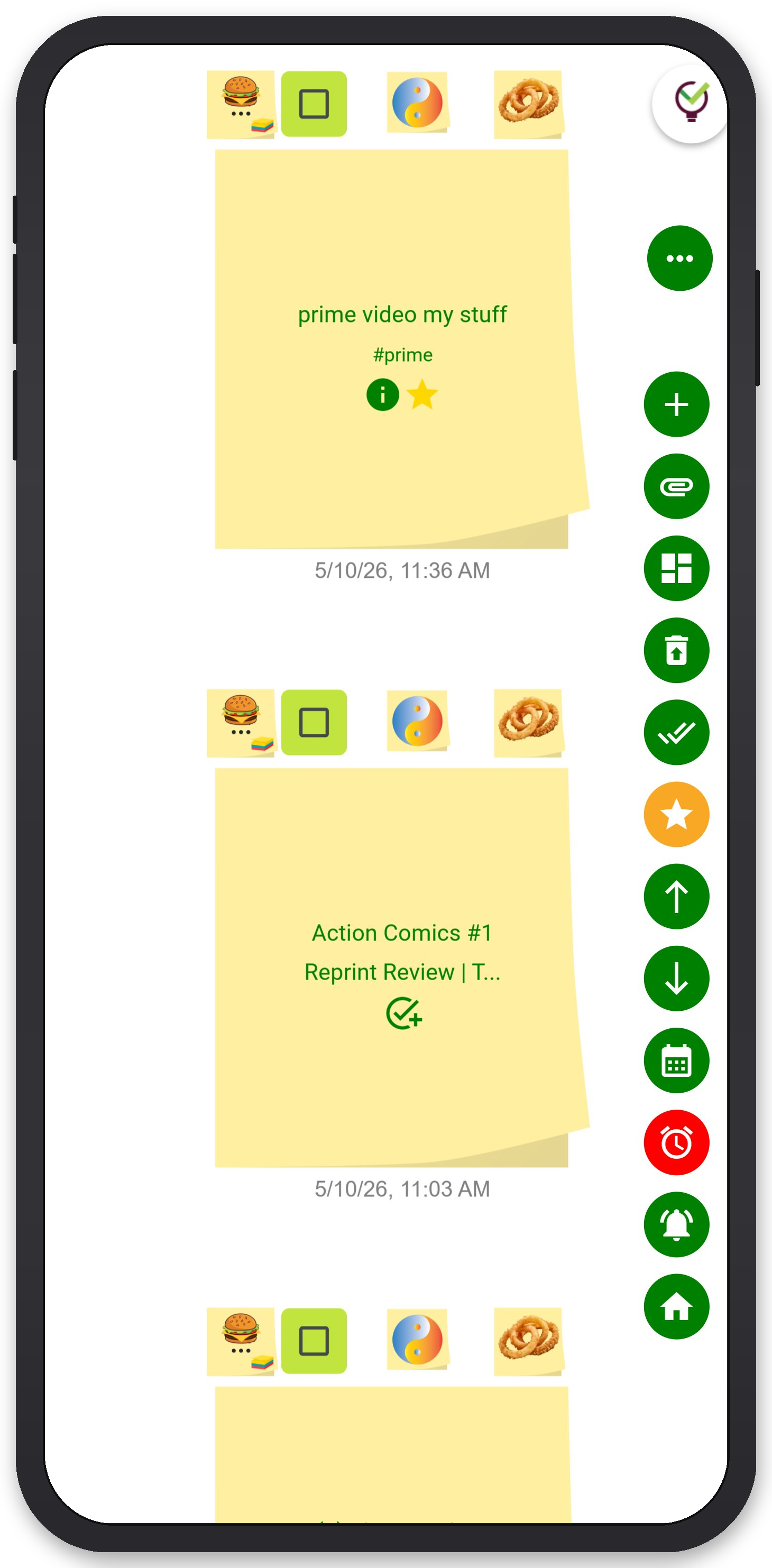
TaskLoco is built around exactly this idea. Your notes live on a wall you can see all at once. Each class gets its own cluster. Each lecture gets its own note. Color-coding by subject takes ten seconds to set up and makes the whole wall scannable in an instant. If you took notes on Thursday's organic chemistry lecture, you scroll to the chemistry section and it's right there — not buried inside Chemistry > Fall Semester > Week 9 > Thursday.
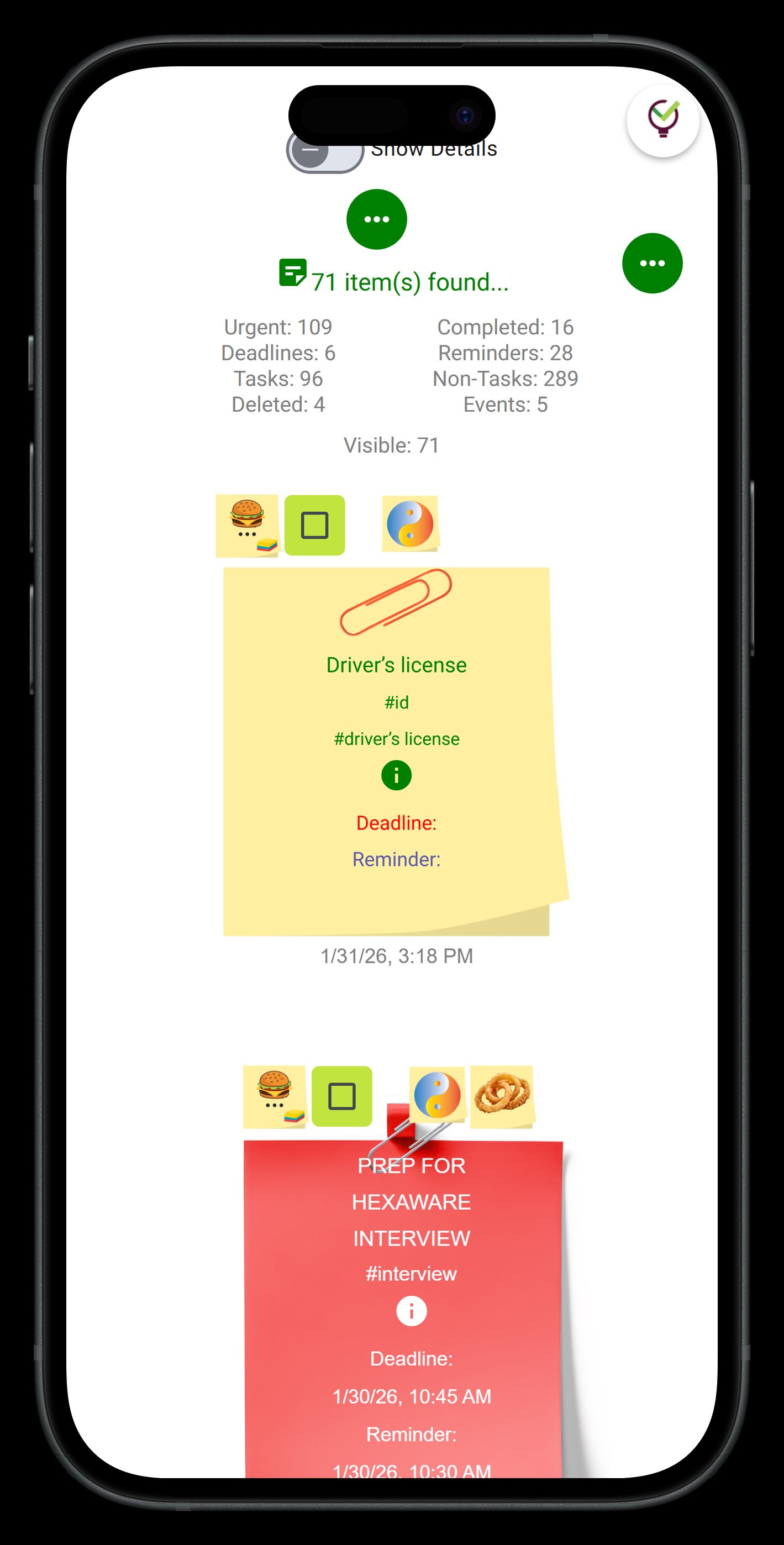
The quick-look feature lets you peek at the contents of any note without opening it fully, so you can find the right one even when you only half-remember what you titled it. And TaskLoco's full-text search runs across everything — note titles, body text, and file attachments — so typing "Krebs cycle" finds every note that mentions it regardless of which class or week it came from.
Attachments, Reminders, and the Deadline Problem
Lecture notes don't exist in isolation. They come with syllabi, assignment sheets, photos of whiteboards, and PDF readings. A note system that can't hold these files forces you to maintain two parallel systems — notes in one place, files in another — and that split is where things get lost.
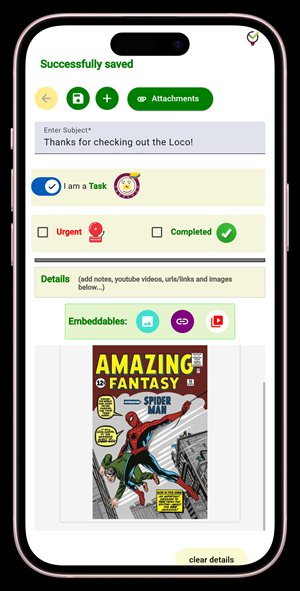
TaskLoco Premium includes 10GB of file storage, so you can attach the actual lecture slide deck, a photo of the whiteboard diagram you photographed, or the rubric for the paper right inside the note where it belongs. When you're reviewing for an exam, everything is in one place. No switching between apps, no hunting through Downloads.
The other place lecture notes break down: deadlines buried inside them. You take a note on Monday's lecture, the professor mentions the paper is due in two weeks, and that information disappears into the note never to be seen again until the night before. TaskLoco's reminder system solves this directly — set a reminder on any note and it fires as a push notification to your phone and computer, with a deep link that takes you straight back to that exact note. Optional email notifications are also available, and SMS is an add-on if you want a belt-and-suspenders backup for high-stakes deadlines.
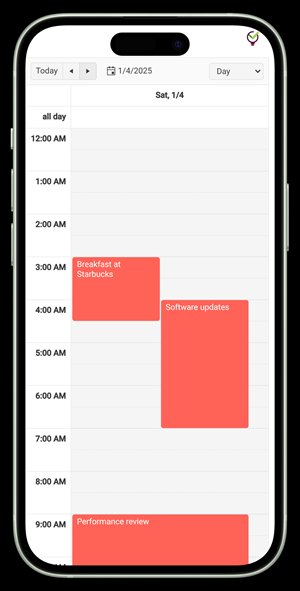
The calendar view in TaskLoco Premium lets you see every reminder-linked note plotted against your actual schedule, so you can see at a glance whether Tuesday is manageable or a disaster waiting to happen.
Capture on Any Device — Including One-Click from the Web
Half of research for papers and projects happens in a browser. A professor posts a reading on the course portal. You find a relevant journal abstract. You want to clip a section of a Wikipedia article to review later. If your note system doesn't reach into the browser, you're back to copy-pasting into a document and losing context around where it came from.
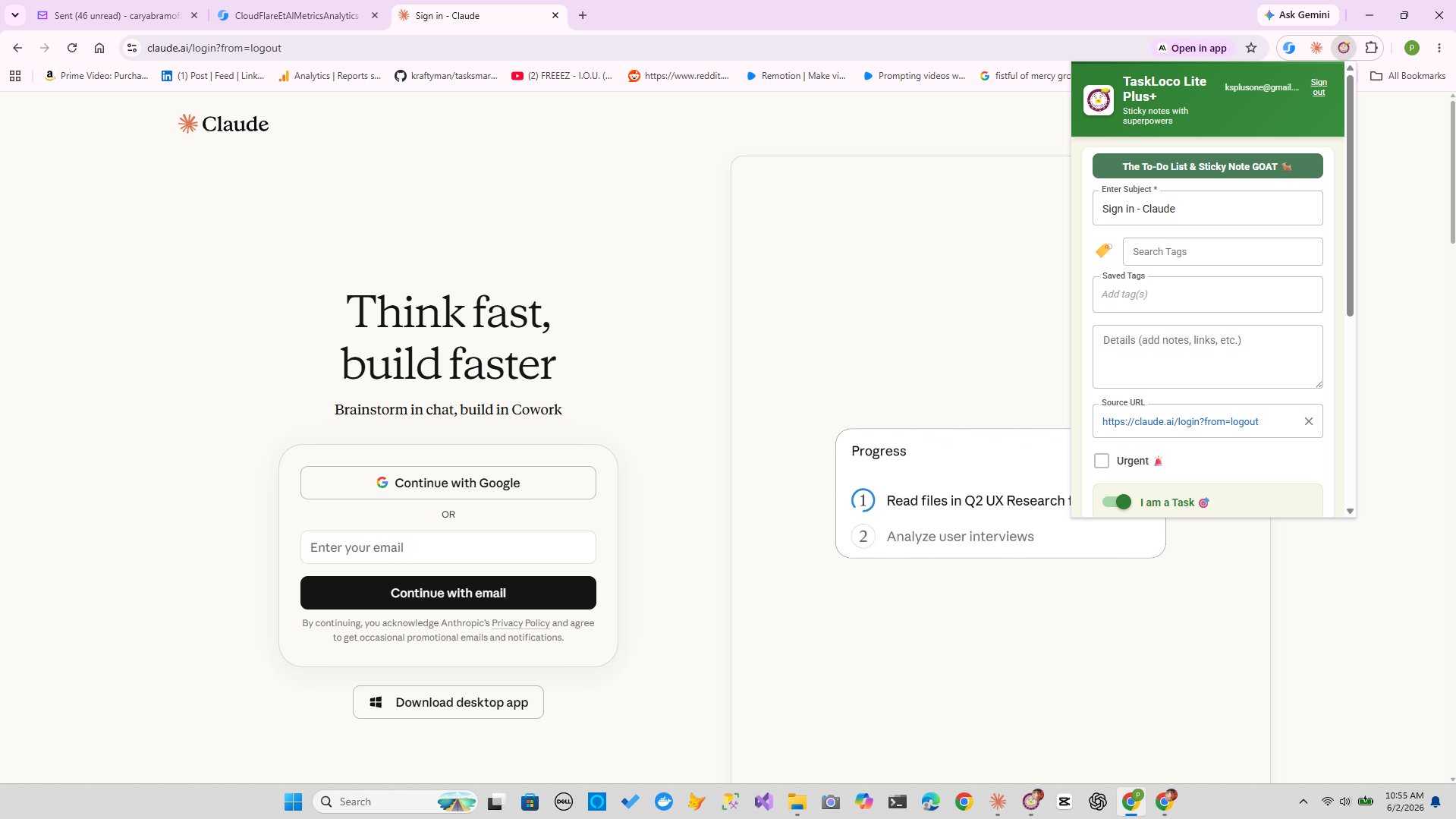
TaskLoco's Chrome extension captures any webpage in a single click and drops it into your note wall as a new note, with the source URL preserved. Research stays connected to its source. You can add your own annotations before saving, or just clip it and tag it for later. For anyone doing paper research across multiple browser tabs, this alone saves a significant amount of the friction that makes research feel exhausting.
TaskLoco Lite Plus+ and Premium sync across all your devices in real time, so notes you create on your laptop in class are immediately available on your phone. There's also a free tier to start with: TaskLoco Lite is a native iPhone and Android app — completely anonymous, no sign-in required — that stores up to 20 notes on your device. It's a genuine no-commitment way to get a feel for the sticky-note workflow before you commit to anything.
TaskLoco Premium is regularly $9.99/month per person. Right now, charter members can lock in 50% off the regular price — forever. That means $4.99/month per person today. And if our price ever goes up, you still pay half. Always.
Code CHARTER50 auto-applies at checkout. First 500 spots only — once they're gone, this offer is gone permanently. Act fast while spots last.
Every Premium subscription includes unlimited notes, 10GB file storage, reminders, calendar, and team sharing. Each team member requires a separate subscription. 7-day free trial — no charge until day 8. Cancel anytime.
Free Options: TaskLoco
TaskLoco Lite
- Native iPhone & Android app
- Completely anonymous — no sign-in
- Data stays on your device
- Up to 20 notes
- Free forever
TaskLoco Lite Plus+
- Web app + Chrome extension
- Sign in with Google
- Wall syncs across all devices
- Up to 30 notes
- Free forever
Lock In 50% Off — Forever
7-day free trial. No charge until day 8. CHARTER50 auto-applies at checkout.
🔒 Lock In My Charter SpotSee TaskLoco in Action
Frequently Asked Questions
What's the best way to organize lecture notes by subject?
Group notes spatially on a visual wall rather than in nested folders. In TaskLoco, you assign each subject a color and cluster those notes together on the wall. You can see every class at once without clicking into anything — and when you need a specific note, full-text search finds it by content, not by what you named it.
How do I make sure I don't miss assignment deadlines buried in my notes?
Set a reminder directly on the note where the deadline lives. TaskLoco delivers reminders as push notifications to your phone and computer, with a deep link that opens that exact note. Optional email and SMS notifications are also available as backups. The calendar view in Premium shows all your reminder-linked notes plotted by date so you can see your week at a glance.
Can I attach lecture slides and syllabi to my notes?
Yes — TaskLoco Premium includes 10GB of file storage. You can attach PDFs, images, slide decks, and other files directly inside any note. That means your notes, the relevant slides, and the assignment rubric all live in the same place instead of scattered across Downloads folders and email attachments.
Is there a free way to try TaskLoco before paying?
Yes. TaskLoco Lite is a free native app for iPhone and Android — no sign-in, completely anonymous, stores up to 20 notes on your device. TaskLoco Lite Plus+ is also free and syncs up to 30 notes across all your devices using your Google account. Premium adds reminders, file attachments, unlimited notes, calendar view, and team sharing. $9.99/month per person (currently $4.99/month per person for first 500 charter members with code CHARTER50)
How do I capture research from the web into my notes?
Install the free TaskLoco Chrome extension. One click on any page saves it as a note with the source URL preserved. You can add annotations before saving or just clip it and sort it later. It's the fastest way to keep browser research connected to the notes where it belongs.
Does TaskLoco work on my phone and laptop at the same time?
TaskLoco Lite Plus+ and Premium both sync in real time across all your devices. Notes you write on your laptop in class appear immediately on your phone. The native mobile apps (iPhone and Android) are TaskLoco Lite — the free, anonymous version with 20-note local storage. Lite Plus+ and Premium run through your phone's browser and sync fully.
How is organizing notes with sticky notes better than folders?
Folders require you to remember the path to a file — the right folder, the right subfolder, the right filename. Sticky-note walls are spatial: your brain builds a mental map of where things live and you navigate by recognition, not memory. Combined with full-text search, you find any note faster than you ever would by drilling into a folder hierarchy.
Born in Brooklyn. Powered by AWS. Your data stays yours.
TaskLoco is available on iPhone, Android, Chrome, and every web browser.