You've saved hundreds of things. Articles, ideas, tasks, links, screenshots, voice memos. You saved them in your notes app, your browser bookmarks, your camera roll, your email drafts — because in that moment, the thing mattered. Then a week passed. You forgot where you put it. Or you remembered it existed but couldn't find it. Or worst of all: you remembered it too late.
This is not a memory problem. It's a system problem. The tools most people use to save things are built for capture — not for recall. A note that sits silently in a list is not a system. A reminder that fires without context is noise. What actually works is a setup where saved information resurfaces at the right moment, in a form you can immediately act on. That's a much higher bar than most apps are designed to meet — and it's worth understanding what that bar looks like before you pick a tool.
What to Look for in a Save-and-Remember System
Before picking any tool, it helps to be clear about what a save-and-remember system actually needs to do. There are three things that matter most — and most apps only nail one or two of them.
1. Frictionless capture. If saving something takes more than two or three seconds, you won't do it consistently. The best capture systems live where you already are — in your browser, on your phone, in your clipboard flow. The moment you have to open a separate app, navigate to the right folder, and paste a link manually, you've already lost half your users. Look for a tool that meets you where you are, not one that demands a detour.
2. Contextual recall — not just storage. A filing cabinet is not a memory system. True recall means the saved item comes back to you when it's relevant, with enough context that you immediately know what to do with it. That means reminders need to link directly back to the original saved item — not just ping you with a generic alert. If you get a notification that says "check notes" and you have to hunt for what the reminder was about, the system has already failed.
3. Durability across devices. Ideas don't care what device you're on. You save something on your laptop, you need it on your phone. You capture something on your phone, you need to act on it at your desk. A save-and-remember system that lives on one device is fragile — the moment your habit changes, the system breaks. Look for real sync, not manual export.
Why Most "Save for Later" Habits Fall Apart
The browser bookmarks folder most people have is essentially a write-only system. Things go in. They rarely come out. The same is true for most notes apps used as a dump zone — a flat list of things that seemed important, now indistinguishable from each other because nothing is date-prioritized, context-tagged, or connected to any future action.
The deeper problem is the gap between capture and use. Saving and acting are two separate mental events, and most tools treat the first as the finish line. They're optimized for the dopamine hit of "I saved that." What they don't build in is any mechanism to ensure the saved thing actually affects your behavior later. That requires a different architecture entirely — one where the saved item is connected to a future moment.
Search helps, but only if you remember to search. Full-text search across your notes is genuinely useful — TaskLoco Premium includes it across all notes and file attachments — but search is a pull system. You have to know to go looking. For the things that matter most, you need a push: something that brings the saved item back to you, unprompted, at the right time.
This is why the reminder-to-note connection is so important. A reminder that deep-links back to the original note is categorically different from a generic alarm. One gives you instant context and an immediate path to action. The other just adds to the noise.
How TaskLoco Is Built for Recall, Not Just Capture
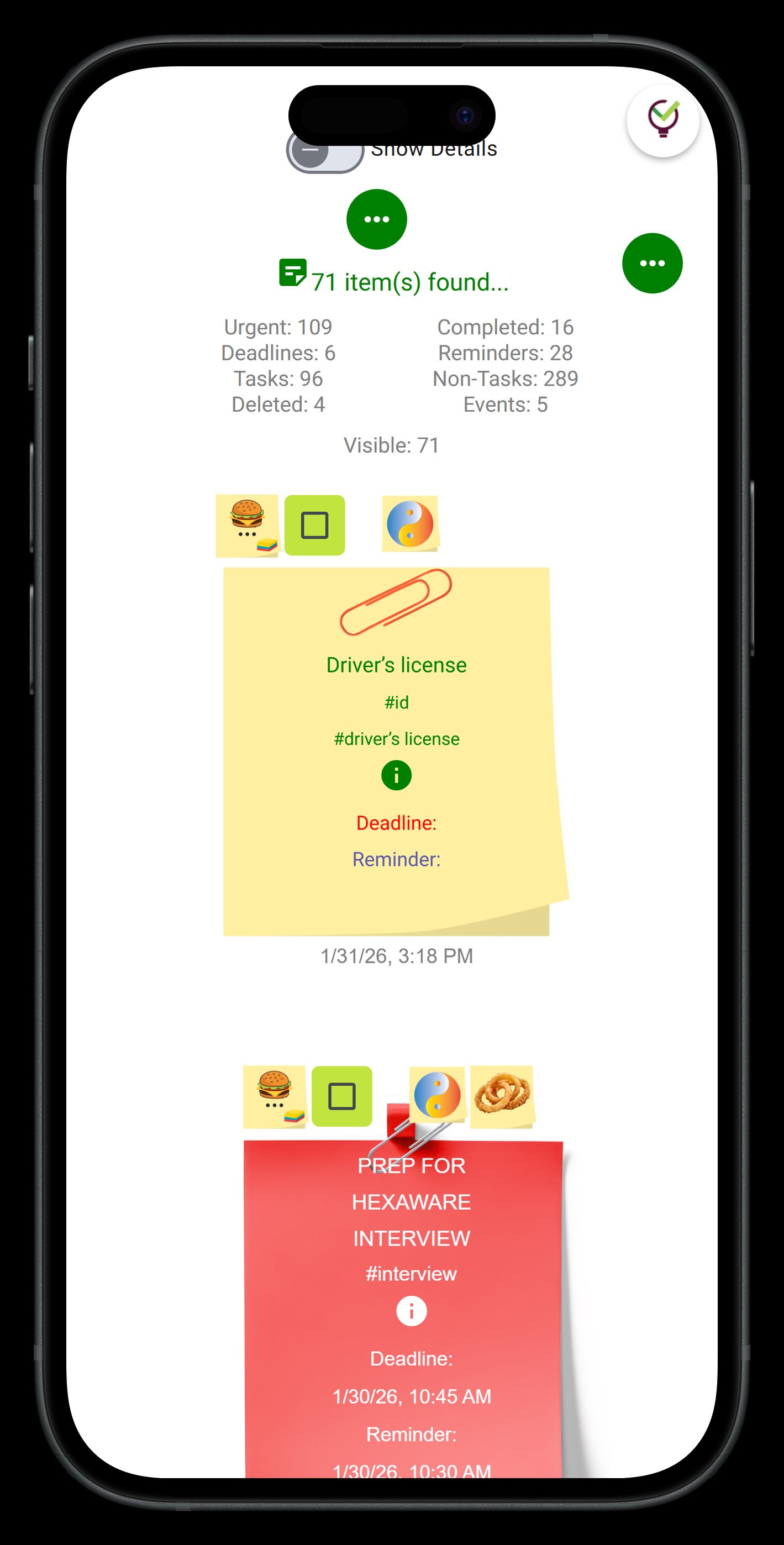
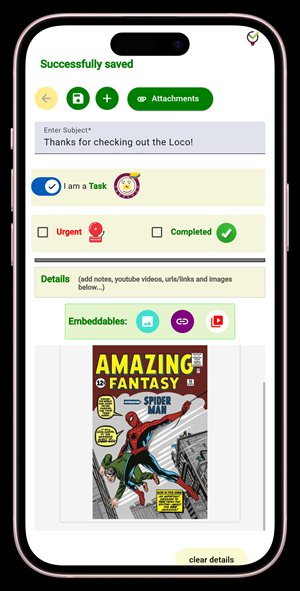
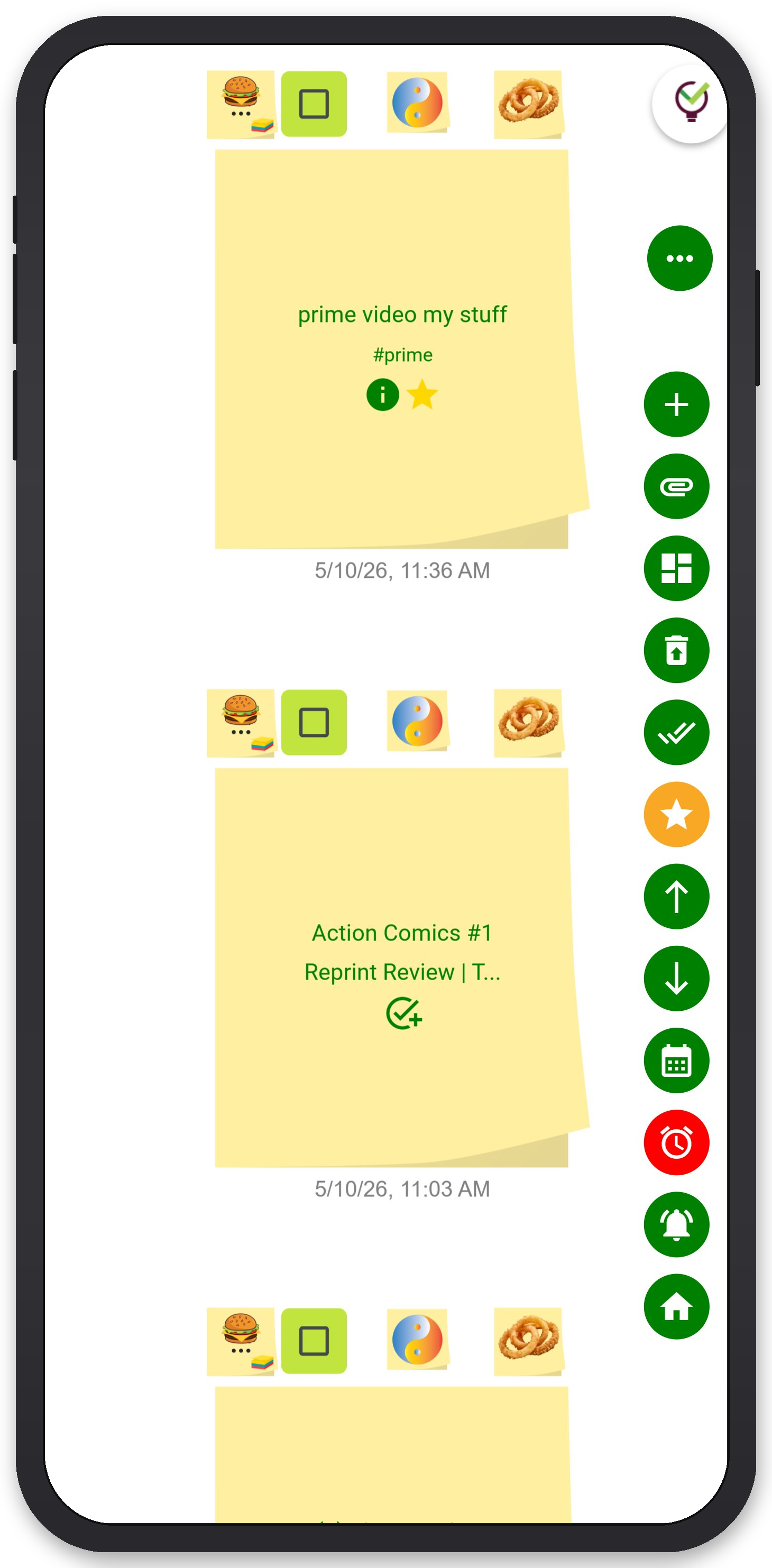
TaskLoco starts with the sticky note — the most intuitive unit of saved information there is. But unlike a physical sticky note or a passive text file, every note in TaskLoco is a live object: it can hold text, files (up to 10GB of storage with Premium), embedded photos, and a direct link to a reminder that fires as a push notification on your phone and computer.
That reminder doesn't just buzz. It deep-links back to the exact note it's attached to. You tap the notification, you're in the note. No searching, no scrolling, no "wait, what was this reminder about?" That single feature — the deep-link from push notification to note — is the difference between a system that works and one that slowly gets ignored.
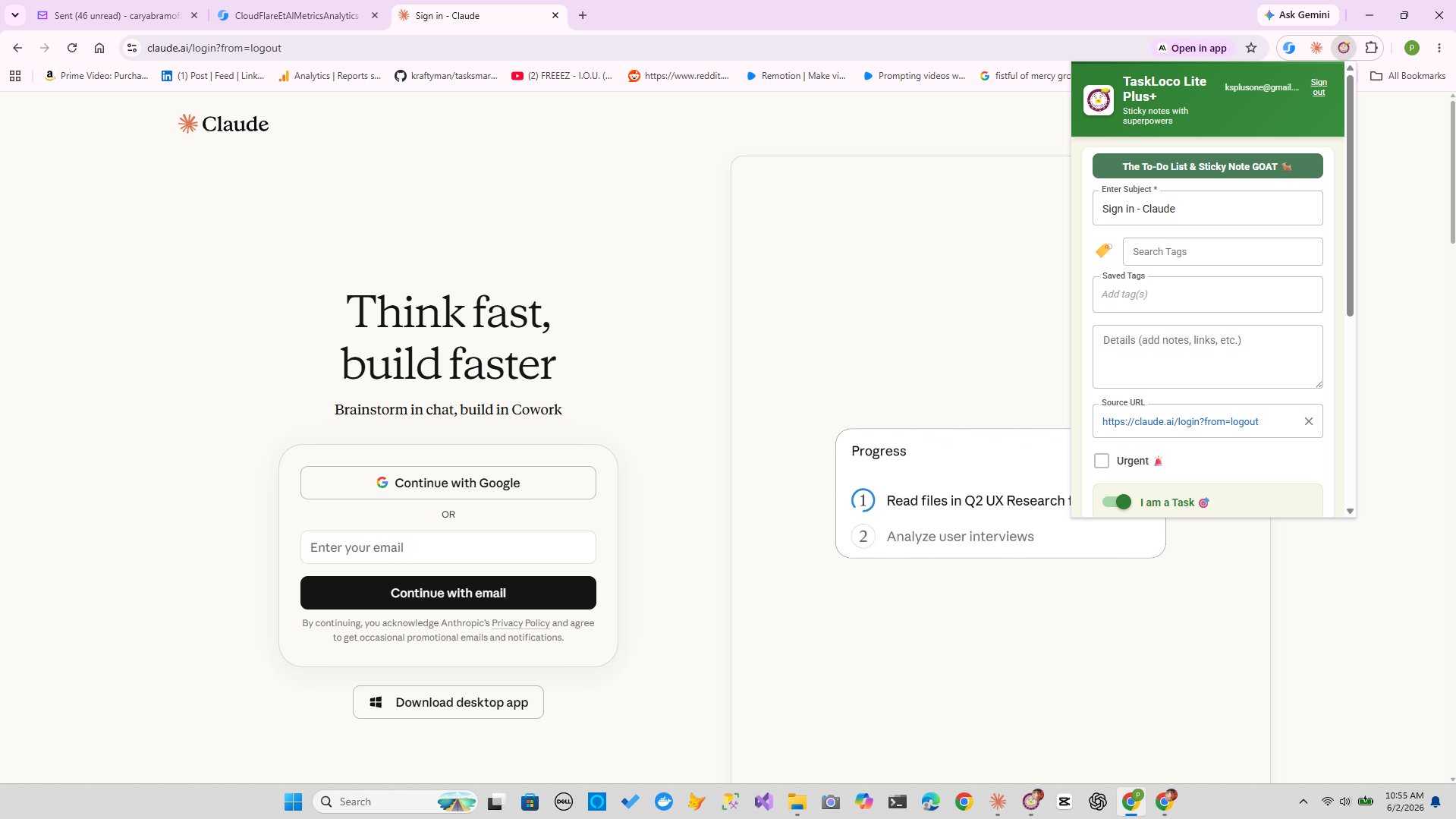
For capture, the Chrome extension is the critical piece. One click on any webpage creates a TaskLoco note containing that page — title, URL, and whatever context you add. If you've ever meant to "save this to read later" and then completely forgotten about it, the Chrome extension with a reminder attached to the resulting note is the closest thing to a working solution that actually exists.
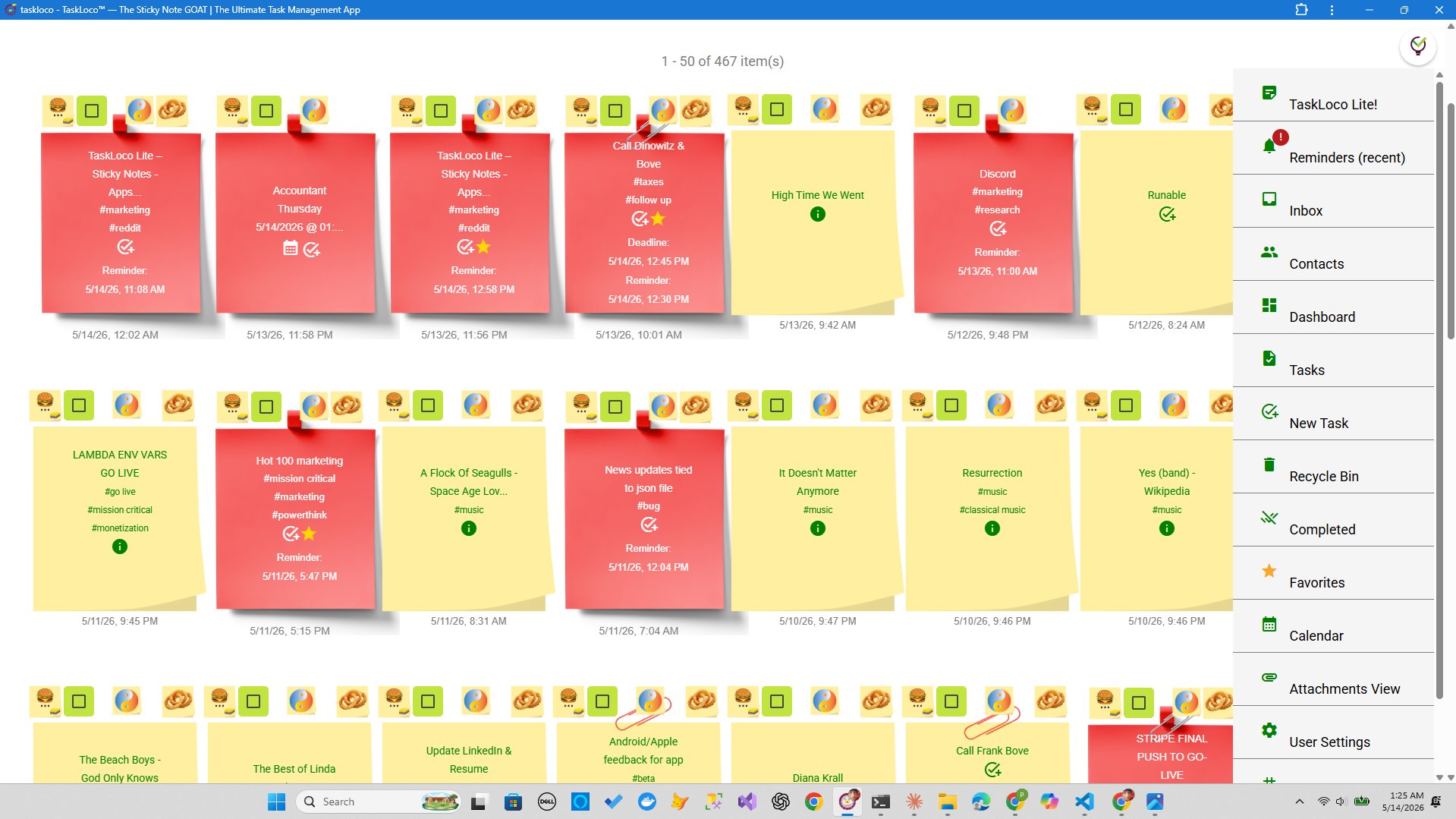
Notes sync across all your devices through the web app — open TaskLoco in any browser and your full note wall is there. The visual wall layout also matters more than it might seem: when you can see your saved notes spatially arranged rather than buried in a linear list, your brain retains a rough mental map of where things are. That spatial memory is part of why sticky notes have outlasted every productivity trend since the 1980s.
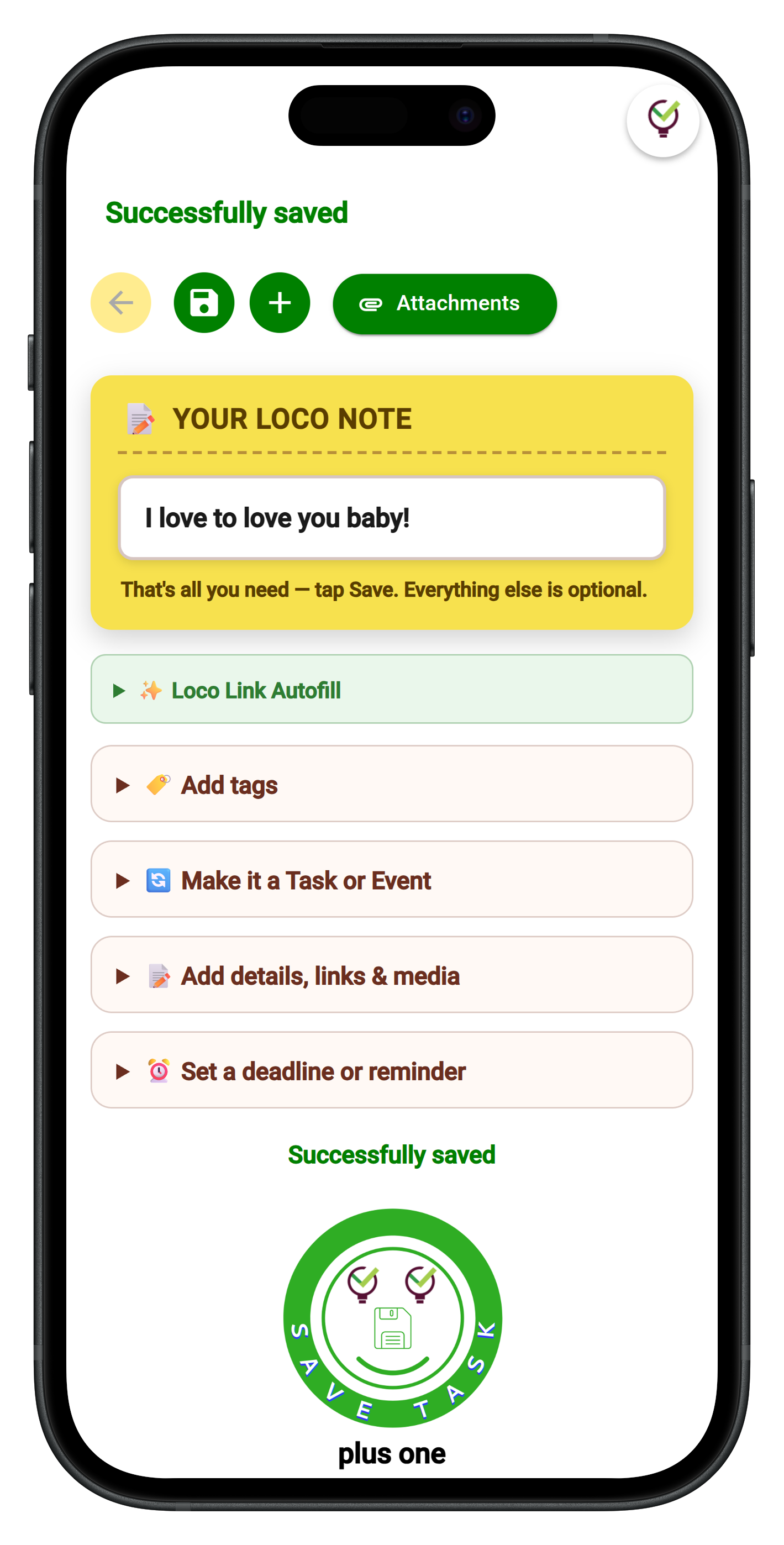
TaskLoco Lite is the native iPhone and Android app — completely anonymous, no sign-in required, stores up to 20 notes directly on your device. It's a fast, private way to capture thoughts when you're on the go, with no account or internet needed. For full recall power — reminders, cross-device sync, file attachments, unlimited notes, calendar view, and team sharing — that's TaskLoco Premium, running as a web app accessible from any browser on any device.
Building a System That Actually Sticks
The best productivity system is the one you'll maintain without thinking about it. That's a higher bar than "the most feature-rich" or "the most customizable" — it means the system has to be fast enough, simple enough, and rewarding enough to run on autopilot.
A few principles that hold regardless of which tool you use:
- Capture immediately, organize later. The worst thing you can do in the moment of saving is pause to decide where it goes. Capture first. TaskLoco's quick-add and Chrome extension are built around this — get it in, then sort it when you have a second.
- Every saved item that matters should have a reminder attached. If it genuinely matters, you should be pulled back to it. If it doesn't warrant a reminder, consider whether it's worth saving at all. Ruthless curation beats endlessly growing archives.
- Keep your note wall as a working surface, not a museum. TaskLoco's wall view is most powerful when it reflects your current priorities — not everything you've ever captured. Archive liberally. The notes you can see are the ones that stay in your mental model.
- Let the tool do the remembering. That's the whole point. You don't have to be disciplined about checking your notes if your notes come to you — via push notification, deep-linked, with full context — at the moment you set when the thing was still fresh in your mind.
Team sharing in TaskLoco Premium works the way sharing should: recipients clone the shared note and make it their own. No permission levels, no access requests, no read-only friction. Someone shares a research note with you, you get your own editable copy. That model scales naturally — whether you're sharing with one person or coordinating across a whole team, each person ends up with their own context-rich, reminder-ready copy of the original.
TaskLoco Premium is regularly $9.99/month per person. Right now, charter members can lock in 50% off the regular price — forever. That means $4.99/month per person today. And if our price ever goes up, you still pay half. Always.
Code CHARTER50 auto-applies at checkout. First 500 spots only — once they're gone, this offer is gone permanently. Act fast while spots last.
Every Premium subscription includes unlimited notes, 10GB file storage, reminders, calendar, and team sharing. Each team member requires a separate subscription. 7-day free trial — no charge until day 8. Cancel anytime.
Free Options: TaskLoco
TaskLoco Lite
- Native iPhone & Android app
- Completely anonymous — no sign-in
- Data stays on your device
- Up to 20 notes
- Free forever
TaskLoco Lite Plus+
- Web app + Chrome extension
- Sign in with Google
- Wall syncs across all devices
- Up to 30 notes
- Free forever
Lock In 50% Off — Forever
7-day free trial. No charge until day 8. CHARTER50 auto-applies at checkout.
🔒 Lock In My Charter SpotSee TaskLoco in Action
Frequently Asked Questions
Why do I keep forgetting things I've saved?
Because most save systems are built for capture, not recall. Browser bookmarks, flat note lists, and camera rolls are write-only for most people — things go in and never come back out at the right moment. The fix isn't saving more carefully. It's attaching a reminder to anything that matters, so it comes back to you with full context when you actually need it. TaskLoco does this with push notifications that deep-link directly to the original note — tap the notification, you're in the note instantly.
What's the best way to save articles and webpages so I actually read them later?
Save the page with TaskLoco's Chrome extension — one click creates a note with the title and URL. Then immediately set a reminder on that note. When the push notification fires, it opens the note directly, the link is right there, and you're reading in under two seconds. That's the loop that actually works: capture in context, resurface with context.
How does TaskLoco sync across my phone and laptop?
TaskLoco Lite Plus+ and TaskLoco Premium are web apps — open them in any browser on any device and your full note wall is there. TaskLoco Lite is the native iPhone and Android app, which stores up to 20 notes on-device only with no sync. For full cross-device sync, use Lite Plus+ (free, up to 30 notes) or Premium (unlimited notes, reminders, file attachments, calendar, and team sharing).
Is TaskLoco free to use?
Yes. TaskLoco Lite is completely free — native iPhone and Android app, no sign-in required, up to 20 notes stored on your device. TaskLoco Lite Plus+ is also free — web app and Chrome extension, sign in with Google, up to 30 notes synced across devices. TaskLoco Premium adds unlimited notes, reminders, file attachments (10GB storage), calendar view, and team sharing. $9.99/month per person (currently $4.99/month per person for first 500 charter members with code CHARTER50)
How do TaskLoco reminders work?
Reminders in TaskLoco Premium are delivered as push notifications to your phone and computer. The key detail: each reminder deep-links directly back to the note it's attached to. Tap the notification and you're in the note immediately — no hunting, no context switching. Optional email notification and optional SMS notification are also available as additional channels. Reminders are a Premium-only feature.
Can I save webpages directly into TaskLoco?
Yes — the TaskLoco Chrome extension captures any webpage in one click and creates a note from it. From there you can add text, attach files, and set a reminder so the saved page resurfaces when you actually have time to use it. The Chrome extension is free with Lite Plus+ and Premium.
Does TaskLoco work for team knowledge sharing, or just personal use?
Both. TaskLoco Premium includes full team sharing — when you share a note, recipients clone it and get their own editable copy, complete with all the content and attachments. No permissions, no access levels, no read-only friction. Each team member requires their own Premium subscription. It scales from a solo user to a large team without any change in workflow. $9.99/month per person (currently $4.99/month per person for first 500 charter members with code CHARTER50)
Born in Brooklyn. Powered by AWS. Your data stays yours.
TaskLoco is available on iPhone, Android, Chrome, and every web browser.