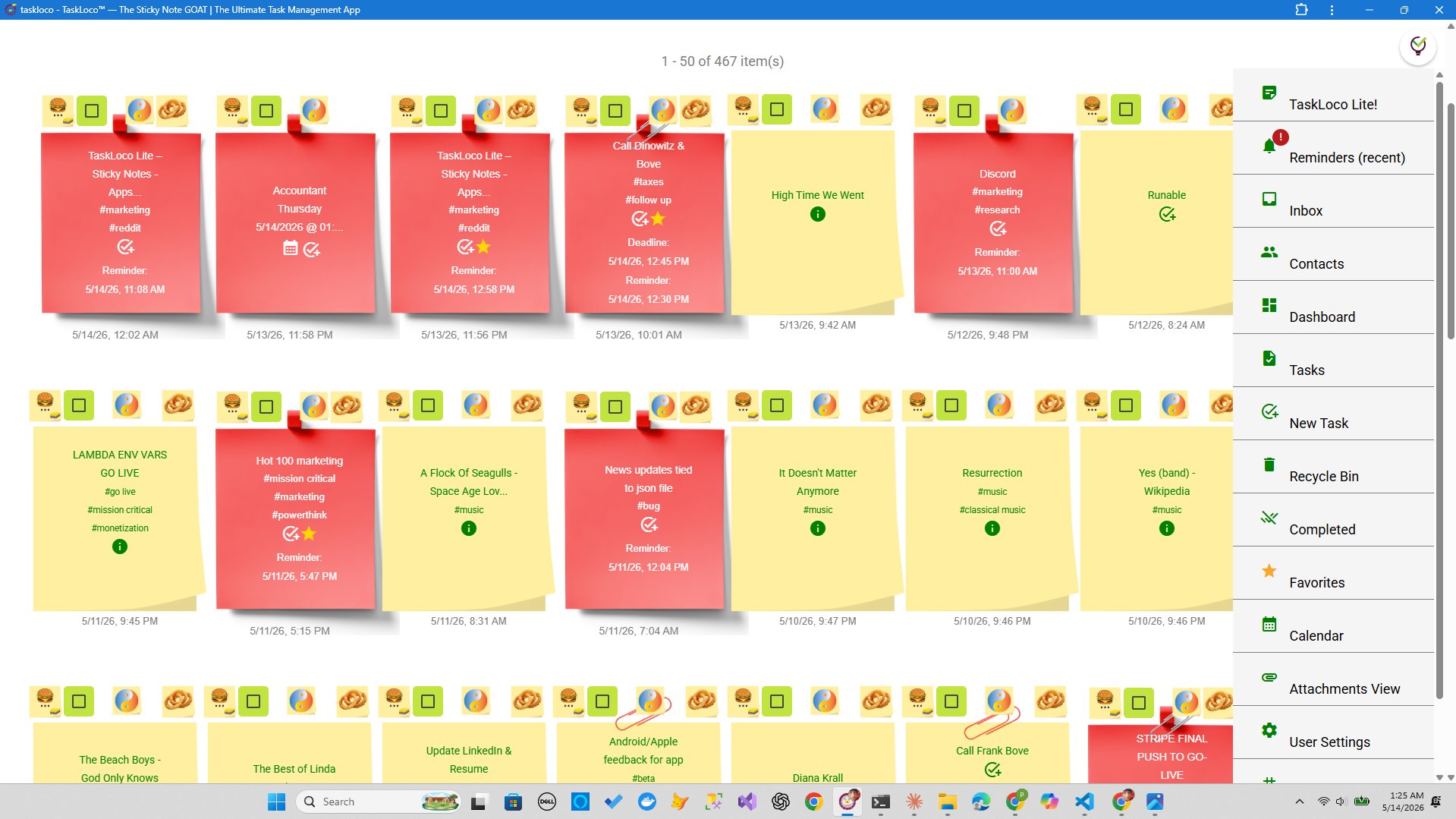
The Ivy Lee Method is one of the oldest productivity systems on record, and it still works because it does one thing lists never do: it forces a decision. Every evening you write down your six most important tasks for tomorrow, rank them in order, and work through them one at a time. No multitasking. No reshuffling mid-morning. Just six things, in a line, done in sequence.
The single failure mode of the method is the same one that kills every paper system — you write the list and then it disappears into a notebook, a notes app, or a crumpled sticky note. Putting the Ivy Lee Method on a visual wall solves that. When your six tasks are pinned in front of you — color-coded, sized by priority, rearrangeable in two seconds — the method becomes a physical presence in your day rather than a forgettable checklist.
What to look for in a visual task wall for the Ivy Lee Method
Before picking any tool, understand what the Ivy Lee Method actually demands from a wall. It is not a kanban board. It is not a project tracker. It is a daily prioritization ritual with a hard limit of six items. That constraint shapes everything about what a good implementation needs.
Strict daily limits without friction. The method's power comes from the six-task ceiling. A good visual wall should make it easy to create exactly six cards and genuinely hard to pile on a seventh. Tools that reward volume — long backlogs, unlimited swim lanes, infinite subtasks — work against the method rather than with it. Look for a tool where adding a card is fast, but where the wall itself stays deliberately minimal.
Visible priority ranking. Ranking is not optional in the Ivy Lee system — it is the whole point. Your wall needs to make the sequence obvious at a glance: card one is card one, not one of six equal tiles. Spatial position (top to bottom or left to right), numbering, or size differentiation all work. What doesn't work is a flat alphabetical or chronological list with no visual hierarchy.
End-of-day review built into the workflow. Ivy Lee requires a nightly ritual — carry unfinished tasks forward, set tomorrow's six, rank them before you close the laptop. The best tools surface this habit through reminders or a visible carryover mechanism, not just a blank canvas you have to remember to visit.
Why TaskLoco's wall view fits the Ivy Lee Method precisely
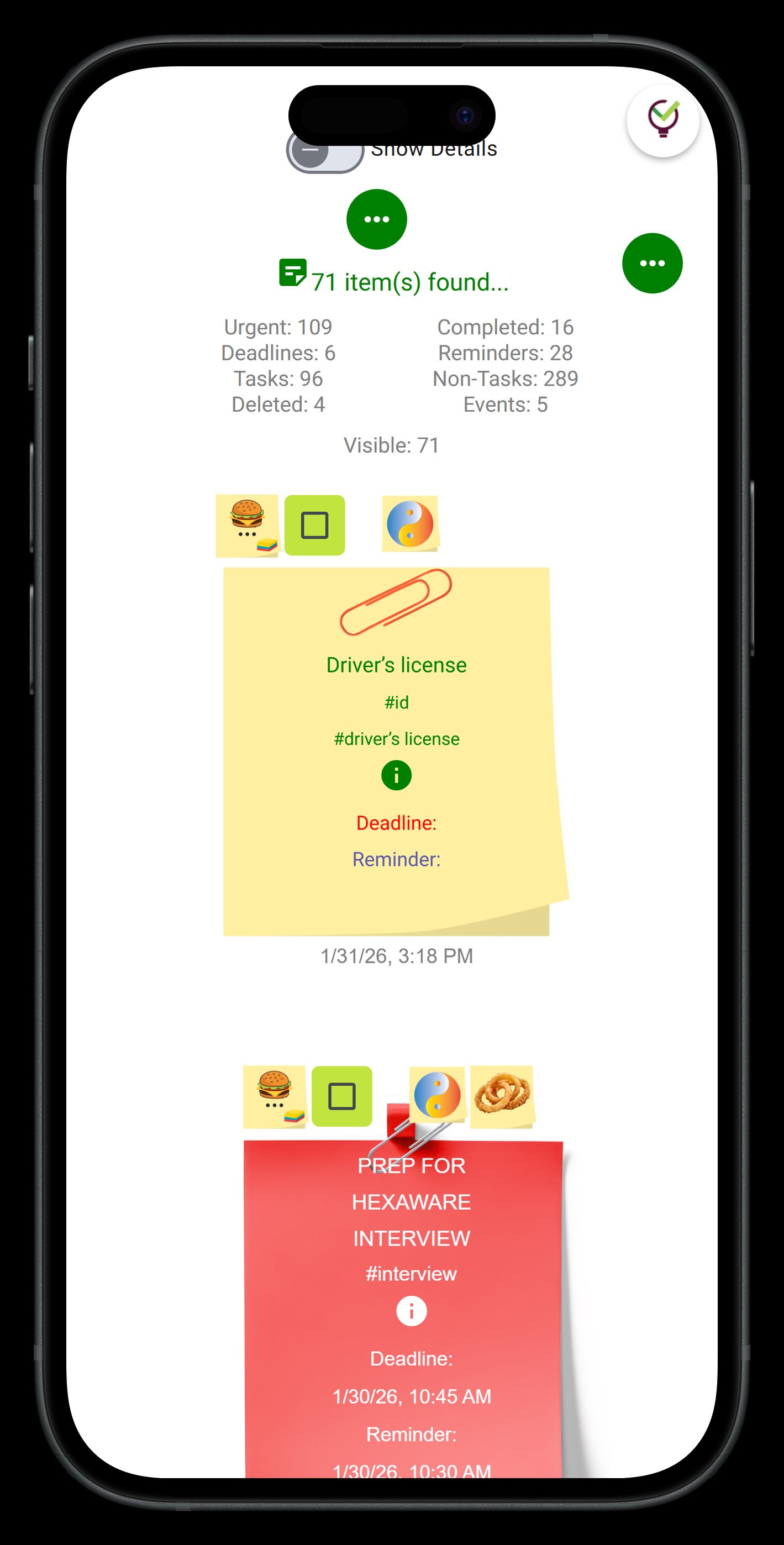
TaskLoco was built around the sticky note as the atomic unit of thought. That makes it a natural fit for a six-card Ivy Lee wall in a way that project management suites are not. There is no onboarding flow that pushes you toward epics, sprints, or dependencies. You open the wall, you place six notes, you rank them left to right or top to bottom by dragging them into position, and that is your day.
The wall is spatial, not sequential. Most task apps give you a list. TaskLoco gives you a canvas. The distinction matters for Ivy Lee because ranking by position — physically placing task one above task two — is cognitively different from typing a priority number into a field. You see the whole day in one glance, the way Ivy Lee intended when he described writing tasks on a piece of paper.
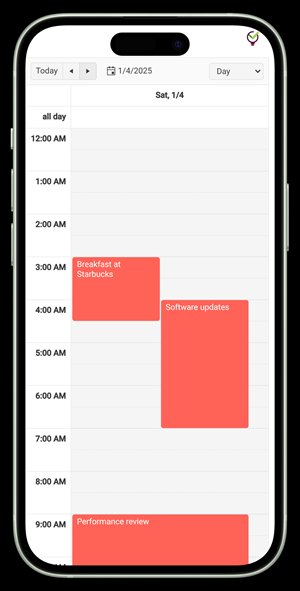
Reminders that bring you back to the note. The evening review is the hardest habit to build. TaskLoco Premium reminders are delivered as push notifications to your phone and computer, and each notification deep-links directly back to the original note — so when your end-of-day reminder fires, one tap opens tomorrow's blank wall, not the app's home screen. Optional email and SMS notification channels are available as add-ons if you want a belt-and-suspenders approach to the nightly ritual.
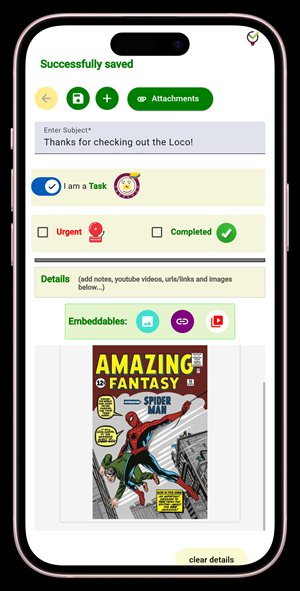
Notes that hold context. A sticky note in TaskLoco is not just a title. You can attach reference files, embed images, and write as much supporting detail as you need inside the note body. So task three on your Ivy Lee wall can hold the brief, the draft, and the related assets — all inside the card. No context switching to find the file.
Running the Ivy Lee ritual inside TaskLoco: a daily workflow
Here is the exact routine, mapped to TaskLoco's features, so you can set it up in one sitting.
Evening setup (5 minutes). Open your TaskLoco wall. Archive or mark complete anything from today. Create six new notes — one for each task you commit to tomorrow. Keep titles short: this is a sticky note, not a project document. Drag the cards into rank order. The leftmost or topmost card is task one. That is the task you open tomorrow morning before you do anything else.
Attach context before you close. If task two requires a reference document, attach it to the note now while it is fresh. TaskLoco Premium's 10GB file storage means you can drop in PDFs, images, spreadsheets — whatever the task needs — directly inside the card. Tomorrow-you will open the note and have everything in one place.
Set the morning trigger. Create a reminder on card one. It fires as a push notification at whatever time you want to start work. Tap the notification and it deep-links straight into that note. You are immediately in the context of your highest-priority task, not hunting for it.
Set the evening trigger. Create a second reminder — on any note, or a standing 'daily review' note — for the end of your workday. When it fires, you do the five-minute reset: move any unfinished task forward to a new card, build tomorrow's six, rank them, close the laptop.
Team Ivy Lee. If your team runs the method together, TaskLoco's sharing works the way email works for notes — recipients can clone a shared note and make it their own wall card. No permissions to configure, no access levels to manage. A shared morning brief or a shared reference note clones into each person's wall in one step. Each team member keeps their own independent Ivy Lee wall while staying connected to shared context.
File attachments, the Chrome extension, and capturing tasks without breaking focus
One underrated friction point in the Ivy Lee Method is the gap between where information lives and where your task card lives. You read an article that becomes tomorrow's task-three research. You receive an email that is, in fact, task one for next Monday. If capturing that context requires more than two steps, you will skip it, and your evening review will be built on memory rather than reality.
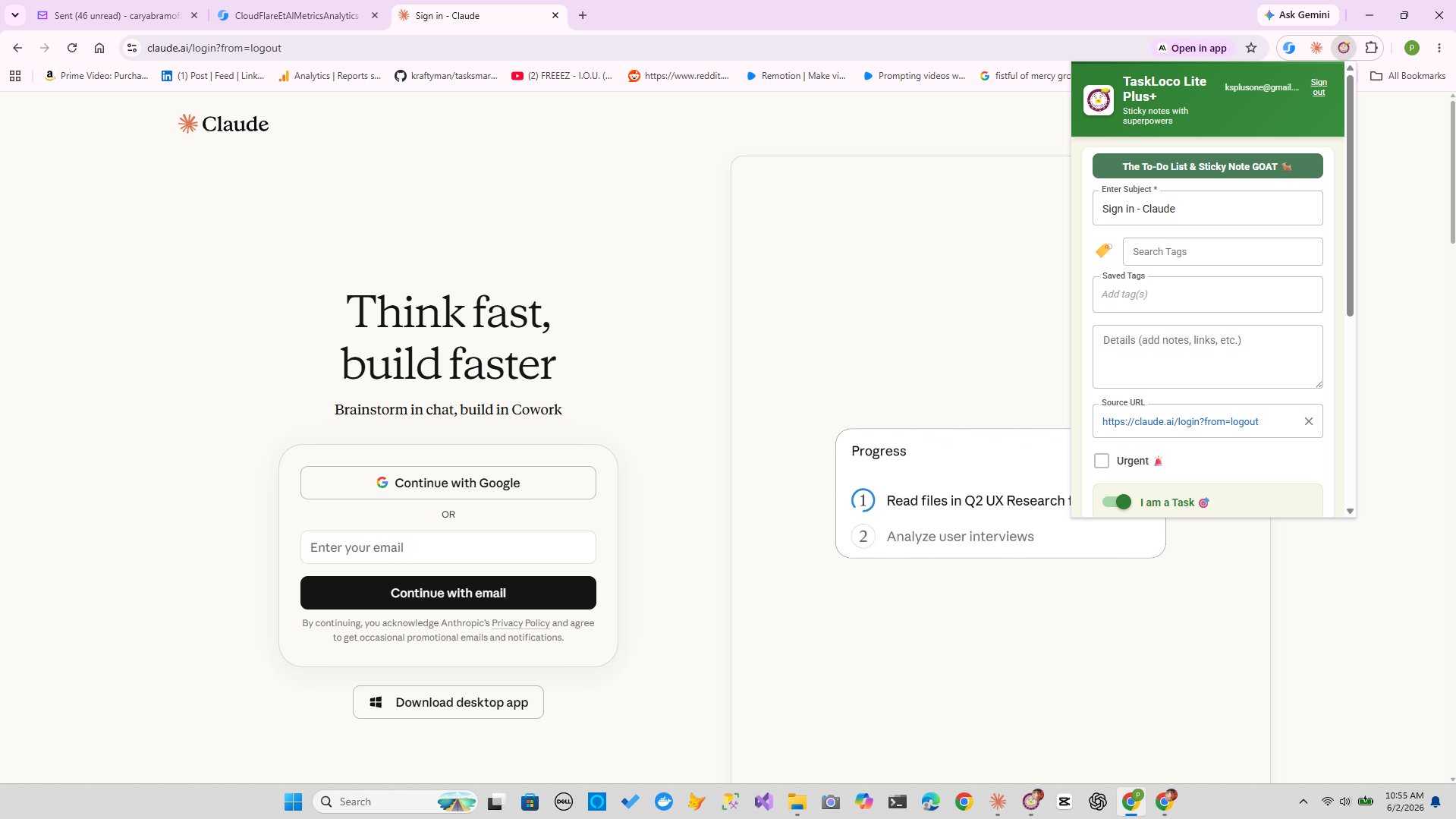
TaskLoco's Chrome extension closes that gap. One click on any webpage creates a new note pre-filled with the page title and URL. You are not copying and pasting; you are clipping. That note goes straight to your TaskLoco wall, where you can promote it to tomorrow's six during the evening review or attach it to an existing card as supporting context.
The attachment flow works the same way on the wall itself. Drag a file onto a note card and it uploads to your 10GB Premium storage, secured to that note. When the task comes up in the Ivy Lee sequence, everything you need is already attached. The method's one-task-at-a-time discipline is much easier to maintain when starting the task doesn't require five minutes of file hunting.
TaskLoco Premium is regularly $9.99/month per person. Right now, charter members can lock in 50% off the regular price — forever. That means $4.99/month per person today. And if our price ever goes up, you still pay half. Always.
Code CHARTER50 auto-applies at checkout. First 500 spots only — once they're gone, this offer is gone permanently. Act fast while spots last.
Every Premium subscription includes unlimited notes, 10GB file storage, reminders, calendar, and team sharing. Each team member requires a separate subscription. 7-day free trial — no charge until day 8. Cancel anytime.
Free Options: TaskLoco
TaskLoco Lite
- Native iPhone & Android app
- Completely anonymous — no sign-in
- Data stays on your device
- Up to 20 notes
- Free forever
TaskLoco Lite Plus+
- Web app + Chrome extension
- Sign in with Google
- Wall syncs across all devices
- Up to 30 notes
- Free forever
Lock In 50% Off — Forever
7-day free trial. No charge until day 8. CHARTER50 auto-applies at checkout.
🔒 Lock In My Charter SpotSee TaskLoco in Action
Frequently Asked Questions
What is the Ivy Lee Method?
The Ivy Lee Method is a daily prioritization system developed in 1918. Each evening, you write down the six most important tasks for the following day and rank them in strict priority order. The next morning, you work through them one at a time — finishing each before moving to the next. Any unfinished tasks carry forward to the next day's list of six. The method's power is in the constraint: six tasks maximum, worked in sequence, with no multitasking.
Why use a visual wall instead of a plain list for the Ivy Lee Method?
A list lives in a linear dimension — you scroll past it. A visual wall occupies space. When your six prioritized cards are arranged spatially on a canvas, the rank order is immediately legible without reading a single word. Spatial priority — card one physically above card two — is cognitively faster to process than a numbered list. The wall also makes it obvious when you have violated the six-task rule, because the canvas looks crowded rather than just getting longer.
Can I use TaskLoco Lite for the Ivy Lee Method?
TaskLoco Lite is a free, fully anonymous native app for iPhone and Android that stores up to 20 notes on your device with no account required. For a solo Ivy Lee wall with six cards, Lite works fine as a starting point. However, Lite has no reminders, no file attachments, no syncing, and no team sharing — so the evening review habit and the morning trigger reminder that make the method sustainable are Premium-only features.
How does TaskLoco handle the evening review habit?
TaskLoco Premium lets you set a reminder on any note — including a standing 'daily review' note you keep on the wall. That reminder fires as a push notification to your phone and computer at whatever time you choose, and tapping it deep-links directly into that note. You are immediately in the review workflow rather than hunting through an app. Optional email and SMS notification channels are available as add-ons.
Can my whole team run the Ivy Lee Method in TaskLoco?
Yes. TaskLoco Premium includes full team sharing. Sharing works like sending a note via email — recipients can clone the shared note and make it their own wall card. Each person maintains their own independent Ivy Lee wall. A shared morning brief, a reference document, or a handoff note can be cloned into anyone's wall in a single step, with no permissions or access levels to configure. Each team member needs their own Premium subscription.
What happens to unfinished tasks at the end of the day?
In the Ivy Lee Method, any unfinished task moves to tomorrow's list and is ranked again based on tomorrow's priorities — it does not automatically become task one. In TaskLoco, you do this during the evening review: carry the unfinished note forward to the next day's wall, decide its rank position relative to new tasks, and drag it into place. The card retains all its content, attachments, and context, so nothing is lost in the carry-forward.
How is TaskLoco priced for someone who wants to run this system?
$9.99/month per person (currently $4.99/month per person for first 500 charter members with code CHARTER50)
Born in Brooklyn. Powered by AWS. Your data stays yours.
TaskLoco is available on iPhone, Android, Chrome, and every web browser.