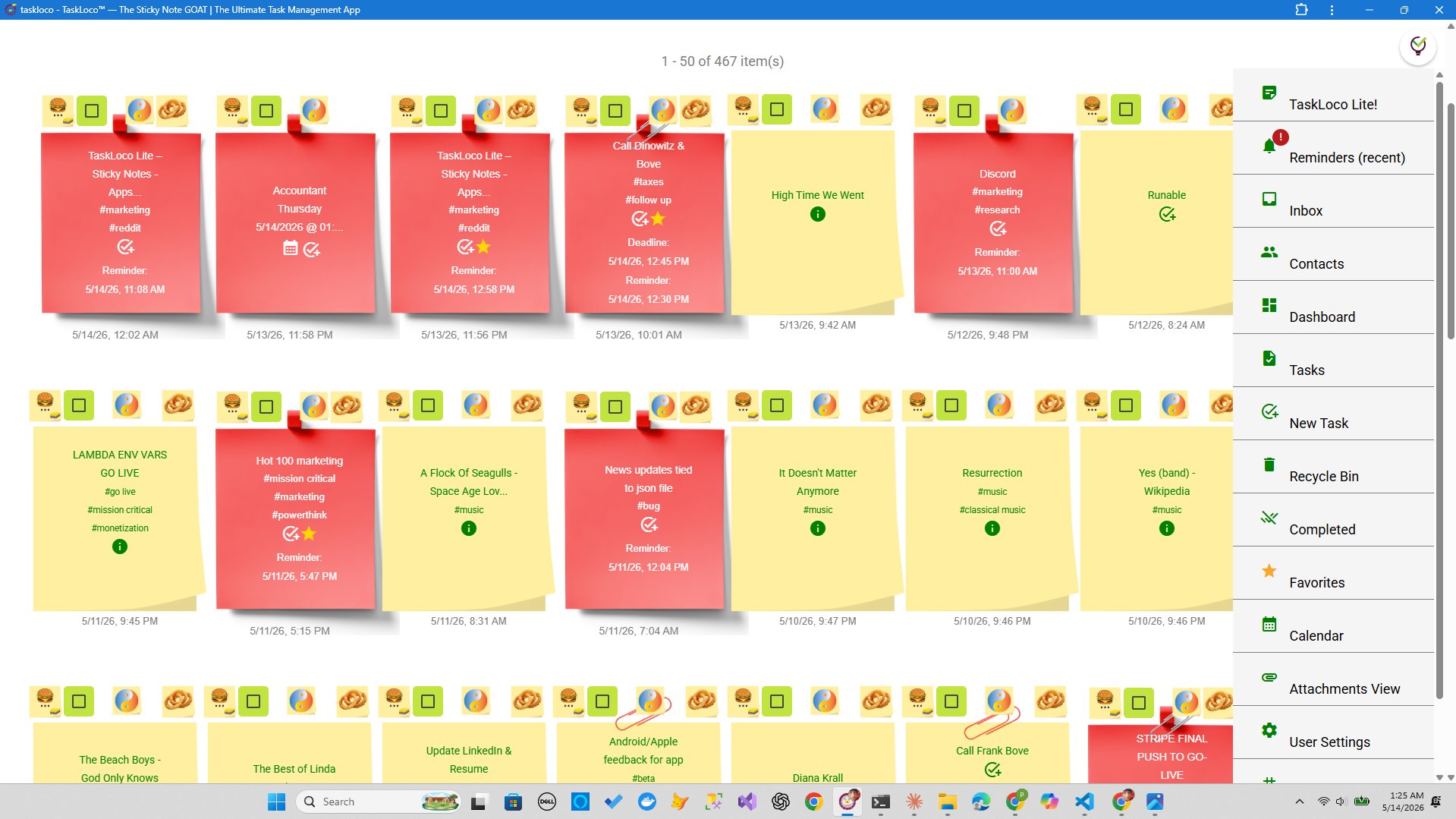
Your desk is covered in colorful squares. Yellow reminders, pink deadlines, blue ideas stuck everywhere. Colleagues mock your analog approach, but neuroscience backs you up completely.
Physical sticky notes trigger multiple memory pathways simultaneously—visual processing, spatial awareness, and motor memory from writing by hand. Studies from Princeton and UCLA prove this combination beats digital typing for retention and recall. TaskLoco preserves these neurological advantages while solving the chaos of paper notes.
TaskLoco Premium is regularly $9.99/month per person. Right now, charter members can lock in 50% off the regular price — forever. That means $4.99/month per person today. And if our price ever goes up, you still pay half. Always.
Code CHARTER50 auto-applies at checkout. First 500 spots only — once they're gone, this offer is gone permanently. Act fast while spots last.
Every Premium subscription includes unlimited notes, 10GB file storage, reminders, calendar, and team sharing. Each team member requires a separate subscription. 7-day free trial — no charge until day 8. Cancel anytime.
Free Options: TaskLoco
TaskLoco Lite
- Native iPhone & Android app
- Completely anonymous — no sign-in
- Data stays on your device
- Up to 20 notes
- Free forever
TaskLoco Lite Plus+
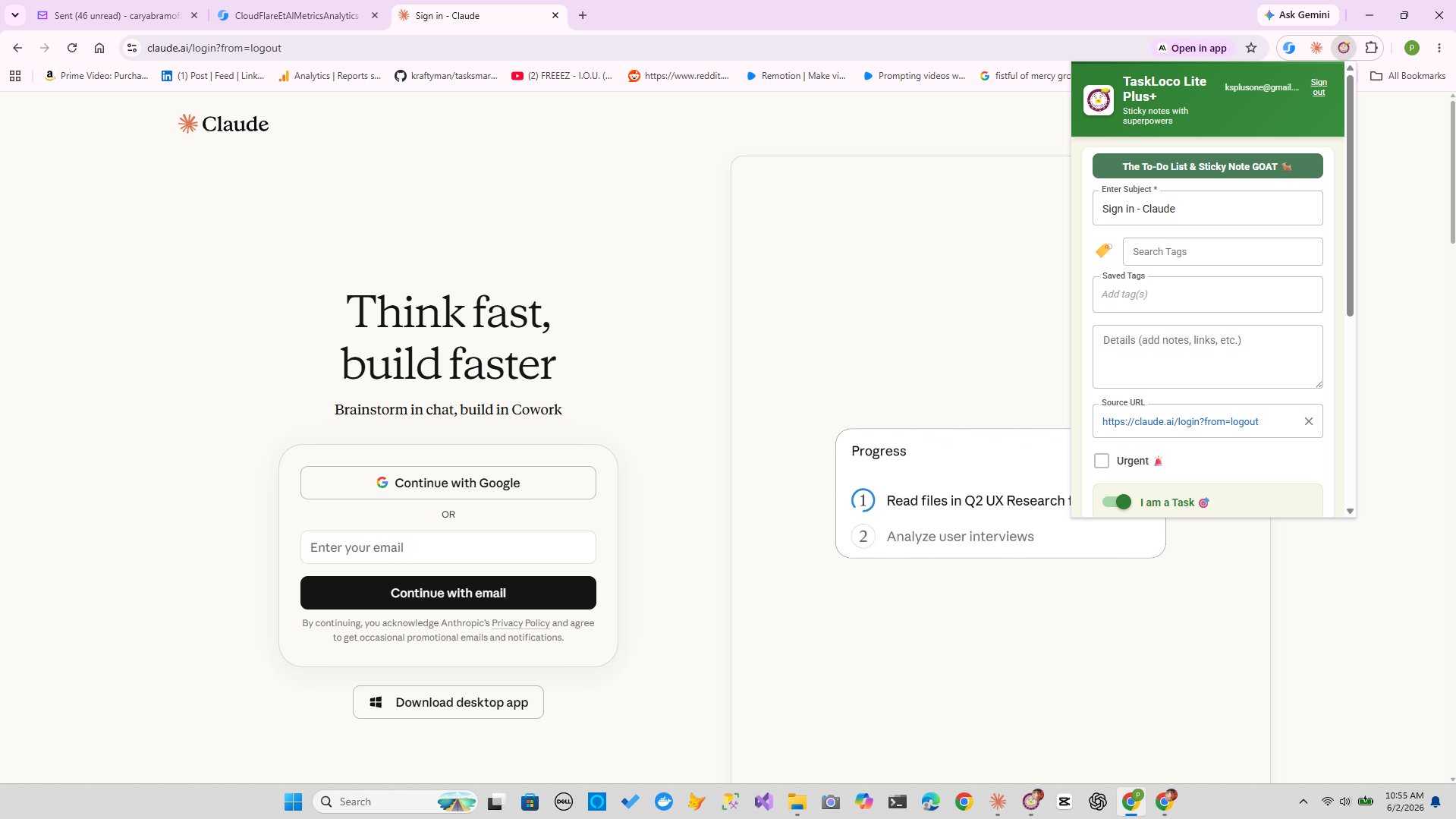
- Web app + Chrome extension
- Sign in with Google
- Wall syncs across all devices
- Up to 30 notes
- Free forever
Visual Processing: Why Color-Coded Tasks Work
Your brain processes visual information 60,000 times faster than text. When you see a red sticky note, your amygdala triggers urgency before you even read the words. Yellow signals caution. Green means go. This isn't psychology—it's evolutionary wiring.
Research from MIT's Computer Science and Artificial Intelligence Laboratory found that people using color-coded task management completed 23% more work and made 18% fewer errors than those using plain text lists. The visual cortex simply processes spatial relationships faster than linear reading.
Most productivity apps ignore this research entirely. They force everything into uniform rows and columns, eliminating the visual hierarchy that makes sticky notes so effective. Your brain wants to see priorities, not read them.
Spatial Memory: The Location Advantage
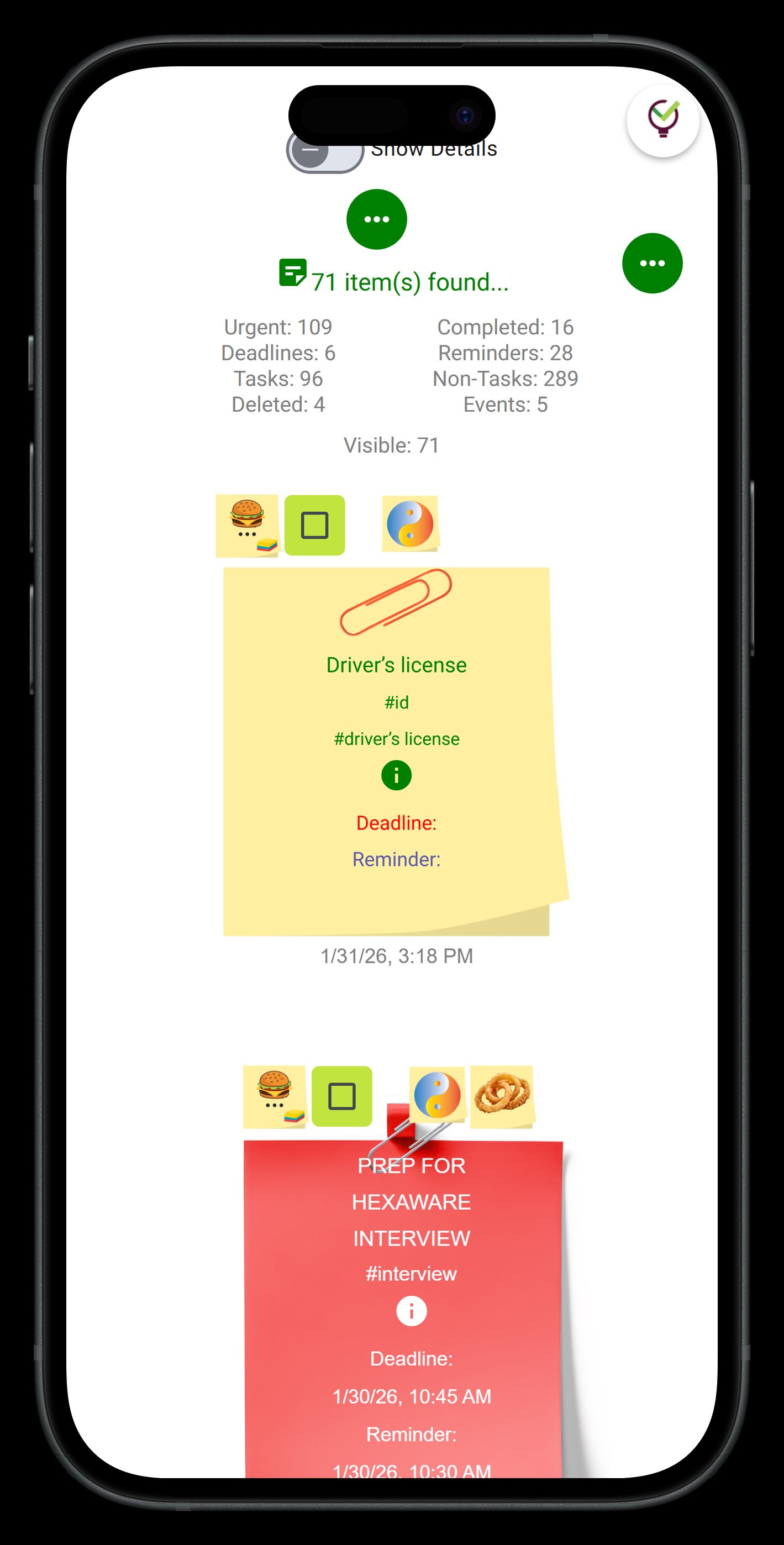
You remember where you put things. That urgent reminder sits top-right on your monitor. Project notes cluster left. Personal stuff goes bottom corner. This isn't random—it's your spatial memory at work.
Dr. Russell Poldrack at Stanford's Neuroscience Institute found that location-based memory activates the hippocampus differently than sequential memory. When information has a physical place, recall improves by an average of 34%. Your brain creates a mental map.
Digital to-do lists destroy this advantage. Everything lives in the same scrolling interface. Task #47 looks identical to task #3. No spatial relationships. No visual anchors. Just endless scrolling through identical rows.
The Completion Effect: Why Throwing Away Paper Feels Good
Crumpling a finished sticky note triggers genuine satisfaction. The physical gesture releases dopamine—your brain's reward chemical. Dr. Teresa Amabile's Harvard research on 12,000 diary entries found that progress visualization dramatically improves motivation and performance.
Digital checkboxes can't replicate this. A tiny state change in a database doesn't engage your motor cortex or provide tactile feedback. The completion feels hollow because neurologically, nothing really happened.
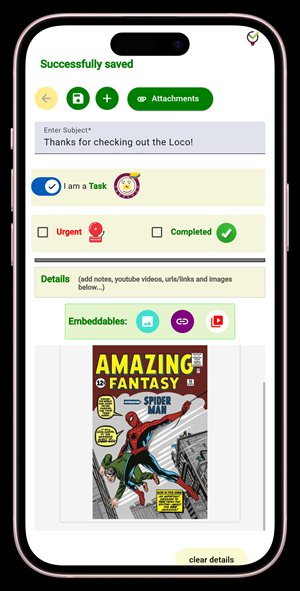
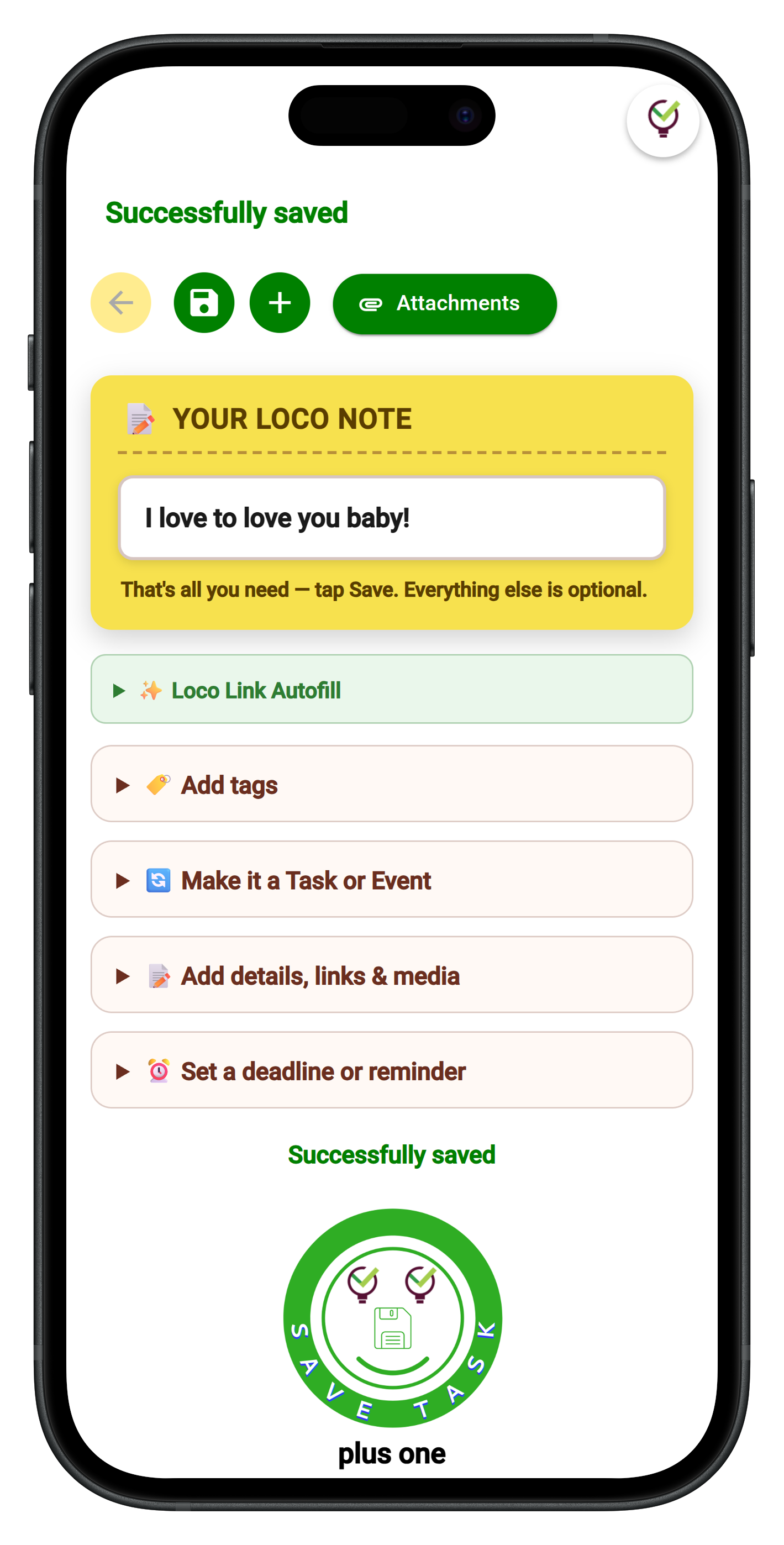
TaskLoco bridges this gap with satisfying completion animations and visual removal of finished notes. The digital gesture mimics the physical reward cycle while keeping your completed work searchable and trackable.
Why Digital Usually Fails (And How TaskLoco Succeeds)
Most productivity apps optimize for databases, not brains. They prioritize searchability over spatial memory, uniformity over visual processing, efficiency over neurological reality. The result? Tools that work great for machines but feel lifeless to humans.
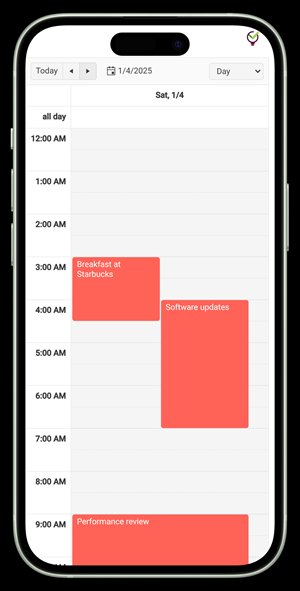
TaskLoco was designed around sticky note research from the beginning. Visual walls instead of lists. Spatial positioning instead of rigid hierarchies. Color coding instead of monochrome rows. Rich attachments instead of plain text.
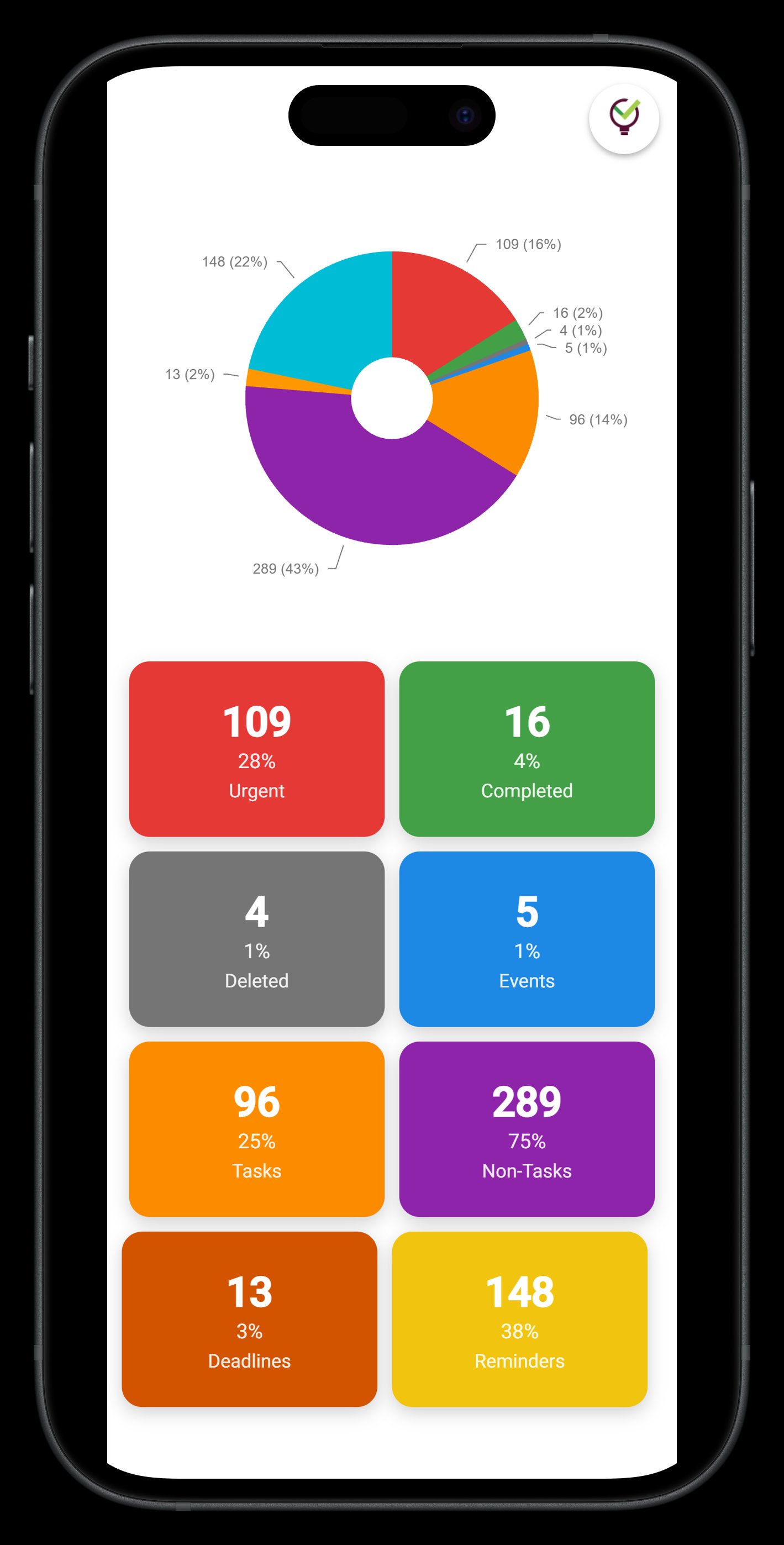
The free Lite version works completely offline with no account required—just like physical notes. Lite Plus+ syncs across devices while maintaining the visual approach. Premium adds reminders, calendar views, and team sharing without losing the core sticky note experience.
The Honest Comparison
| Feature | TaskLoco | Competitor |
|---|---|---|
| Visual note arrangement | Free-form 2D wall view—position notes anywhere spatially FREE | Traditional apps |
| Color-coded organization | Customizable note colors for visual priority systems FREE | Usually limited or missing entirely |
| Offline access | Lite version works completely offline—no account needed FREE | Most require internet connection |
| File attachments | 10GB storage included with Premium—photos, docs, audio | Often limited or expensive add-on |
| Completion satisfaction | Animated note removal mimics physical crumpling FREE | Basic checkboxes provide minimal feedback |
| No sign-in option | Lite stores 20 notes locally with zero setup FREE | All require account creation |
| Cross-device sync | Lite Plus+ and Premium sync everywhere FREE | Standard feature in most apps |
| Team collaboration | Premium includes shared walls and email notifications | Usually requires expensive business tiers |
| Reminders and calendar | Built into Premium with calendar view | Standard in most productivity apps |
| Project dependencies | Not available—focuses on individual task clarity | Advanced project tools often include this |
| Gantt charts | Not available—visual wall serves different purpose | Project management tools excel here |
| Time tracking | Not available—focuses on task completion | Many productivity apps include built-in tracking |
| API access | Limited integrations available | Enterprise apps often have extensive APIs |
| Enterprise compliance | No SOC2 or GDPR certifications | Business-focused apps prioritize compliance |
| Chrome extension | One-click webpage capture to notes FREE | Not always available |
| Mobile apps | Native iPhone and Android apps FREE | Standard across most platforms |
| Pricing transparency | One simple rate per person, no hidden tiers | Often complex pricing with feature restrictions |
Who Should Use Each
Use TaskLoco if…
- You want the neurological advantages of sticky notes without the physical chaos
- You prefer visual organization over rigid list structures
- You need simple task management that doesn't require training or setup
- You want to work offline sometimes without losing functionality
- You value completion satisfaction and spatial memory in your workflow
Use Other Apps if…
- You need complex project dependencies and timeline management
- Your workflow requires extensive third-party integrations
- You need enterprise compliance certifications for your organization
- You prefer traditional list-based interfaces over visual arrangements
Lock In 50% Off — Forever
7-day free trial. No charge until day 8. CHARTER50 auto-applies at checkout.
🔒 Lock In My Charter SpotSee TaskLoco in Action
Frequently Asked Questions
Do sticky notes really improve productivity compared to digital lists?
Yes. Research from Princeton, UCLA, and MIT shows that sticky notes engage visual processing, spatial memory, and motor memory simultaneously. This multi-pathway approach improves retention by 34% and task completion by 23% compared to plain digital lists.
How much does TaskLoco cost?
$9.99/month per person (currently $4.99/month per person for first 500 charter members with code CHARTER50)
Can I use TaskLoco completely offline?
Yes. TaskLoco Lite works completely offline with no account required. It stores up to 20 notes locally on your device in a JSON file. This version never connects to any server and works just like physical sticky notes.
Does TaskLoco sync across devices?
TaskLoco Lite Plus+ (free) and Premium sync across all devices. Only the offline Lite version stays local to one device. All synced versions maintain the visual wall layout across platforms.
What file types can I attach to TaskLoco notes?
Premium subscribers get 10GB storage for any file type—photos, PDFs, documents, audio recordings, videos. The attachments integrate directly into notes just like stapling documents to physical sticky notes.
Does TaskLoco have a Chrome extension?
Yes, the free Chrome extension captures any webpage directly to a TaskLoco note with one click. Perfect for saving articles, references, or inspiration without switching apps.
Is TaskLoco good for teams?
Premium includes team sharing with real-time updates and email notifications. Shared walls maintain the visual sticky note experience while enabling collaboration. Each team member needs their own subscription.
Born in Brooklyn. Powered by AWS. Your data stays yours.
TaskLoco is available on iPhone, Android, Chrome, and every web browser.