Let's be honest about what Airtable is: it's a genuinely impressive piece of software. If you need to build a product catalog, manage inventory with linked records, or create a relational data structure that would otherwise require a developer, Airtable can pull that off inside a browser tab. That's real, and it deserves credit.
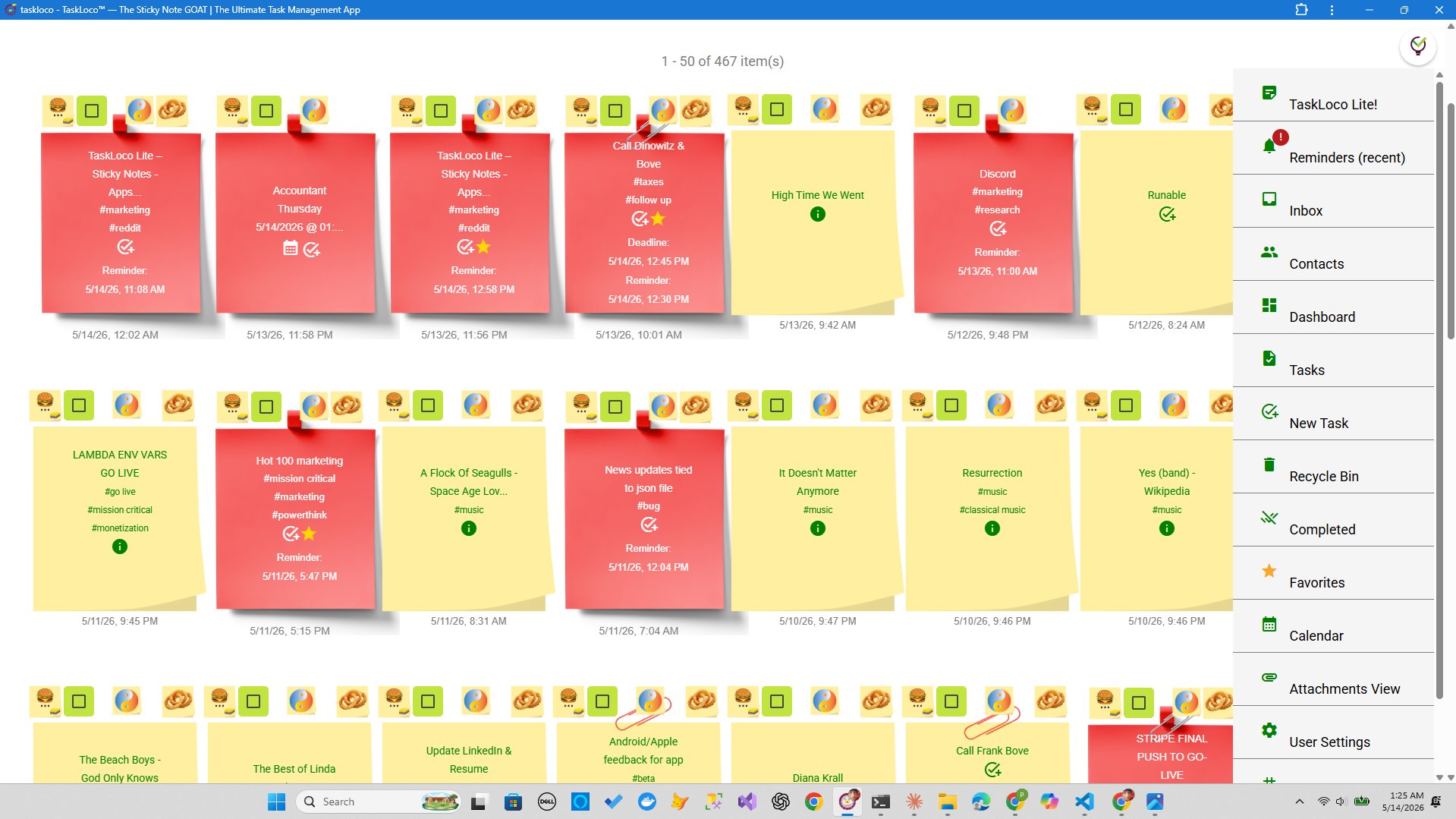
But here's what happens in practice: teams sign up for Airtable because they want to get organized, and they spend the first two weeks building the database instead of doing the work. Fields, views, linked tables, formulas — suddenly the tool that was supposed to reduce friction has become a side project. TaskLoco takes the opposite approach. Your wall of sticky notes is live in seconds. Notes become tasks. Tasks get reminders. Files attach in one click. Your team shares everything without configuring permissions. If that sounds like what you actually needed, read on.
What Airtable Actually Gets Right (And Where It Overreaches)
Airtable's core strength is its data model. Linked records across tables, formula fields, rollups, and lookup fields give teams a genuinely relational database that non-developers can build. For use cases like CRM pipelines with linked contact and deal records, asset libraries with metadata, or editorial calendars that pull from a content inventory — Airtable earns its place. If your team is essentially running a structured data operation, that power is real.
The problem is that most teams don't need a database. They need to capture ideas, assign work, track deadlines, and share files. When those teams land in Airtable, they find themselves making architectural decisions — what's a table, what's a field type, how do views relate to each other — before they've shipped a single task. The interface that makes Airtable powerful for data-heavy work makes it genuinely confusing for everyday task management.
There's also the automation layer. Airtable's automations are capable, but they're another system to learn and another place for things to break. Teams that just want a reminder when a deadline is close shouldn't need to build an automation to get one.
Files, Attachments, and the Capture Workflow
One of the quieter advantages TaskLoco has over Airtable for everyday work is how it handles files. In Airtable, attaching a file means finding the right record in the right table, locating the attachment field, and uploading. It works, but it assumes you already know where the file belongs in your data structure.
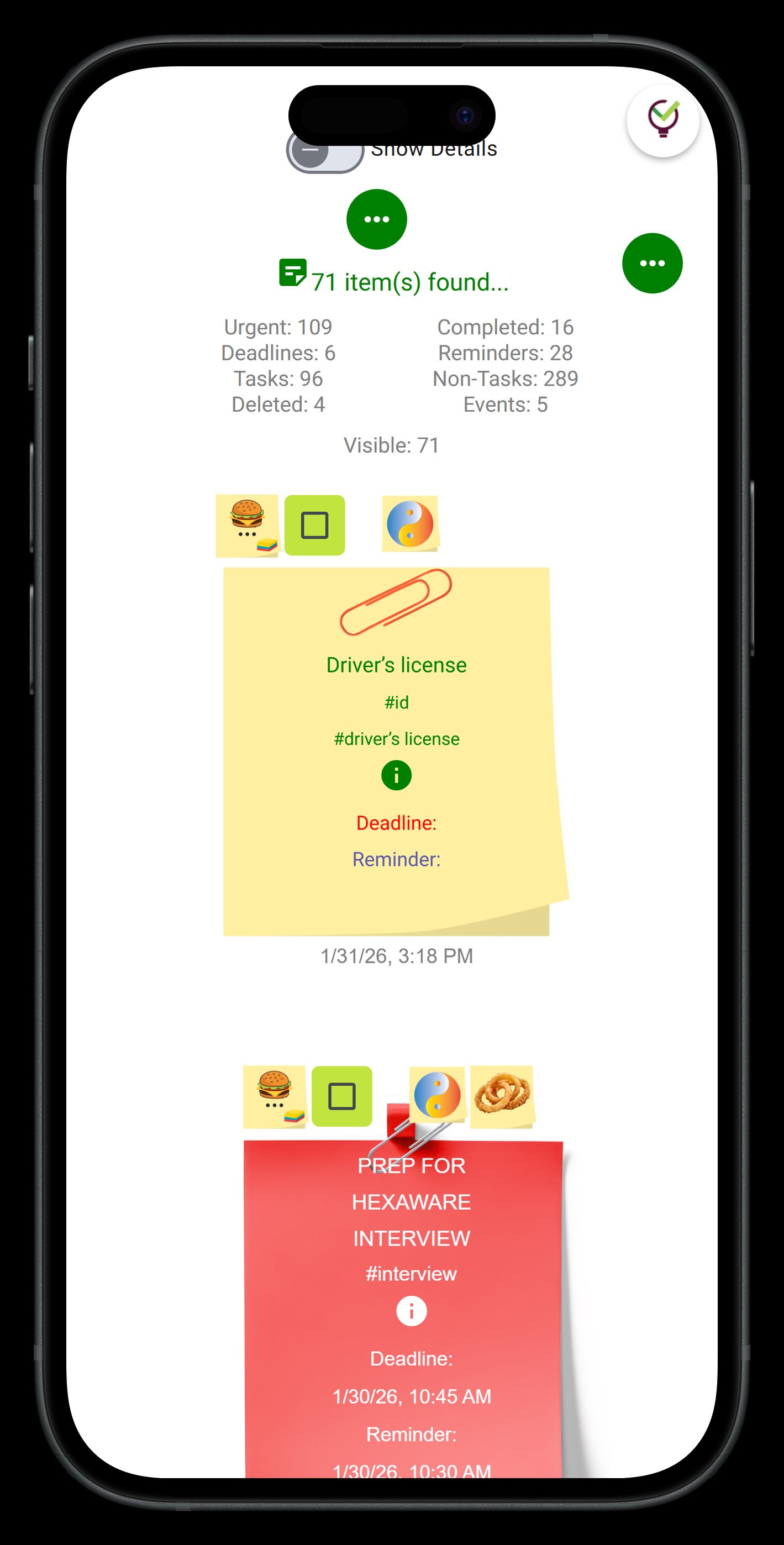
In TaskLoco, you open a note and drop a file. That's it. The note is the context — if the file is relevant to the thing you were thinking about, it lives there. No field type to configure, no table to navigate. The 10GB storage included with Premium handles real working files: contracts, design comps, spreadsheets, photos. If your team generates a lot of media, additional storage tiers go up to 1TB and are stackable.
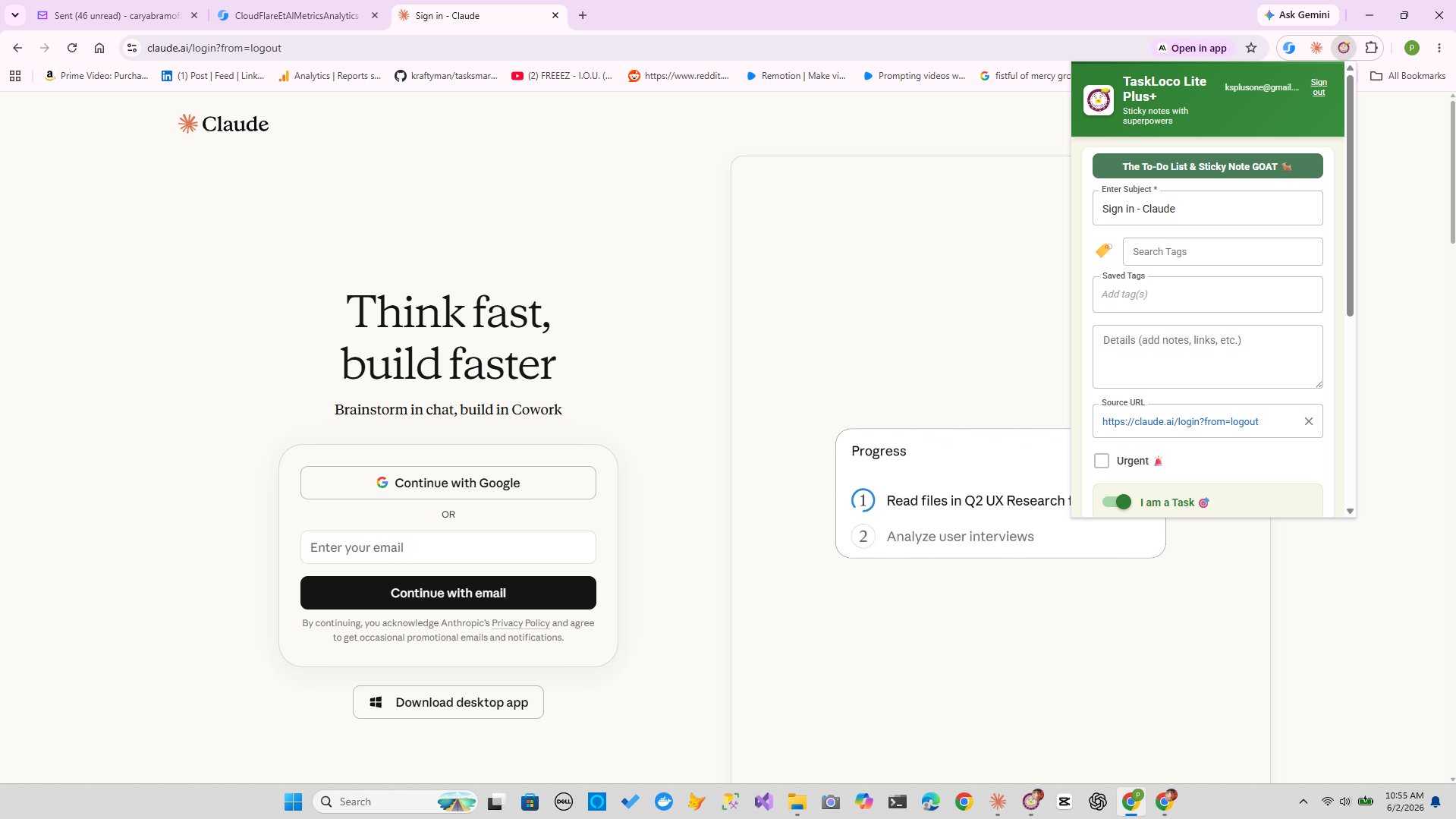
The Chrome extension adds another dimension to this. When you're reading a brief, a client email in the browser, or a reference article, one click on the extension captures the page and creates a note from it. That note can immediately get a reminder, a file attachment, or be shared with a teammate. The capture-to-action loop takes seconds rather than minutes.
Where Airtable Still Wins (Be Honest With Yourself)
TaskLoco doesn't try to be a database, and that's a deliberate choice — not a gap. But some teams genuinely need what a database provides, and pretending otherwise wouldn't be fair to you.
If you need relational data structures — records that link across multiple tables, rollup fields that aggregate child records, formula columns that calculate across rows — Airtable is built for that and TaskLoco is not. If your team is managing a product catalog where each SKU links to vendor records, pricing history, and inventory levels, you need a tool that thinks relationally. That's Airtable's home turf.
If you need natural language task input that parses due dates and assignees from a sentence, TaskLoco doesn't have that. If your organization requires enterprise SSO, SOC 2 compliance documentation, or extensive third-party API integrations with platforms like Salesforce or custom internal tools, Airtable's enterprise tier is more likely to satisfy those requirements. TaskLoco's integration surface is intentionally lean.
The question to ask yourself honestly is: does your team's daily work involve querying and relating structured data, or does it involve thinking, writing, assigning, and tracking? If it's the former, Airtable is probably right for you. If it's the latter — and for most teams, it is — TaskLoco will get out of your way and let you work.
The Honest Comparison
| Feature | TaskLoco | Airtable |
|---|---|---|
| Free tier | Two free tiers: Lite (20 notes, native app, no sign-in) and Lite Plus+ (30 notes, synced across devices, Chrome extension) FREE | Free tier available with limited records and views |
| Setup time | Write a note and go — no schema, no field types, no table architecture | Requires designing tables, fields, and views before productive use |
| Relational database features | Not a database tool — notes, tasks, and files without relational structure | Genuine relational database with linked records, rollups, and formula fields |
| Reminders | Built into Premium — push notifications to phone and computer, deep-links back to the original note. Optional email and SMS add-on. | Reminders via automation — requires setup, not built in natively to records |
| File attachments | 10GB included with Premium, stackable add-on tiers up to 1TB, attached directly to any note | File attachments supported within records, storage limits depend on plan |
| Team sharing | Yes — included with Premium. Each team member requires a separate subscription — currently $9.99/month per person, but TaskLoco is offering a Charter Member special: 50% off for life, currently $4.99/month per person for the first 500 subscribers with code CHARTER50. | Sharing requires workspace management, permission levels, and collaborator seat configuration |
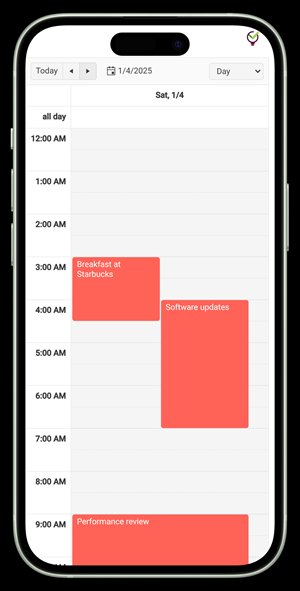
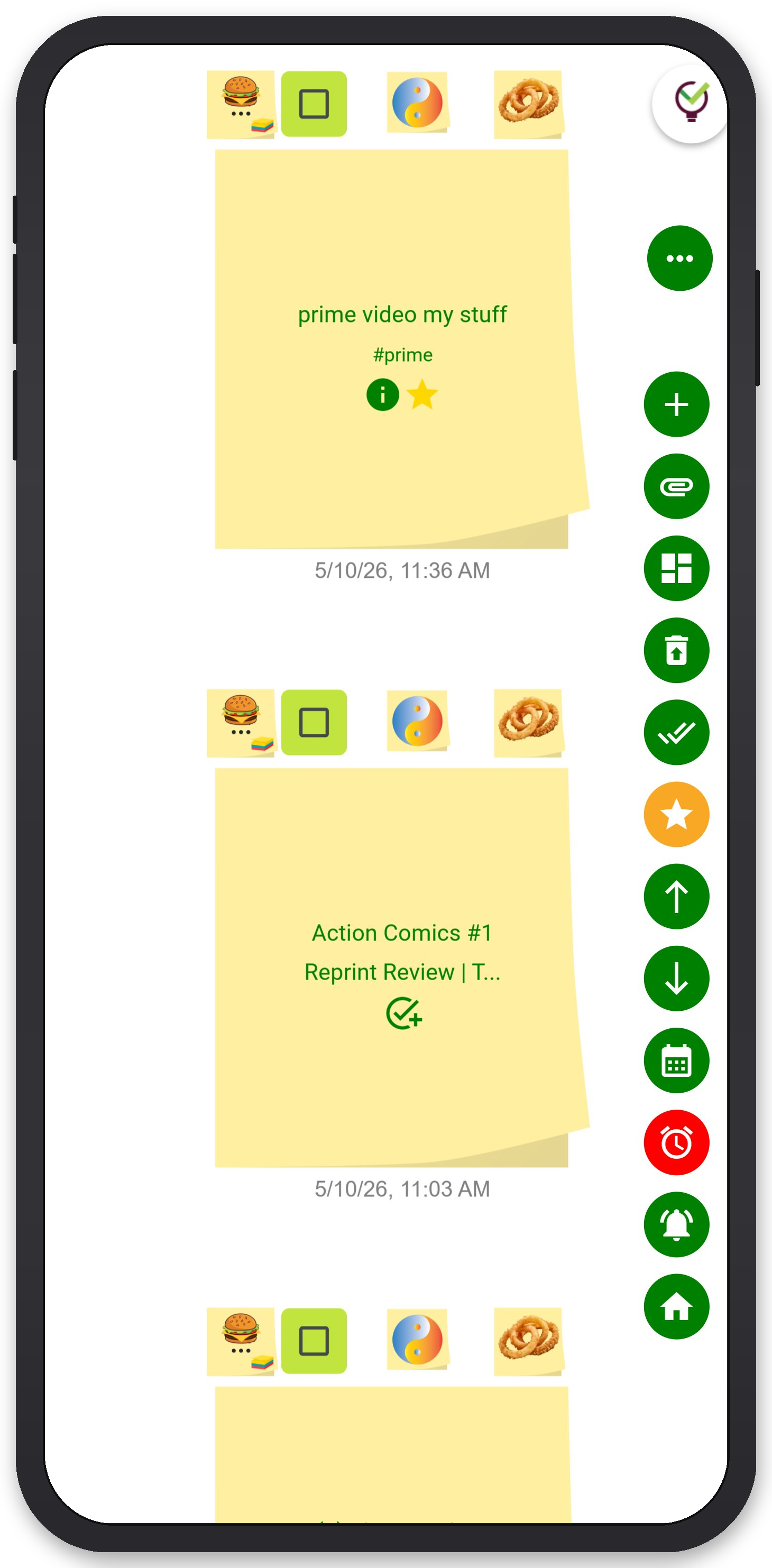
| Calendar view | Built into Premium — all dated notes and events in a single timeline | Calendar view available but requires a date field and view configuration |
| Chrome extension | One-click webpage capture — saves any page directly to your wall as a note FREE | No dedicated Chrome extension for capture |
| Full-text search | Full-text search across all notes and attachments | Search available within bases and records |
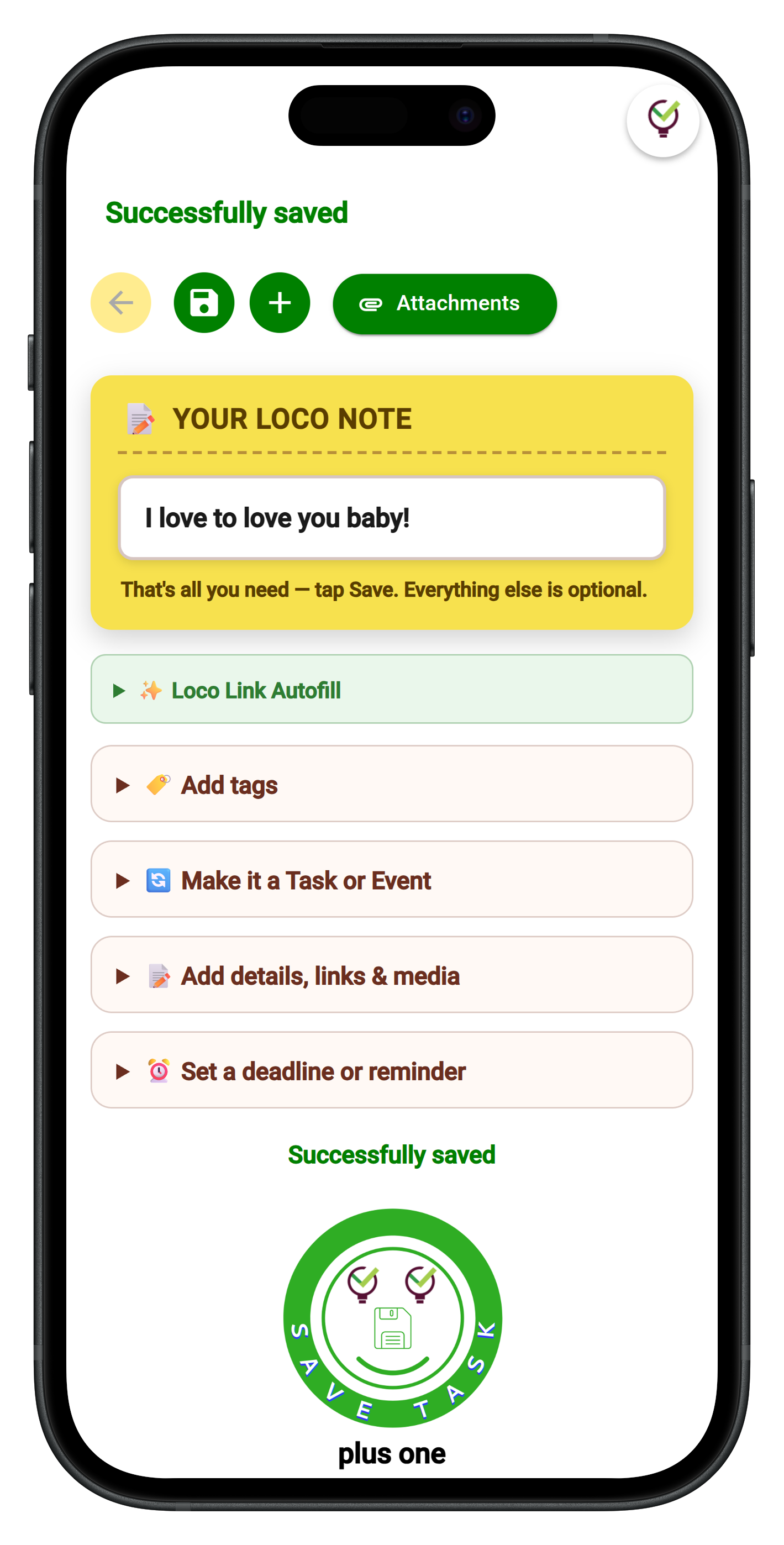
| Native mobile app | TaskLoco Lite is a native iPhone and Android app (anonymous, 20 notes, no sign-in). Premium and Lite Plus+ run through the mobile browser. | Native iOS and Android apps available across plans |
| Natural language task input | Not available — notes and tasks are created manually | Not a core feature either — requires manual field entry or automation |
| Custom fields and data types | Not applicable — TaskLoco uses notes, not structured field types | Extensive custom field types: text, number, date, checkbox, linked record, formula, and more |
| API and integrations | Limited integrations — intentionally lean | REST API, Zapier, and extensive third-party integrations |
| Enterprise SSO / compliance | Not available | Enterprise SSO and compliance certifications available on higher tiers |
| Per-person subscription model | One clear price per person — no seat tiers, no minimums, no plan complexity | Per-seat pricing with multiple plan tiers and feature gating |
| 7-day free trial | Full 7-day free trial — no charge until day 8, cancel anytime FREE | Free trial available on paid plans |
| Anonymous use (no account) | TaskLoco Lite requires zero sign-in — completely anonymous, notes stored on device FREE | Account required for all tiers |
Who Should Use Each
Use TaskLoco if…
- Your daily work is notes, tasks, deadlines, and files — not relational data structures
- You want reminders that fire as push notifications and drop you back into the exact note they came from
- You need team sharing that works in seconds — share a note, teammate clones it, done
- You want file attachments built into your notes, not a field type you have to configure
- You capture research and reference links constantly and want a Chrome extension that does it in one click
- You want a clear, honest per-person subscription with a 7-day free trial and no hidden plan tiers
- You tried database-style tools and spent more time building the system than doing the work
Use Airtable if…
- Your team's output is genuinely relational data — linked records, rollups, and formula fields are core to how you work
- You need custom field types, multiple data views, and spreadsheet-style calculation across records
- Your organization requires enterprise SSO, advanced compliance certifications, or audit logs
- You depend on extensive API integrations with platforms like Salesforce, custom ERPs, or internal developer tools
- You're building internal tools or product catalogs where structured, relational data is the foundation — not the overhead
TaskLoco Premium is regularly $9.99/month per person. Right now, charter members can lock in 50% off the regular price — forever. That means $4.99/month per person today. And if our price ever goes up, you still pay half. Always.
Code CHARTER50 auto-applies at checkout. First 500 spots only — once they're gone, this offer is gone permanently. Act fast while spots last.
Every Premium subscription includes unlimited notes, 10GB file storage, reminders, calendar, and team sharing. Each team member requires a separate subscription. 7-day free trial — no charge until day 8. Cancel anytime.
Free Options: TaskLoco vs Airtable
TaskLoco Lite
- Native iPhone & Android app
- Completely anonymous — no sign-in
- Data stays on your device
- Up to 20 notes
- Free forever
TaskLoco Lite Plus+
- Web app + Chrome extension
- Sign in with Google
- Wall syncs across all devices
- Up to 30 notes
- Free forever
Lock In 50% Off — Forever
7-day free trial. No charge until day 8. CHARTER50 auto-applies at checkout.
🔒 Lock In My Charter SpotSee TaskLoco in Action
Frequently Asked Questions
Is TaskLoco really simpler than Airtable, or is that just marketing?
It's a real difference in philosophy. Airtable asks you to design a data structure before you can work — tables, field types, views, linked records. TaskLoco asks you to write a note. That's the entire onboarding. Whether simpler is better depends entirely on what you're building: if you need a database, Airtable's complexity is worth it. If you need to manage work — tasks, deadlines, files, team communication — TaskLoco's approach gets you productive in minutes, not hours.
Can TaskLoco replace Airtable for project management?
For most project management needs — capturing tasks, assigning work, setting reminders, attaching files, sharing notes with teammates — yes. TaskLoco Premium covers all of that without requiring you to architect a database first. Where it won't replace Airtable is in genuinely data-heavy use cases: if your project management involves relational records, formula-driven rollups, or complex multi-table views, Airtable's structure serves a real purpose. But for teams whose projects are primarily made up of tasks, deadlines, and communication rather than structured data, TaskLoco is the faster path.
Does TaskLoco have a free version?
Yes — two of them. TaskLoco Lite is a native iPhone and Android app that requires zero sign-in and stores up to 20 notes directly on your device. TaskLoco Lite Plus+ is a web app and Chrome extension that stores up to 30 notes, syncs across all your devices, and lets you capture any webpage in one click. Neither free tier includes reminders, file attachments, unlimited notes, or team sharing — those are Premium features. $9.99/month per person (currently $4.99/month per person for first 500 charter members with code CHARTER50)
How does TaskLoco team sharing work compared to Airtable?
TaskLoco team sharing is designed to feel like email — but better. You share a note and the recipient gets it like a message. They can clone it and make it entirely their own: edit it, add reminders, attach files, reshare it. There are no permissions to configure, no access levels to set, no admin panel to navigate. In Airtable, sharing involves workspace configuration, collaborator seats, and permission levels. For teams that just want to hand off work and get moving, TaskLoco's approach removes the overhead entirely.
What happens when TaskLoco's reminder fires?
A reminder fires as a push notification to your phone and computer. Tap it and it deep-links directly back to the original note — you land exactly where the reminder came from, no searching, no scrolling. Optional email notifications are available as an additional channel. An optional SMS add-on is also available if you want reminders sent to your phone number. Push notification is the primary and default delivery method.
Does TaskLoco work on mobile?
TaskLoco Lite is a native app available in the App Store and Google Play — it's free, requires no sign-in, and stores up to 20 notes on your device. The full-featured Premium experience, including reminders, file attachments, team sharing, and unlimited notes, is available through the browser on any device.
How much does TaskLoco Premium cost?
$9.99/month per person (currently $4.99/month per person for first 500 charter members with code CHARTER50)
Born in Brooklyn. Powered by AWS. Your data stays yours.
TaskLoco is available on iPhone, Android, Chrome, and every web browser.