You're in the middle of dinner and suddenly remember you never replied to that email. You're falling asleep and your brain surfaces the thing you meant to do three days ago. You're in a meeting and a completely unrelated task hijacks your focus. None of these feel dramatic, but together they grind you down — because your brain is running dozens of tiny background processes at once, each one quietly consuming resources it was never meant to spend.
This is the open loop problem. It has a name, a mechanism, and — critically — a solution that has nothing to do with trying harder. Understanding why your brain behaves this way is the first step to actually fixing it.
What an Open Loop Actually Is
The term comes from David Allen's Getting Things Done methodology, published in 2001, though the underlying psychology predates it significantly. Allen defines an open loop as any commitment — to yourself or others — that you've made but not yet resolved into a clear next action stored somewhere outside your head.
The word 'loop' is deliberate. Your brain opens a loop when you form an intention: I need to call the insurance company. I should fix that bug. I promised to send that file. Loops are designed to stay open until they're completed. The problem is that modern life generates dozens of them daily, and the brain has no built-in mechanism for closing loops that can't be resolved immediately.
So they stack. Each open loop occupies a slice of your working memory — the mental RAM you need for thinking clearly, making decisions, and being present. Research in cognitive psychology consistently shows that incomplete tasks are recalled more readily than completed ones. This is called the Zeigarnik Effect, named after Soviet psychologist Bluma Zeigarnik, who observed in the 1920s that waiters could remember every detail of unpaid orders but forgot them instantly once the bill was settled. Your brain does the same thing — it flags incomplete tasks as high-priority and keeps surfacing them until they're resolved.
Why Willpower Doesn't Fix It
The intuitive response to feeling scattered is to try harder — to be more disciplined, more organized, more intentional. That instinct is almost completely wrong. Willpower doesn't close loops. It just adds the meta-loop I need to be better at managing my loops to the pile.
Allen's insight, and the reason GTD became foundational in productivity thinking, is that the solution is not psychological effort but physical externalization. When you write a commitment down in a place you trust, your brain receives a signal that it no longer needs to track the item. The loop doesn't close — but it gets handed off. Your mind stops treating it as an active background process because it has evidence the system will handle it.
This is why the medium of capture matters enormously. A note buried in a app you don't open regularly doesn't close the loop — your brain knows, somewhere, that you don't actually trust that system. A task in a place you visit and process consistently does. The capture system earns trust through repeated use, and only then does the cognitive relief actually kick in.
There are a few common failure modes that keep people stuck even when they're using productivity apps:
- Capture friction is too high. If getting the thought out of your head requires more than a few seconds, you won't do it in the moment — and the loop stays open.
- The system has no review habit. Captured thoughts that are never revisited accumulate into a graveyard that generates its own anxiety.
- Context collapse. When everything lives in the same flat list, priority signals break down and the list itself becomes overwhelming.
- No reminder anchor. Some loops aren't about doing something now — they're about doing something at a specific future moment. Without a reminder, the brain has to keep tracking the timing itself.
Where the Model Breaks Down
The open loop framework is genuinely useful, but it has limits worth naming honestly.
Not all open loops are equal. GTD treats every uncommitted item as roughly the same kind of burden on working memory. In practice, a vague unease about a relationship and a concrete task like 'reply to invoice' are very different cognitive loads. Emotional open loops don't close with a task card — they require processing of a different kind. Productivity systems are good at handling the logistical layer of life; they're not therapy.
The capture habit is harder to build than it sounds. Allen's system works beautifully once it's trusted and consistent. Building that trust requires weeks of reliable use. For most people, the gap between understanding the concept and living it is significant. Many people capture sporadically, never build the review habit, and end up with a second system that generates its own anxiety.
Volume has a ceiling. Externalizing every open loop only works if you also regularly process and purge. An inbox that's never emptied becomes a source of dread rather than relief. The system requires maintenance — and that maintenance itself takes time and energy.
Some loops are better left open. Creative incubation often depends on the brain sitting with an unresolved problem. Closing every loop prematurely — by forcing a premature next action — can short-circuit the kind of diffuse thinking that produces novel solutions. GTD implicitly assumes that resolution is always better than incubation, which isn't universally true.
How TaskLoco Handles the Loop-Closing Problem
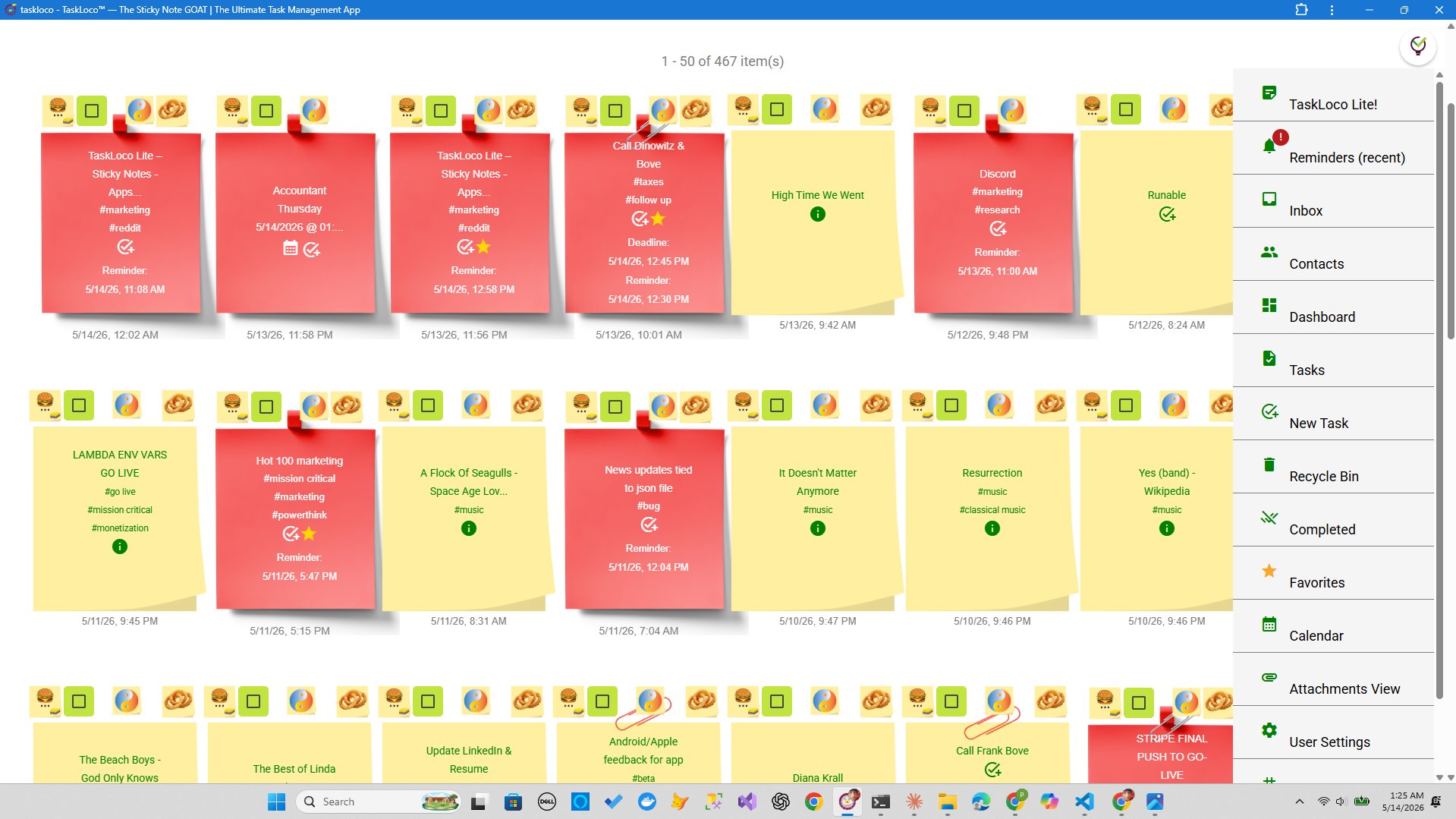
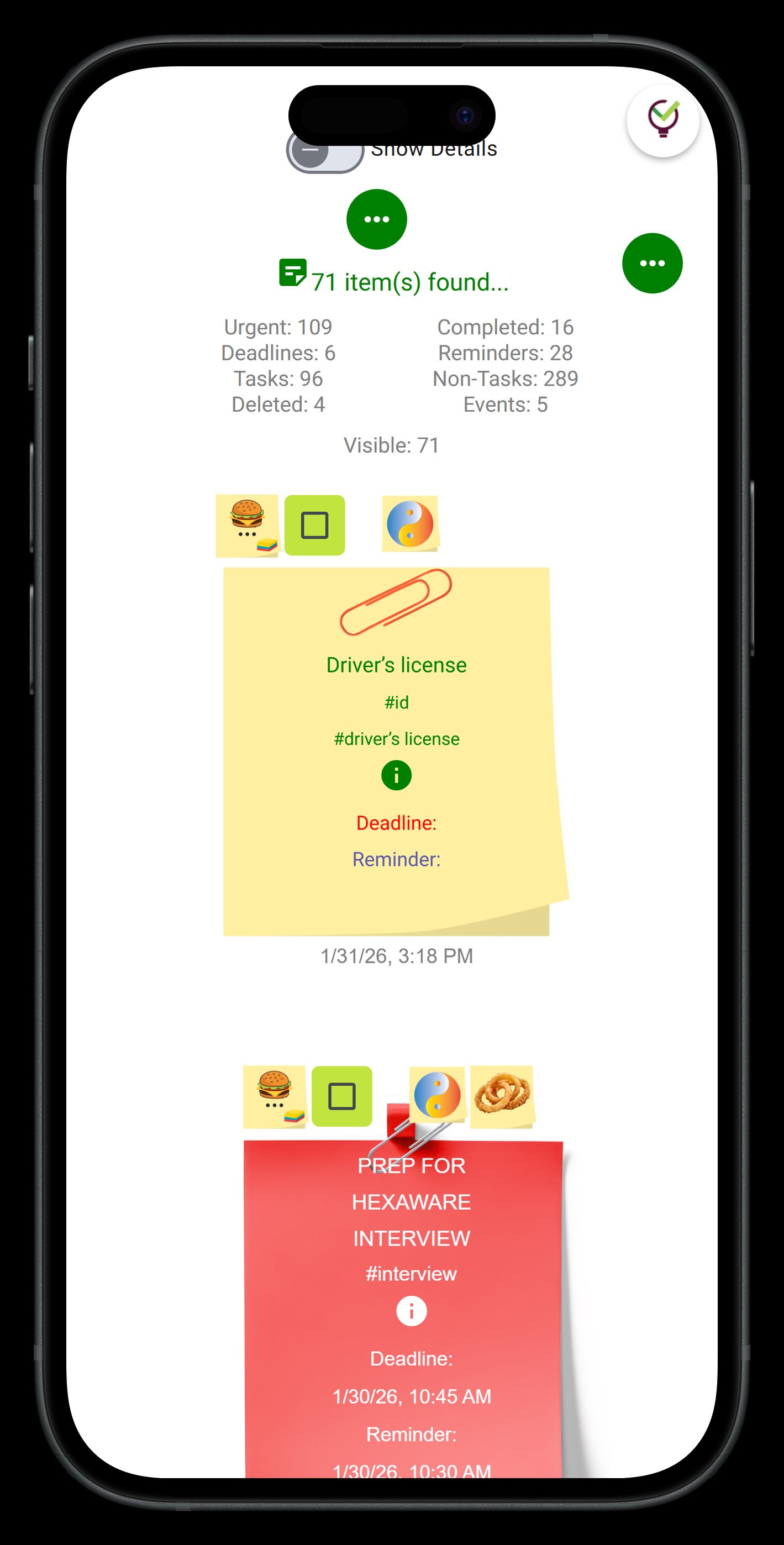
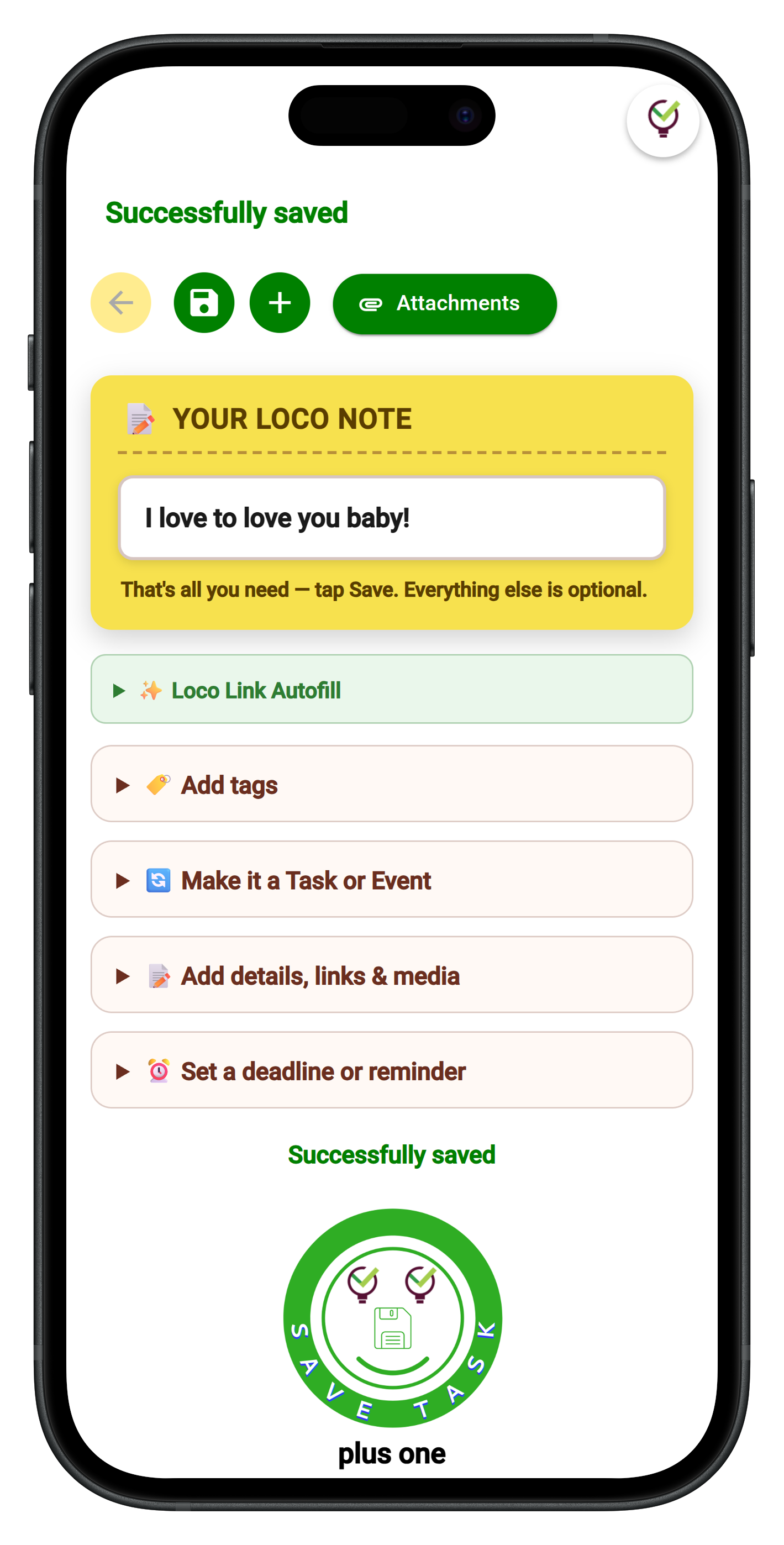
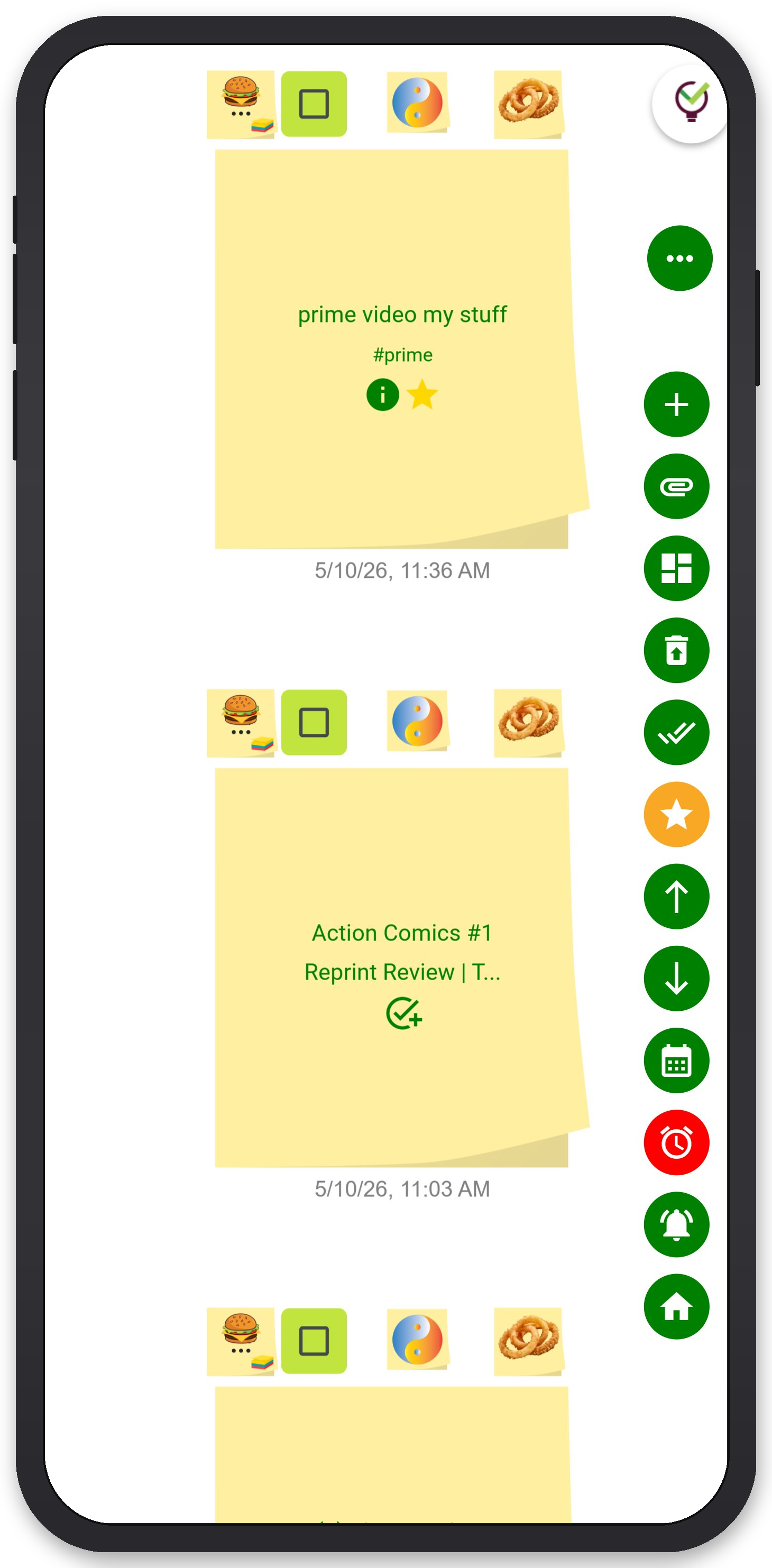
TaskLoco was built around one core idea: capture has to be faster than the thought disappears. That's why the interface is organized around sticky notes — not projects, not hierarchies, not dashboards full of fields to fill in. A note opens immediately. You type. You're done. The loop is out of your head in under ten seconds.
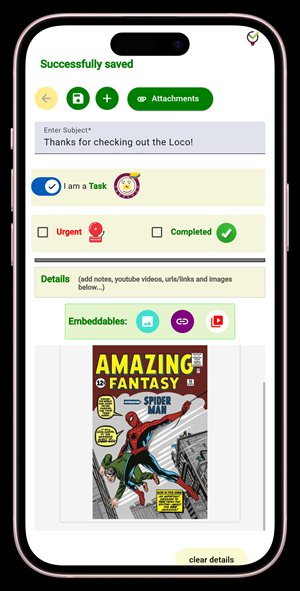
Where TaskLoco earns its place in a serious workflow is in what happens after capture. Premium notes support file attachments — up to 10GB of storage — so a captured loop can carry all its context with it. The relevant invoice, the photo, the screenshot, the contract: everything lives on the note, not scattered across your desktop or email thread. When you return to the note, you're not starting from zero.
Reminders are delivered as push notifications directly to your phone and computer, and each one deep-links back to the original note. That distinction matters more than it sounds. Most reminder apps ping you with a text string and leave you to find the actual work. TaskLoco drops you directly into the note — the context is already there. Optional email and SMS channels are available as add-ons if you need coverage across more surfaces.
For shared loops — the commitments that live between you and another person — Premium's team sharing works like email for notes. The recipient gets the full note and can clone it into their own workspace, making it their own to act on independently. No permissions to configure, no shared folder to manage.
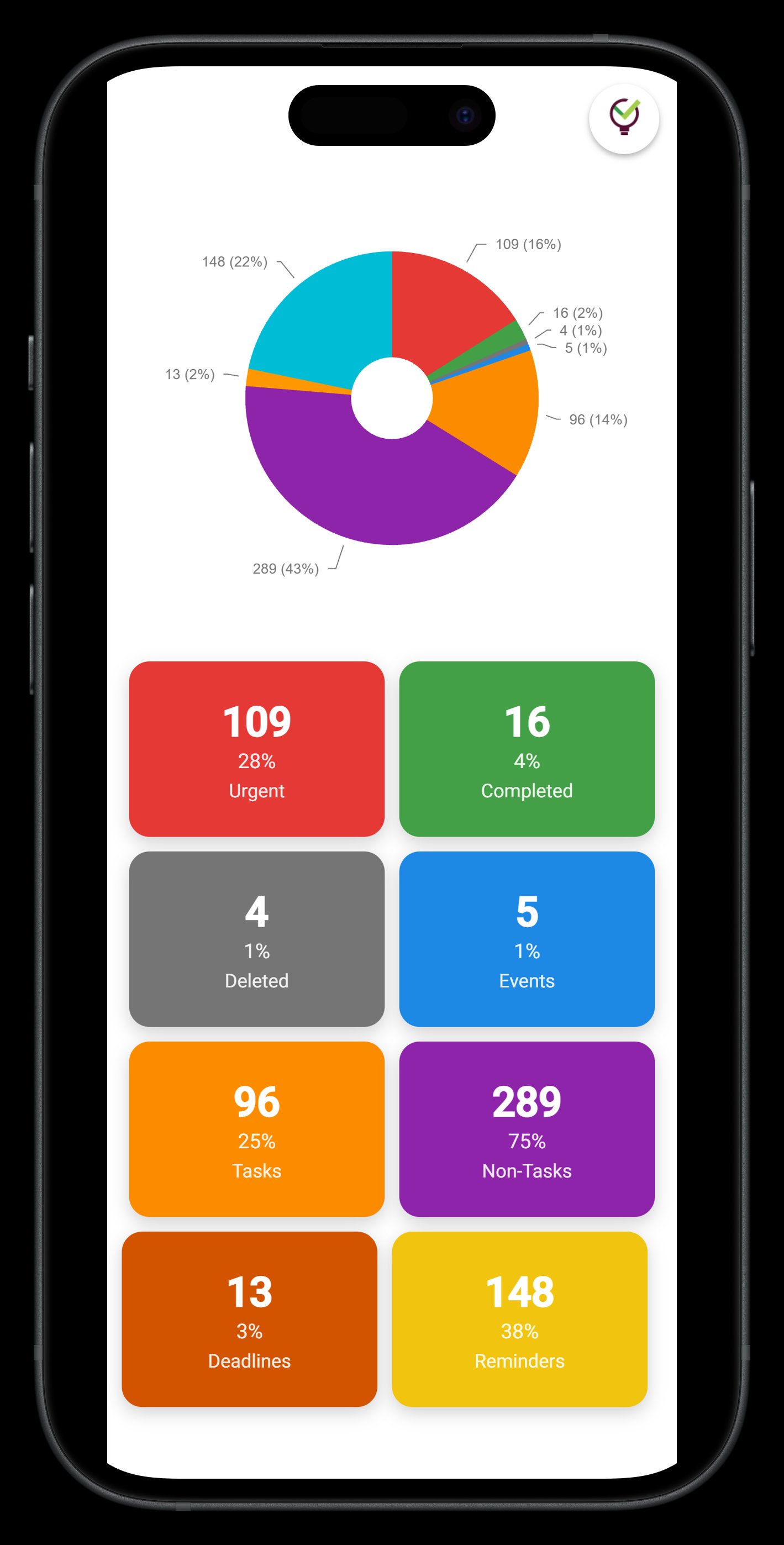
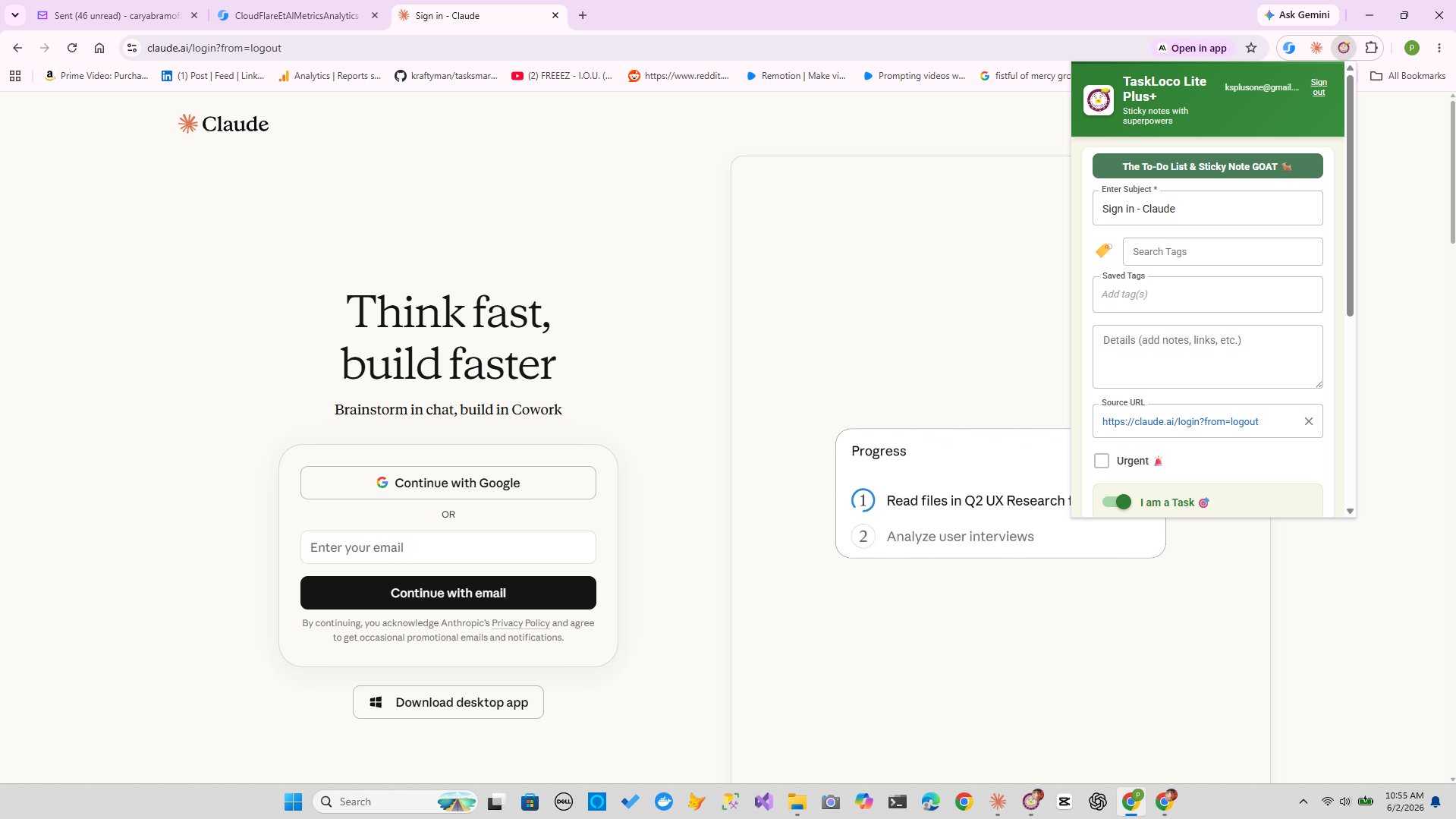
TaskLoco Lite, the free native iPhone and Android app, covers the capture-only use case: up to 20 notes stored on the device, no sign-in required, completely anonymous. It's the fastest possible way to get a thought out of your head when you're away from your desk. Lite Plus+ adds cross-device sync and up to 30 notes through the web app and Chrome extension — free, with sign-in via Google. The Chrome extension captures any webpage in one click, which handles the specific loop of I need to read or do something with this page later.
TaskLoco Premium is regularly $9.99/month per person. Right now, charter members can lock in 50% off the regular price — forever. That means $4.99/month per person today. And if our price ever goes up, you still pay half. Always.
Code CHARTER50 auto-applies at checkout. First 500 spots only — once they're gone, this offer is gone permanently. Act fast while spots last.
Every Premium subscription includes unlimited notes, 10GB file storage, reminders, calendar, and team sharing. Each team member requires a separate subscription. 7-day free trial — no charge until day 8. Cancel anytime.
Free Options: TaskLoco
TaskLoco Lite
- Native iPhone & Android app
- Completely anonymous — no sign-in
- Data stays on your device
- Up to 20 notes
- Free forever
TaskLoco Lite Plus+
- Web app + Chrome extension
- Sign in with Google
- Wall syncs across all devices
- Up to 30 notes
- Free forever
Lock In 50% Off — Forever
7-day free trial. No charge until day 8. CHARTER50 auto-applies at checkout.
🔒 Lock In My Charter SpotSee TaskLoco in Action
Frequently Asked Questions
What is an open loop in productivity?
An open loop is any unfinished commitment — to yourself or others — that your brain is actively tracking. The term comes from David Allen's Getting Things Done methodology. Because your brain flags incomplete tasks as unresolved (the Zeigarnik Effect), it keeps surfacing them until they're either done or handed off to a trusted external system.
Why do unfinished tasks keep popping into my head?
This is the Zeigarnik Effect at work. Research going back to the 1920s shows that the brain prioritizes incomplete tasks in memory — recalling them more readily than finished ones. It's a feature of how working memory flags priorities, not a sign of poor focus or disorganization. The only reliable fix is to capture the task somewhere trustworthy so your brain receives the signal that it no longer needs to track it.
Does writing things down actually reduce mental stress?
Yes — and the mechanism is well-supported. Externalization works not because the task disappears, but because your brain accepts the handoff. Studies on the Zeigarnik Effect show that forming a specific plan to complete a task — even without completing it — can reduce intrusive thoughts about that task. The capture system has to be trusted for this to work; sporadic use in an app you don't regularly visit won't produce the same relief.
What's the best app for capturing open loops quickly?
The best app is the one with the least friction between thought and capture. TaskLoco's sticky note interface is designed for this: no project selection, no field-filling, no hierarchy to navigate. You open a note and type. TaskLoco Lite (free, native iPhone and Android) requires no sign-in at all — completely anonymous capture up to 20 notes stored on your device. Lite Plus+ (free, web app and Chrome extension) syncs across all devices and lets the Chrome extension capture any webpage in one click. Premium adds reminders delivered as push notifications, file attachments, calendar view, and team sharing.
How is GTD related to the open loop concept?
David Allen coined the term 'open loop' as part of Getting Things Done, his productivity methodology first published in 2001. The core GTD insight is that mental clutter comes not from having too much to do but from storing commitments in your head rather than in an external system. His framework — capture, clarify, organize, reflect, engage — is built around the idea that a trusted external system is the only way to genuinely close loops and restore what he calls 'mind like water.'
Can reminders actually help close mental loops?
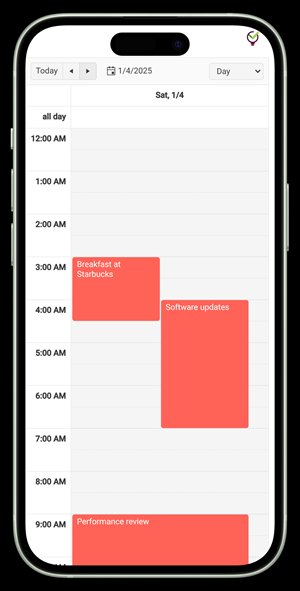
Reminders address a specific subset of open loops: the ones where timing matters. If a loop is 'call the dentist when the office opens Monday,' your brain has to track not just the task but the timing — which is an additional cognitive burden. A reminder hands the timing off to the system. In TaskLoco Premium, reminders are delivered as push notifications to your phone and computer, and each reminder deep-links directly back to the original note so the context is immediate when it fires. Optional email and SMS channels are also available.
What if I capture everything but never act on it?
Capture without review creates a different problem: a growing archive that generates its own anxiety. Allen's GTD system addresses this with a weekly review — a scheduled time to process the inbox, update statuses, and close or defer loops intentionally. The capture habit and the review habit have to develop together. An unchecked capture system eventually stops feeling trustworthy, and the brain starts tracking loops again on its own.
Born in Brooklyn. Powered by AWS. Your data stays yours.
TaskLoco is available on iPhone, Android, Chrome, and every web browser.