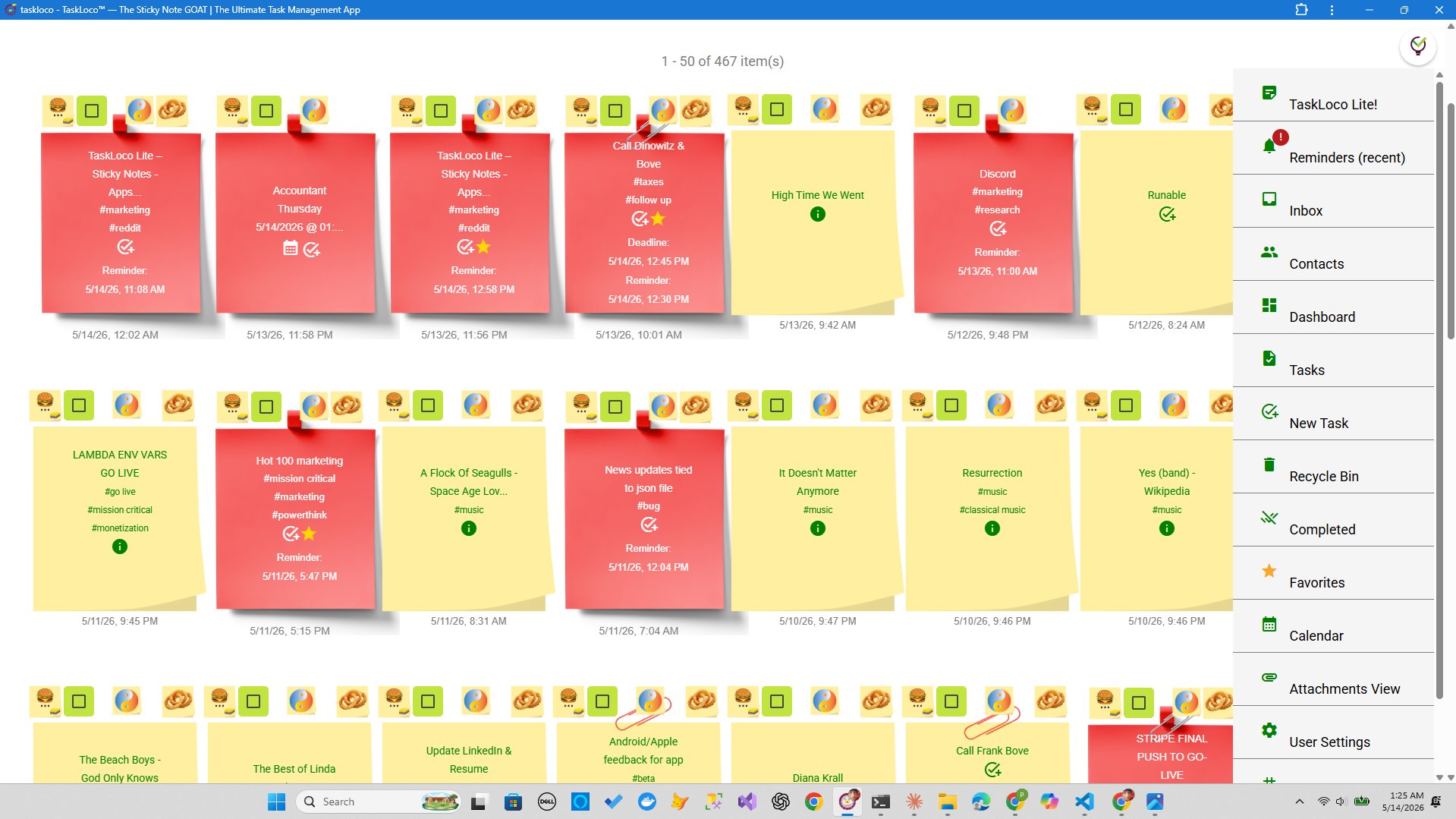
Nobody ever puts "inaction" on their budget. It doesn't show up on an invoice. There's no line item that reads "hours lost to unclear priorities" or "deals that went cold because nobody followed up." But the cost is there — baked into missed deadlines, repeated mistakes, and the low-grade anxiety of knowing things are falling through the cracks.
The research on this is consistent: knowledge workers lose significant chunks of their day not to hard work, but to the absence of organization. Tasks that live only in someone's head don't get done on time. Notes scattered across email, paper, and chat apps create friction that compounds every single day. And the longer a broken system stays in place, the more expensive it becomes to fix. Inaction isn't neutral. It's a slow drain.
What Does Inaction Actually Cost?
Inaction isn't the absence of a decision — it's a decision by default. And like any decision, it has consequences. The problem is those consequences are diffuse and delayed, which makes them easy to ignore until they're impossible to.
Think about what happens when a task doesn't get written down. In the moment, it feels fine — you'll remember it. An hour later, you're 60% sure you remember it. By morning, it's gone or distorted. The cost isn't just that one task. It's the trust others had that it would get done. It's the work that has to be redone, the apology that has to be made, the reputation that takes a small hit.
Now multiply that by a team of five, ten, or twenty people — all carrying tasks in their heads, all using different systems, all assuming someone else is tracking the important stuff. The hidden cost becomes very visible, very fast.
There's also a cognitive cost. When your brain is acting as the task manager, it's working overtime. Every open loop — every "I need to remember to..." — consumes working memory. This is why people feel exhausted even on days when they haven't accomplished much. The cost of inaction isn't just measured in missed tasks; it's measured in mental bandwidth burned just trying to hold things together.
The Three Places Inaction Hides
Inaction rarely announces itself. It hides in the gaps between the tools and habits we already have. Here are the three places it does the most damage:
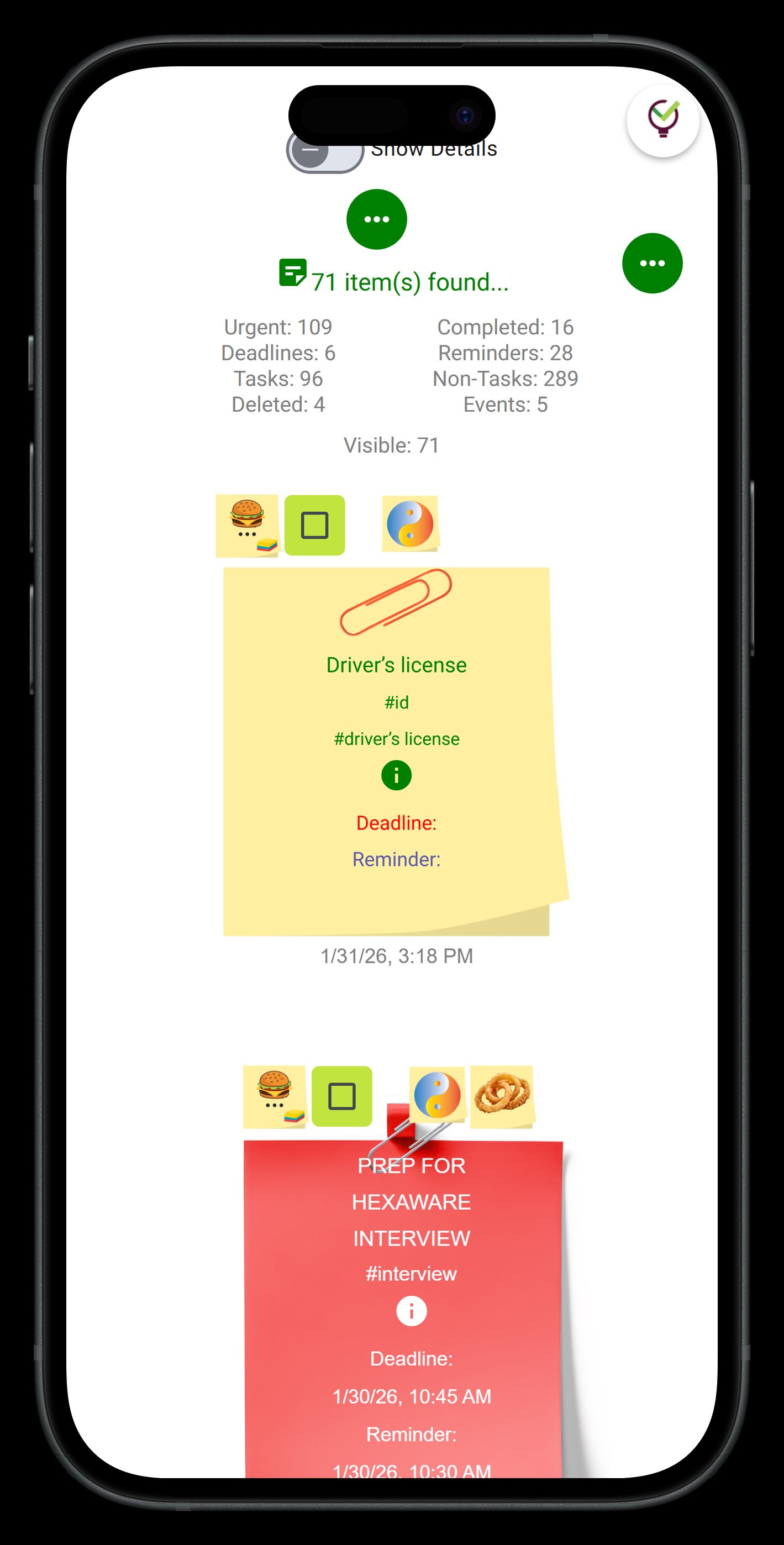
1. The "I'll deal with it later" pile. Every inbox, every sticky note stack, every browser tab left open is a deferred decision. Individually, each one seems harmless. Collectively, they create a mounting psychological debt. The longer something sits in the pile, the more mental energy it costs you every time you look at it and choose not to deal with it.
2. The handoff that never happened. Work that lives in one person's head — or one person's notebook — can't move when that person is unavailable. Teams lose hours every week to hunting down context that should have been shared and documented. The inaction here isn't laziness; it's a system that makes sharing friction-heavy, so people skip it.
3. The reminder that wasn't set. How many times have you thought "I need to follow up on that" and then didn't — not because you forgot the task, but because there was no system nudging you back to it at the right moment? Every dropped follow-up is a small cost. Over a year, those small costs add up to something significant: a client who felt ignored, a project that drifted, a deal that went cold.
How TaskLoco Closes the Gap
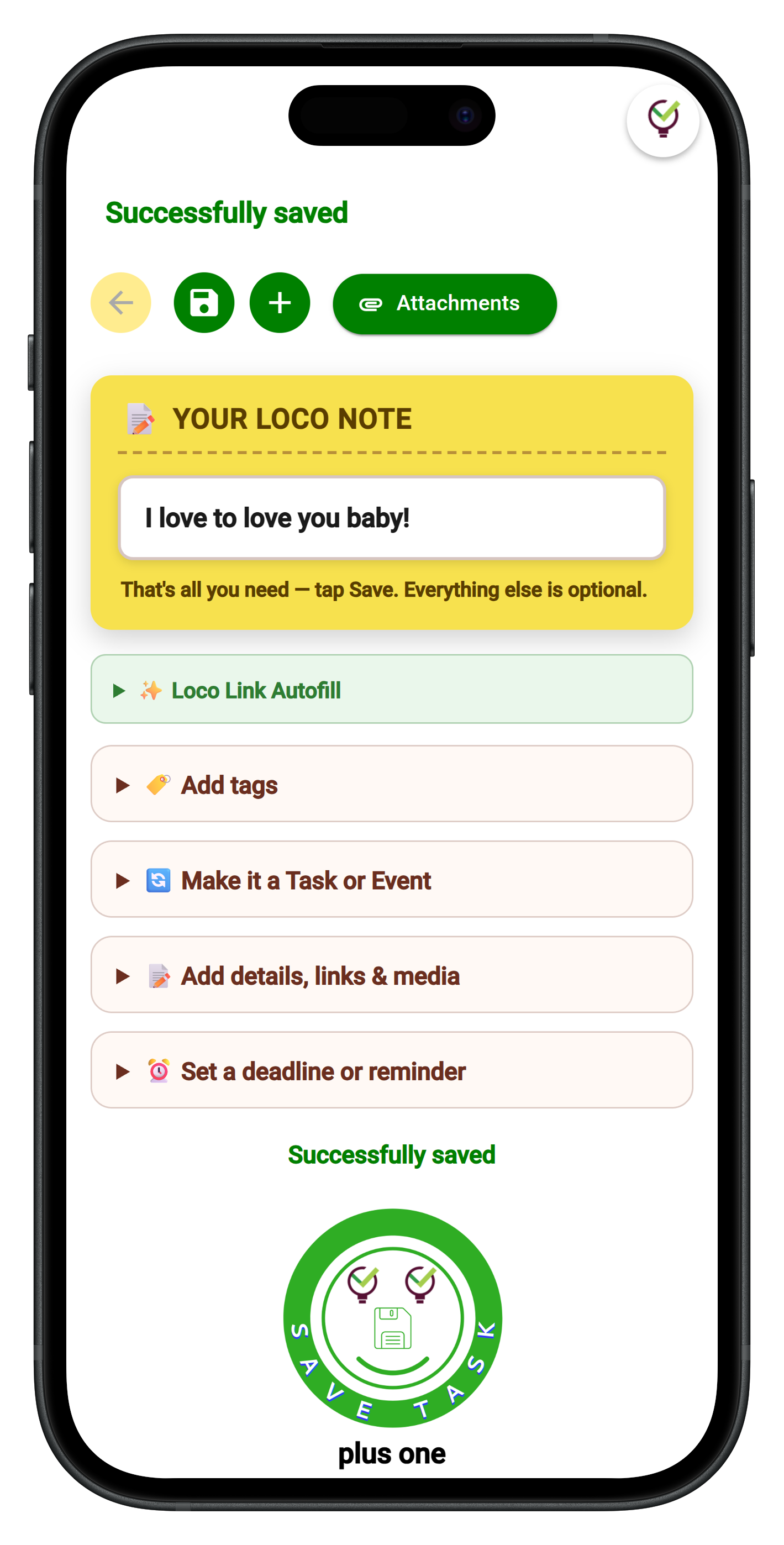
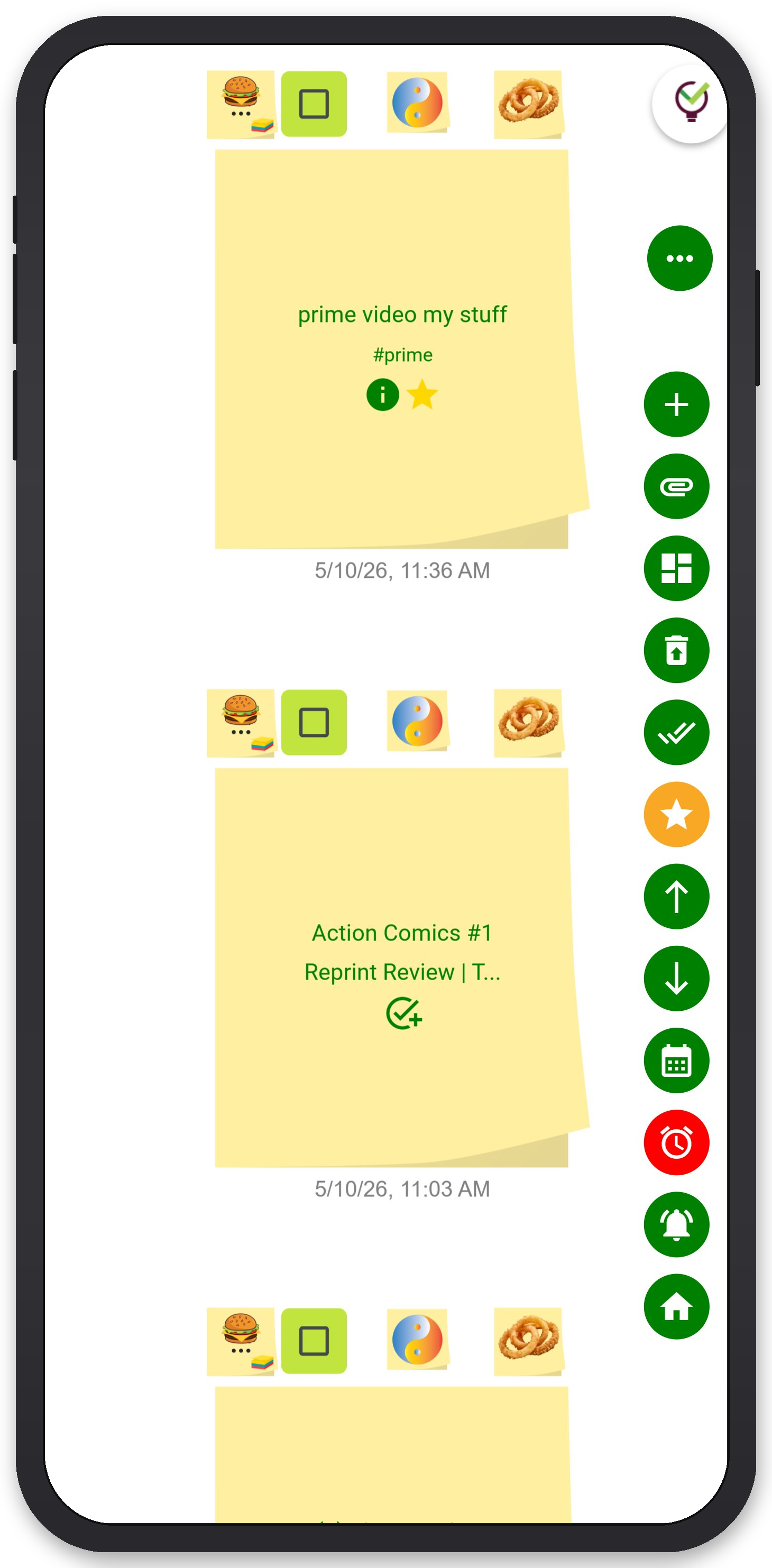
TaskLoco was built around a deceptively simple premise: the closer your capture system is to the moment of thought, the more you'll actually use it. That's why it starts with sticky notes — a format everyone already understands — and layers in the structure that makes them actually powerful.
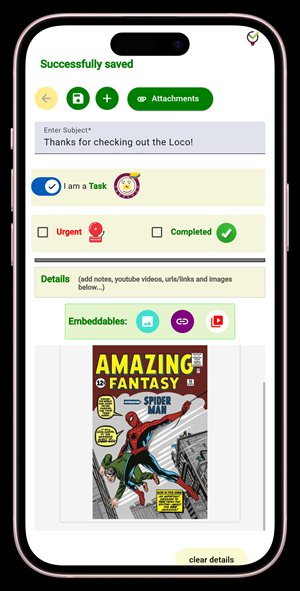
When a thought hits, you create a note. That note can hold a task, a file, a reminder, a link to a webpage you captured with one click from Chrome, or a photo you embedded on the spot. Everything lives in one place, tied together, searchable. There's no "where did I put that?" There's no emailing yourself at midnight. There's no second tool for reminders and a third for files.
The reminder system in particular attacks one of the most expensive habits in knowledge work: the dropped follow-up. Set a reminder on any note, and you'll get a push notification delivered directly to your phone and computer that deep-links straight back to the note itself — so you're not just reminded that something exists, you're dropped right into the context you need to act on it. Optional email and SMS notifications are available too, so you can meet the reminder wherever you are.
For teams, shared notes work like email — the recipient clones the note and makes it their own. No permissions to configure, no access levels to manage, no admin overhead. The work moves; the friction doesn't. When everyone on a team is working from a shared system with reminders and real-time sync, the hidden costs of inaction stop compounding and start shrinking.
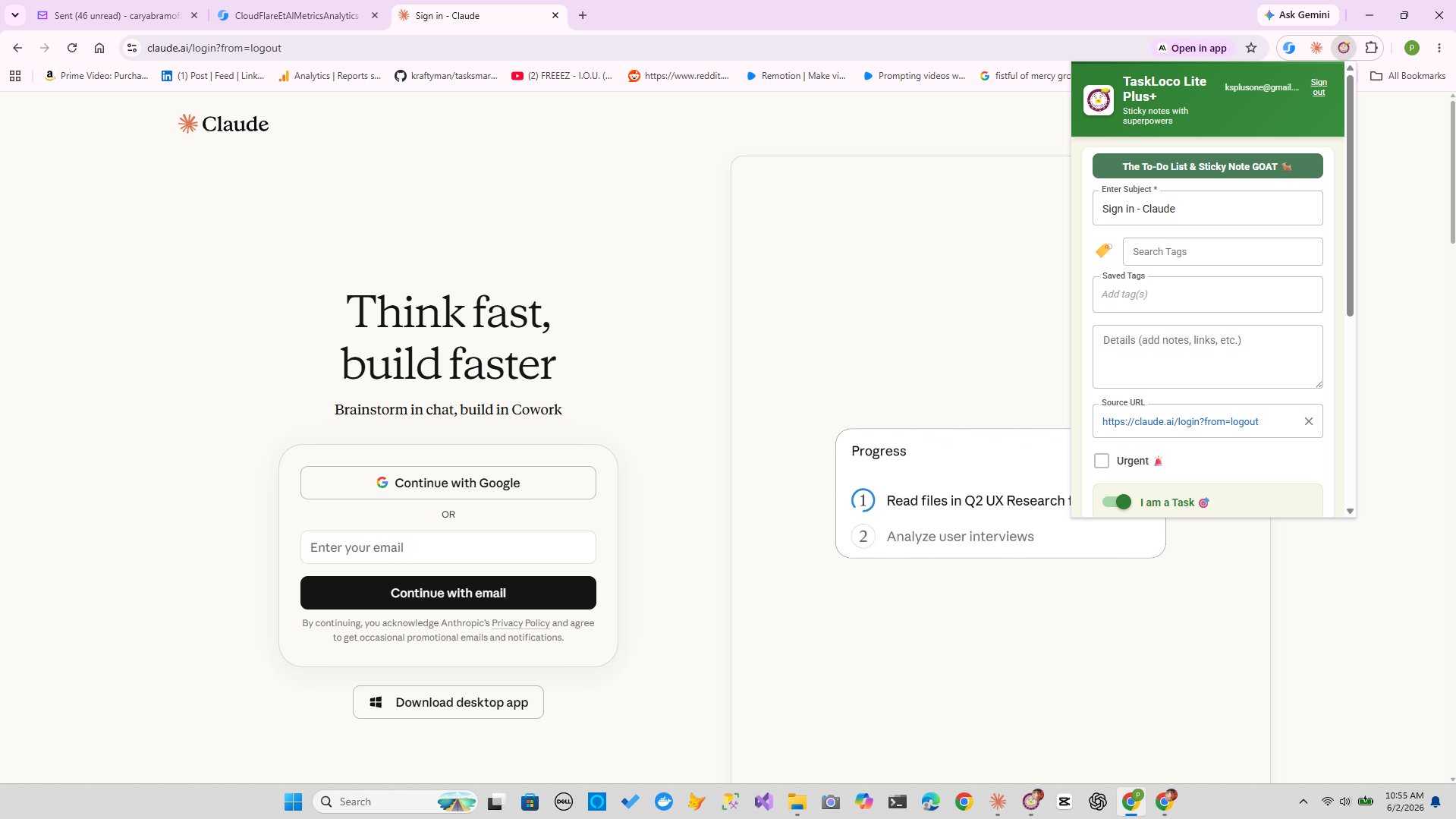
Start with TaskLoco Lite, the free native iPhone and Android app — completely anonymous, no sign-in required, up to 20 notes stored on your device. Or use TaskLoco Lite Plus+ for free on the web and Chrome extension, which syncs across all your devices and gives you 30 notes. When you're ready for reminders, file attachments, unlimited notes, calendar view, and team sharing, that's TaskLoco Premium.
TaskLoco Premium is regularly $9.99/month per person. Right now, charter members can lock in 50% off the regular price — forever. That means $4.99/month per person today. And if our price ever goes up, you still pay half. Always.
Code CHARTER50 auto-applies at checkout. First 500 spots only — once they're gone, this offer is gone permanently. Act fast while spots last.
Every Premium subscription includes unlimited notes, 10GB file storage, reminders, calendar, and team sharing. Each team member requires a separate subscription. 7-day free trial — no charge until day 8. Cancel anytime.
Free Options: TaskLoco
TaskLoco Lite
- Native iPhone & Android app
- Completely anonymous — no sign-in
- Data stays on your device
- Up to 20 notes
- Free forever
TaskLoco Lite Plus+
- Web app + Chrome extension
- Sign in with Google
- Wall syncs across all devices
- Up to 30 notes
- Free forever
Lock In 50% Off — Forever
7-day free trial. No charge until day 8. CHARTER50 auto-applies at checkout.
🔒 Lock In My Charter SpotSee TaskLoco in Action
Frequently Asked Questions
What is the hidden cost of inaction at work?
The hidden cost of inaction is the cumulative loss — in time, money, and opportunity — that results from tasks not captured, decisions not made, and follow-ups not completed. Unlike direct costs, it rarely appears on a report. It shows up as project delays, rework, dropped clients, and the exhausting mental overhead of carrying open loops in your head instead of a system.
How does poor task management cost money?
Poor task management costs money in several compounding ways: duplicated effort when context isn't shared, missed deadlines that damage client relationships, time spent searching for information that should have been organized, and the cognitive tax of managing priorities mentally instead of systematically. When multiplied across a team, even small inefficiencies per person per day become significant annual losses.
Why do people keep using systems they know don't work?
Because switching feels more disruptive in the moment than the slow drain of staying put. The cost of a broken system is diffuse and invisible; the effort of changing it is immediate and concrete. This is exactly the trap inaction sets — the pain isn't acute enough to force action until it's much worse than it needed to be. The real question isn't whether to fix the system; it's how long you're willing to keep paying for the one you have.
What is the best way to stop tasks from falling through the cracks?
The most effective approach is to get tasks out of your head and into a capture system the moment they appear — not later, not "when you have a minute," but immediately. The system needs to be fast enough that using it feels easier than skipping it, and it needs to support reminders so captured tasks actually resurface at the right moment. TaskLoco is built exactly around this: fast note capture, push notification reminders that deep-link back to the original note, and file attachments so every note carries the context needed to act.
How do reminders help reduce the cost of inaction?
Reminders eliminate one of the most expensive habits in knowledge work: the dropped follow-up. A task captured without a reminder depends entirely on you remembering to return to it — which means it competes with everything else in your working memory. TaskLoco reminders are delivered as push notifications directly to your phone and computer, deep-linking straight back to the note, so you return to the right context at the right time. Optional email and SMS notifications are available as additional channels.
Does TaskLoco have a free version I can try?
Yes — two of them. TaskLoco Lite is a free native iPhone and Android app: completely anonymous, no sign-in required, stores up to 20 notes on your device. TaskLoco Lite Plus+ is free on the web and Chrome extension: sign in with Google, syncs across all your devices, up to 30 notes, and a one-click Chrome extension to capture any webpage. Neither free tier includes reminders, file attachments, or team sharing — those are Premium features. TaskLoco Premium includes a 7-day free trial with no charge until day 8.
How much does TaskLoco Premium cost?
$9.99/month per person (currently $4.99/month per person for first 500 charter members with code CHARTER50)
Born in Brooklyn. Powered by AWS. Your data stays yours.
TaskLoco is available on iPhone, Android, Chrome, and every web browser.