Most to-do lists are graveyards of good intentions. 'Finish report.' 'Call dentist.' 'Deal with tax stuff.' These aren't tasks — they're compressed anxiety. The Next Action Principle, popularized by David Allen's Getting Things Done methodology, cuts through that fog with one brutal question: what is the very next physical action required to move this forward? Not the project. Not the goal. The next action.
The difference sounds trivial until you sit down to work and realize 'finish report' could mean anything from opening a blank document to emailing three people. The next action removes ambiguity completely. It's the difference between a list you avoid and a list you actually use. This article explains the principle in full, why it works psychologically, and how the right tool — one built around fast capture and frictionless retrieval — makes the whole system stick.
What the Next Action Principle Actually Means
David Allen introduced the term in Getting Things Done, but the underlying idea is older than any productivity book. A next action is a specific, visible, physical activity. 'Plan the conference' is not a next action. 'Open a new doc and type three potential venue names' is. The distinction matters because your brain can execute the second one the moment you read it. The first one requires invisible pre-processing work that your brain silently bills you for all day long — what Allen calls 'open loops.'
Open loops drain cognitive energy. Every time a vague task sits on your list, your brain re-evaluates it — consciously or not — trying to figure out what it actually means. The Next Action Principle closes those loops by forcing you to do the thinking once, at capture time, rather than repeatedly at execution time.
Three elements define a true next action:
- Physical — it describes a real-world behavior (call, write, click, walk to)
- Specific — it cannot be misinterpreted or require further clarification before starting
- Immediately actionable — no prerequisite step is needed before you begin
Why It Works: The Psychology Behind the Principle
There's a reason the Next Action Principle has outlasted every productivity trend of the last twenty years. It's not a hack — it maps directly onto how working memory functions. Psychologist Bluma Zeigarnik documented in the 1920s that the brain obsessively holds onto unfinished tasks. The 'Zeigarnik effect' is why you can't stop thinking about a project at dinner. But research by E.J. Masicampo and Roy Baumeister found a critical nuance: you don't have to finish the task to quiet the mental chatter. You just have to make a concrete plan for it.
That's exactly what defining a next action does. It satisfies your brain's need for resolution without requiring you to actually do the work right now. The intrusive thought stops. Your working memory frees up. You can focus on whatever is actually in front of you.
The second psychological mechanism is decision fatigue. Every time you look at an ambiguous item on your list, you're making a micro-decision about what it means. Multiply that by thirty items, twice a day, and you've burned real cognitive fuel before you've done a single unit of actual work. Next actions eliminate that tax entirely — the decision was made once, at capture, and now execution is automatic.
This also explains why people who try GTD but don't commit to next-action thinking abandon the system. Lists without next actions feel heavier over time, not lighter. The method only works when the thinking happens at capture, not at execution.
How to Apply the Principle Without Overcomplicating It
The irony of productivity systems is that they can become the thing that stops you from being productive. The Next Action Principle is intentionally lightweight. Here's a practical implementation that doesn't require you to read a 300-page book first.
Step 1 — Capture everything. Every commitment, idea, task, and worry that lives in your head needs to land somewhere external. Your brain is for having ideas, not storing them. Use whatever capture tool is fastest for you — but it must be immediately accessible. Friction at capture means thoughts get lost.
Step 2 — Process each item once. When you look at a captured item, ask: is this actionable? If no, it's reference material or trash. If yes, define the next action using a verb that describes physical behavior. 'Email Sarah the budget spreadsheet' beats 'budget stuff' every time.
Step 3 — Assign context if it helps. Some practitioners tag next actions by context: @phone, @computer, @errands. This lets you batch actions by situation. When you're at your desk, you work through @computer items. This is optional but powerful for busy people with fragmented days.
Step 4 — Review regularly. A weekly review keeps the system honest. Scan every list, update next actions that have changed, and capture anything still living in your head. This is the maintenance step most people skip — and the reason most systems collapse within a month.
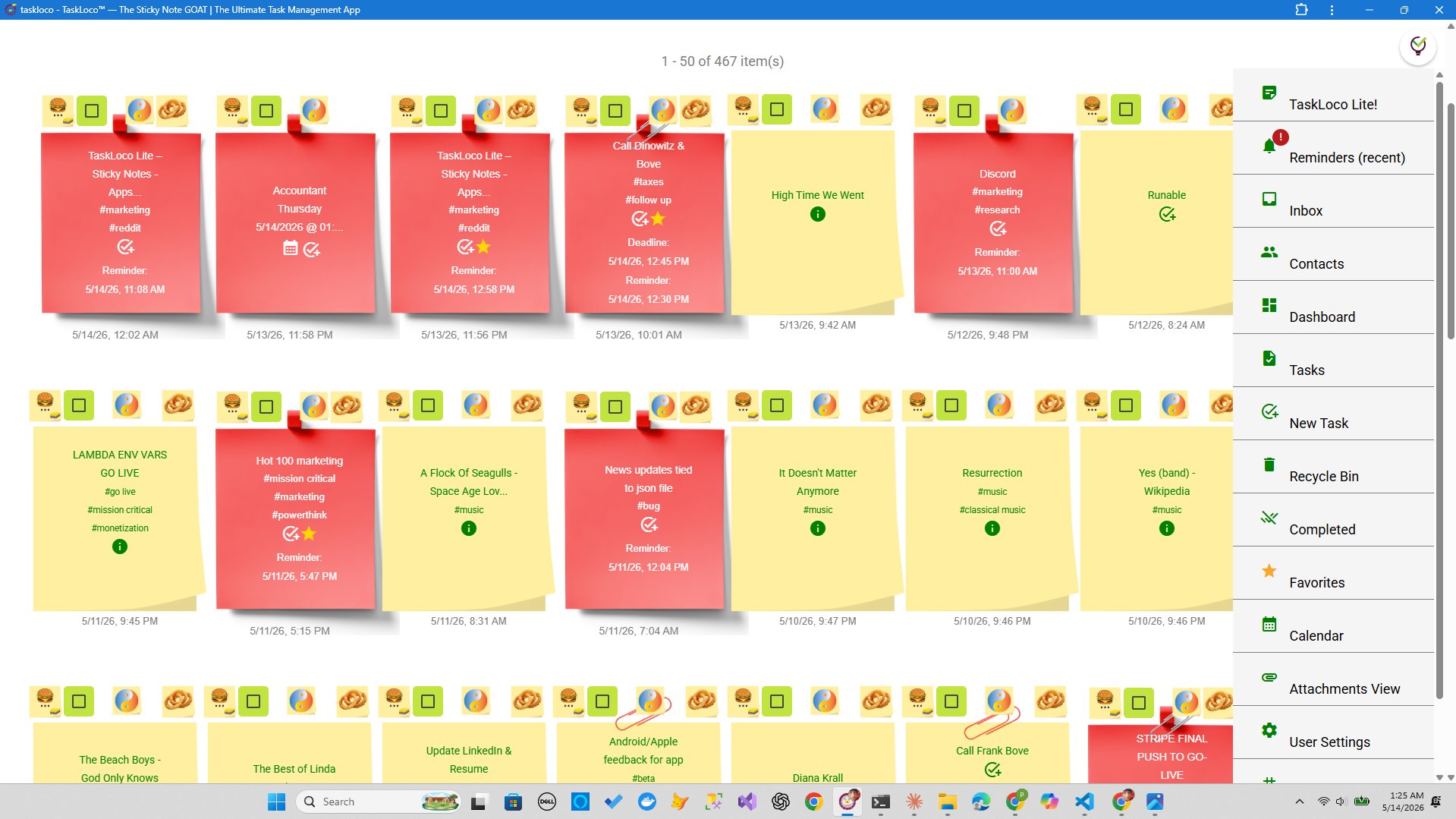
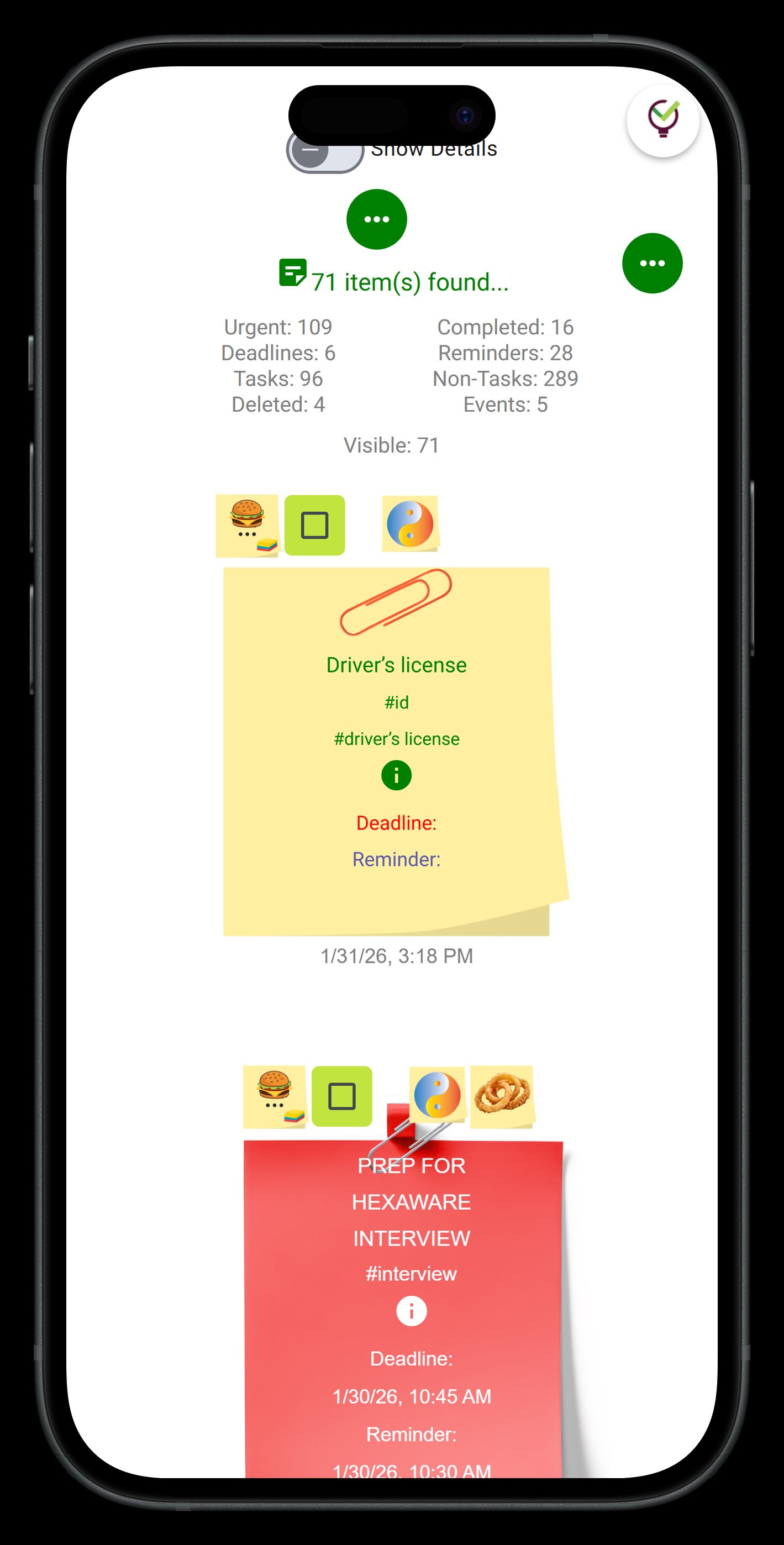
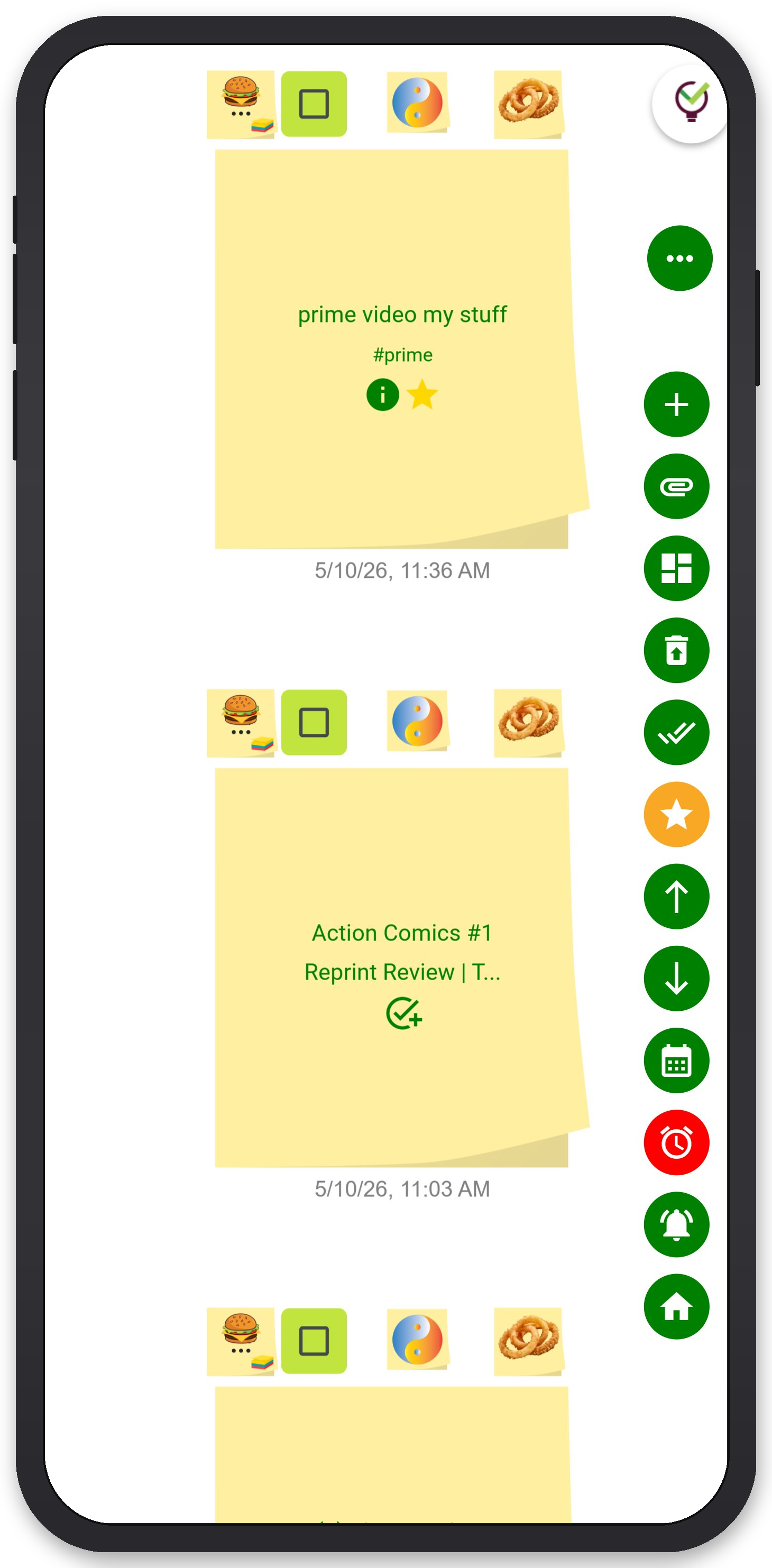
Tools matter less than habit, but a tool that makes capture fast and retrieval instant will outlast one that requires navigation. TaskLoco was built precisely for this: a sticky-note wall where each note is a single thought, a single next action, immediately visible without menus or subfolders standing in the way.
TaskLoco and the Next Action Principle: Built for Each Other
Most productivity apps are built around projects. Tasks nest under projects, which nest under portfolios. That hierarchy is useful for teams managing complex deliverables — but it's friction-heavy for personal next-action capture. By the time you've decided which project a thought belongs to, you've broken the mental flow that produced it. TaskLoco inverts this: capture first, organize later, or don't organize at all. The wall is a flat, scannable surface where every sticky note is a visible unit of work.
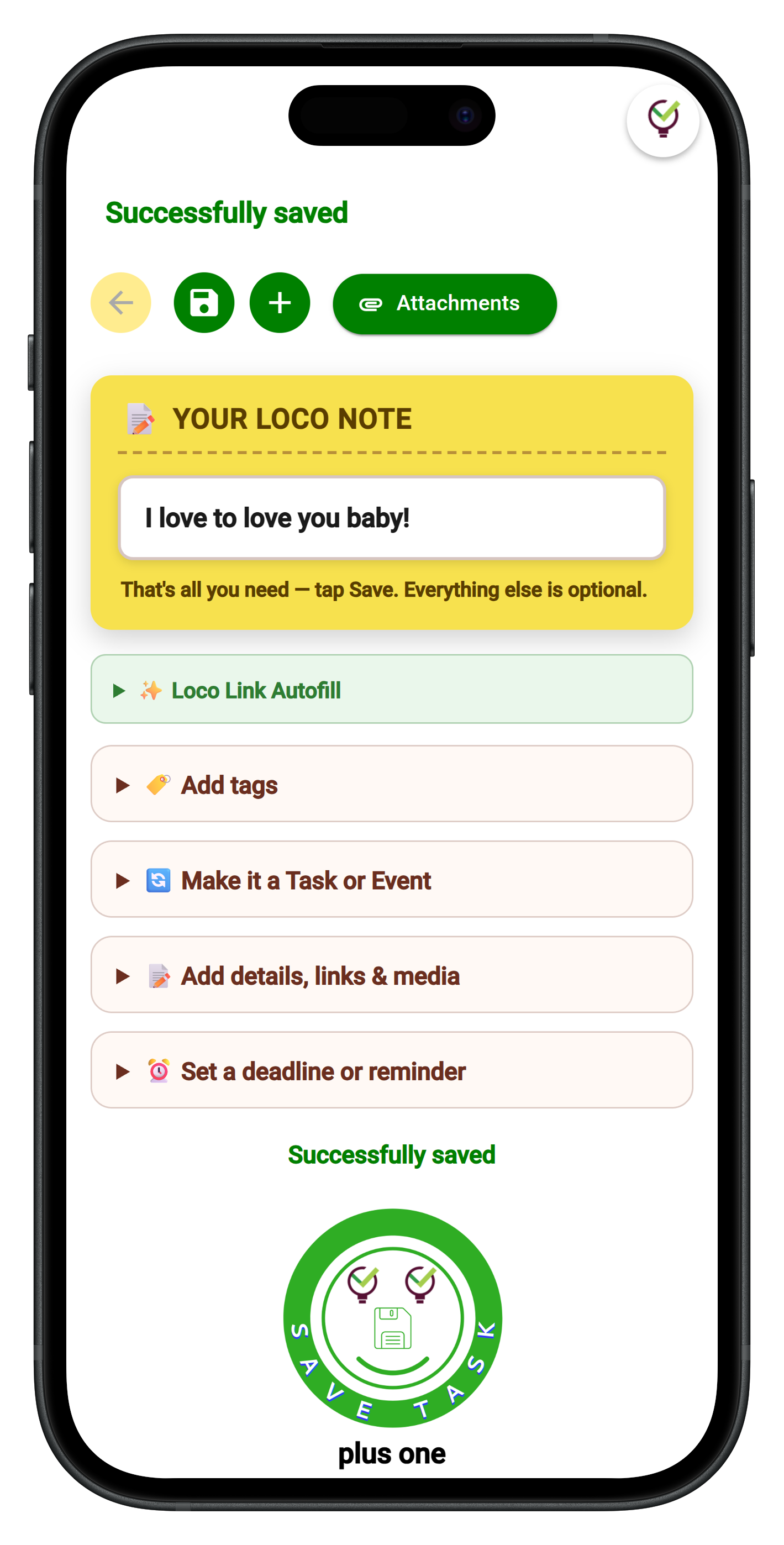
That design philosophy aligns with next-action thinking almost by accident — or maybe by intention. Each note holds one thought. You can write 'Email Jake re: contract renewal — attach the March invoice' and that note is done. It's a complete next action. You'll never have to decode it. When you're ready to work, you open the wall, scan the notes, and execute.
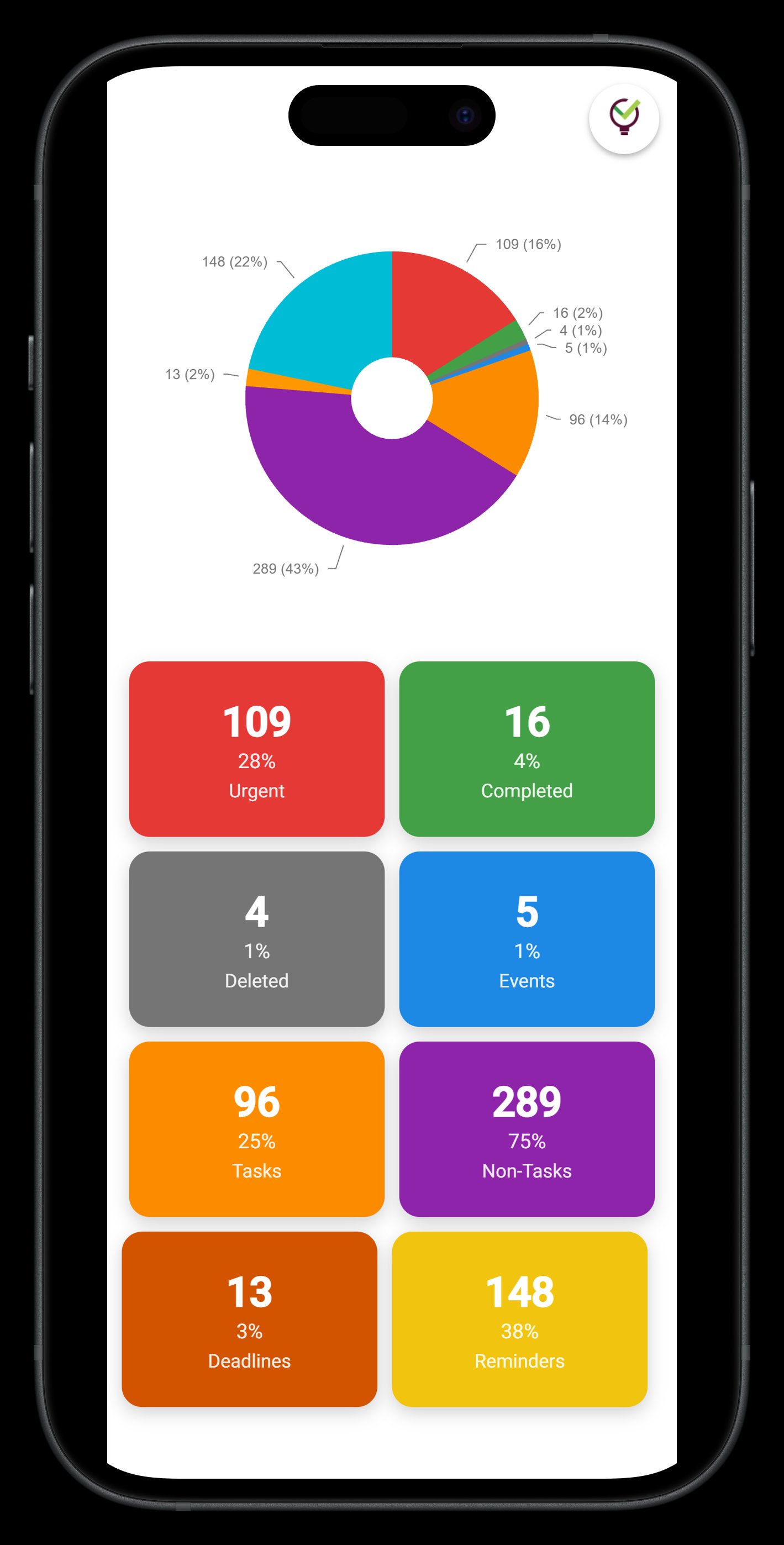
TaskLoco Premium adds the layer that makes the system truly close loops: reminders delivered as push notifications directly to your phone and computer, deep-linking back to the original note. That last part is the important piece. Most reminder apps surface an alert with a title and then drop you at a home screen. TaskLoco's reminder opens the exact note that contains the next action — the instruction is right there, with any attached files, the moment the notification fires. Optional email and SMS channels are available too, so the alert reaches you wherever you are.
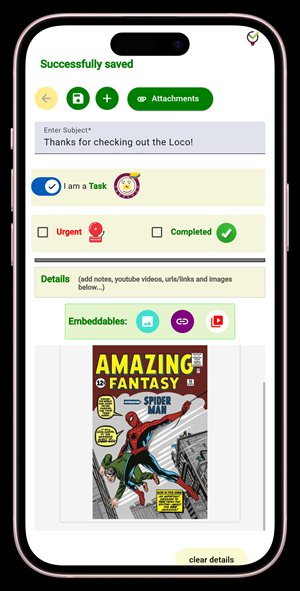
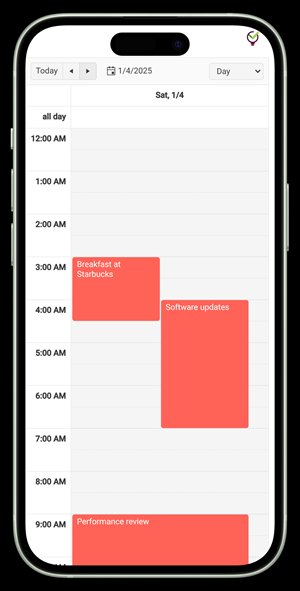
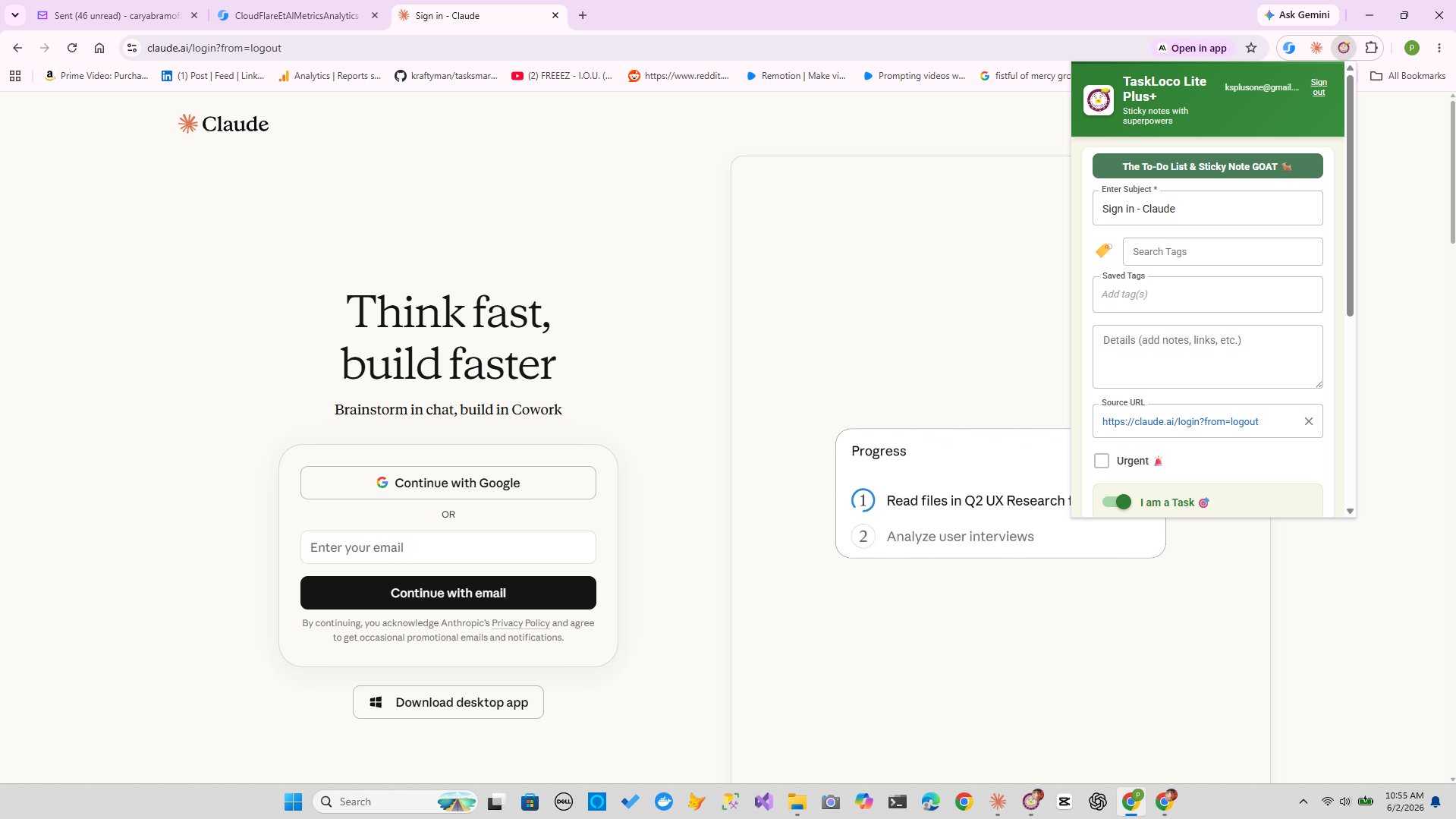
The Chrome extension means any webpage — a job posting, a research article, an email thread you need to act on — becomes a note in one click. Attach files up to your 10GB storage limit, set a reminder, and it's a complete next action package. Calendar view surfaces everything with a time component in one place. Nothing falls through the cracks because nothing lives only in your memory.
TaskLoco Premium is regularly $9.99/month per person. Right now, charter members can lock in 50% off the regular price — forever. That means $4.99/month per person today. And if our price ever goes up, you still pay half. Always.
Code CHARTER50 auto-applies at checkout. First 500 spots only — once they're gone, this offer is gone permanently. Act fast while spots last.
Every Premium subscription includes unlimited notes, 10GB file storage, reminders, calendar, and team sharing. Each team member requires a separate subscription. 7-day free trial — no charge until day 8. Cancel anytime.
Free Options: TaskLoco
TaskLoco Lite
- Native iPhone & Android app
- Completely anonymous — no sign-in
- Data stays on your device
- Up to 20 notes
- Free forever
TaskLoco Lite Plus+
- Web app + Chrome extension
- Sign in with Google
- Wall syncs across all devices
- Up to 30 notes
- Free forever
Lock In 50% Off — Forever
7-day free trial. No charge until day 8. CHARTER50 auto-applies at checkout.
🔒 Lock In My Charter SpotSee TaskLoco in Action
Frequently Asked Questions
What is the Next Action Principle?
The Next Action Principle states that every incomplete task on your list should be defined as a specific, physical, immediately executable action — not a project name or vague intention. It was formalized by David Allen in Getting Things Done and is the single most effective way to eliminate procrastination caused by ambiguous to-do items.
What's the difference between a next action and a task?
A task is often a label: 'finish presentation,' 'deal with invoices.' A next action is a physical behavior: 'open Slides and write the three-point conclusion,' 'download invoice from Stripe and email it to [email protected].' The difference is whether you can start the item in under 30 seconds without thinking about what it means. Tasks require interpretation at execution time; next actions don't.
How do I figure out the next action for a complex project?
Ask yourself: 'What is the very next physical thing I need to do to move this project forward?' Ignore everything that comes after it. You're not planning the whole project — you're just identifying the single step that unblocks forward movement right now. If that step still feels vague, break it down one more level. Keep going until you hit something you could explain to a stranger in one sentence and they'd know exactly what to do.
Is the Next Action Principle part of GTD?
Yes. It's one of the core concepts in David Allen's Getting Things Done methodology. Allen argues that most stress around incomplete work comes not from the volume of tasks but from undefined tasks — commitments that sit in your head or on a list without a clear path to action. Defining next actions is the primary mechanism GTD uses to eliminate that stress and convert vague projects into executable steps.
What's the best tool for capturing next actions?
The best tool is the one with the lowest capture friction and the fastest retrieval. If it takes more than a few seconds to open your system and write a thought down, you'll stop using it when you're busy — which is exactly when you need it most. TaskLoco's sticky-note wall is designed for instant capture: open the app, create a note, write the next action, done. Premium adds reminders that deep-link back to the note so you're returned to the exact instruction when the alert fires.
How does TaskLoco help with the Next Action Principle?
TaskLoco's flat, sticky-note-based wall maps naturally onto next-action thinking — each note holds one discrete action, visible at a glance without buried menus. TaskLoco Premium adds push notification reminders that deep-link directly back to the original note, file attachments so all supporting context travels with the action, and a calendar view to surface time-sensitive items. The Chrome extension captures webpages as notes in one click, turning anything you find online into an immediate next action.
What is the weekly review in GTD and why does it matter for next actions?
The weekly review is a regular check-in — typically once a week — where you scan every list, update next actions that are stale, capture anything still living only in your memory, and confirm that every open project has at least one defined next action attached to it. It's the maintenance step that keeps the system trustworthy. Without it, lists drift back toward vague intentions and you stop checking them. With it, you maintain a system you can actually rely on.
Born in Brooklyn. Powered by AWS. Your data stays yours.
TaskLoco is available on iPhone, Android, Chrome, and every web browser.