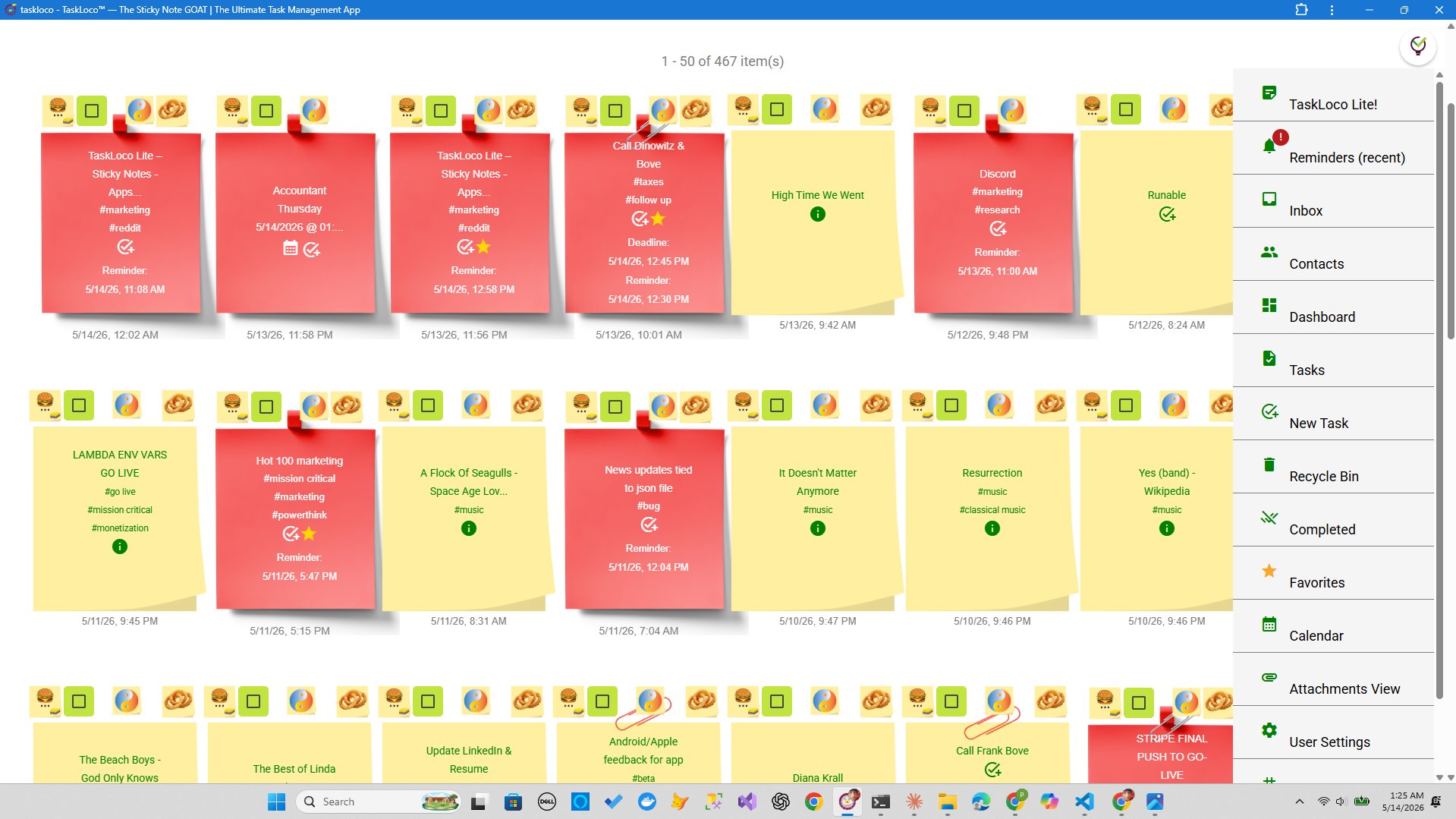
At some point, most people's productivity setup quietly becomes its own problem. You have a task manager for to-dos, a notes app for context, a calendar for deadlines, a file-sharing tool for attachments, and a team board for collaboration. Five tabs. Five notification streams. Five monthly charges. And somehow nothing talks to anything else.
The one-wall system is the antidote: everything that needs your attention lives on a single visual surface, organized by you, readable at a glance. No onboarding wizard. No project hierarchy to maintain. Just a wall of notes that reflects exactly where things stand — tasks, files, dates, and teammates included. This article explains what a great one-wall system actually requires, and shows exactly how to build one that holds up in the real world.
What to Look for in a One-Wall System
Before picking any tool, it helps to understand what actually makes a one-wall system work — and where most people go wrong when they try to build one.
1. Visual density without visual noise. The whole point of a wall is to see everything at once. If your tool buries information behind clicks, dropdowns, or nested menus, it defeats the purpose. A good wall system lets you read status, priority, and ownership from across the room — or at least across a screen. Color, position, and label should all carry meaning. If every note looks identical regardless of urgency, the wall becomes wallpaper.
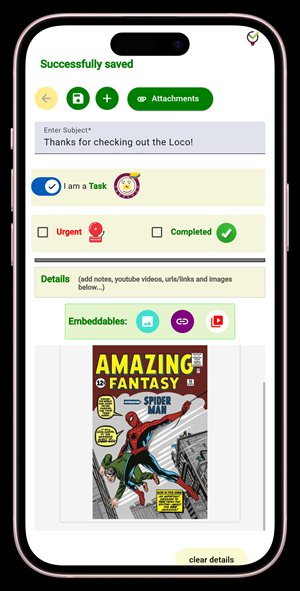
2. Depth where it counts. A sticky note is a starting point, not an endpoint. The one-wall approach collapses only if individual notes can't carry weight. That means file attachments directly on a note (not linked to a separate folder), reminders that fire at the right moment and bring you back to the exact note, and task lists that live inside the note rather than floating in a separate system. Without that depth, you end up rebuilding the five-app problem inside a single tool.
3. Sharing that doesn't require managing permissions. Team walls fail when sharing becomes a coordination task of its own. Access levels, viewer vs. editor roles, approval flows — these add friction that kills the simplicity a wall is supposed to provide. The cleanest approach: share a note the same way you'd share an email. The recipient gets a copy they can make their own. No permission management. No access expiry. Just shared context that each person owns on their end.
With those criteria clear, the question becomes which tool actually delivers all three. Most fall short on at least one. Visual note apps often lack depth. Task managers have depth but kill the visual simplicity. Team tools add collaboration but require so much setup that the wall never gets built. The rare tool that nails all three is worth serious attention.
The Five Apps a Great Wall Replaces
Let's be specific about what gets consolidated — because vague promises of "doing everything" are how people end up with six apps instead of five.
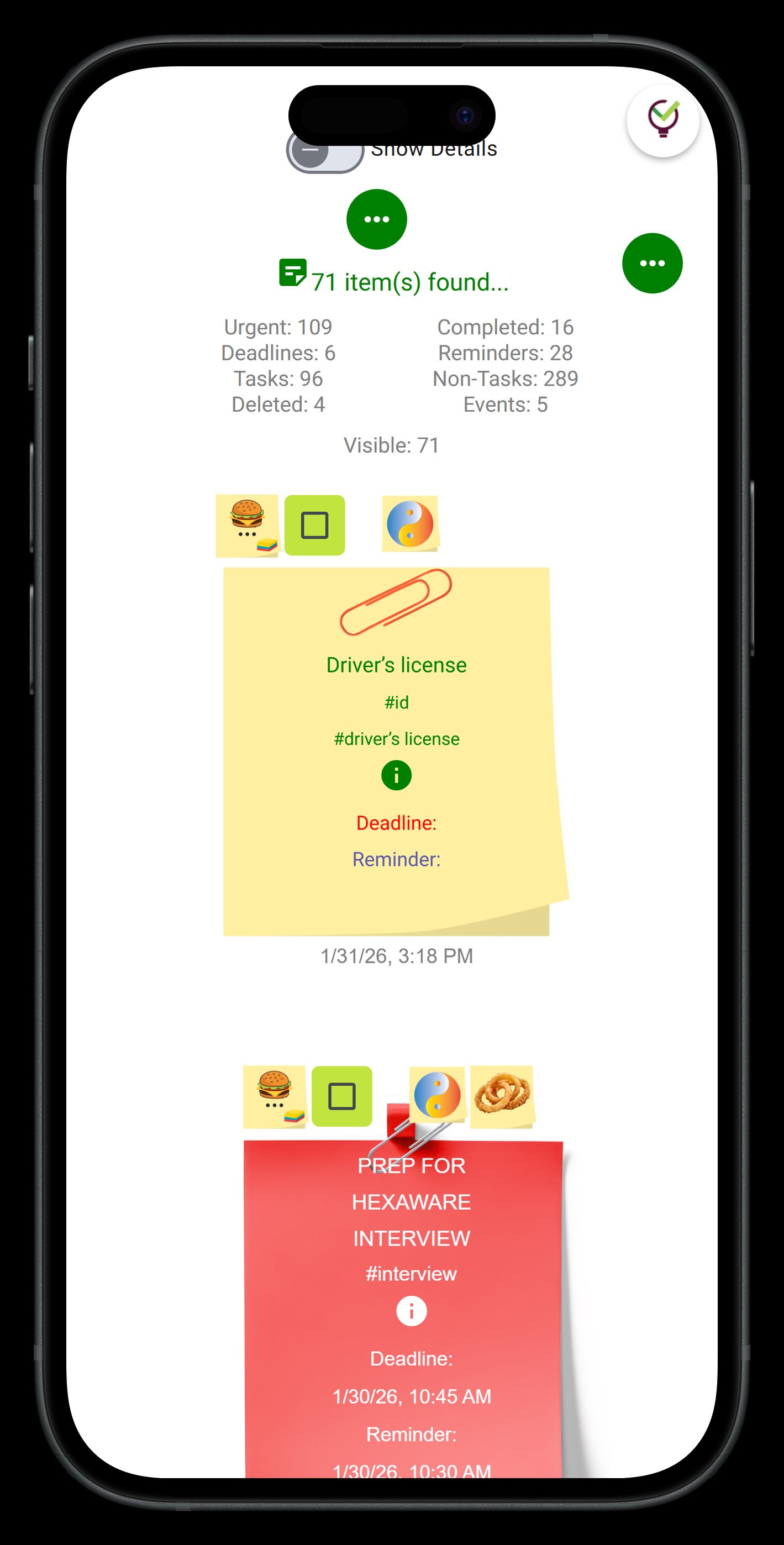
App 1: The task manager. Replaced by notes with embedded task lists. Instead of a separate app with projects and subtasks, each sticky note becomes a self-contained unit of work. The note has a title, a checklist, a due date, and a file if needed. When the tasks are done, the note is done. No project to archive. No completed items cluttering a sidebar.
App 2: The reminder app. Replaced by note-level reminders with push notifications delivered to your phone and computer. The critical difference from a generic reminder: when the notification fires, it deep-links back to the exact note. You don't get "Meeting with Sara" floating in your notification tray with no context. You get tapped directly into the note with the agenda, the attached file, and the task list — all there when you need it. Optional email or SMS notifications can layer on top of push for high-stakes reminders.
App 3: The file drop. Replaced by attachments directly on the note. Attach a contract to the note about the contract. Attach the design brief to the note about the design. The file lives with the context, not in a folder you have to remember to check. TaskLoco Premium includes 10GB of file storage with add-on tiers available for teams with heavier needs.
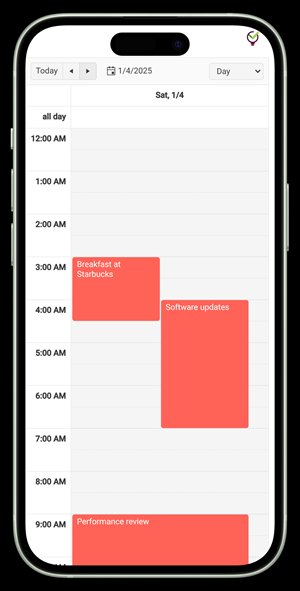
App 4: The calendar. Replaced by a calendar view built into the same workspace. Notes with due dates appear on the calendar automatically. You don't need to copy deadlines from your task manager into a separate calendar. The wall and the calendar are the same data, different views.
App 5: The team board. Replaced by note sharing that works like email. Share a note with a teammate — they receive it, clone it, and it becomes their own. No permissions to set. No access levels to manage. The note travels the same way an email would, but lands in their wall rather than their inbox.
Building Your Wall: The TaskLoco Setup
Theory only matters if the setup is actually doable. Here's how a one-wall system comes together in TaskLoco from day one.
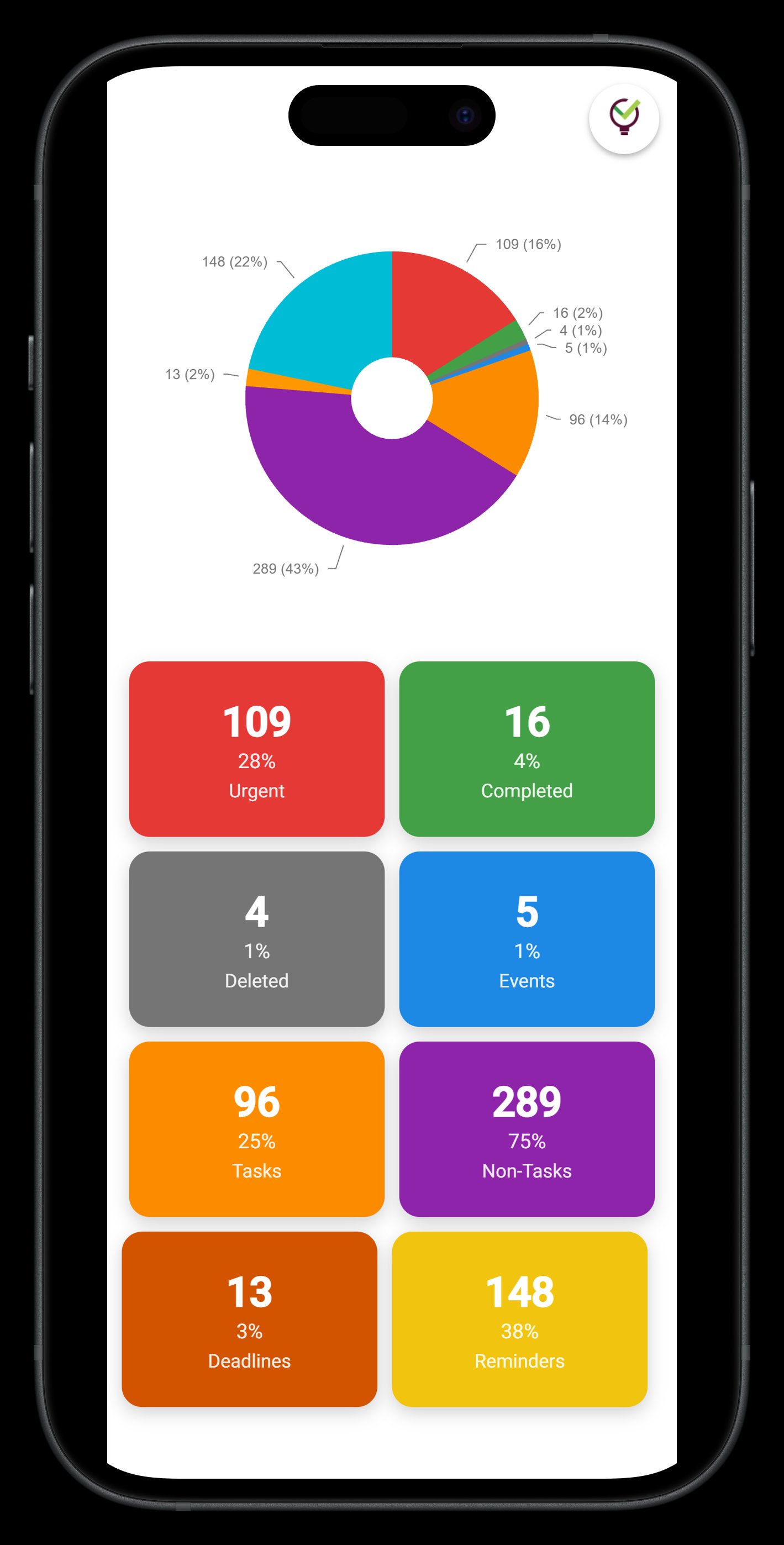
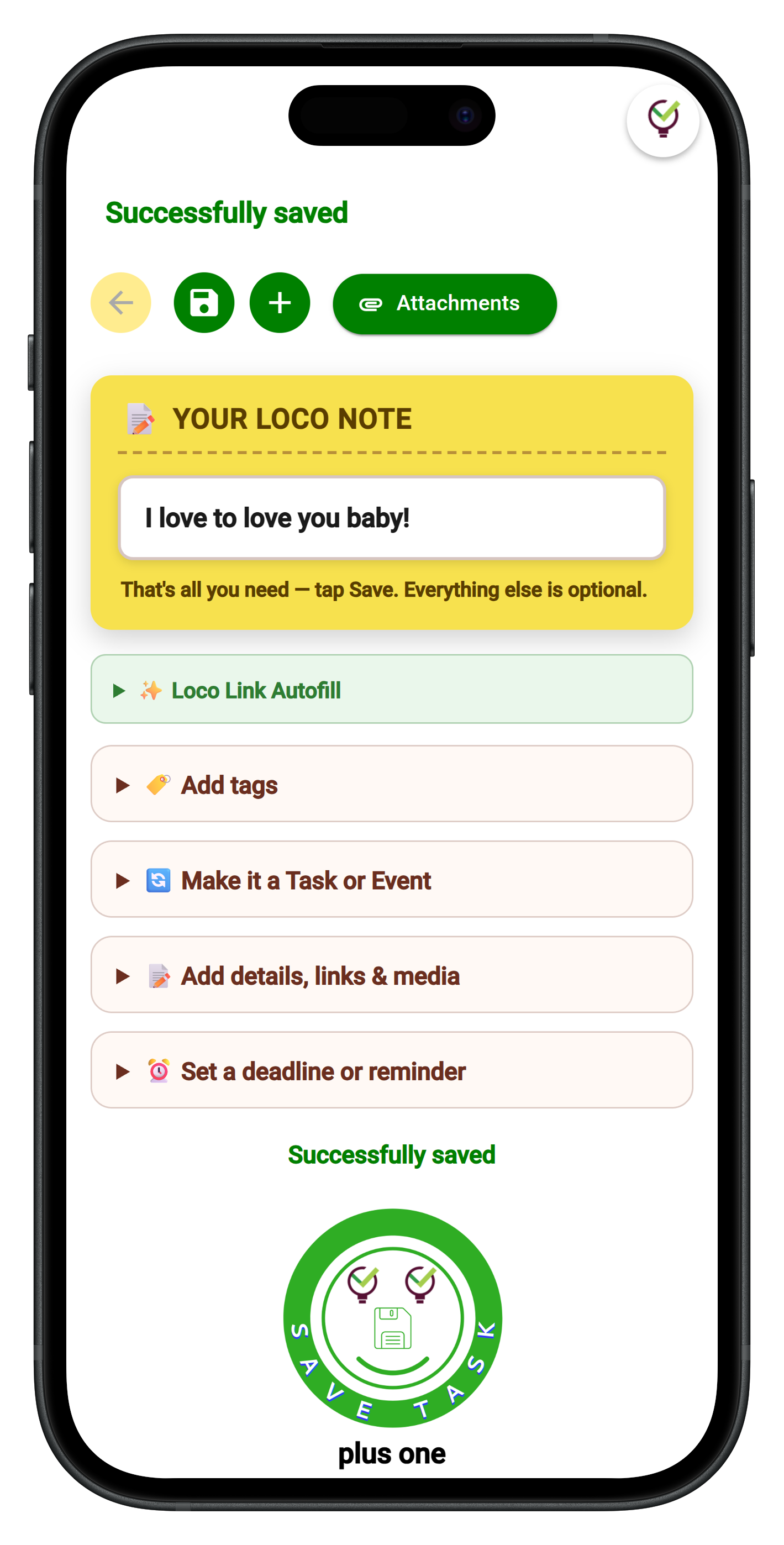
Start free, scale when you need to. TaskLoco Lite is a native iPhone and Android app — completely anonymous, no sign-in required, stores up to 20 notes on your device. It's the fastest possible way to start building a note habit. No account, no cloud, no friction. When you're ready for sync and cross-device access, TaskLoco Lite Plus+ runs in the browser and Chrome extension, syncs across all your devices, and holds up to 30 notes for free. When you need reminders, file attachments, unlimited notes, calendar view, and team sharing, that's TaskLoco Premium — and it's where the one-wall system fully comes together.
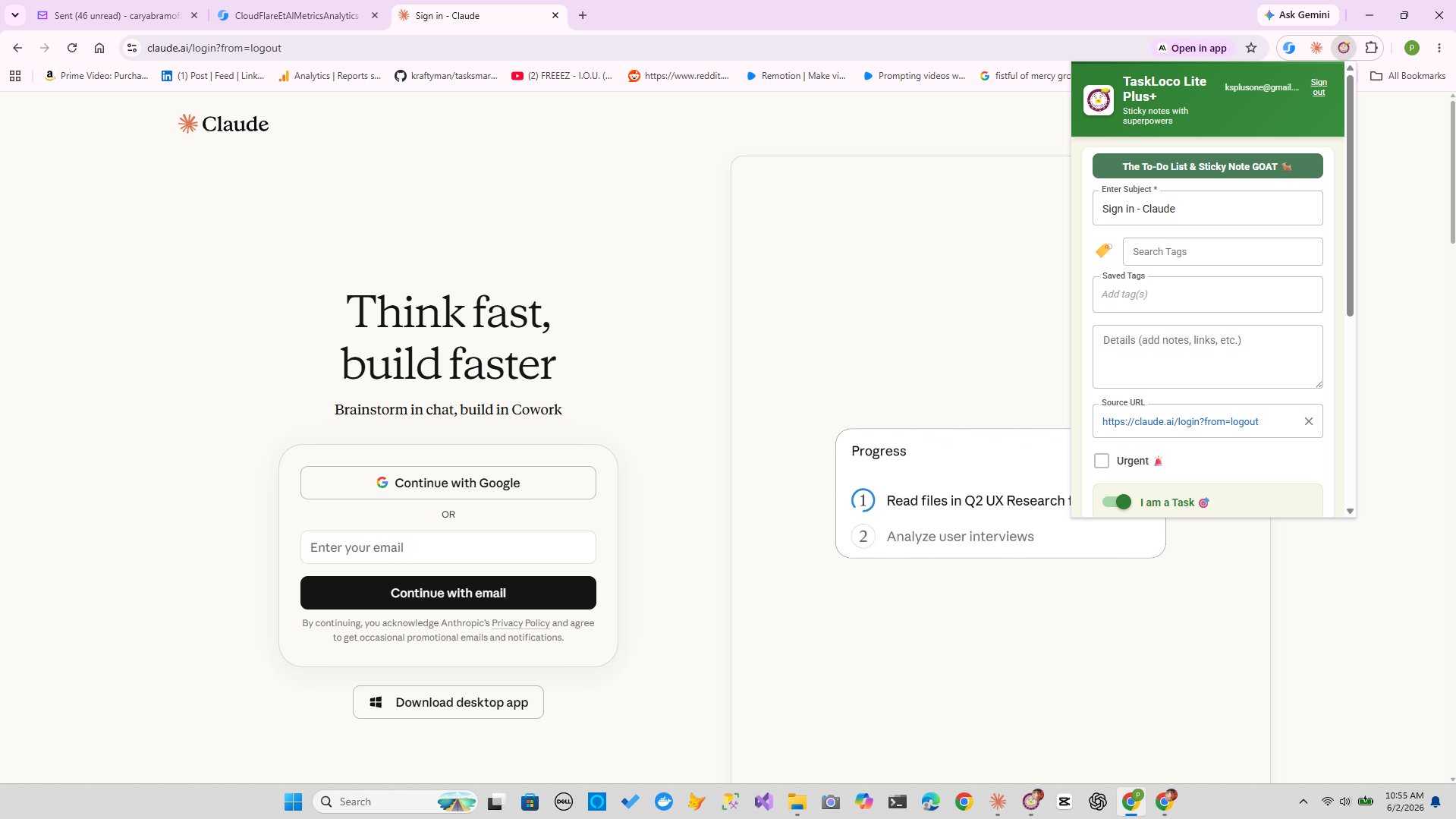
The Chrome extension is your capture layer. One of the silent killers of any wall system is the friction of adding things to it. If capture is slow, things don't get captured. The TaskLoco Chrome extension solves this for web content: one click saves any webpage directly into your wall as a note. No copy-paste. No tab-switching. The page is on your wall the moment you decide it matters.
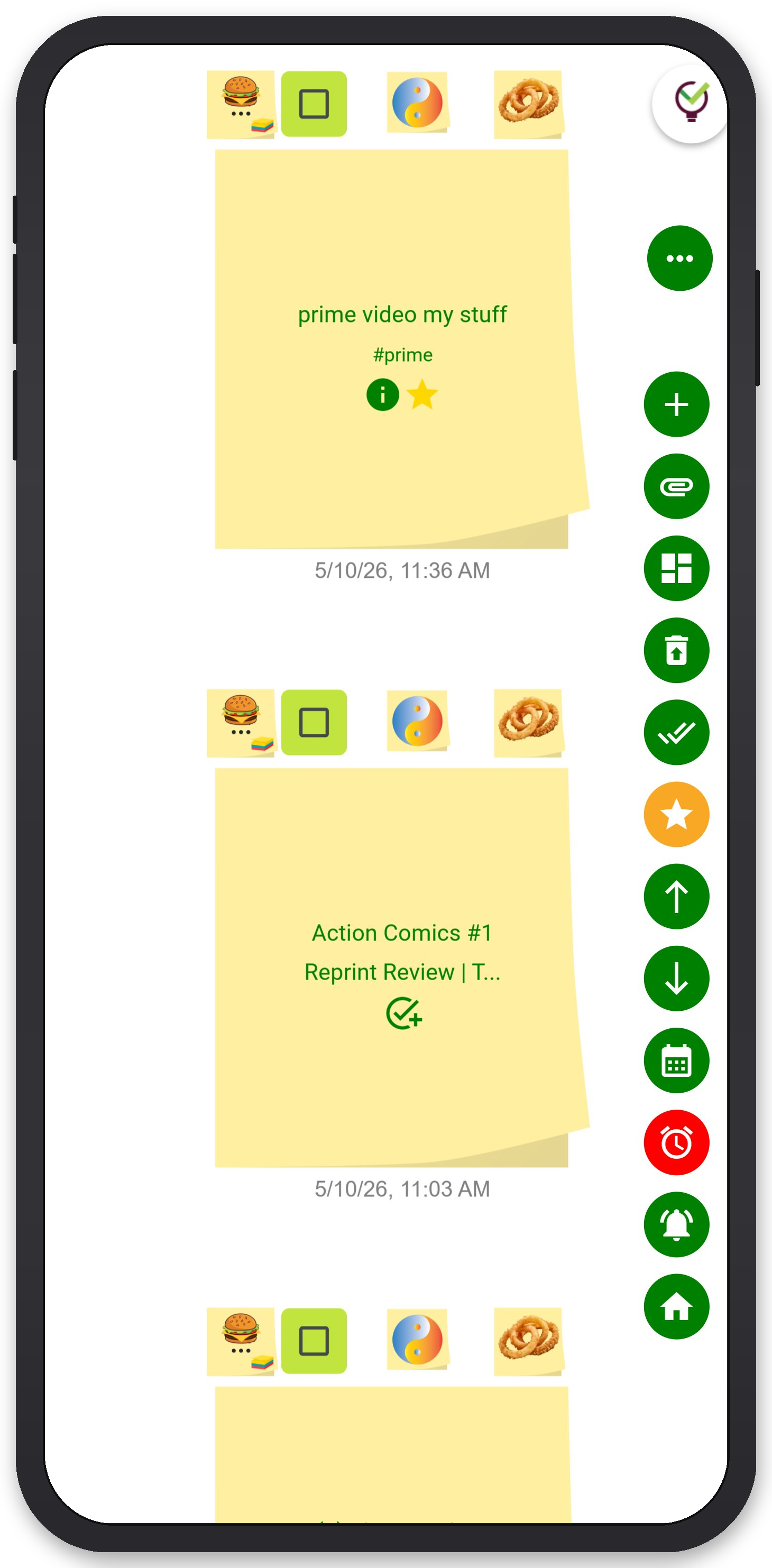
Color and layout are your organizational layer. TaskLoco's wall isn't a flat list. Notes can be color-coded, sized, and positioned to reflect priority, category, or owner. Build a column for urgent, a column for this week, a column for waiting. Or keep it looser — just let colors signal status. Either way, the wall becomes readable at a glance without requiring a project structure you have to maintain.
Reminders close the loop. Set a reminder on any note. When it fires, the push notification takes you directly back to that note — not your home screen, not a generic alert. The note with all its context opens immediately. For anything where a push notification alone isn't enough, add optional email or SMS notifications on top.
Team sharing keeps everyone in context. Share any note with a teammate. They receive it like an email, clone it into their own wall, and own their copy from there. No permission management, no access levels, no admin overhead. The note carries all its context — attachments, tasks, and all — when it travels.
Files, Storage, and the Attachment Layer
File management is where most one-wall experiments break down. People start strong — notes, tasks, reminders working well — and then a contract needs to be attached and suddenly they're back in Google Drive or Dropbox, and the context splits.
TaskLoco Premium includes 10GB of file storage per person, and attachments live directly on the note they belong to. That's the key distinction. A file attached to a note isn't stored in a folder hierarchy you have to navigate — it's accessible from the note, in the context where it makes sense. Open the note about the vendor negotiation, and the vendor's proposal is right there. Open the note about the product launch, and the brief, the mockup, and the timeline are all attached and waiting.
For teams or individuals with heavier storage needs, additional storage tiers are available as add-ons: 10GB, 50GB, 200GB, and 1TB, stackable up to 100x. The base 10GB that comes with Premium covers a large majority of use cases — most professionals accumulate far less than 10GB of truly active working files.
The attachment model also changes how you think about file organization. Instead of creating folder structures and remembering where you put things, you create notes and attach things to them. The note is the folder. The title of the note is the folder name. When you're done with the project, you're done with the note — and everything attached to it goes with it.
TaskLoco Premium is regularly $9.99/month per person. Right now, charter members can lock in 50% off the regular price — forever. That means $4.99/month per person today. And if our price ever goes up, you still pay half. Always.
Code CHARTER50 auto-applies at checkout. First 500 spots only — once they're gone, this offer is gone permanently. Act fast while spots last.
Every Premium subscription includes unlimited notes, 10GB file storage, reminders, calendar, and team sharing. Each team member requires a separate subscription. 7-day free trial — no charge until day 8. Cancel anytime.
Free Options: TaskLoco
TaskLoco Lite
- Native iPhone & Android app
- Completely anonymous — no sign-in
- Data stays on your device
- Up to 20 notes
- Free forever
TaskLoco Lite Plus+
- Web app + Chrome extension
- Sign in with Google
- Wall syncs across all devices
- Up to 30 notes
- Free forever
Lock In 50% Off — Forever
7-day free trial. No charge until day 8. CHARTER50 auto-applies at checkout.
🔒 Lock In My Charter SpotSee TaskLoco in Action
Frequently Asked Questions
Can one app really replace five productivity apps?
Yes — if it's built to handle depth, not just breadth. TaskLoco Premium combines unlimited notes, task checklists, push notification reminders that deep-link back to the original note, a calendar view, 10GB file attachments, and full team sharing. That's a task manager, reminder app, file drop, calendar, and team board in one workspace. The consolidation holds because each layer is genuinely built out — not bolted on.
What is the one-wall system, exactly?
The one-wall system is a productivity approach where all active work — tasks, reminders, files, deadlines, and team notes — lives on a single visual surface instead of scattered across multiple apps. The wall is readable at a glance, organized by you (color, position, label), and deep enough that each note carries real context: attached files, task lists, due dates, and reminders. It works because you stop context-switching between apps and start working from one place.
How does TaskLoco handle reminders on the wall?
Set a reminder on any note in TaskLoco Premium. When it fires, you receive a push notification on your phone and computer. The notification deep-links directly back to the original note — not your home screen, not a generic alert. The note opens immediately with all its context: task list, attachments, and content. Optional email notifications are available at no extra cost. SMS notifications are an optional add-on with a free monthly quota included.
Is there a free version I can start with?
Two of them. TaskLoco Lite is a native iPhone and Android app — completely anonymous, no sign-in, stores up to 20 notes on your device only. TaskLoco Lite Plus+ is the web app and Chrome extension — sign in with Google, syncs across all your devices, holds up to 30 notes. Neither free tier includes reminders, file attachments, unlimited notes, or team sharing. Those are Premium features. Both free tiers are genuine starting points for building a note habit before committing to Premium.
How does the Chrome extension fit into the one-wall system?
The Chrome extension is your capture layer. One click saves any webpage directly into your TaskLoco wall as a note. No copy-paste, no tab-switching, no friction. Fast capture is what keeps a wall alive — if adding things to the wall is slow, things don't get added. The extension is free and available with TaskLoco Lite Plus+ and Premium.
How does team sharing work without permission management?
TaskLoco's team sharing works like email. You share a note and the recipient receives it — they can clone it into their own wall and make it theirs. No access levels to set, no viewer vs. editor roles to manage, no admin panel to configure. The note carries all its context when it travels: task lists, file attachments, and content included. Each team member needs their own separate Premium subscription.
What's the pricing for TaskLoco Premium?
$9.99/month per person (currently $4.99/month per person for first 500 charter members with code CHARTER50)
Born in Brooklyn. Powered by AWS. Your data stays yours.
TaskLoco is available on iPhone, Android, Chrome, and every web browser.