You open your task manager to add a quick to-do. Twenty minutes later you're still deciding which project to file it under, whether to set a due date, and what priority level makes sense. The thing you needed to do? Still not done. That's the starting problem — and it's not a willpower failure. It's a design failure.
Every system, app, and productivity framework eventually runs into the same wall: the cost of using the tool starts competing with the cost of doing the work. When capture is harder than the task itself, people stop capturing. They let things live in their head, or in a notes app graveyard, or nowhere at all. The fix isn't a better framework. It's lower friction at the moment of entry.
What Is the Starting Problem — and Who Does It Hit Hardest?
The starting problem describes the psychological and logistical gap between intending to work and actually beginning. It shows up differently for different people: for some it's procrastination dressed up as planning, for others it's genuine tool overhead — too many fields to fill, too many clicks to get to a blank page. Both kill momentum in the same way.
It hits hardest when the stakes feel low but the volume is high. A single to-do with a clear deadline is easy to start. Twenty vaguely important items with no obvious order? That's where most people stall, shuffle, and eventually give up on the system entirely.
Three things actually matter when choosing a tool to fight the starting problem:
- Time to first capture: How many seconds does it take to go from thinking something to having it written down somewhere safe? Every extra second is a reason to skip the system.
- Zero-config entry: Does the tool let you write something immediately, or does it ask questions first? Mandatory fields and folder structures are starting-problem factories.
- Visual clarity when you return: A system that's fast to write into but impossible to scan when you come back is just a different kind of failure. You need to be able to see what matters at a glance.
Why Complexity Is the Enemy of Starting
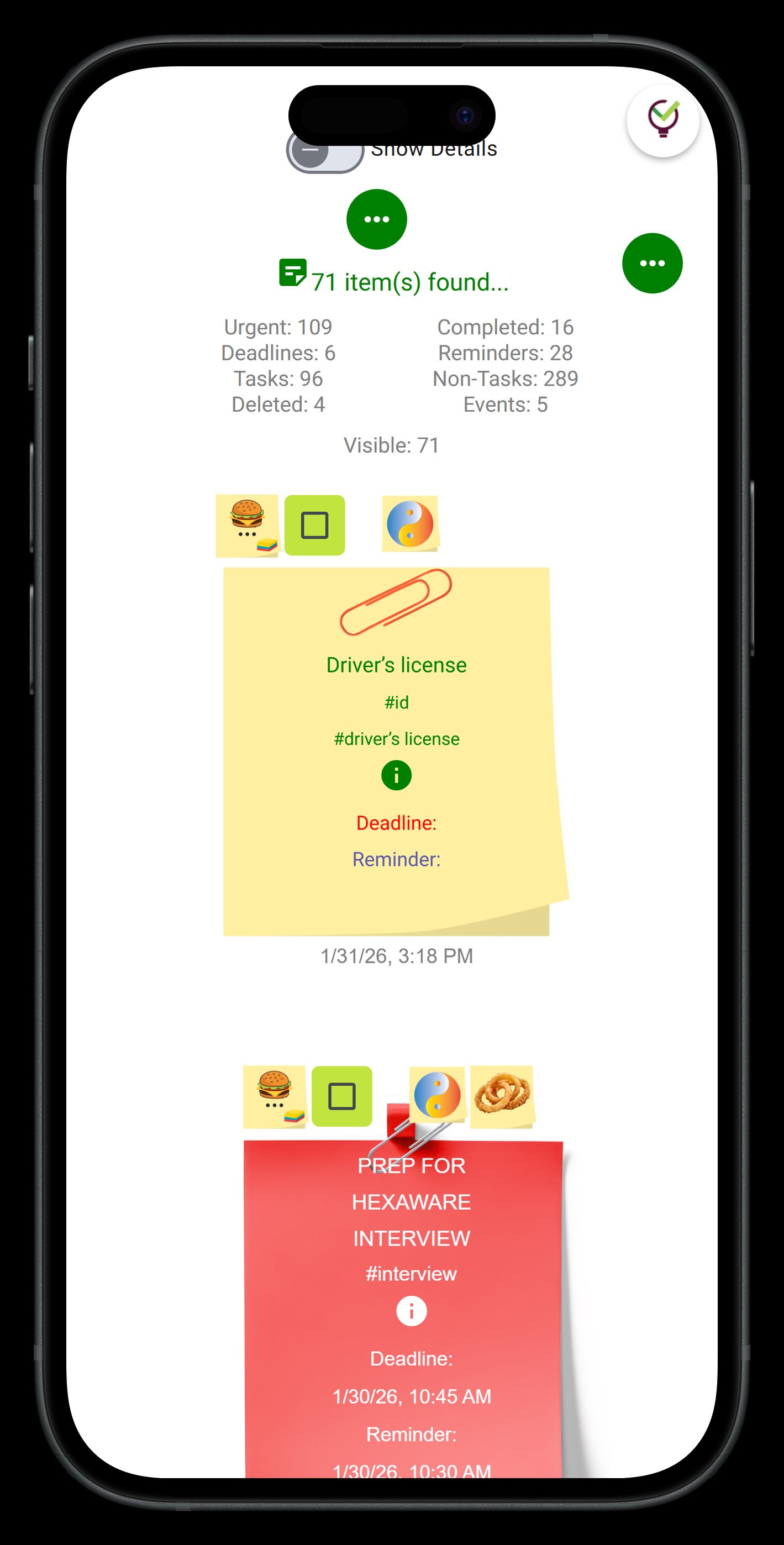
There's a reason sticky notes have outlasted every productivity revolution of the past fifty years. A sticky note has one affordance: write on it. No fields, no categories, no hierarchy. That simplicity isn't a limitation — it's the feature. The moment you add required metadata to a capture experience, you've added a decision point, and decision points at the moment of capture are where starting problems breed.
Modern task managers have evolved to serve teams with complex workflows, and for those teams that complexity is necessary. But for the majority of people — individuals, freelancers, small project leads — the overhead of enterprise-grade structure is pure friction. You don't need a Gantt chart to remember to call someone back. You need a place to write it down before the thought disappears.
The irony is that people often blame themselves when a complex system breaks down. They call it a discipline problem or a follow-through problem. It's usually neither. It's a starting problem, and the tool caused it.
How TaskLoco Solves the Starting Problem at the System Level
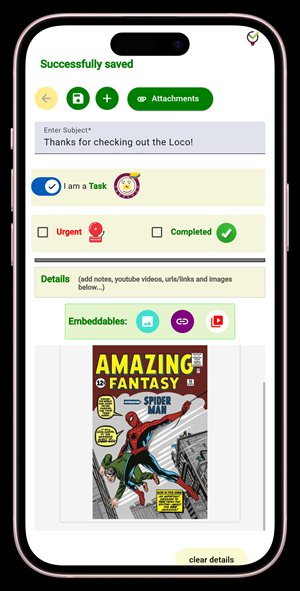
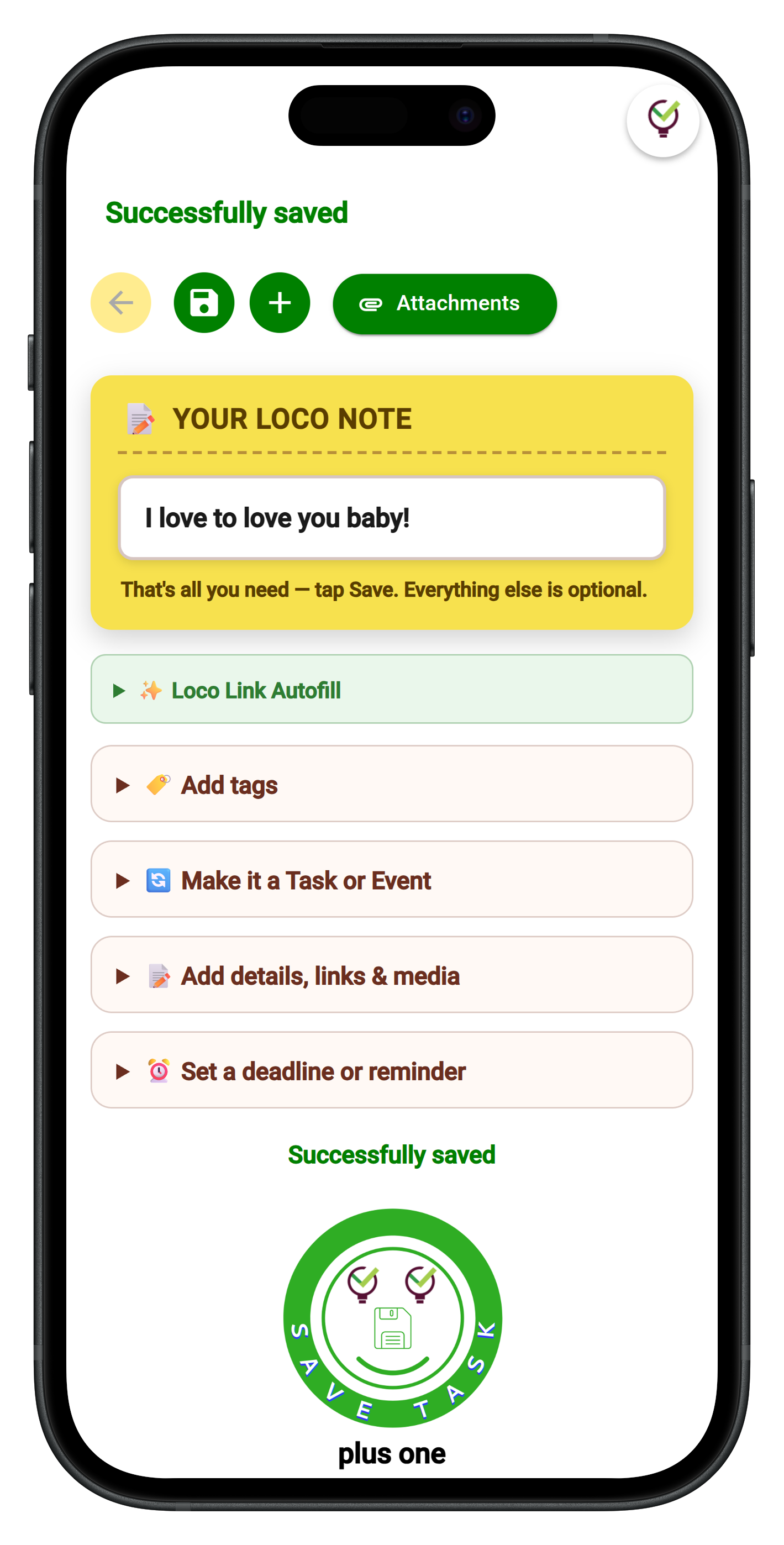
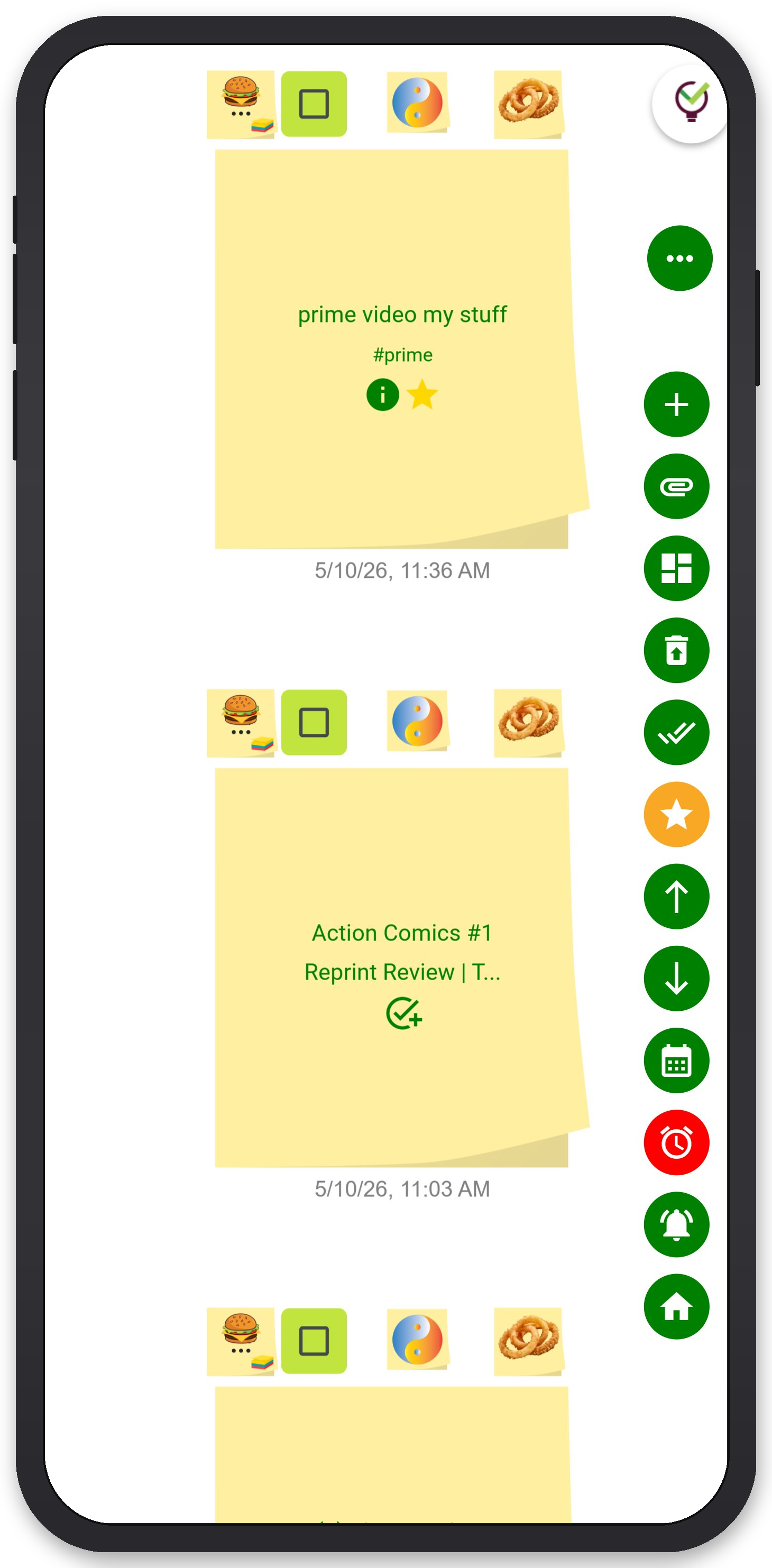
TaskLoco is built around sticky notes because sticky notes are the fastest known capture interface. Open the app — or the web app, or the Chrome extension — and you're already at a blank note. No home screen to navigate, no project to select, no template to choose. You write, you close, it's saved. That's the entire capture flow.
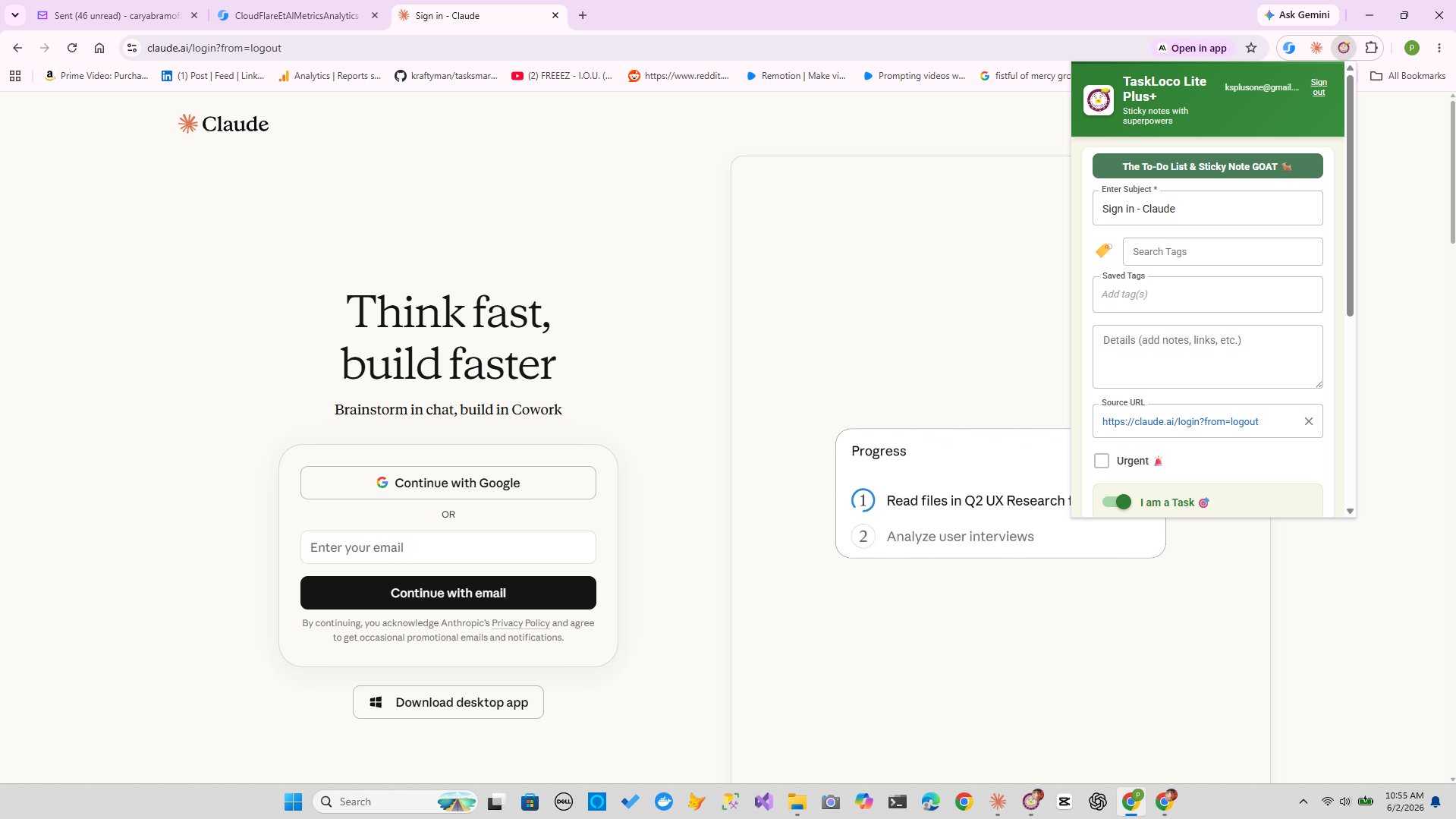
The Chrome extension makes this concrete in a way most people don't expect: if you're on a webpage and something triggers a thought, one click captures the page as a note with your annotation attached. The thought doesn't wait for you to open a separate app, find the right project, and type a subject line. It's there before the moment passes.
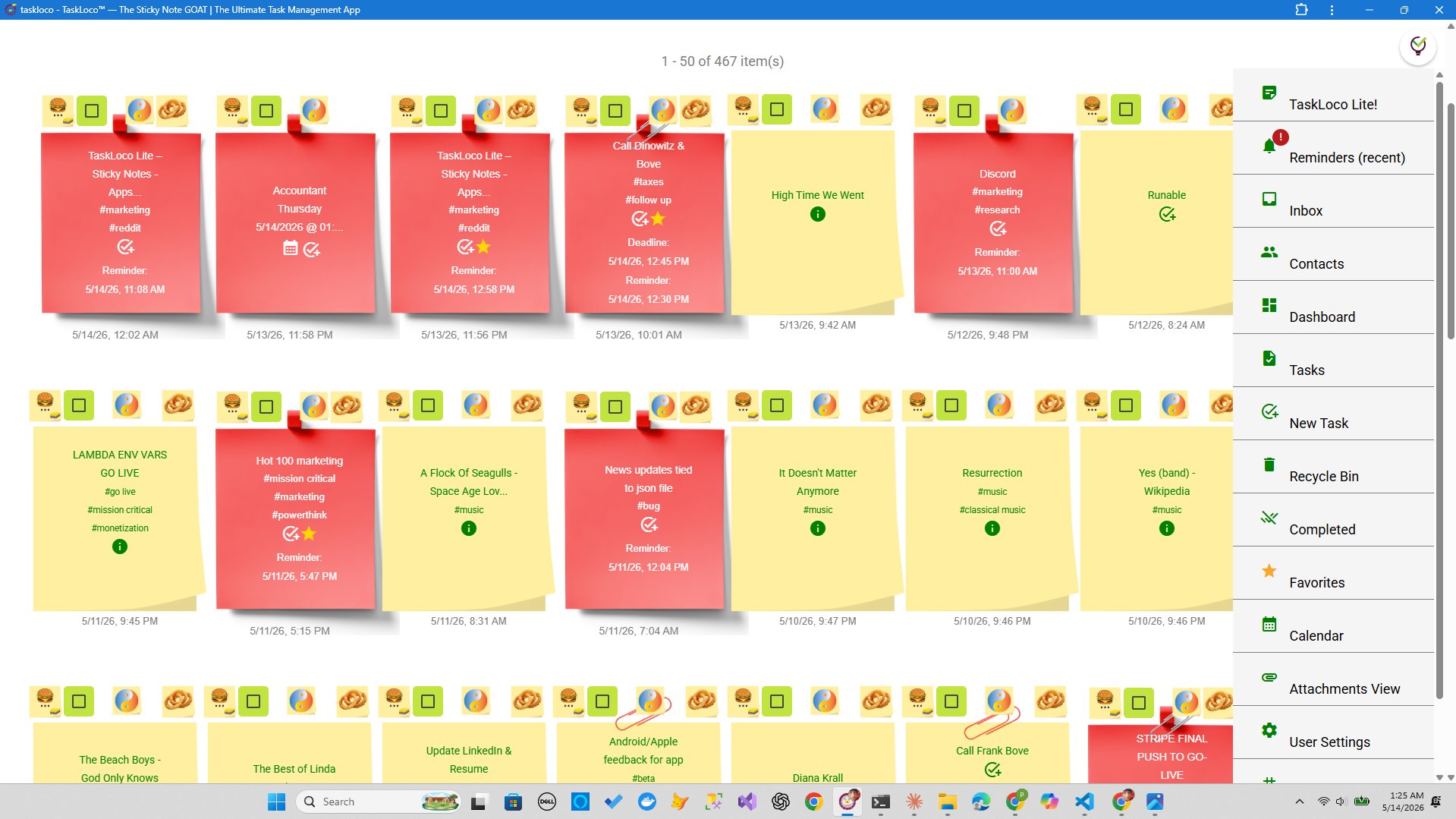
On the organization side, TaskLoco's wall view puts every note in front of you spatially — the same way a physical corkboard does. You're not hunting through folders or filtering by tag. You see what's there, you move things around, you work. That visual immediacy solves the other half of the starting problem: returning to a system that's easy to read as well as easy to write into.
For people who need reminders, TaskLoco Premium delivers them as push notifications directly to your phone and computer — and each reminder deep-links straight back to the original note, so you land in context instead of having to search for what you were doing. Optional email and SMS notifications are available as add-ons if you want redundancy, but the default is a tap that takes you exactly where you need to go.
Building a System That Actually Survives First Contact With Your Day
A productivity system only works if you use it on your worst days, not just your best ones. On a calm Tuesday morning, any system looks functional. On a Thursday afternoon when you're context-switching between five things and someone just asked you for something — that's when the starting problem strikes. The question to ask about any tool is: will I reach for this when I'm already overwhelmed?
The answer depends almost entirely on capture speed. If opening the tool and creating a note takes under five seconds, you will use it. If it takes thirty, you'll use your phone's native notes app, or your email drafts folder, or the back of an envelope — and your actual system will never see that information.
TaskLoco Lite, the free native iPhone and Android app, is the fastest possible on-ramp: completely anonymous, no sign-in, no account, no setup. Open it, write a note, close it. It stores up to 20 notes on the device. It's not a full system — it's deliberately introductory. But as a capture habit builder, it's exactly the right tool for people who are trying to prove to themselves that they can maintain a system at all.
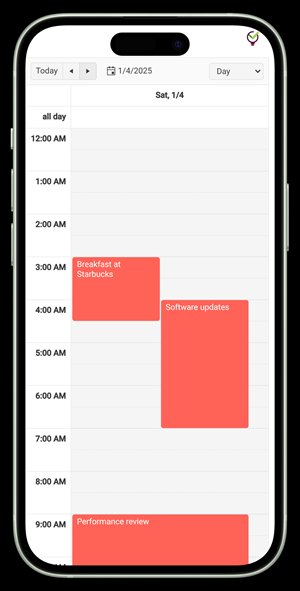
TaskLoco Lite Plus+, the free web app tier, adds cross-device sync and up to 30 notes — ideal for people who have confirmed the habit and want their notes accessible across phone and computer without yet committing to a paid plan. When you're ready for reminders, file attachments, unlimited notes, calendar view, and team sharing, that's TaskLoco Premium — and the charter offer makes it the most accessible entry point the platform has ever had.
TaskLoco Premium is regularly $9.99/month per person. Right now, charter members can lock in 50% off the regular price — forever. That means $4.99/month per person today. And if our price ever goes up, you still pay half. Always.
Code CHARTER50 auto-applies at checkout. First 500 spots only — once they're gone, this offer is gone permanently. Act fast while spots last.
Every Premium subscription includes unlimited notes, 10GB file storage, reminders, calendar, and team sharing. Each team member requires a separate subscription. 7-day free trial — no charge until day 8. Cancel anytime.
Free Options: TaskLoco
TaskLoco Lite
- Native iPhone & Android app
- Completely anonymous — no sign-in
- Data stays on your device
- Up to 20 notes
- Free forever
TaskLoco Lite Plus+
- Web app + Chrome extension
- Sign in with Google
- Wall syncs across all devices
- Up to 30 notes
- Free forever
Lock In 50% Off — Forever
7-day free trial. No charge until day 8. CHARTER50 auto-applies at checkout.
🔒 Lock In My Charter SpotSee TaskLoco in Action
Frequently Asked Questions
What is the starting problem in productivity?
The starting problem is the friction between deciding to do something and actually doing it. It's often caused by tools or systems that require setup, decisions, or navigation before you can capture a thought — which means people either skip the system entirely or spend more time managing the tool than doing the work.
Why do most productivity apps make the starting problem worse?
Most productivity apps are optimized for organizing and reporting, not for the instant capture moment. They ask you to assign a project, set a priority, choose a due date, and pick a label before your note is saved. Each of those is a decision point that adds friction. When the cost of capturing something exceeds the perceived value of capturing it, people stop using the system.
How does TaskLoco reduce starting friction?
TaskLoco puts you at a blank note the moment you open the app, the web app, or the Chrome extension. No project selection, no required fields, no template. The Chrome extension lets you capture any webpage as a note with one click — before the thought fades. For existing notes with reminders, each push notification deep-links you straight back to the original note so you land in context immediately.
What is the difference between TaskLoco Lite and TaskLoco Lite Plus+?
TaskLoco Lite is the free native iPhone and Android app — completely anonymous, no sign-in required, stores up to 20 notes on the device only, and never syncs. It's the fastest possible capture experience and the best starting point for building the habit. TaskLoco Lite Plus+ is the free web app tier — you sign in with Google, get up to 30 notes, and your notes sync across all your devices. Neither tier includes reminders, file attachments, or team sharing — those are Premium features.
Do I need a paid plan to try TaskLoco?
No. TaskLoco Lite (native app, no sign-in, 20 notes) and TaskLoco Lite Plus+ (web app, Google sign-in, 30 notes, synced) are both permanently free. If you want reminders, unlimited notes, 10GB file storage, calendar view, or team sharing, those require TaskLoco Premium. Premium includes a 7-day free trial — no charge until day 8. $9.99/month per person (currently $4.99/month per person for first 500 charter members with code CHARTER50)
What features does TaskLoco Premium include?
TaskLoco Premium includes unlimited notes, tasks, and calendar events; 10GB file storage (with larger tiers available as add-ons); reminders delivered as push notifications to your phone and computer (with optional email and SMS add-ons); a calendar view; and full team sharing. Each team member requires their own separate subscription.
Can I use TaskLoco without creating an account?
Yes — TaskLoco Lite, the native iPhone and Android app, is completely anonymous. No sign-in, no account, no email address required. It stores up to 20 notes in a JSON file on your device. If you want cross-device sync, you'll need TaskLoco Lite Plus+ (free, Google sign-in) or TaskLoco Premium.
Born in Brooklyn. Powered by AWS. Your data stays yours.
TaskLoco is available on iPhone, Android, Chrome, and every web browser.