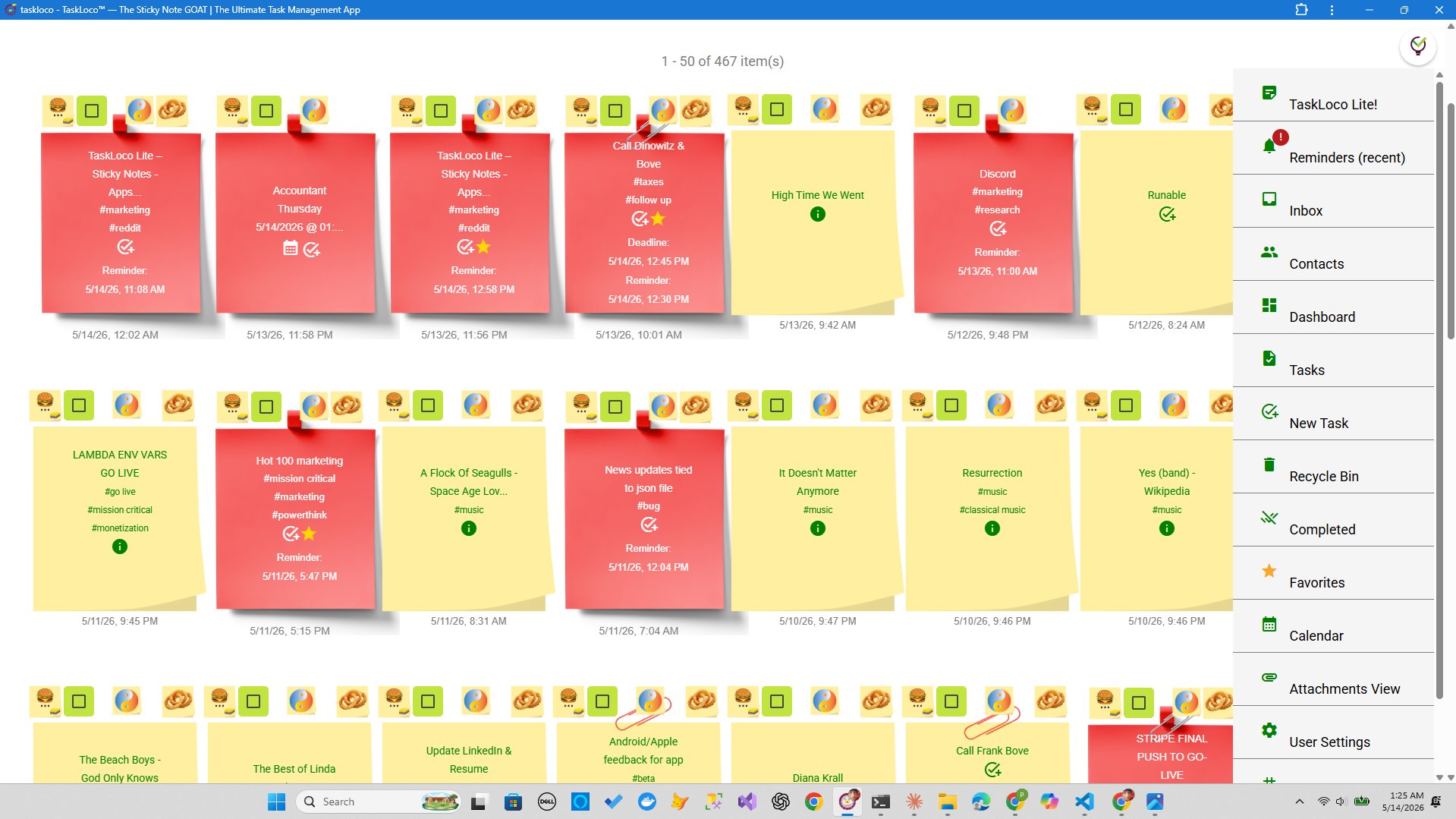
Every student has experienced the pile-up: three exams in one week, a project due Friday, reading nobody started, and a scholarship application buried in an email from six weeks ago. A study wall exists to prevent exactly that — it makes the invisible visible, turning a scattered mental load into a physical or digital space you can actually look at and manage.
The idea is older than digital tools. Teachers have pinned assignment boards to classroom walls for decades. What's changed is that students now move between dorm rooms, libraries, coffee shops, and home — and a corkboard doesn't come with them. The best study walls today work wherever the student is, across every device they carry, without requiring a second thought to maintain.
What to Look for in a Study Wall
A study wall — physical or digital — is a dedicated visual workspace where a student tracks every active obligation: coursework, deadlines, study goals, extracurriculars, and personal commitments. It works because the human brain processes spatial, visual information faster than lists buried in apps. When everything lives in one visible place, nothing needs to be remembered — it just needs to be seen.
When choosing a study wall system, three criteria actually matter:
- Glanceability. You should be able to understand your week in under ten seconds. If you have to click, scroll, or dig to find out what's due tomorrow, the system has already failed. Color-coding, spatial layout, and visual hierarchy all contribute to this. A wall with too much text or too many categories becomes noise.
- Capture speed. A student who just heard a new assignment in class needs to record it in seconds — not open an app, navigate to a project, pick a due date format, and assign a priority. If capture is slow or awkward, students stop using the system within two weeks. The best study walls make adding a note feel like writing on a physical sticky.
- Reliable reminders that follow you. A static corkboard can't ping you an hour before a quiz. Any digital study wall worth using should send reminders directly to your phone and computer — not just sit quietly waiting for you to check in. The reminder should bring you back to the exact note it came from, not just drop you on a home screen.
Secondary considerations include file attachment support (so a syllabus or rubric lives next to the assignment), cross-device access (library computer, phone, laptop — it should all be the same wall), and a free or low-cost entry point so trying it costs nothing.
Why TaskLoco Works as a Study Wall
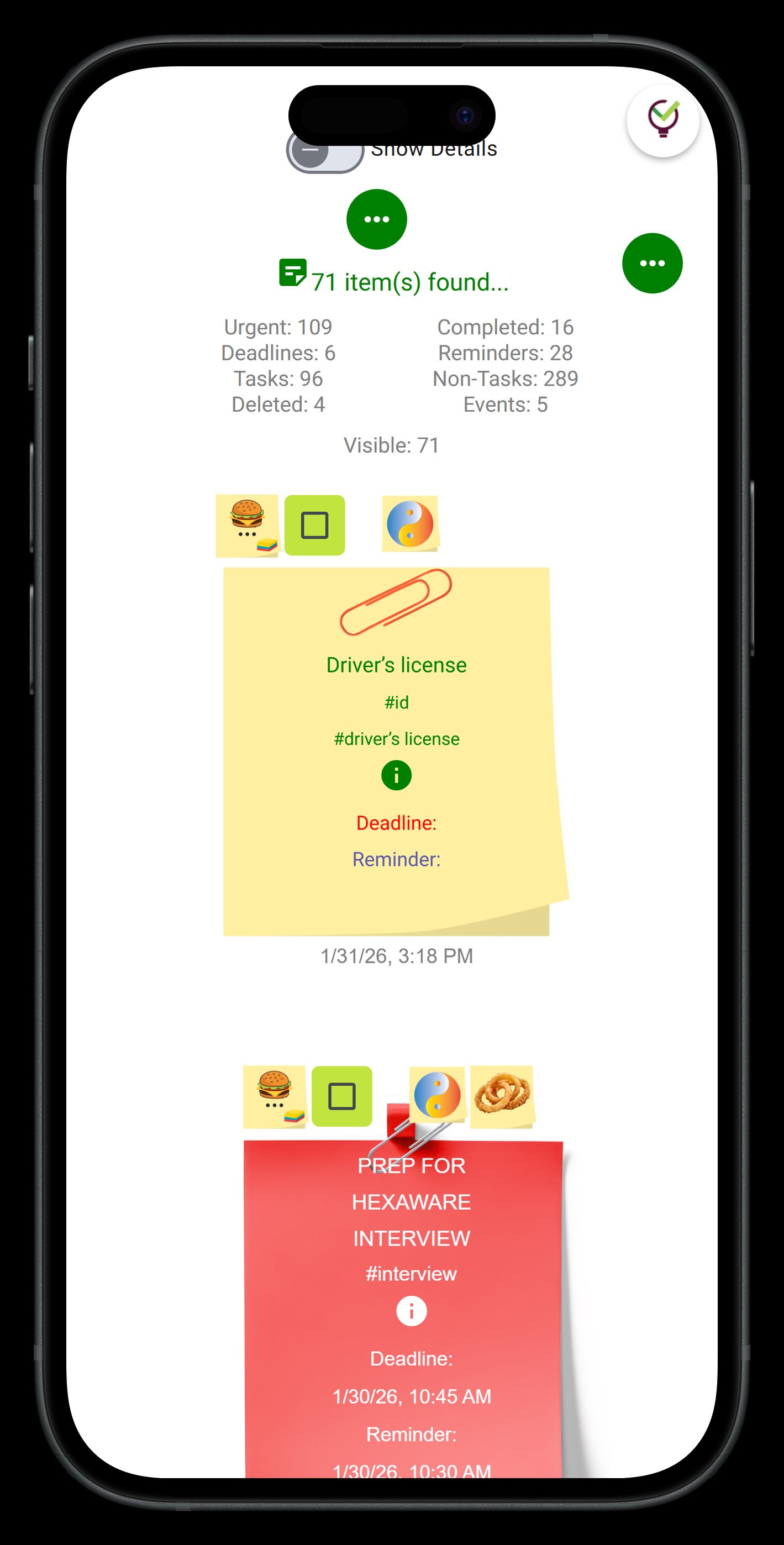
TaskLoco was built around sticky notes — the same visual metaphor students already understand — but gives them the power of a full productivity layer underneath. Notes can hold tasks, due dates, embedded photos, and file attachments. They live on a wall-style board that you can rearrange, color-code by subject, and scan in seconds. It looks like a study wall because it was designed to work like one.
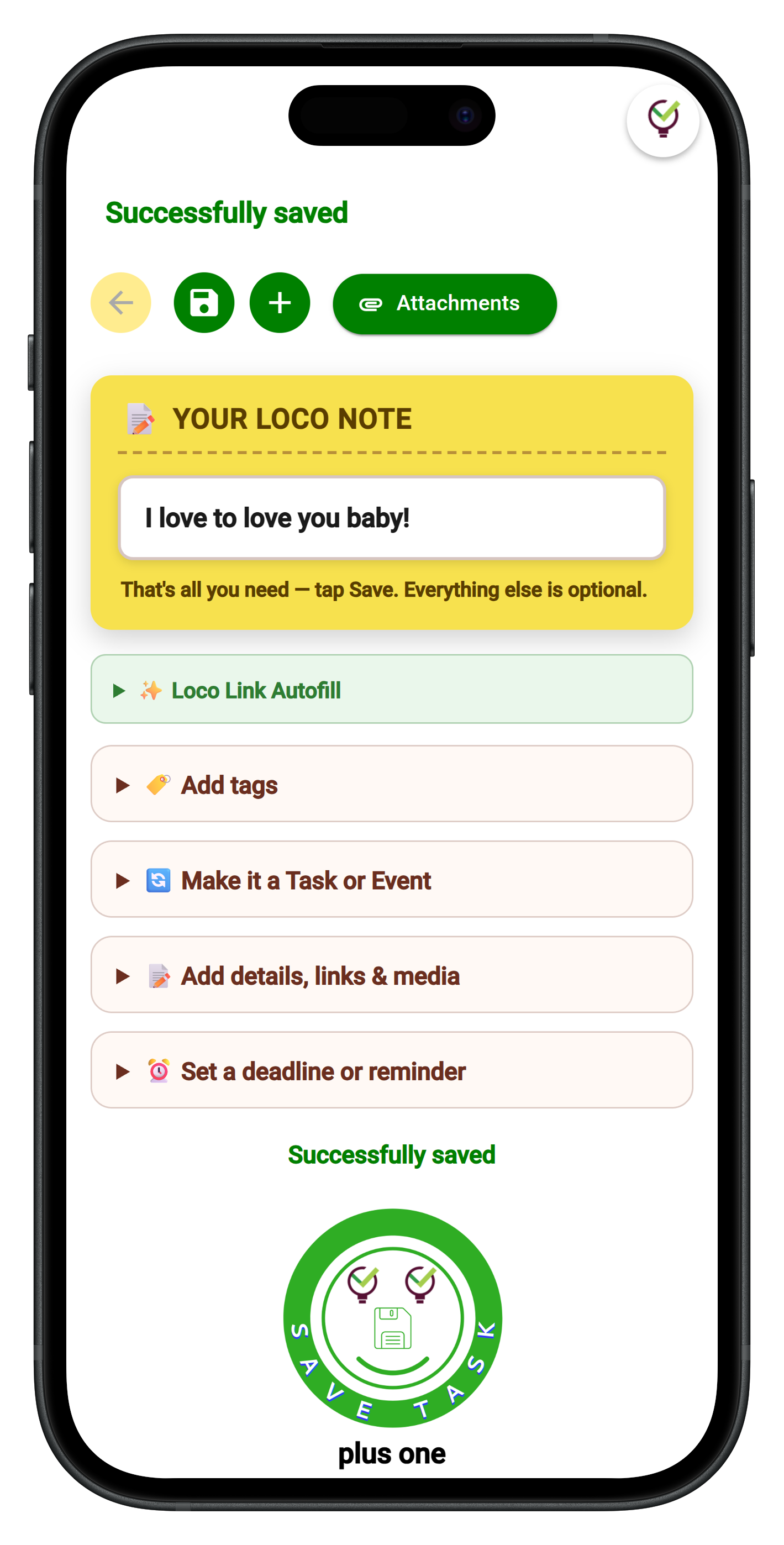
The capture experience is genuinely fast. Open TaskLoco, tap a blank spot, start typing. There's no project structure to navigate first, no mandatory fields, no workflow to configure before you can write a single word. A student who hears "essay outline due Thursday" in class can have it on their wall before the professor moves to the next topic. That speed is what separates a system students keep using from one they abandon by midterms.
TaskLoco Premium adds the layer that makes a study wall actionable rather than just decorative: reminders. Each reminder delivers a push notification directly to your phone and computer — and tapping it deep-links back to the exact note it came from. You don't land on a dashboard and have to hunt. You land on the assignment. Optional email and SMS notification are available as additional channels if you want them.
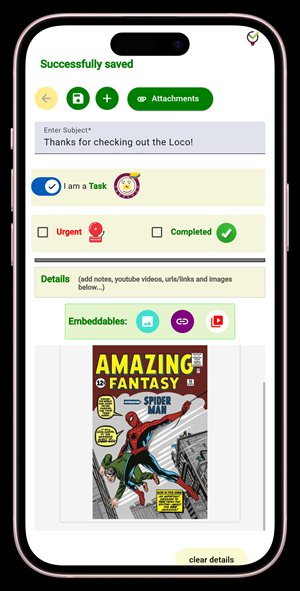
For students who save syllabi, rubrics, professor feedback, or research PDFs, Premium includes 10GB of file storage. Attach the document directly to the note it belongs to. The rubric lives next to the assignment. The feedback lives next to the draft. Nothing is in a separate folder you'll forget to check.
How to Set Up Your Study Wall in TaskLoco
The setup takes about fifteen minutes and pays dividends every week after. Here's a structure that works for most students:
- One note per subject. Create a note for each course — label it with the course name and color-code it. All tasks for that course live inside that note. This gives you subject-level glanceability: one look at the wall and you know which subjects have the most open items.
- A "This Week" note in a bright color. Every Sunday, pull the most urgent tasks from each subject note into a "This Week" note. This becomes your daily driver — the one you check every morning. It's a filter, not a replacement for the subject notes.
- A "Deadlines" note pinned at the top. Keep a running list of all hard deadlines for the semester. Not tasks — just dates. Exam on the 14th. Portfolio due the 28th. This is your early-warning radar so nothing sneaks up on you two days before it's due.
- Attach the syllabus to the subject note. With Premium's file storage, drop the PDF directly onto the course note. You'll never search your downloads folder for a syllabus again.
- Set a reminder on any task with a deadline. Takes three seconds. The push notification will fire to your phone and laptop and take you straight back to that note when it does.
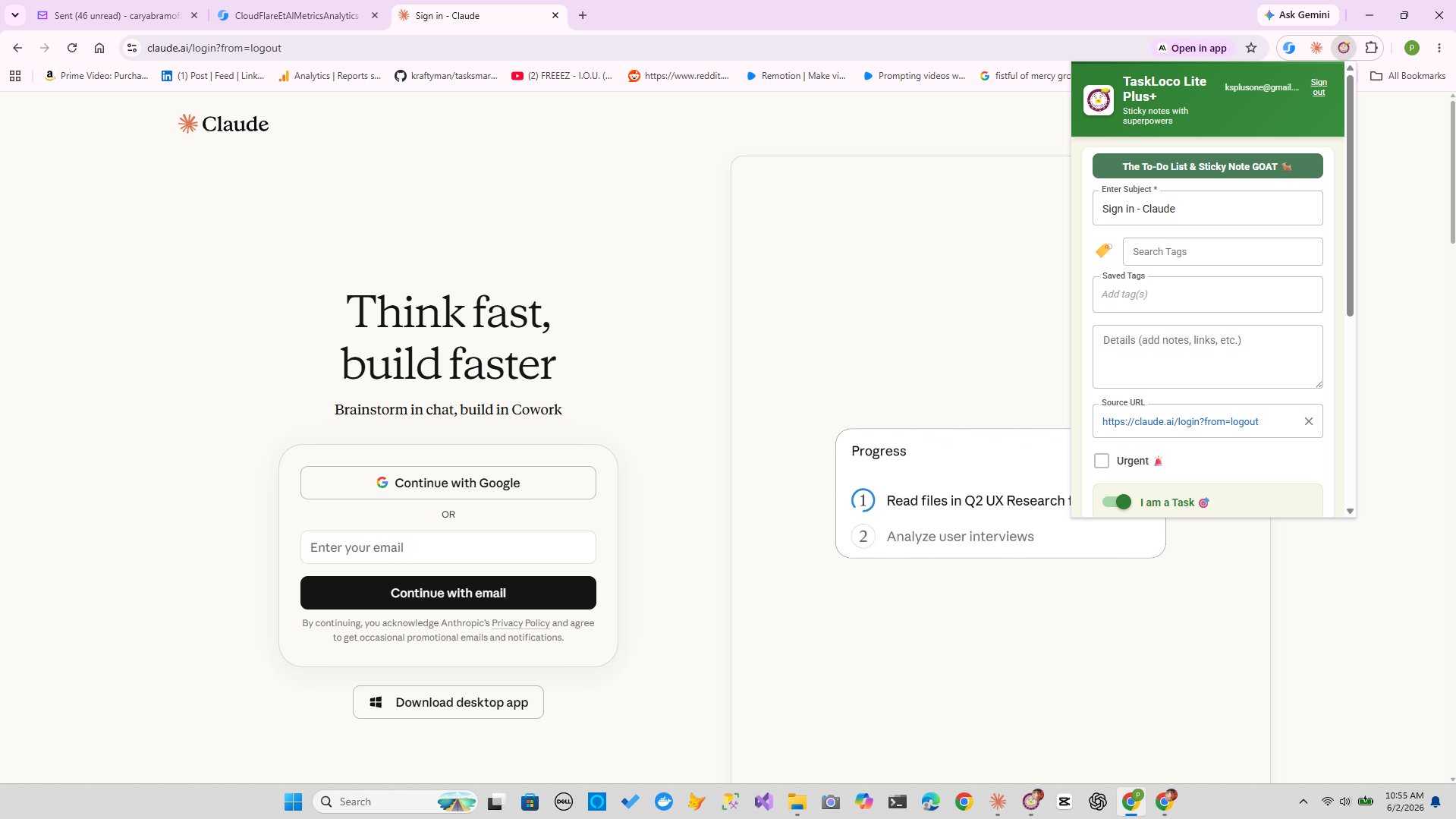
The Chrome extension adds a layer that's genuinely useful for research-heavy students: one click captures any webpage — an article, a library database result, a citation page — and saves it as a note on your wall. No copy-pasting URLs into a separate document. The source lives in TaskLoco where it belongs.
Which Version of TaskLoco Do You Need?
TaskLoco has three tiers, and picking the right one depends on how seriously you want to use your study wall.
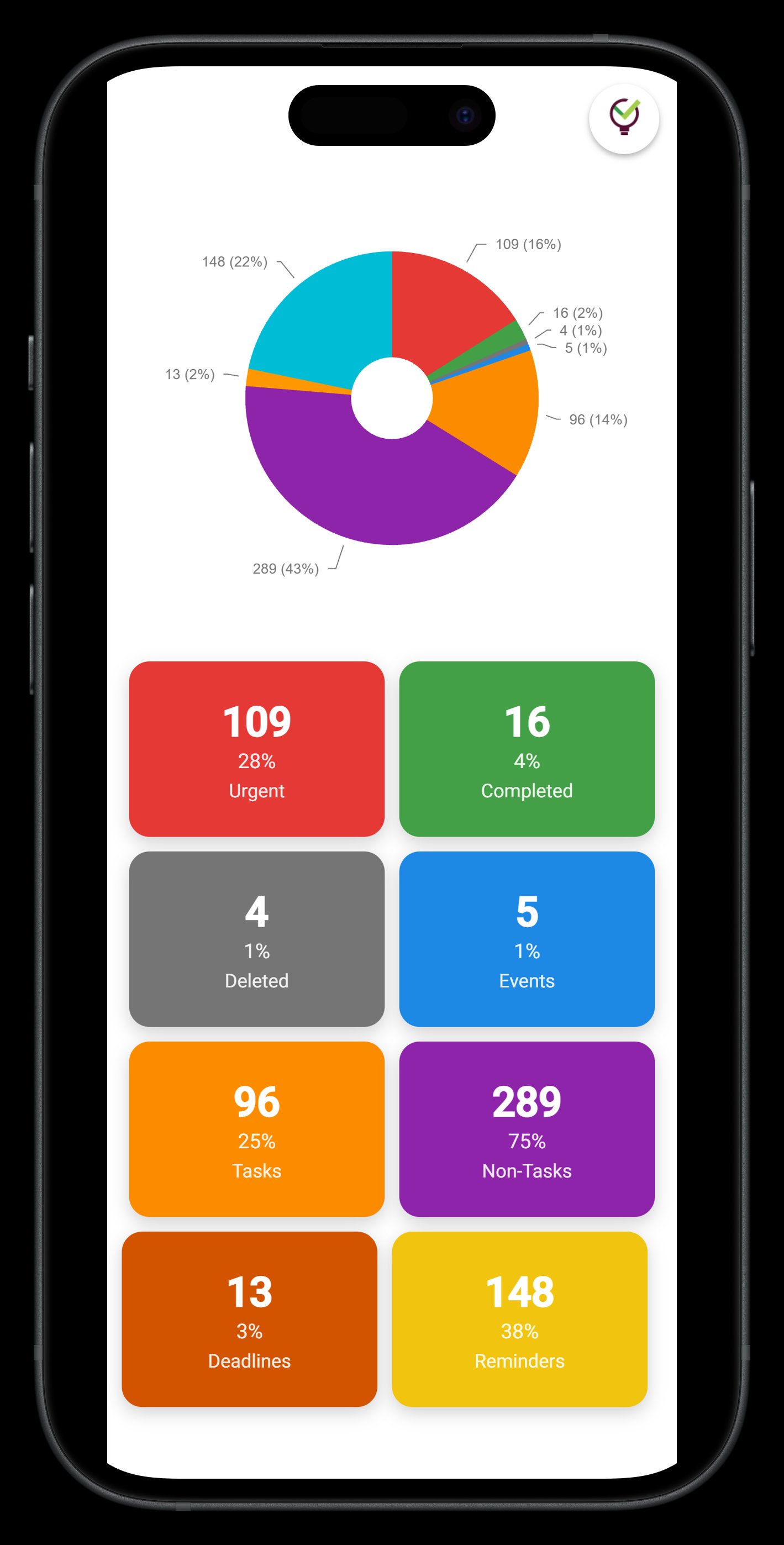
TaskLoco Lite is the free native iPhone and Android app. It's completely anonymous — no sign-in, no account. You get up to 20 notes stored locally on your device. There's no syncing, no reminders, no attachments. It's a good way to try the note-taking concept with zero commitment, but it won't serve as a full study wall for a serious semester.
TaskLoco Lite Plus+ is the free web app and Chrome extension. Sign in with Google, get up to 30 notes, and sync them across every device — laptop, phone browser, tablet. The Chrome extension lets you capture pages in one click. No reminders, no file attachments, no unlimited notes — but for a student who just needs a synced visual board and nothing else, it costs nothing and works immediately.
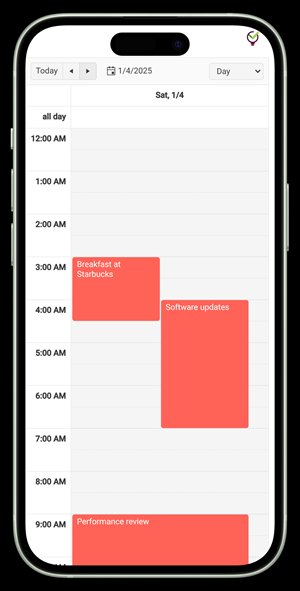
TaskLoco Premium is where the study wall becomes a full system. Unlimited notes, 10GB file storage, reminders that push to your phone and computer, a calendar view, and team sharing. For a group project where multiple people need to see the same notes, Premium's sharing works like forwarding an email — the recipient gets a copy of the note and makes it their own, no permissions setup needed.
TaskLoco Premium is regularly $9.99/month per person. Right now, charter members can lock in 50% off the regular price — forever. That means $4.99/month per person today. And if our price ever goes up, you still pay half. Always.
Code CHARTER50 auto-applies at checkout. First 500 spots only — once they're gone, this offer is gone permanently. Act fast while spots last.
Every Premium subscription includes unlimited notes, 10GB file storage, reminders, calendar, and team sharing. Each team member requires a separate subscription. 7-day free trial — no charge until day 8. Cancel anytime.
Free Options: TaskLoco
TaskLoco Lite
- Native iPhone & Android app
- Completely anonymous — no sign-in
- Data stays on your device
- Up to 20 notes
- Free forever
TaskLoco Lite Plus+
- Web app + Chrome extension
- Sign in with Google
- Wall syncs across all devices
- Up to 30 notes
- Free forever
Lock In 50% Off — Forever
7-day free trial. No charge until day 8. CHARTER50 auto-applies at checkout.
🔒 Lock In My Charter SpotSee TaskLoco in Action
Frequently Asked Questions
What is a study wall and why do students use one?
A study wall is a dedicated visual workspace — physical or digital — where a student pins every active obligation: assignments, deadlines, goals, and reminders. It works because seeing everything in one place eliminates the mental load of trying to remember what's due and when. Students who use one consistently tend to miss fewer deadlines and feel less overwhelmed during heavy academic periods.
Is TaskLoco free for students?
Yes — TaskLoco has two free tiers. TaskLoco Lite is the native iPhone and Android app: anonymous, no sign-in, up to 20 notes stored on the device. TaskLoco Lite Plus+ is the free web app and Chrome extension: sign in with Google, up to 30 notes synced across all your devices. Neither free tier includes reminders or file attachments — those are Premium features. $9.99/month per person (currently $4.99/month per person for first 500 charter members with code CHARTER50)
Does TaskLoco work on a phone?
Yes, in two ways. TaskLoco Lite is a native app available on the App Store and Google Play — anonymous, no account, 20 notes stored on your device. TaskLoco Lite Plus+ and Premium run as a web app through your phone's browser and sync across every device you use. Note that reminders, file attachments, unlimited notes, and team sharing are Premium (web) features only.
How do reminders work in TaskLoco?
TaskLoco Premium reminders are delivered as push notifications to your phone and computer. When you tap the notification, it deep-links directly back to the original note — so you land on the assignment, not a generic home screen. Optional email notification is also available, and SMS notification is available as an add-on.
Can I attach my syllabus or a PDF to a TaskLoco note?
Yes — TaskLoco Premium includes 10GB of file storage. You can attach a syllabus, rubric, research paper, or any file directly to the note it belongs to. The file lives next to the assignment, not in a separate folder somewhere else. Additional storage tiers (50GB, 200GB, 1TB) are available as add-ons.
Can I share study notes with a classmate or study group?
Yes, with TaskLoco Premium. Sharing works like forwarding an email: the person you share with receives the note, clones it, and makes it their own. There are no permissions to configure and no access levels to manage. Each person in the study group needs their own Premium subscription.
How is TaskLoco different from a regular to-do app for studying?
Most to-do apps are list-based — you scroll through tasks without a spatial sense of what's urgent or where things belong. TaskLoco uses a wall-style sticky note layout, so you can organize notes visually by subject, deadline, or priority and understand your week at a glance. Combined with push notification reminders that bring you back to the exact note, and file attachments for syllabi and rubrics, it functions as a full study command center rather than just another checklist.
Born in Brooklyn. Powered by AWS. Your data stays yours.
TaskLoco is available on iPhone, Android, Chrome, and every web browser.