There's a reason your to-do list keeps growing even when you're busy all day. Most productivity systems are optimized for projects — not for the hundred tiny things that drain your attention before lunch. The Two Minute Momentum Rule fixes that. It's deceptively simple: if something takes two minutes or less, handle it immediately instead of parking it in a queue. No estimation, no prioritization meeting, no system overhead. Just done.
The rule didn't start with productivity influencers. It's a core plank of David Allen's Getting Things Done methodology, and it survives decades of productivity fashion because it works at a neurological level. Every small task you complete releases a micro-dose of satisfaction that lowers the mental resistance to the next task. Chain enough of those together and you're not fighting momentum — you're riding it. The trick is having a capture system fast enough to keep up with your brain, and a workspace that makes acting on small tasks feel lighter than ignoring them.
What the Two Minute Rule Actually Is — and Why Most People Apply It Wrong
The original formulation is precise: if the next action required to move something forward takes two minutes or less, do it now — not later today, not after your next meeting, right now. The two-minute threshold isn't arbitrary. It's roughly the switching cost of adding something to a formal task system, finding it again, and re-reading your own notes to remember what you meant. Below that threshold, deferral costs more than doing.
Where people go wrong is applying the rule to tasks that feel quick but aren't. Replying to a complex email doesn't take two minutes just because you can type fast. Reviewing a contract isn't two minutes because you want it to be. Honest time estimation is the skill the rule is really training. When you genuinely can't finish something in two minutes, the rule still applies — but the correct response is capture and defer, not ignore and hope.
The three responses to any incoming task are: Do it (two minutes or less), Dump it (not worth doing at all), or Defer it (real work that needs a place in your system). The rule fails when people add a fourth option: hold it in their head. That's not a system — that's a tax on your working memory that compounds every hour.
Why Your Capture Tool Is the Whole Game
The Two Minute Rule breaks down at one specific point: the moment between noticing a task and recording it. If your capture system takes longer than fifteen seconds to open and log a thought, you will unconsciously start holding things in your head instead — which is exactly the tax the rule was designed to eliminate.
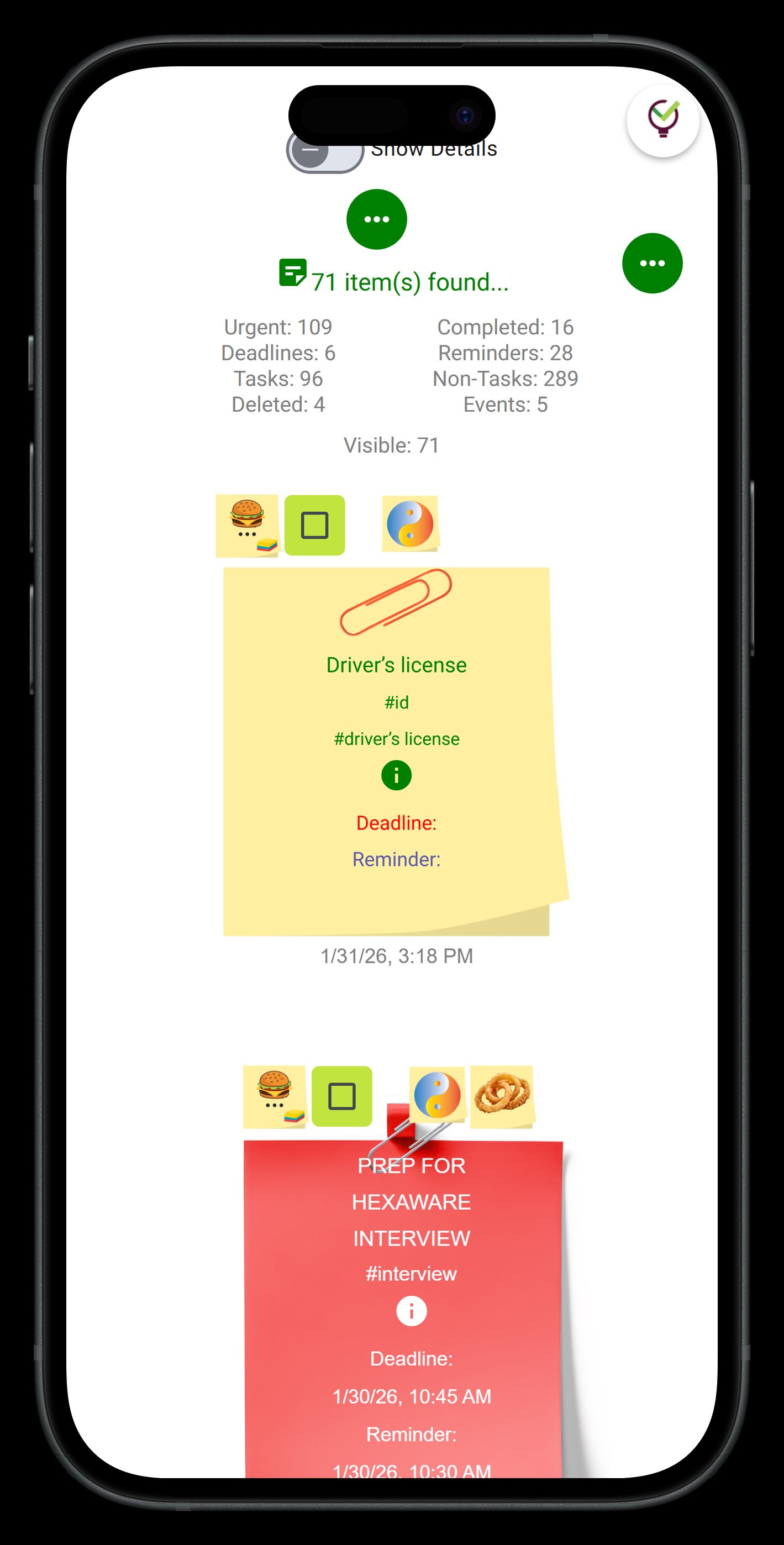
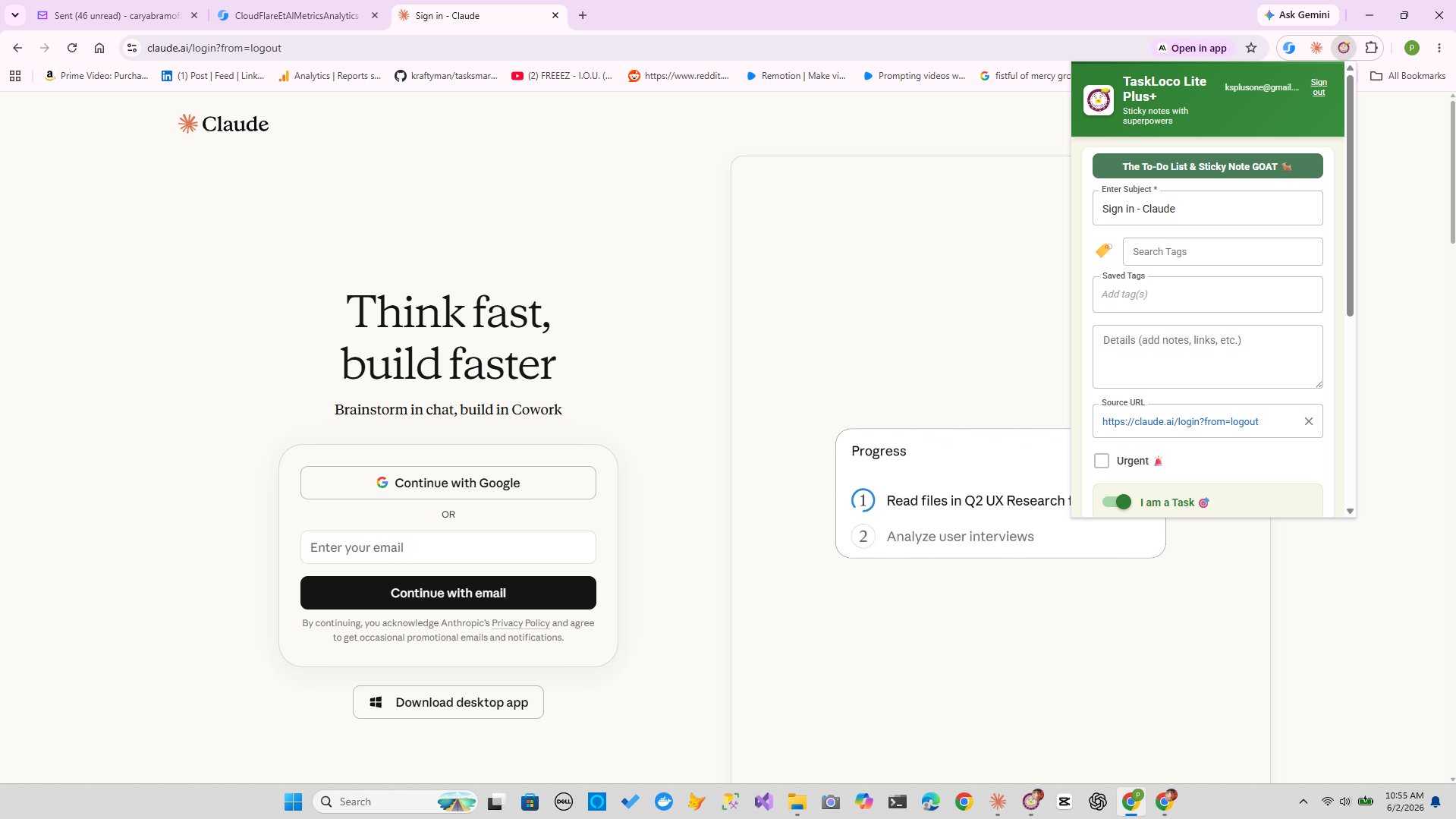
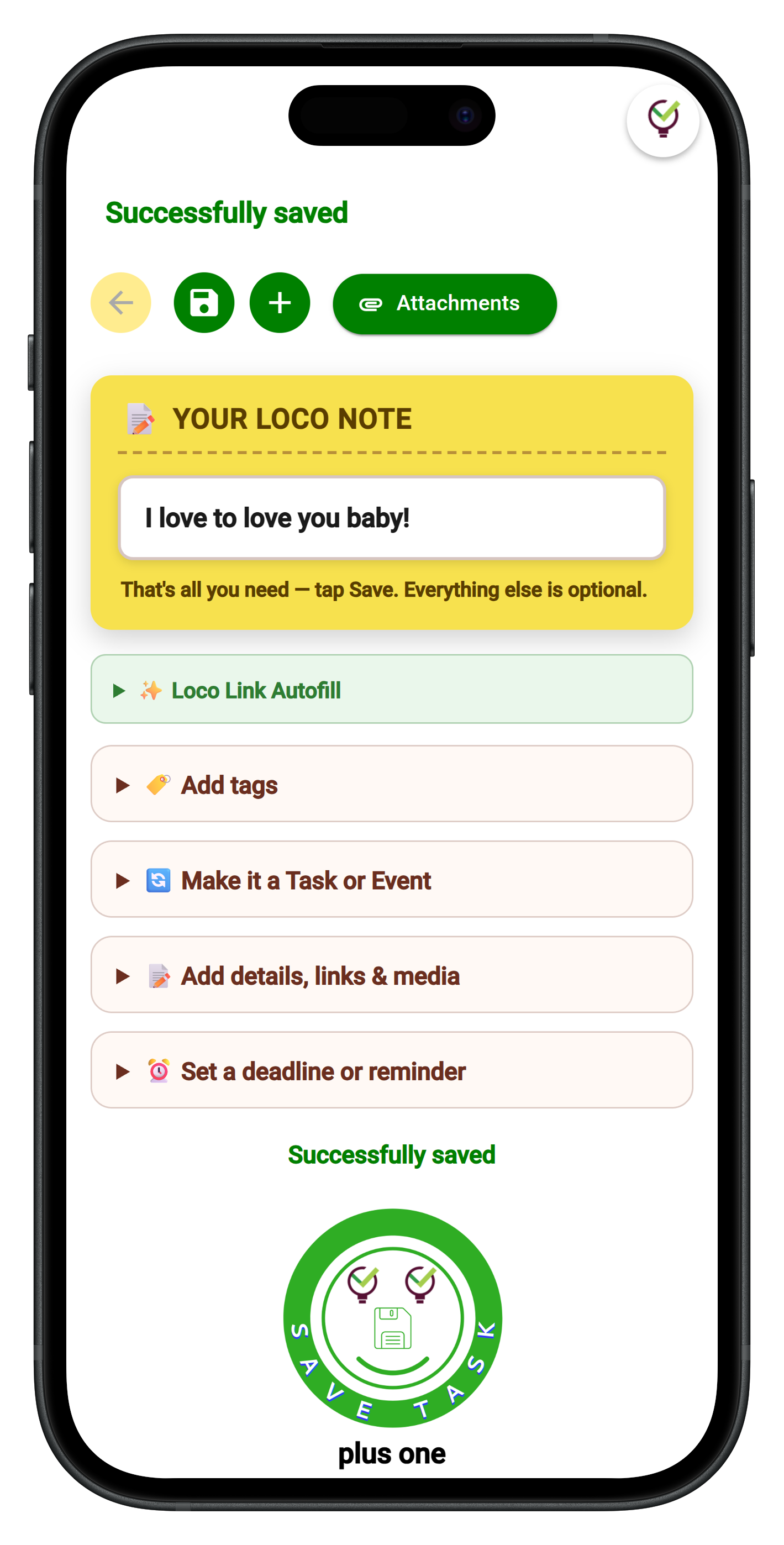
This is why sticky notes — physical or digital — have outlasted every wave of productivity software since the 1980s. They match the speed of the thought. No project selection, no tag hierarchy, no field to fill in before you can type the actual thing. The note is the capture. With TaskLoco, opening a new note from the Chrome extension is a single click on any webpage. On mobile, the native TaskLoco Lite app requires zero sign-in — just open, tap, type. The friction has been engineered out.
But capture is only half the job. The other half is surfacing deferred tasks at the right moment. A sticky note buried in a stack is better than nothing, but a reminder that fires as a push notification — and deep-links you straight back to the original note — is the difference between a system that works and one you have to maintain manually. TaskLoco Premium reminders do exactly that: the notification lands on your phone or computer and one tap drops you directly into the note you wrote when the thought was fresh.
Building the Momentum Habit: How to Stack Two-Minute Wins
Individual two-minute completions are satisfying. But the productivity compounding happens when you stack them into a morning ritual. The structure that works best looks like this: spend the first ten minutes of your day sweeping your capture system — your inbox, your sticky wall, your overnight notes — and triaging everything with a hard Do / Dump / Defer decision. Anything that clears in two minutes gets done on the spot. Everything else gets a note with a real deferred date.
What you're building is a momentum anchor — a string of small completions early in the day that lowers the perceived difficulty of the harder work ahead. Cognitive scientists call this the Zeigarnik effect in reverse: instead of unfinished tasks nagging at your attention, finished tasks create a psychological runway. The more you close, the easier it becomes to open the next thing.
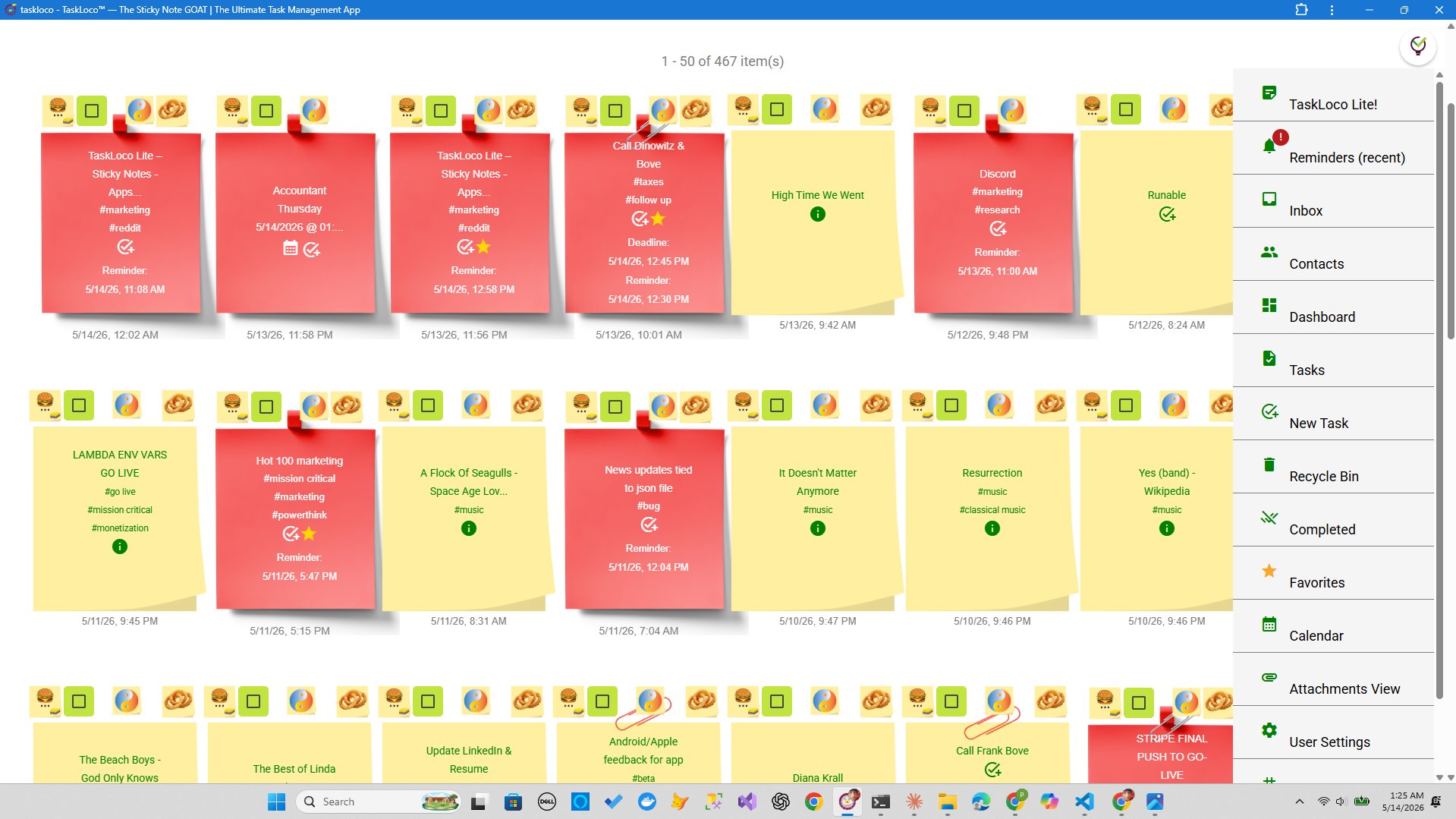
TaskLoco's wall view makes this ritual visual. Each note is a physical-feeling object you can move, pin, complete, or trash. There's something about the spatial layout of a sticky-note wall that makes the Do / Dump / Defer decision faster than a list ever does — you're not reading, you're seeing. Color, position, and the sheer act of dragging a note to a Done column gives your brain the closure signal it's looking for.
For anything with a hard deadline or a time-sensitive context, Premium reminders arrive as push notifications with a direct link back to the note — so your deferred items don't disappear into a folder you'll check next quarter. The note finds you, not the other way around.
TaskLoco and the Two Minute Rule: A Natural Match
Most productivity apps are built around projects. TaskLoco is built around notes — which means it's built around the unit of capture, not the unit of planning. That distinction matters enormously for the Two Minute Rule, because the rule lives at the capture-and-act layer, not the project-management layer. You don't need a Gantt chart to reply to an email. You need a place to log the thought, act on it fast, or set a reminder and move on.
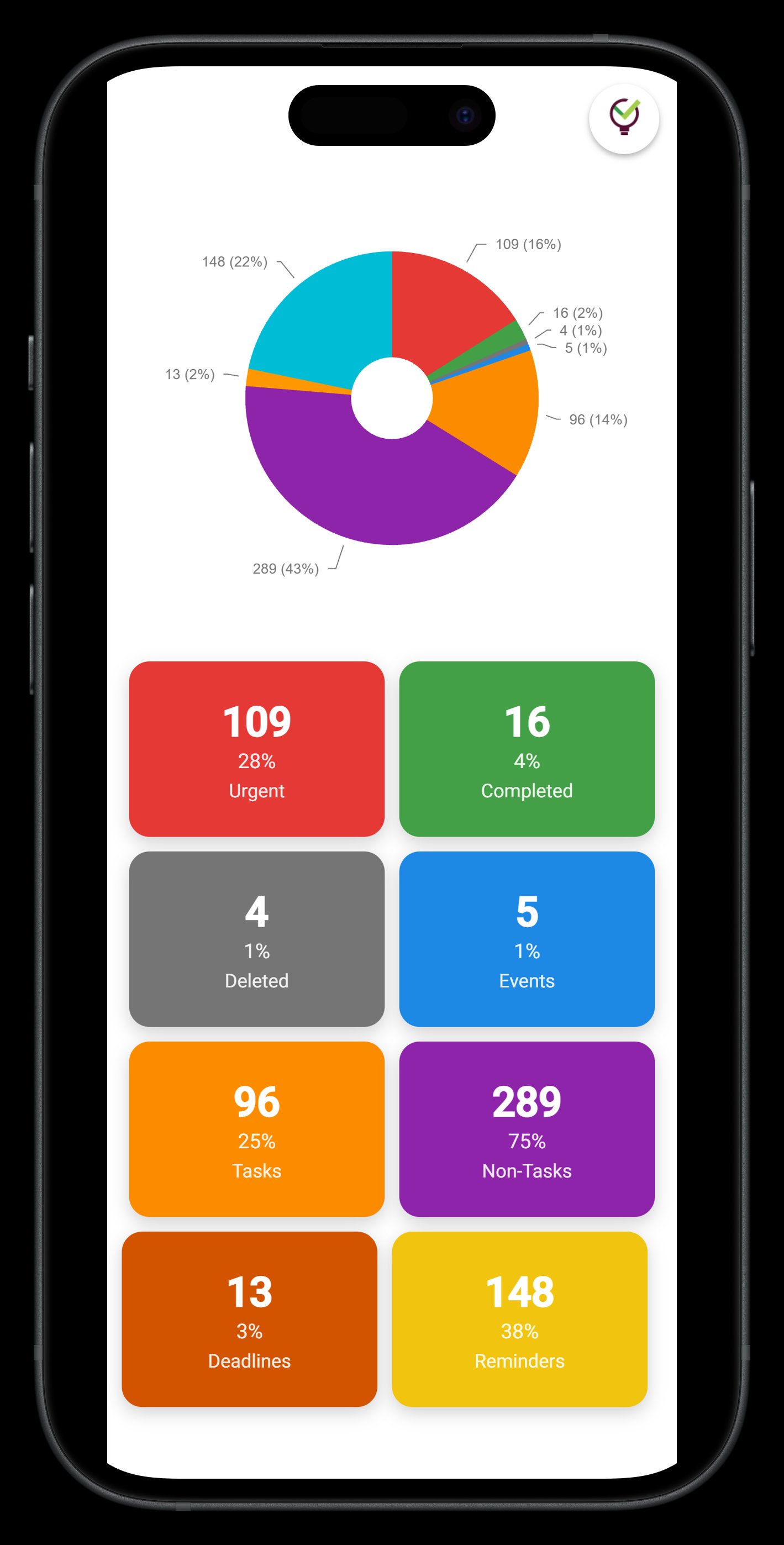
TaskLoco Lite (free, native iOS and Android) gets you to zero-friction capture with no account, no sign-in, and no setup. Twenty notes, stored entirely on your device, available the moment you unlock your phone. For the pure Two Minute moment — the flash of a thought while you're away from your desk — nothing is faster.
TaskLoco Lite Plus+ (free, web app and Chrome extension) extends that to 30 synced notes across all your devices. The Chrome extension is particularly useful for the Two Minute Rule applied to web research: you're reading an article, you spot something actionable, one click captures the page as a note. The thought doesn't escape.
TaskLoco Premium is where deferred tasks live long-term. Unlimited notes, file attachments up to 10GB, calendar view, team sharing, and reminders delivered as push notifications that deep-link directly back to your original note. If you're managing your own work and coordinating with others, Premium keeps the Two Minute Rule working at team scale — shared notes work like email, recipients can clone them and make them their own, no permissions architecture to navigate.
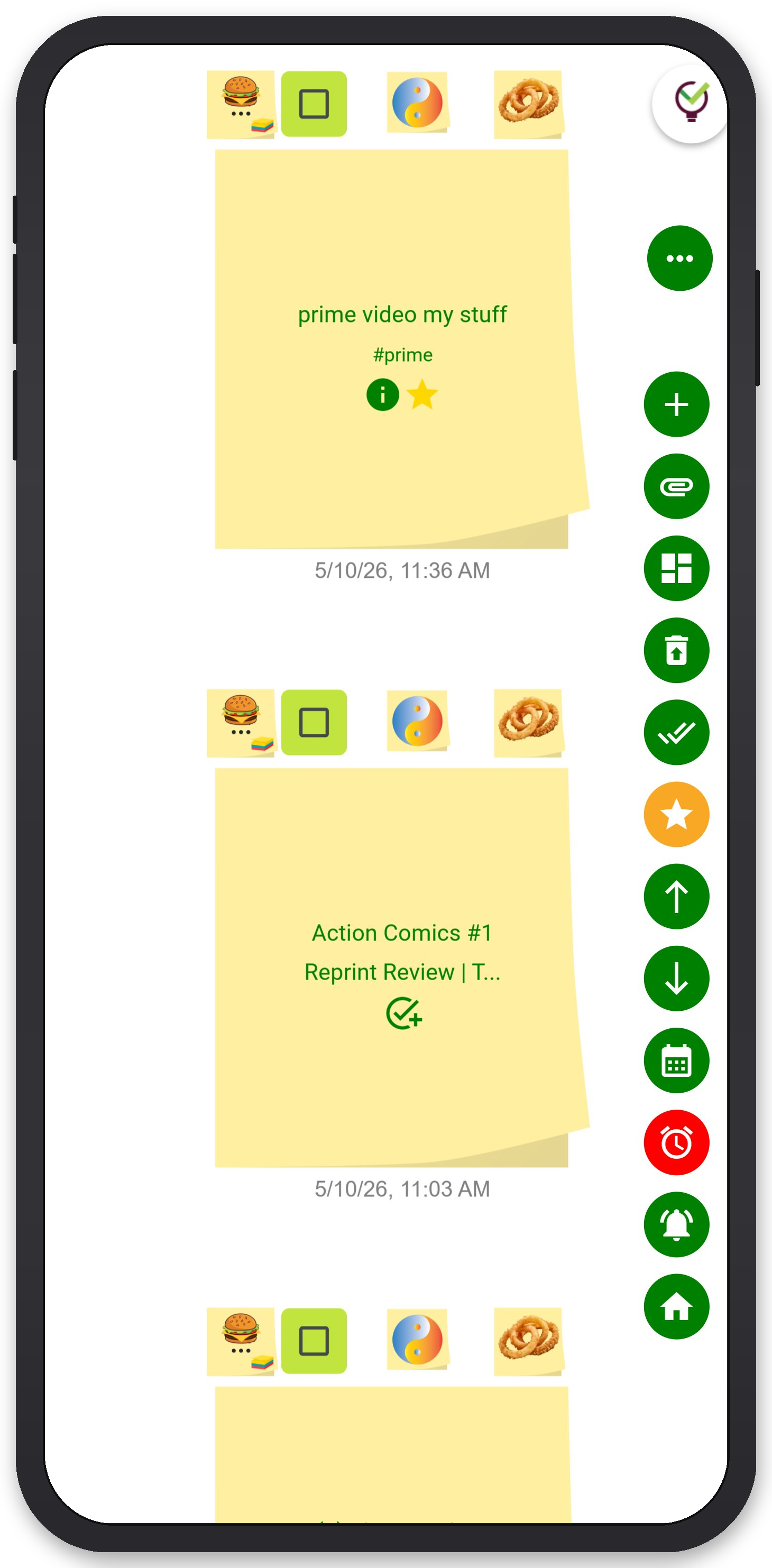
TaskLoco Premium is regularly $9.99/month per person. Right now, charter members can lock in 50% off the regular price — forever. That means $4.99/month per person today. And if our price ever goes up, you still pay half. Always.
Code CHARTER50 auto-applies at checkout. First 500 spots only — once they're gone, this offer is gone permanently. Act fast while spots last.
Every Premium subscription includes unlimited notes, 10GB file storage, reminders, calendar, and team sharing. Each team member requires a separate subscription. 7-day free trial — no charge until day 8. Cancel anytime.
Free Options: TaskLoco
TaskLoco Lite
- Native iPhone & Android app
- Completely anonymous — no sign-in
- Data stays on your device
- Up to 20 notes
- Free forever
TaskLoco Lite Plus+
- Web app + Chrome extension
- Sign in with Google
- Wall syncs across all devices
- Up to 30 notes
- Free forever
Lock In 50% Off — Forever
7-day free trial. No charge until day 8. CHARTER50 auto-applies at checkout.
🔒 Lock In My Charter SpotSee TaskLoco in Action
Frequently Asked Questions
What exactly is the Two Minute Momentum Rule?
The Two Minute Momentum Rule states that any task requiring two minutes or less should be done immediately rather than deferred into a task system. The logic is simple: the time cost of capturing, scheduling, and returning to a tiny task often exceeds the time cost of doing it on the spot. The 'Momentum' framing extends the original rule — stringing together multiple small completions early in the day builds psychological forward motion that makes harder work feel lighter.
Where did the Two Minute Rule come from?
The Two Minute Rule originates from David Allen's Getting Things Done (GTD) methodology, first published in 2001. In GTD, it's one of the core processing rules: during your inbox sweep, if the next action on an item takes two minutes or less, do it immediately. The rule has been adopted far beyond GTD because it's self-evidently correct — the switching cost of deferral often outweighs the task itself for small items.
How do I apply the Two Minute Rule without losing track of bigger tasks?
The key is a clean Do / Dump / Defer decision on every incoming task. Two-minute items get done immediately. Items not worth doing get discarded. Everything else gets captured with enough context to act on later — and ideally a reminder so the deferred item surfaces when it's relevant rather than when you remember to go looking for it. TaskLoco Premium reminders fire as push notifications that deep-link directly back to the original note, so your deferred tasks find you instead of getting buried.
What's the best app for the Two Minute Rule?
The best app is the one with the lowest capture friction — because the rule fails the moment recording a thought takes longer than fifteen seconds. TaskLoco is purpose-built around the sticky note: zero-account capture with the native Lite app, one-click webpage capture with the Chrome extension, and full reminders with deep-linking back to original notes in Premium. The architecture matches the rhythm of the rule: fast in, fast out, nothing lost.
Is the Two Minute Rule the same as GTD's Two Minute Rule?
Yes and no. The core rule is identical — do it now if it takes two minutes or less. The 'Momentum' framing is a behavioral extension that emphasizes stacking multiple small completions as a deliberate morning ritual rather than applying the rule reactively throughout the day. The stacking creates a compound psychological effect that GTD describes but doesn't name explicitly.
What counts as a 'two minute task' in practice?
Genuinely short actions: sending a one-line reply, filing a document, confirming an appointment, delegating a clear request, logging a quick note, or making a brief phone call. What does not qualify: any task where you first have to think about what the task actually is, any writing that requires real composition, any decision that needs information you don't already have. The honest two-minute estimate is itself a skill the rule trains over time.
How is TaskLoco priced?
$9.99/month per person (currently $4.99/month per person for first 500 charter members with code CHARTER50)
Born in Brooklyn. Powered by AWS. Your data stays yours.
TaskLoco is available on iPhone, Android, Chrome, and every web browser.