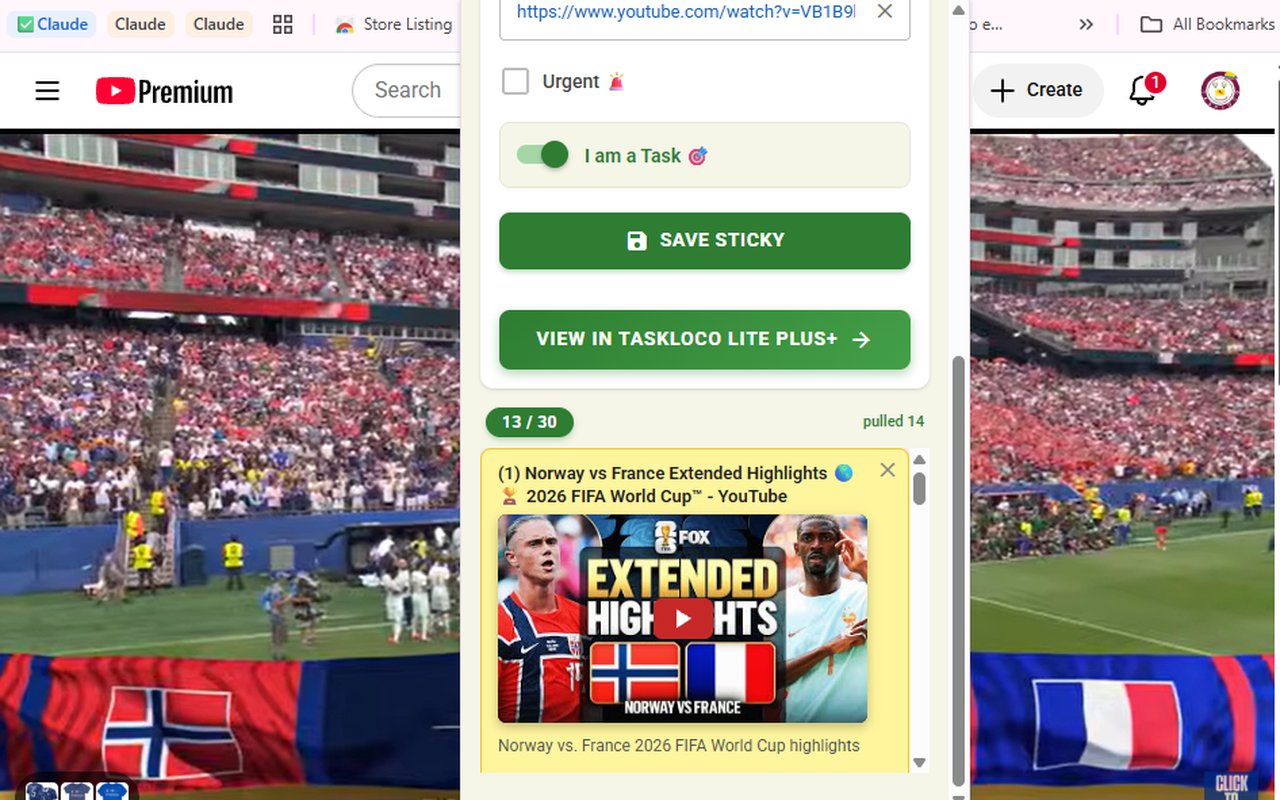
You're watching a tutorial, a documentary, or a recipe video halfway through when something pulls you away. You think you'll remember to come back. You won't. The average person has dozens of YouTube tabs silently rotting in their browser right now — each one a video they fully intended to watch.
The problem isn't memory or intention. It's that saving something for later has too much friction. YouTube's Watch Later playlist requires navigating a menu. Bookmarks strip away all context. Open tabs pile up until a browser crash wipes them out. There are better methods — and the best one takes a single click.
The Built-In YouTube Options (And Where They Fall Short)
YouTube gives you two native ways to save videos: Watch Later and personal playlists. Both work, but both have real limitations worth understanding before you rely on them.
Watch Later is quick — you can add a video from its thumbnail without even opening it. But your Watch Later list lives entirely inside YouTube. You can't add a note about why you saved it, you can't mix it with articles or research pages you're collecting on the same topic, and the list gets cluttered fast with no way to search it meaningfully.
Playlists solve the organization problem slightly better, but they require you to name and maintain the playlist in advance, and they're still siloed inside YouTube's interface.
If YouTube videos are one piece of something bigger you're tracking — a project, a topic, a course — the native tools won't cut it.
Other Common Methods: Bookmarks, Tabs, and Copy-Paste
Beyond YouTube's own tools, most people fall back on one of three habits:
- Browser bookmarks: Fast to create, but a YouTube bookmark is just a link with a long auto-generated title. No thumbnail, no context, no memory of why you saved it. Most bookmarks are never opened again.
- Leaving the tab open: This feels like saving but isn't. Tabs get lost in groups, crash with the browser, and add cognitive weight every time you see them. A tab is not a saved item — it's a deferred decision.
- Copy-pasting the URL into a note or doc: More deliberate, but it takes time and requires you to already have a note open. You also have to navigate back to it manually every time.
All three methods share the same flaw: they give you a link, not a saved experience. A bare URL doesn't tell you anything about the video when you return to it a week later.
The One-Click Method: Sticky Note Web Clipper
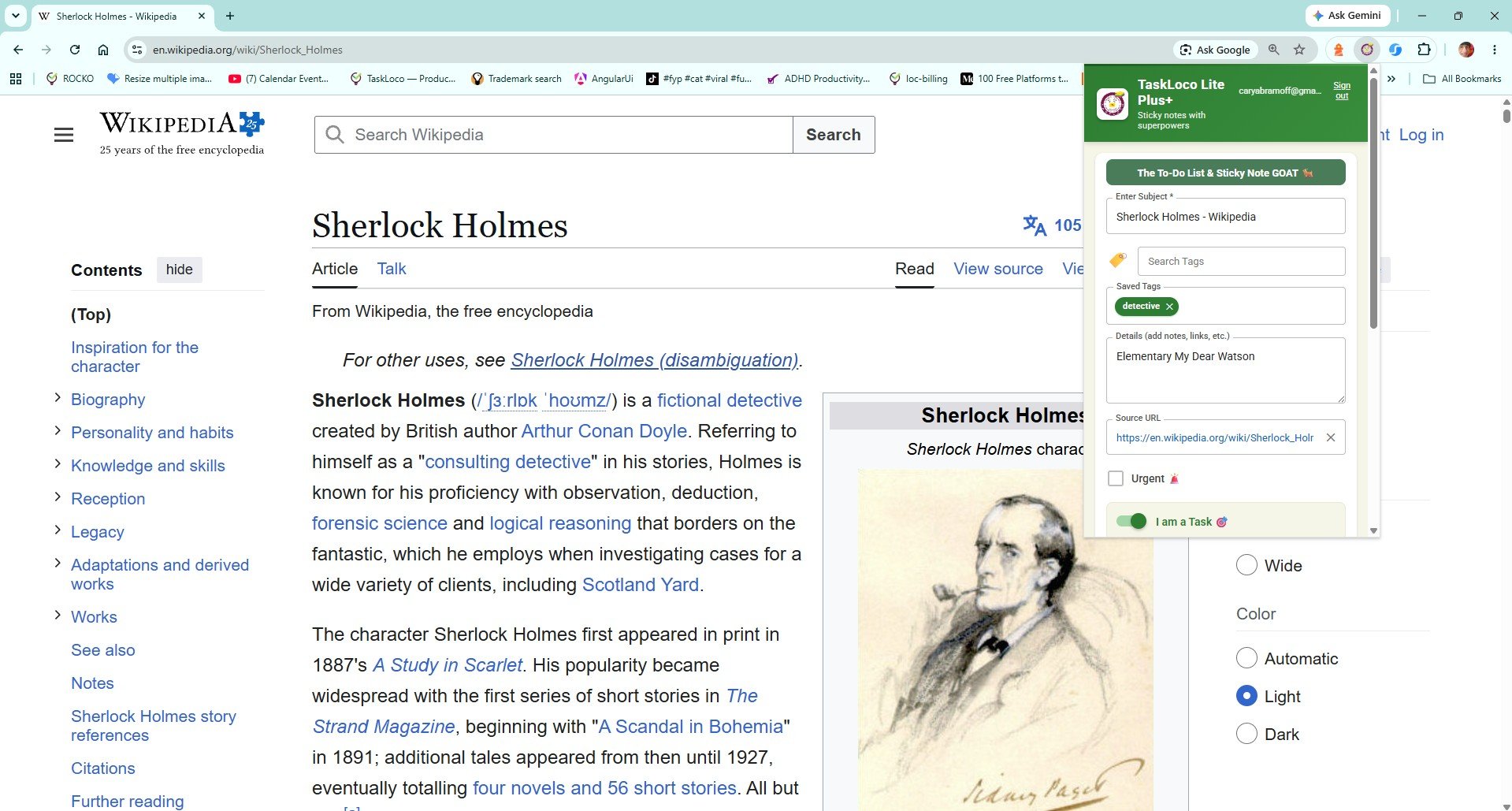
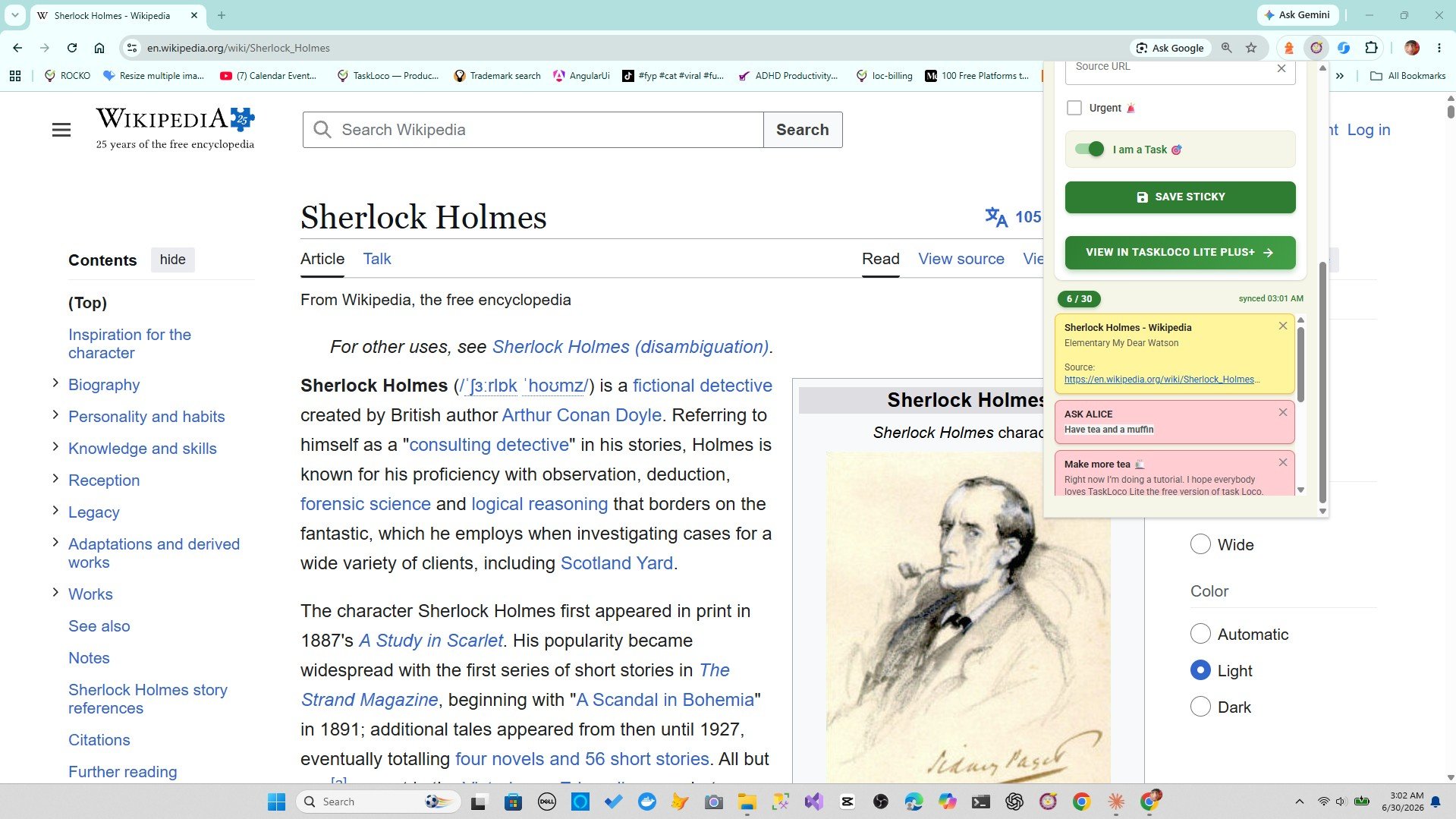
The Sticky Note Web Clipper is a free Chrome extension that changes what it means to save a YouTube video. When you're on any YouTube page and click the toolbar icon, the extension instantly creates a sticky note with the video title and URL already filled in. No typing. No menu navigation. One click and it's saved.
What makes it genuinely different from bookmarks or Watch Later: YouTube videos embed and play directly inside the note. You don't need to navigate back to YouTube to watch it — the video is right there when you open the note. That's a meaningful difference when you're reviewing ten saved items and just want to quickly check whether a video is the right one to watch now.
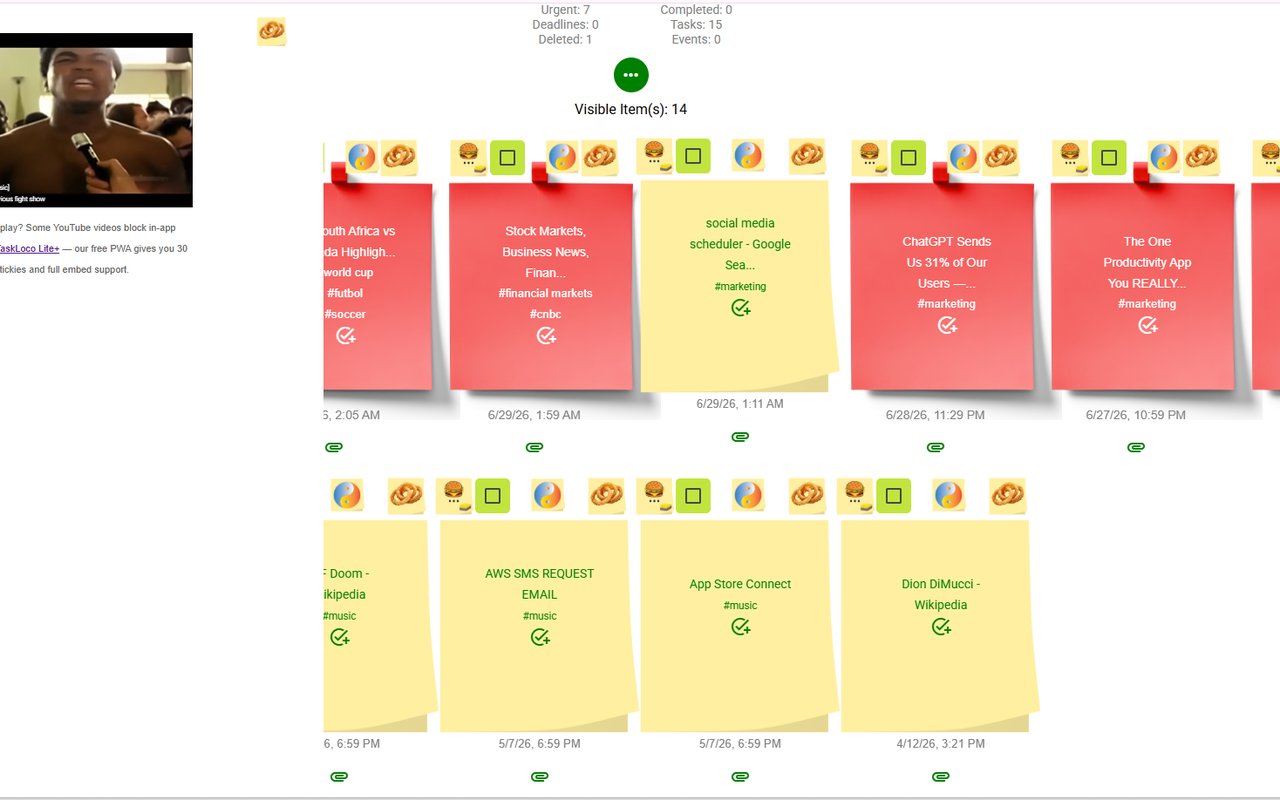
Your notes live on a visual wall in TaskLoco, which is free to start and syncs across Chrome, desktop, iPhone, and Android. So the video you clipped on your laptop is waiting for you on your phone during your commute.
Install it free from the Chrome Web Store, sign in with Google, and the first clip takes about three seconds to set up.
How to Build a Simple Save-for-Later System That You'll Actually Use
The best saving system is the one with the least friction at the moment of capture. Here's a straightforward approach that works whether you use the clipper or not:
- Decide at the moment of saving, not later. The biggest time-waster is saving everything and triaging later. If a video isn't worth fifteen seconds of thought right now, it probably isn't worth saving at all.
- Group by context, not by format. Don't have a 'YouTube' folder and a separate 'Articles' folder. Group by topic or project. A cooking video and a recipe article belong together — not in separate silos.
- Use search instead of folders when possible. If your saved items are searchable, you don't need perfect organization up front. The Sticky Note Web Clipper saves to TaskLoco, where everything is tagged and searchable by default.
- Review on a schedule. Set a recurring time — Sunday evening, Friday lunch — to go through saved items and either act on them or delete them. A save-for-later list that's never reviewed is just a guilt collection.
The clipper is the fastest capture step. The system around it — even a simple one — is what determines whether saved videos actually get watched.
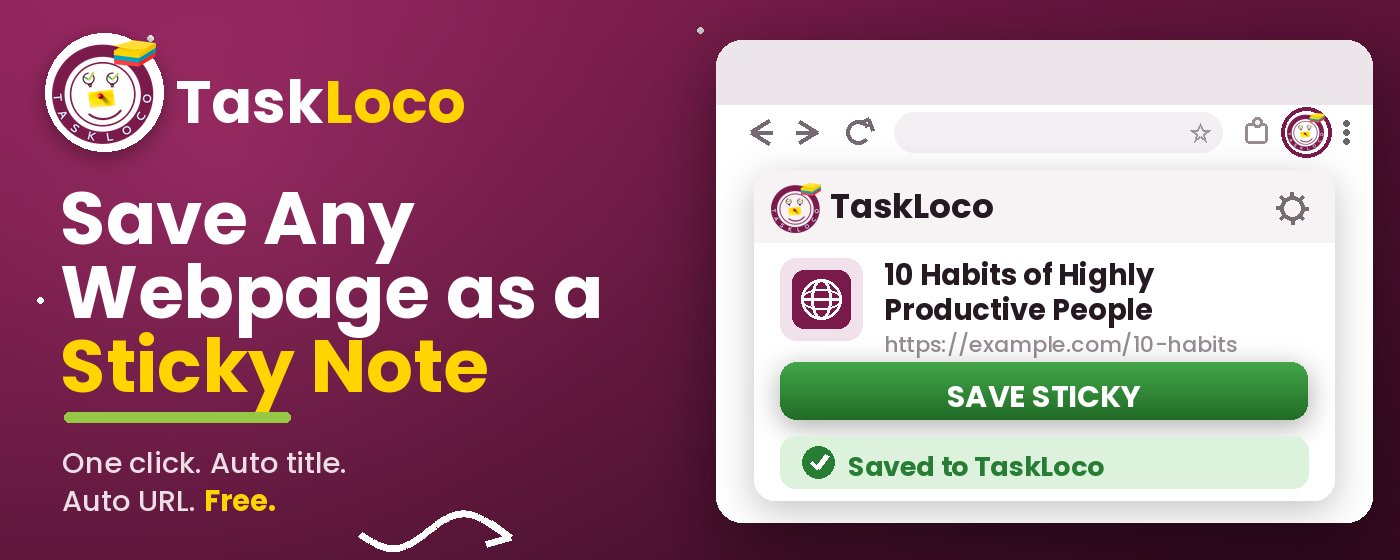
The Sticky Note Web Clipper is free. Install it from the Chrome Web Store, sign in with Google, and every page you clip becomes a sticky note you can find later.
Your clipped notes sync to TaskLoco across Chrome, desktop, iPhone, and Android — also free to start. No credit card to begin.
Get the Free Clipper
Sticky Note Web Clipper
- Free Chrome extension
- One-click save — any page, article, or video
- Title & URL auto-filled
- Tags & search
- Free forever
Synced to TaskLoco
- Sign in free with Google
- Your wall on Chrome, desktop, iPhone, Android
- YouTube videos embed & play in notes
- Visual sticky-note wall
- Free to start
Add It to Chrome — Free
One click saves any page, article, or YouTube video as a sticky note. Title and URL auto-filled.
Add to Chrome — FreeSee TaskLoco in Action
Frequently Asked Questions
Does YouTube Watch Later sync across devices?
Yes, YouTube Watch Later is tied to your Google account, so it appears on any device where you're signed in. The limitation is that it's only for YouTube content — you can't mix it with saved articles, research pages, or other links you're collecting on the same topic.
Can I save a YouTube video as a note with the video embedded?
Yes — the Sticky Note Web Clipper does exactly this. When you clip a YouTube page, the video embeds directly inside the sticky note and plays without leaving your notes wall. It's the fastest way to save a video with full playback built in.
What happens to open tabs when my browser crashes?
Most browsers attempt to restore tabs after a crash, but restoration isn't guaranteed — especially across sessions or after a forced restart. Open tabs are not a reliable save method. Clipping a page to a note or saving it as a bookmark is the only way to make sure it survives.
Is the Sticky Note Web Clipper free?
Yes — the extension is completely free. TaskLoco, where your notes sync, also has a free tier. Install the extension from the Chrome Web Store, sign in with Google, and start clipping immediately.
Can I save YouTube videos to read or watch later on my phone?
Yes. Notes you clip with the Sticky Note Web Clipper sync to TaskLoco, which is accessible on iPhone and Android as well as desktop. The video is embedded in the note, so you can play it directly from your phone.
What's the difference between saving a YouTube video as a bookmark versus clipping it?
A bookmark saves the URL and a title — that's it. Clipping with the Sticky Note Web Clipper creates a visual sticky note with the title, URL, and an embedded video player. When you return to your saved items, you can see what each note is about and play the video without navigating back to YouTube.
How do I stop accumulating YouTube tabs I never go back to?
The main cause is high-friction saving — when saving feels harder than just leaving the tab open, tabs pile up. Switching to a one-click clipper removes that friction. Click the Sticky Note Web Clipper toolbar icon once, the video is saved to your notes wall, and you can close the tab confidently knowing it's not gone.
Born in Brooklyn. Powered by AWS. Your data stays yours.
TaskLoco is available on iPhone, Android, Chrome, and every web browser.