Bookmarks had one job: remember a URL. And for years, that was enough. But the way people actually read and research on the web has changed — you're saving articles to read later, collecting sources for a project, watching YouTube tutorials, and trying to find that one link you saved three weeks ago. A flat list of URLs with no context, no preview, and no way to remember why you saved something just doesn't work anymore.
The good news is that the fix is simple and free. A handful of smarter alternatives to bookmarks have emerged — from read-later apps to web clippers to visual note boards — and the best ones take less time than right-clicking and hitting "Bookmark this page." Here's how to actually choose the right replacement, and what each option gets right and wrong.
Why Bookmarks Fail for Saving Articles
The core problem with bookmarks isn't that they're old — it's that they're context-free. When you bookmark an article, you get a title and a URL. No thumbnail, no personal note about why you saved it, no way to group it visually with related links. Six months later, your bookmarks folder looks like an unsorted filing cabinet, and you've forgotten what half of those pages even were.
There's also the retrieval problem. Bookmarks are only useful if you can find what you saved. Browser bookmark search is rudimentary — it matches titles, not the content of the page, and it gives you zero context. Compare that to a system where your saved article shows up as a visual card with the title, the URL, a note you added, and tags you assigned — and suddenly retrieval feels less like archaeology.
Bookmarks also don't sync gracefully across devices. Yes, Chrome bookmarks technically sync via your Google account, but the experience on mobile is clunky — buried in a menu, displayed as a text list, with no way to quickly scan what you saved. If you've ever emailed yourself a link just to open it on your phone, you already know the problem.
The Real Alternatives — and What Each One Gets Right
There are several legitimate replacements for bookmarks, and the right one depends on how you work. Here's an honest breakdown of the main options:
- Read-later apps (Pocket, Instapaper): These strip an article down to plain text and let you read it later in a clean view. Great if your main goal is distraction-free reading. Less great if you want to save a link for reference, capture a YouTube video, or organize research visually. They solve the reading experience, not the saving and organization problem.
- Notion Web Clipper: Saves pages into a Notion database. Powerful if you're already deeply inside Notion's ecosystem and have set up templates. But the setup cost is real — you're configuring properties, databases, and views before you save your first page. Not a quick win.
- Evernote Web Clipper: One of the oldest clippers. It can capture full page content, which is useful for archiving. But it's tied to a feature-heavy app that many people find overkill for simple article saving.
- Open tabs: Leaving articles open in browser tabs is not a system — it's procrastination. Tabs disappear when browsers crash, slow everything down, and create decision fatigue. A tab you're keeping open "to read later" is just a bookmark you're afraid to commit to.
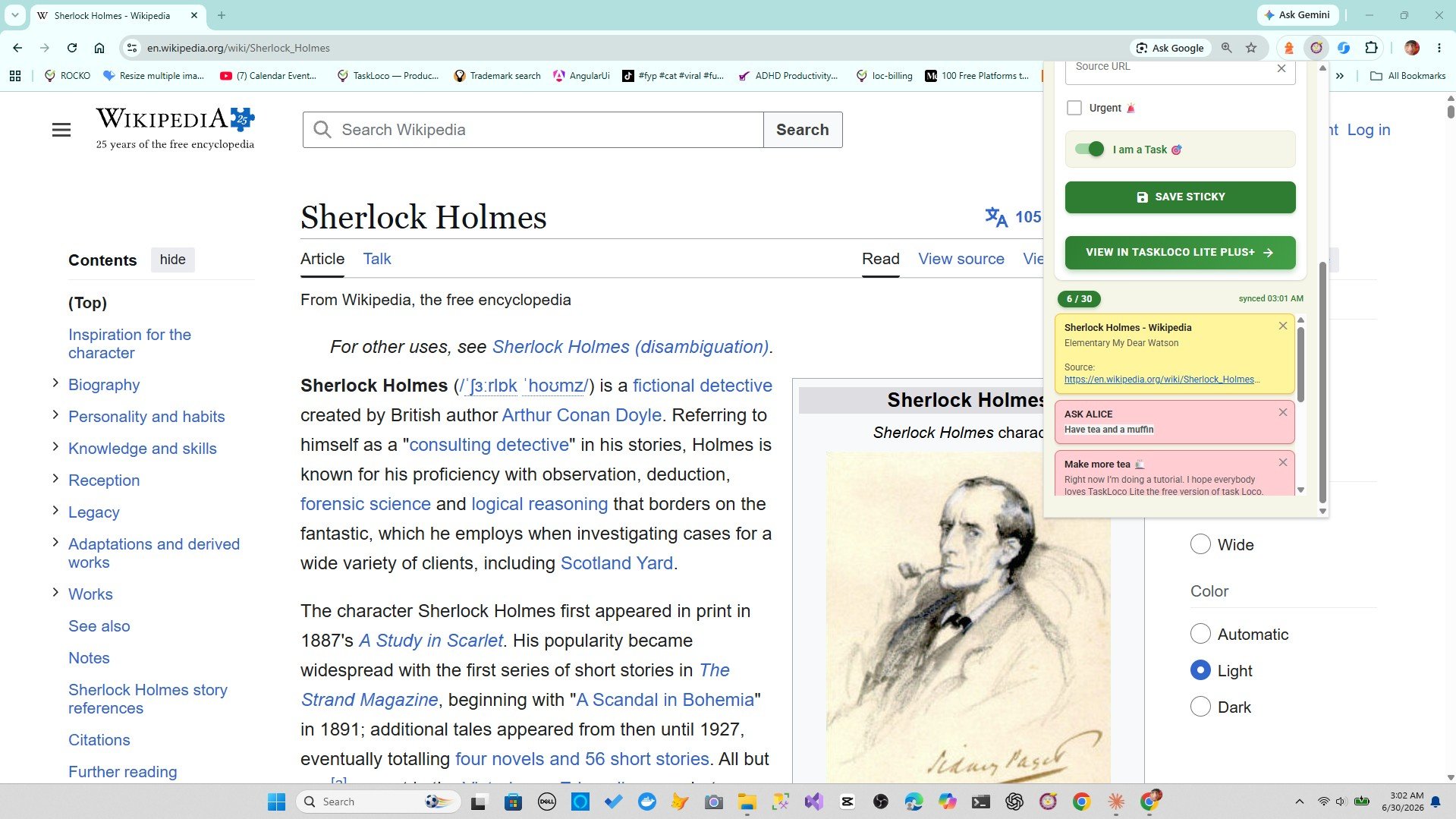
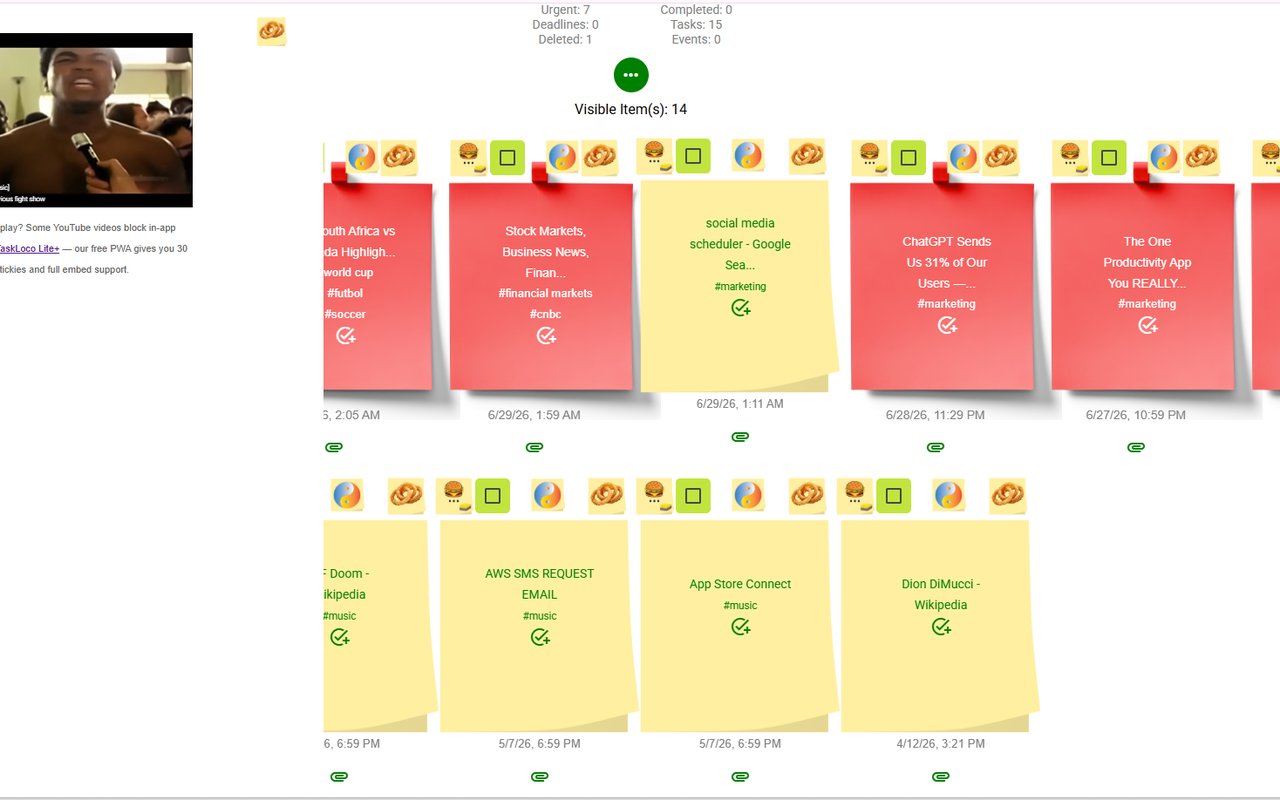
- Visual sticky note clippers: A newer category that treats saved pages as visual cards — like digital sticky notes on a board. You see the page title, URL, any note you added, and you can organize by color, tag, or position. This is closest to how most people actually think about saved content.
For most people who want something fast, visual, and organized without a setup burden, a sticky-note-style web clipper is the practical answer. It's one click, it's visual, and it doesn't require you to become a Notion power user before you save your first thing.
How to Build a Working Article-Saving Habit
The tool only matters if the habit sticks. Here's what actually makes a saving system work long-term, regardless of which tool you use:
Save with context, not just the URL. Every time you save something, add a one-sentence note about why you saved it. "For the blog post on remote work" or "Compare with the other article on sleep science." This takes five seconds and makes retrieval dramatically faster. A URL with no note is only marginally better than no bookmark at all.
Use tags, not folders. Folders create a false choice — an article about productivity and sleep science belongs in one folder but not the other. Tags let you assign multiple categories to one item. Most good clippers support tags; standard bookmarks in most browsers don't.
Review what you save, on a schedule. Save things freely, but set aside time — even ten minutes a week — to go back through what you've clipped. This is where the visual layout of a sticky note board earns its keep. Scanning a wall of visual cards is much faster than scrolling a text list.
Don't clip everything — clip what you'll actually use. Read-later apps have a well-documented problem: people save articles compulsively and never read them, creating a guilt pile. Be deliberate. If you're saving something, ask yourself once: "What will I actually do with this?" If there's no answer, don't save it.
Make sure your saved items are available everywhere. The best clippers sync to your phone and desktop so that an article you saved in Chrome on your laptop is there when you pick up your phone on the couch. If your system doesn't sync, you'll stop using it the moment you switch devices.
One Free Tool That Handles All of This
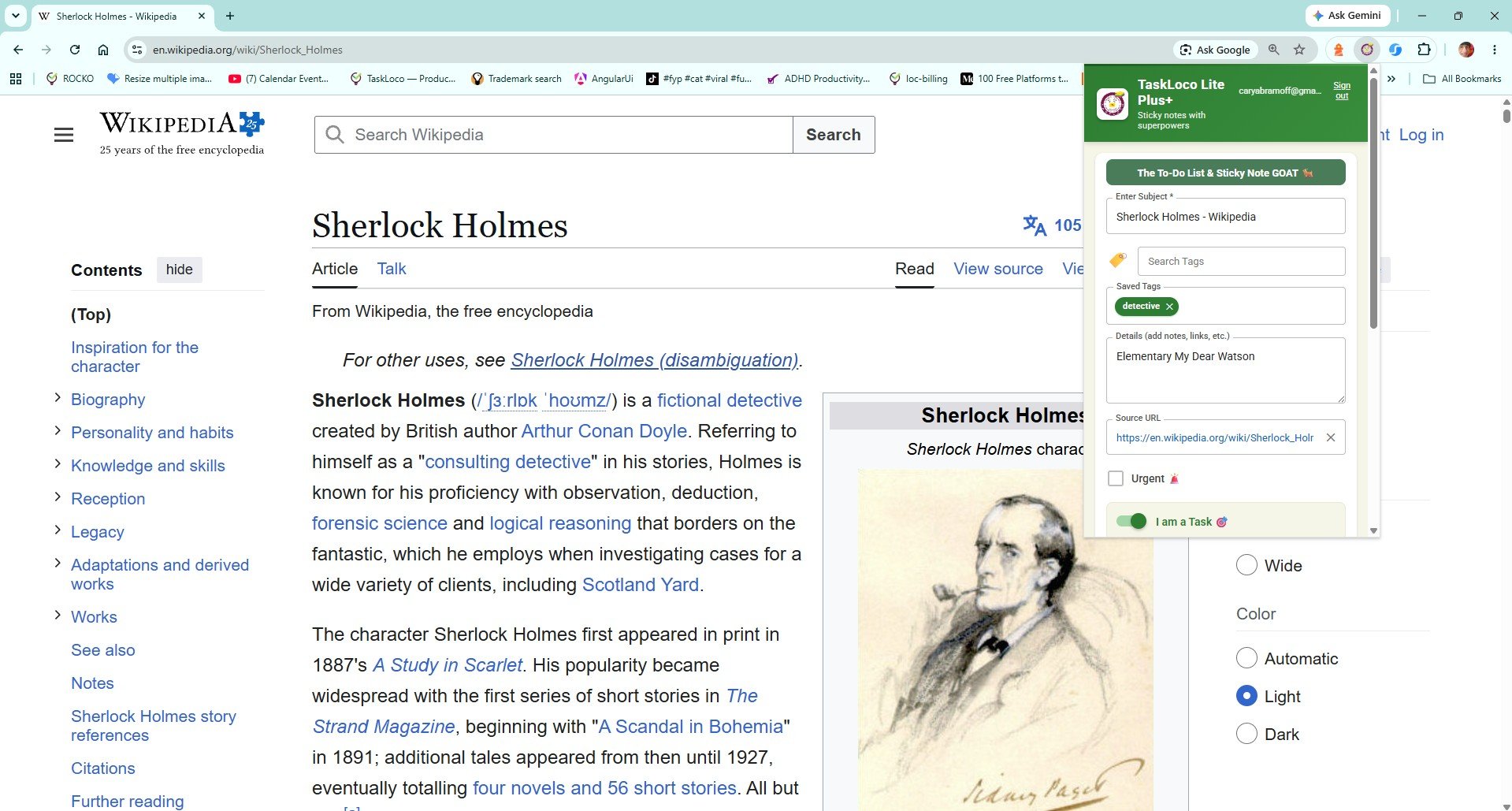
If you want one tool that puts these principles into practice without any setup, the Sticky Note Web Clipper by TaskLoco is worth installing. It's a free Chrome extension — click the toolbar icon on any page, and that page is saved as a visual sticky note with the title and URL already filled in. You can add a note, assign a tag, and move on in about fifteen seconds.
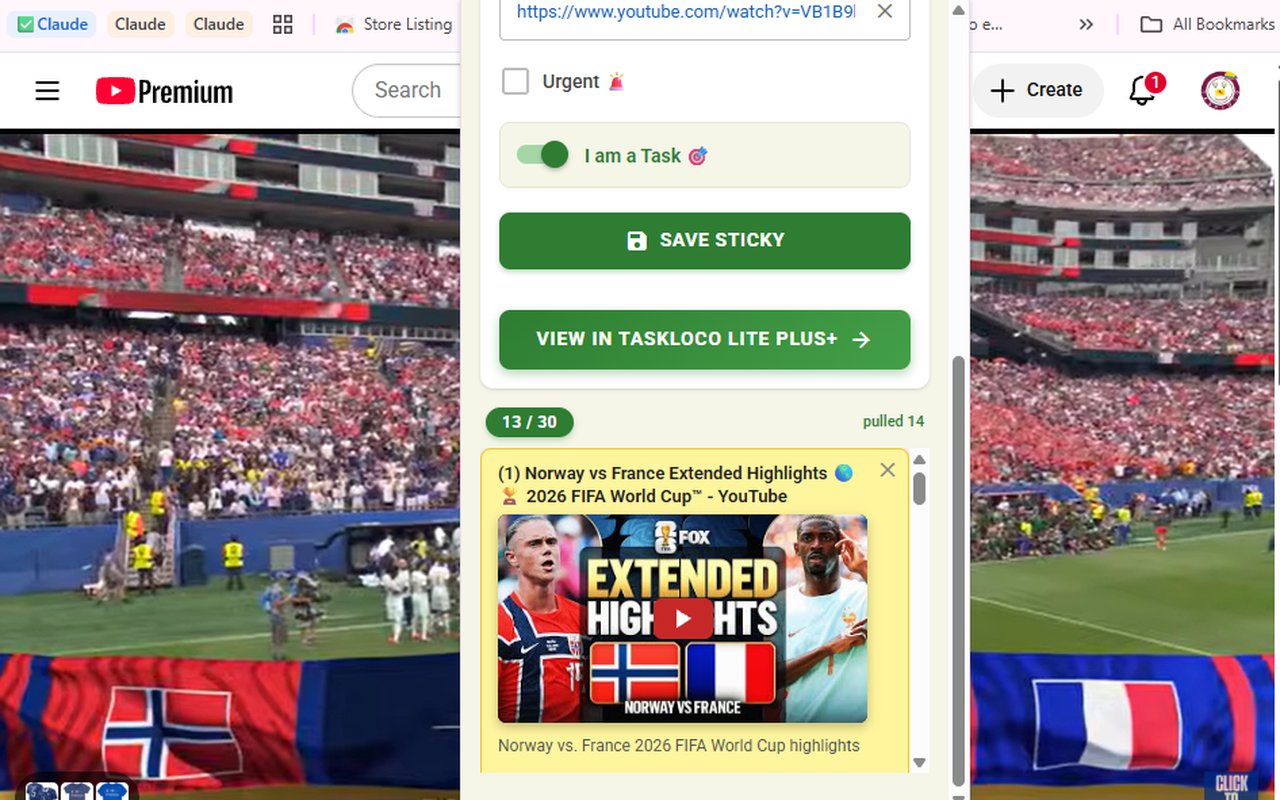
It handles the full range of what people actually save: articles, news pages, research links, and YouTube videos — which embed directly inside the note and play without leaving your wall. That last part is genuinely useful for anyone who saves tutorials or video essays for later.
Everything syncs to TaskLoco, so your saved notes are available on desktop and on iPhone and Android through the free app. You sign in with Google — no new account to create. There's no paid tier to worry about for the extension itself; it's just free.
If you've been living with a messy bookmarks bar or a tab graveyard, this is the clearest way out. Install it once, clip something, and see whether it fits how you actually work.
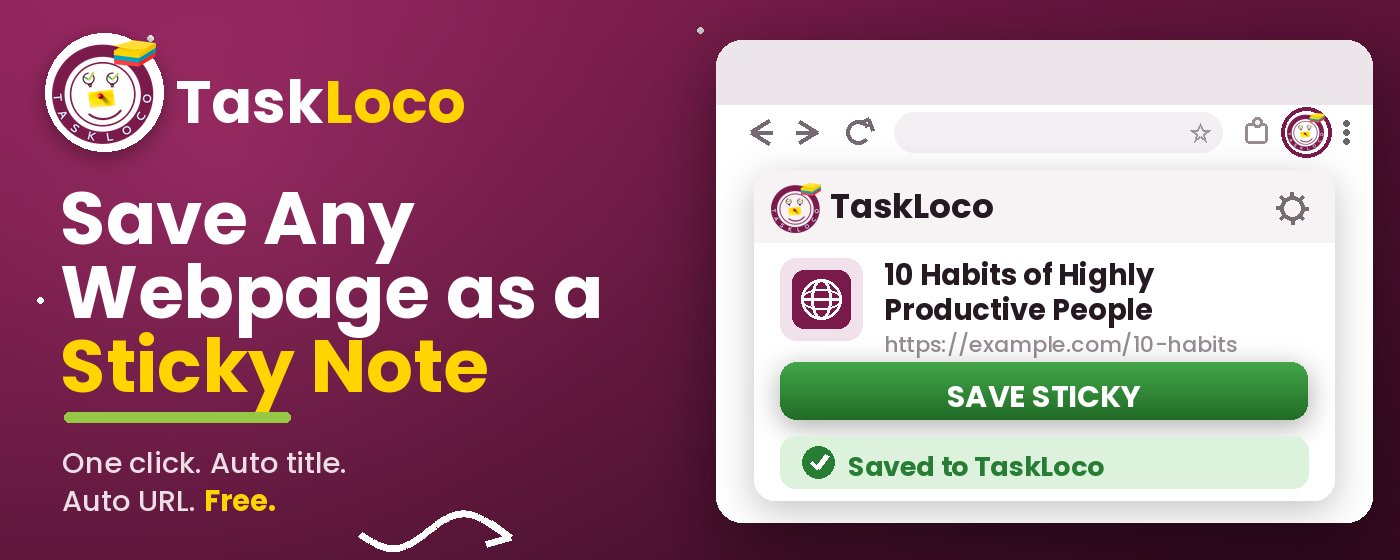
The Sticky Note Web Clipper is free. Install it from the Chrome Web Store, sign in with Google, and every page you clip becomes a sticky note you can find later.
Your clipped notes sync to TaskLoco across Chrome, desktop, iPhone, and Android — also free to start. No credit card to begin.
Get the Free Clipper
Sticky Note Web Clipper
- Free Chrome extension
- One-click save — any page, article, or video
- Title & URL auto-filled
- Tags & search
- Free forever
Synced to TaskLoco
- Sign in free with Google
- Your wall on Chrome, desktop, iPhone, Android
- YouTube videos embed & play in notes
- Visual sticky-note wall
- Free to start
Add It to Chrome — Free
One click saves any page, article, or YouTube video as a sticky note. Title and URL auto-filled.
Add to Chrome — FreeSee TaskLoco in Action
Frequently Asked Questions
What is the best replacement for browser bookmarks?
The best replacement depends on your goal, but for most people saving articles and links to read or reference later, a visual web clipper beats plain bookmarks. Clippers give you context — a note, tags, a visual card — not just a URL. The Sticky Note Web Clipper is a free Chrome extension that saves any page as a sticky note in one click, with the title and URL auto-filled. It syncs to your phone and desktop so you can find what you saved wherever you are.
How do I save articles to read later without a bookmark folder?
Install a web clipper extension in Chrome. Instead of bookmarking a URL into a folder, you click one button and the page is saved as a visual card — with space to add a note and tags. The Sticky Note Web Clipper by TaskLoco does this for free. Your saved articles sync to TaskLoco so you can read them on your phone or desktop later without hunting through a bookmark list.
What's wrong with just leaving tabs open instead of bookmarking?
Open tabs are not a saving system. They slow your browser down, disappear when Chrome crashes or restarts, and don't travel to your phone. There's also the cognitive weight of dozens of open tabs — each one is a micro-decision you're deferring. Saving a page as a sticky note takes the same number of clicks as keeping a tab open, but the note stays searchable and organized long after the tab would be gone.
Can I save YouTube videos somewhere other than a bookmark?
Yes — and it works better than you'd expect. The Sticky Note Web Clipper saves YouTube pages as sticky notes, and the video embeds directly inside the note. You can play it from your saved wall without going back to YouTube. This is especially useful for tutorials, lectures, or any video you want to revisit alongside related articles or notes.
Does the Sticky Note Web Clipper cost anything?
The extension is free. Install it from the Chrome Web Store, sign in with Google, and start saving pages immediately. TaskLoco, where your notes sync, also has a free tier — so there's nothing to pay to get started.
How is a web clipper different from a read-later app like Pocket?
Read-later apps like Pocket focus on the reading experience — they strip pages down to clean text and queue them up for reading. That's genuinely useful for articles. Web clippers focus on saving and organizing — they preserve the URL and context of a page, let you tag it, and keep it findable. The Sticky Note Web Clipper is closer to a visual filing system than a read-later queue. You can use both for different purposes, but if your problem is organization and retrieval rather than distraction-free reading, a clipper is the better fit.
Will my saved articles sync to my phone?
Yes. Notes saved with the Sticky Note Web Clipper sync to TaskLoco, which is available on iPhone and Android as well as desktop. Anything you clip in Chrome on your laptop shows up in the TaskLoco app on your phone — sign in with the same free Google account and your whole saved wall is there.
Born in Brooklyn. Powered by AWS. Your data stays yours.
TaskLoco is available on iPhone, Android, Chrome, and every web browser.