There is a version of your project that exists in your head. It has no typos, no loose ends, no awkward transitions, no second-guessing. It is flawless. It is also completely imaginary — and the longer you protect it, the more damage it does to your actual work.
Perfectionism is not a high standard. It is a stalling mechanism. It feels productive because you are still technically working, still polishing, still improving. But at some point — and most perfectionists blow past this point without noticing — you are no longer making the work better. You are just delaying the moment when it has to go out into the world and be judged. That discomfort is the actual thing you are avoiding. The extra polish is just cover.
What 'Good Enough' Actually Means
Good enough does not mean sloppy. It does not mean careless or half-done. It means fit for purpose — the work accomplishes what it was supposed to accomplish, at a quality level that serves the reader, client, customer, or collaborator. It means you have stopped adding and started shipping.
The phrase gets a bad reputation because it is often used as an excuse for genuinely low-quality work. That is a misuse. The real meaning is about the diminishing returns of additional effort. There is a point in every project where the next hour you put in will produce a worse return than the previous hour. Good enough is recognizing where that point is — and stopping there instead of pushing past it out of anxiety.
Reid Hoffman, who co-founded LinkedIn, is famous for saying: "If you are not embarrassed by the first version of your product, you have launched too late." That is not nihilism. It is a hard-won understanding that real feedback from a real audience is worth infinitely more than another internal review cycle.
The Real Cost of Perfectionism
Most people think the cost of perfectionism is just a delayed deadline. That is the visible cost. The invisible ones are much larger.
Opportunity cost. Every hour spent over-polishing project A is an hour not spent starting project B. The thing you kept refining for six months could have been done in two, leaving you four months to start the next thing, learn from both, and compound your progress. Perfectionism is not just slow — it is expensive in a way that never shows up on a time sheet.
Feedback starvation. The only way to actually know if your work is good is to put it in front of people. Perfectionism delays that moment indefinitely, which means you are building on assumptions instead of data. You might be refining exactly the wrong thing. You will not know until you ship — which means shipping earlier is almost always the smarter move, not the riskier one.
Decision fatigue and context loss. The longer a project drags, the more the original intent drifts. You lose the context of why certain choices were made. Team members rotate. The market moves. What felt essential in month one is irrelevant by month four. Shipping while the context is still fresh keeps the work coherent.
Momentum erosion. Nothing kills motivation like a project that never ends. Completing things — actually finishing and shipping — creates psychological momentum that feeds the next project. Perfectionism robs you of that cycle. You end up exhausted by a project you are not even done with, with no completion boost to carry you forward.
How to Actually Break the Perfectionism Loop
Knowing perfectionism is bad does not make it easy to stop. It is wired into how many high achievers operate — it got them results in school and early career, so it feels like a virtue. Breaking the loop requires deliberate tactics, not just mindset shifts.
Set a definition of done before you start. The single most effective technique. Before you begin a task or project, write down exactly what "finished" looks like. What must be true for this to be done? Not perfect — done. When you hit those criteria, you stop. The lack of a pre-set finish line is why perfectionism spirals; without one, you can always find something else to improve.
Use time constraints as a forcing function. Give yourself half the time you think you need. Parkinson's Law is real — work expands to fill the time available. If you allow three weeks, you will use three weeks. Give yourself five days and you will make sharper decisions faster. Artificial urgency is one of the most reliable creativity and clarity tools available.
Separate creation from editing. Perfectionism often sneaks in during the creation phase — you write a paragraph and immediately re-read and revise it before moving on. This is the wrong order. Create first, edit second. Getting a rough complete draft out is more valuable than a perfectly polished first third with nothing after it.
Name the anxiety, not the work. When you feel the pull to keep refining, ask yourself honestly: is this improvement making the work meaningfully better, or am I just uncomfortable with the idea of it being judged? Most of the time, it is the latter. Naming that is the first step to overriding it.
Ship to one person first. If you cannot bring yourself to release something broadly, send it to one trusted person. A single piece of real feedback from a real reader will tell you more than another week of self-editing. It also breaks the psychological dam — once it is out to anyone, the threshold for sharing more broadly drops dramatically.
- Define done before you start — in writing
- Cut your estimated time in half on purpose
- Draft fully before editing anything
- Ask: is this improving the work, or managing my anxiety?
- Send to one person to break the seal
How TaskLoco Helps You Ship Instead of Stall
One practical reason people over-perfect is that their tools make iteration feel heavy. When every task lives inside a multi-step project management system — with dependencies, status fields, and approval workflows — updating and reshipping feels like work in itself. The system creates friction that rewards staying in draft mode.
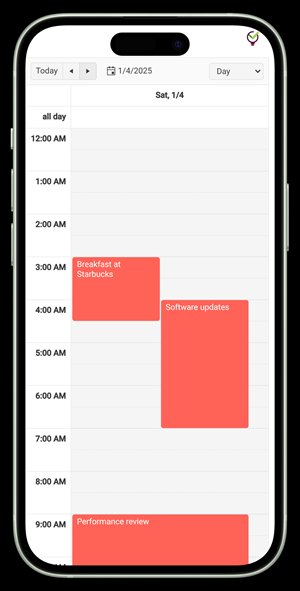
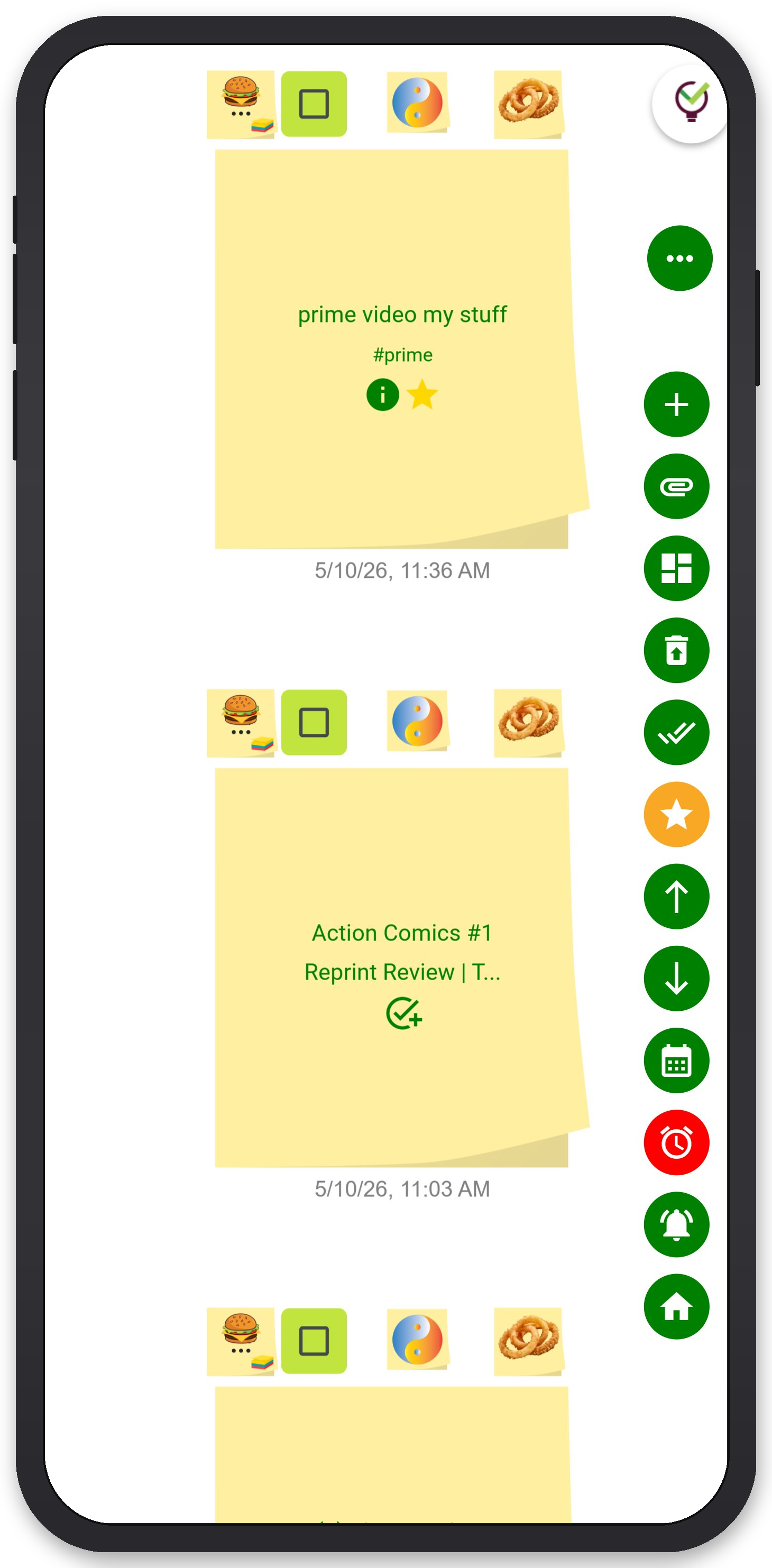
TaskLoco takes the opposite approach. Everything lives on a sticky-note wall. You capture an idea, assign a reminder, attach a file if you need one, and move on. When the note is done, you archive it. When the plan changes, you move the note. There is no system to fight — just a wall that reflects where things actually stand.
The team sharing works like email — you share a note, the recipient clones it and makes it their own. No permissions to manage, no access levels to configure. You share, they receive, they act. That simplicity is the point. When sharing feels as easy as sending a note, you share earlier drafts instead of waiting until something is "ready." Early sharing is exactly how you break the perfectionism loop.
Reminders deep-link back to the original note — delivered as push notifications to your phone and computer — so when the nudge arrives, you land directly on the thing you need to act on. Not an inbox. Not a dashboard. The note itself. That kind of friction removal is what keeps real work moving instead of stalling in a queue.
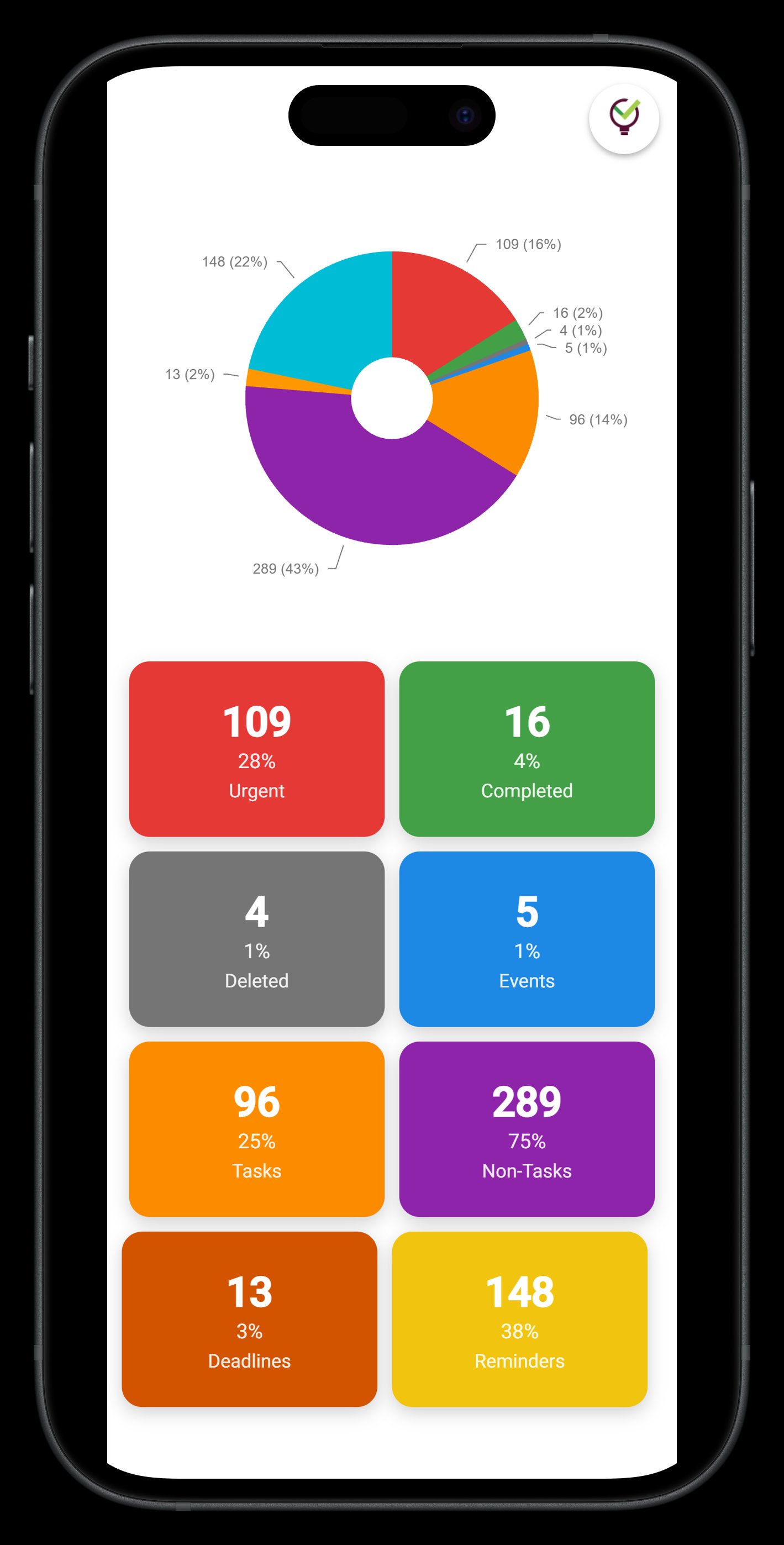
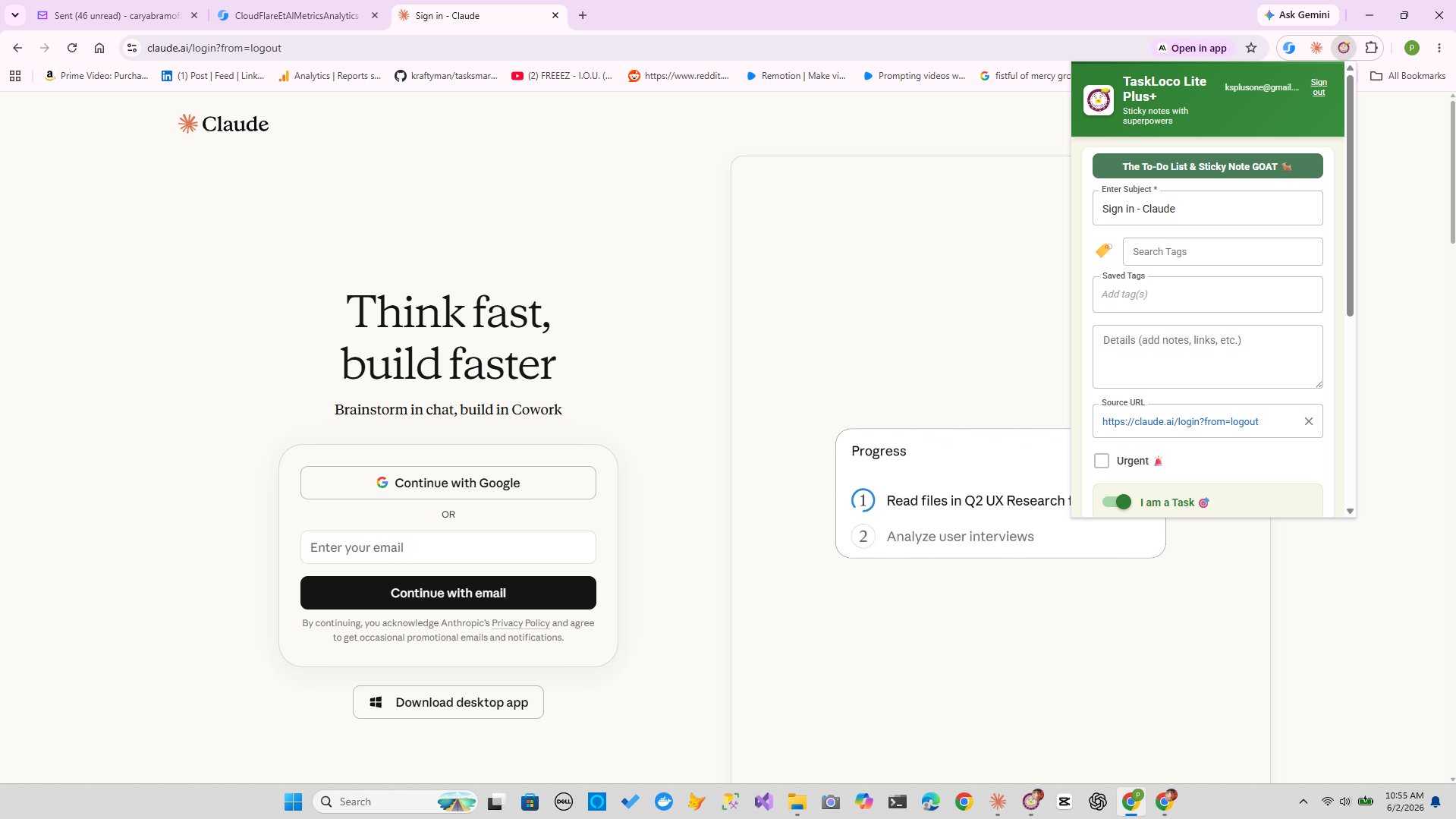
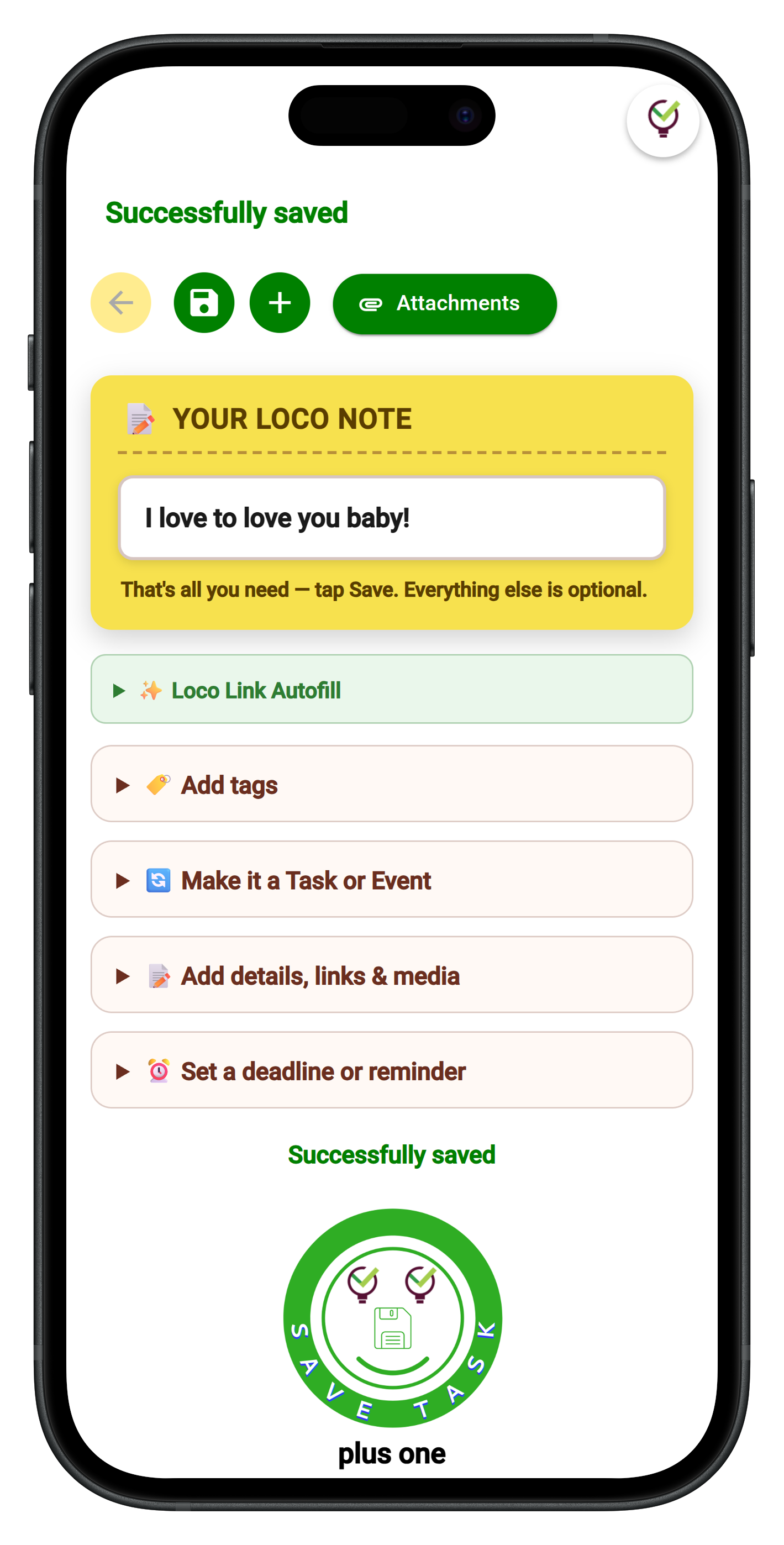
TaskLoco Premium is regularly $9.99/month per person. Right now, charter members can lock in 50% off the regular price — forever. That means $4.99/month per person today. And if our price ever goes up, you still pay half. Always.
Code CHARTER50 auto-applies at checkout. First 500 spots only — once they're gone, this offer is gone permanently. Act fast while spots last.
Every Premium subscription includes unlimited notes, 10GB file storage, reminders, calendar, and team sharing. Each team member requires a separate subscription. 7-day free trial — no charge until day 8. Cancel anytime.
Free Options: TaskLoco
TaskLoco Lite
- Native iPhone & Android app
- Completely anonymous — no sign-in
- Data stays on your device
- Up to 20 notes
- Free forever
TaskLoco Lite Plus+
- Web app + Chrome extension
- Sign in with Google
- Wall syncs across all devices
- Up to 30 notes
- Free forever
Lock In 50% Off — Forever
7-day free trial. No charge until day 8. CHARTER50 auto-applies at checkout.
🔒 Lock In My Charter SpotSee TaskLoco in Action
Frequently Asked Questions
Is 'good enough' just an excuse to be lazy?
No — and this is the most important distinction. Good enough means fit for purpose at a quality level that serves the audience. Lazy means below that threshold. The confusion happens because people misuse 'good enough' as cover for genuinely unfinished work. The real version is disciplined: you define what done looks like before you start, you hit that bar, and you stop. That is not laziness — it is efficiency.
Why do perfectionists struggle to ship?
Perfectionism is fundamentally about avoiding judgment. Shipping something means it can be evaluated, criticized, or found wanting. As long as something is still in progress, it is protected — you can always say it is not done yet. The endless polishing is not really about the work. It is about postponing the vulnerable moment when real feedback arrives. The fix is recognizing that the feedback is the goal, not the threat.
How do I know when something is actually done?
You know it is done when it meets the definition you wrote before you started. If you did not write a definition before you started, write one now — and be honest about whether the work already meets it. Common done criteria: it solves the stated problem, it communicates clearly to the intended audience, it does not contain errors that would undermine its purpose. If yes on all three, it is done. Ship it.
What is the best way to stop over-thinking and just start?
Give yourself a time box. Decide the task gets 45 minutes, not however long it takes. Write down what you need to accomplish in those 45 minutes — not everything, just the next concrete step. When the timer runs, evaluate what exists, not what you wish existed. The combination of a time constraint and a pre-defined output forces decisions that open-ended work never does.
Does perfectionism ever actually produce better results?
In rare, high-stakes single-shot situations — a surgical procedure, a bridge specification, a legal filing — yes, precision matters and there is no iteration. But most knowledge work, creative work, and product work is not like that. It is iterative by nature. In those contexts, the feedback loop from a shipped imperfect version almost always outperforms the isolated refinement of an unshipped perfect one. The domains where perfectionism pays off are much narrower than perfectionists believe.
How can sticky notes help with perfectionism?
Sticky notes impose a natural constraint — they are small. You cannot write a novel on a sticky note, which forces you to distill the idea to its core. That constraint is a feature. When you capture a task or idea in one or two sentences, you are already making the 'what matters here' decision that perfectionism avoids. TaskLoco extends this: a wall of sticky notes gives you the whole picture at a glance, so you can see what is actually done versus what you are endlessly circling back to.
What is the one mindset shift that most helps perfectionists?
Treating your work as a hypothesis rather than a verdict. A hypothesis is meant to be tested, updated, and revised based on evidence. A verdict is final and must be right. Most work is actually closer to a hypothesis — you are making your best current judgment, shipping it, seeing how it lands, and adjusting. When you internalize that frame, shipping an imperfect version stops feeling like failure and starts feeling like the correct scientific method.
Born in Brooklyn. Powered by AWS. Your data stays yours.
TaskLoco is available on iPhone, Android, Chrome, and every web browser.