You had it. You were in the shower, driving, halfway through a meeting — and the idea was perfect. Clear, fully formed, ready to act on. "I'll remember this," you told yourself with total confidence. Then something happened. A notification, a conversation, a turn you almost missed. And it was gone. Not fuzzy — gone.
This isn't a memory problem. It's a biology problem. Your working memory holds roughly four chunks of information at a time, and it flushes constantly. "I'll remember" is a bet you place against your own neurology, and the house always wins. Understanding exactly why — and having a capture habit that takes less than ten seconds — changes everything.
What's Actually Happening in Your Brain When You Say "I'll Remember"
Working memory — the cognitive workspace where you hold and manipulate information in the moment — is not a notepad. It's more like a whiteboard that gets erased every few minutes whether you want it to or not. Psychologist George Miller's classic research showed humans can hold roughly seven items (plus or minus two) in short-term memory. More recent work by Nelson Cowan suggests the real functional limit is closer to four. Either way, it's shockingly small.
When you say "I'll remember," you're assuming your brain will treat that thought as a priority. It won't. Your brain continuously ranks incoming sensory information, emotions, and environmental demands. A new noise, a question from a coworker, a hunger pang — any of these can displace what you were holding. The thought doesn't fade slowly. It gets overwritten, like a file replaced on a hard drive.
There's also an effect called the Zeigarnik effect — your brain holds on to unfinished tasks longer than finished ones. But here's the catch: your brain only keeps the feeling that something is unfinished, not necessarily the details of what that thing was. You'll feel vague anxiety that you were supposed to do something. You just won't know what.
The Real Cost of a Lost Thought
Most people brush off forgotten thoughts as minor inconveniences. They're rarely minor. A forgotten follow-up email costs a relationship. A forgotten idea for a proposal costs a deal. A forgotten commitment to your kid costs trust. The individual loss feels small. The cumulative effect is enormous.
There's a less obvious cost too: the mental overhead of trying to remember. When you tell yourself you'll remember something, your brain doesn't just store it and move on. It keeps checking — did I forget that thing? Should I be worrying right now? This background anxiety is called cognitive load, and it quietly degrades your ability to focus on whatever you're actually doing. You're not fully present in your meeting because part of your brain is babysitting a fragile memory.
David Allen, the author of Getting Things Done, identified this decades ago. He called it an "open loop" — any commitment your mind is holding that hasn't been captured somewhere trusted outside your head. Open loops drain mental energy. The only way to close them is to get them out of your head and into a system. Not a better memory. A system.
- Forgotten task: Re-work, apology, or missed opportunity
- Forgotten idea: You'll never know what you lost
- Forgotten commitment: Damaged trust that takes far longer to rebuild
- Constant background checking: Degraded focus on everything else you're doing
How to Build a Capture Habit That Actually Sticks
The goal is not to have a better memory. The goal is to need one less. Here's how to build a capture system that works regardless of what tools you use.
Rule one: friction kills habits. Your capture method has to be faster than the thought can disappear. If it takes 30 seconds to open an app, navigate to the right folder, and type a properly formatted task — you won't do it when you're in the middle of something else. Your method needs to be reachable in under ten seconds from wherever you are.
Rule two: one inbox, not many. The reason people abandon capture systems is that thoughts end up scattered — some in a notes app, some in email drafts, some on random scraps of paper. Then reviewing becomes a scavenger hunt, and you stop trusting the system. Pick one place. Everything goes there first. Sort it later.
Rule three: review is not optional. Capturing without reviewing is just organized forgetting. Set a daily five-minute window — morning, evening, it doesn't matter — to look at what you captured and decide what to do with each item. This is what turns a capture habit into an actual productivity system.
Rule four: capture context, not just the task. "Email John" is nearly useless. "Email John re: the Q3 budget approval he mentioned on Tuesday — needs answer before Friday" is actionable. The five extra seconds it takes to add context will save you ten minutes of reconstruction later.
- Keep your capture tool visible — hidden tools get skipped
- Use voice-to-text when your hands are full
- Screenshot or web-clip anything online before you leave the page
- At the end of any meeting, write down the one thing you're responsible for before you close your laptop
How TaskLoco Supports a Capture Habit Without Getting in the Way
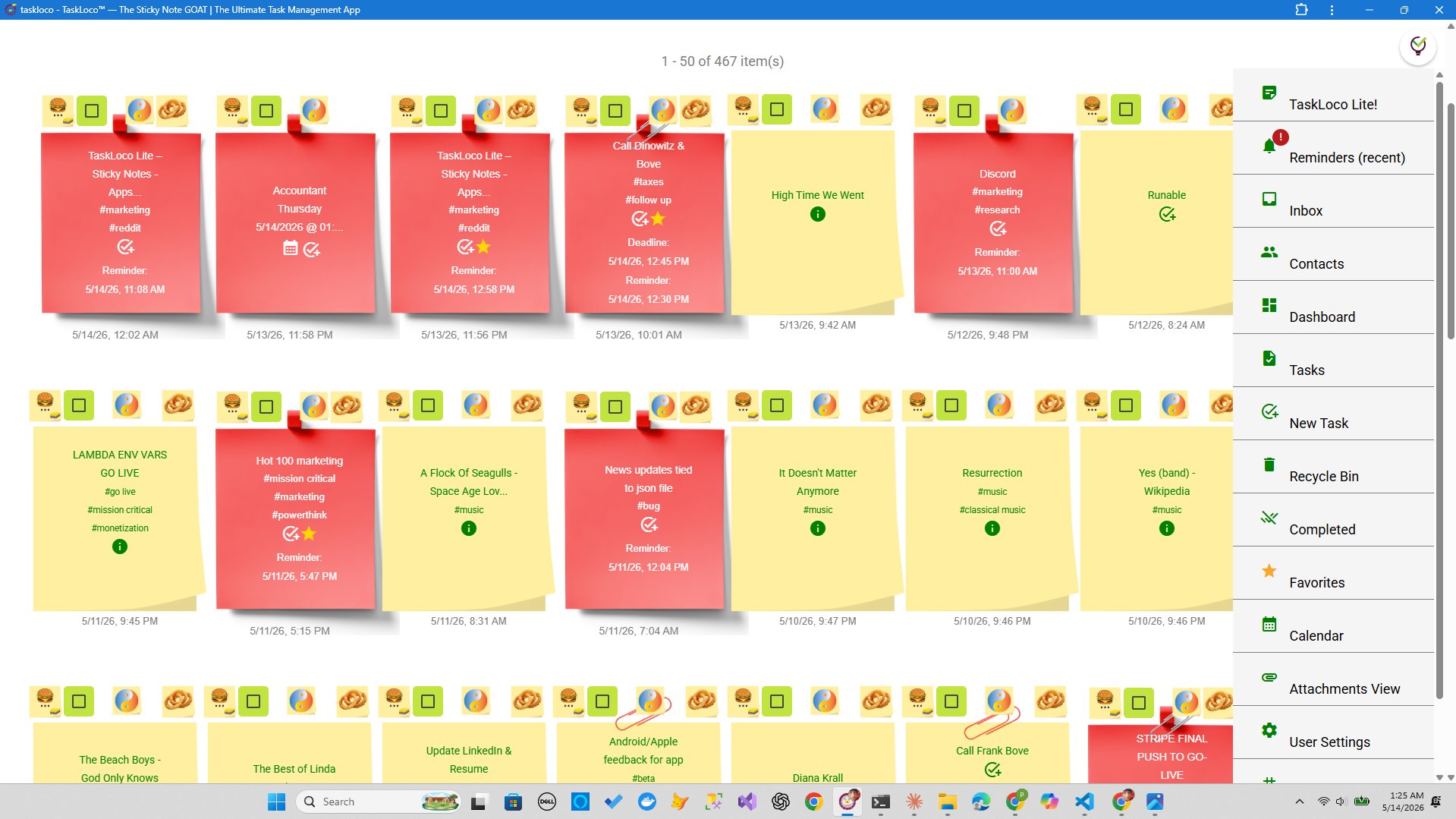
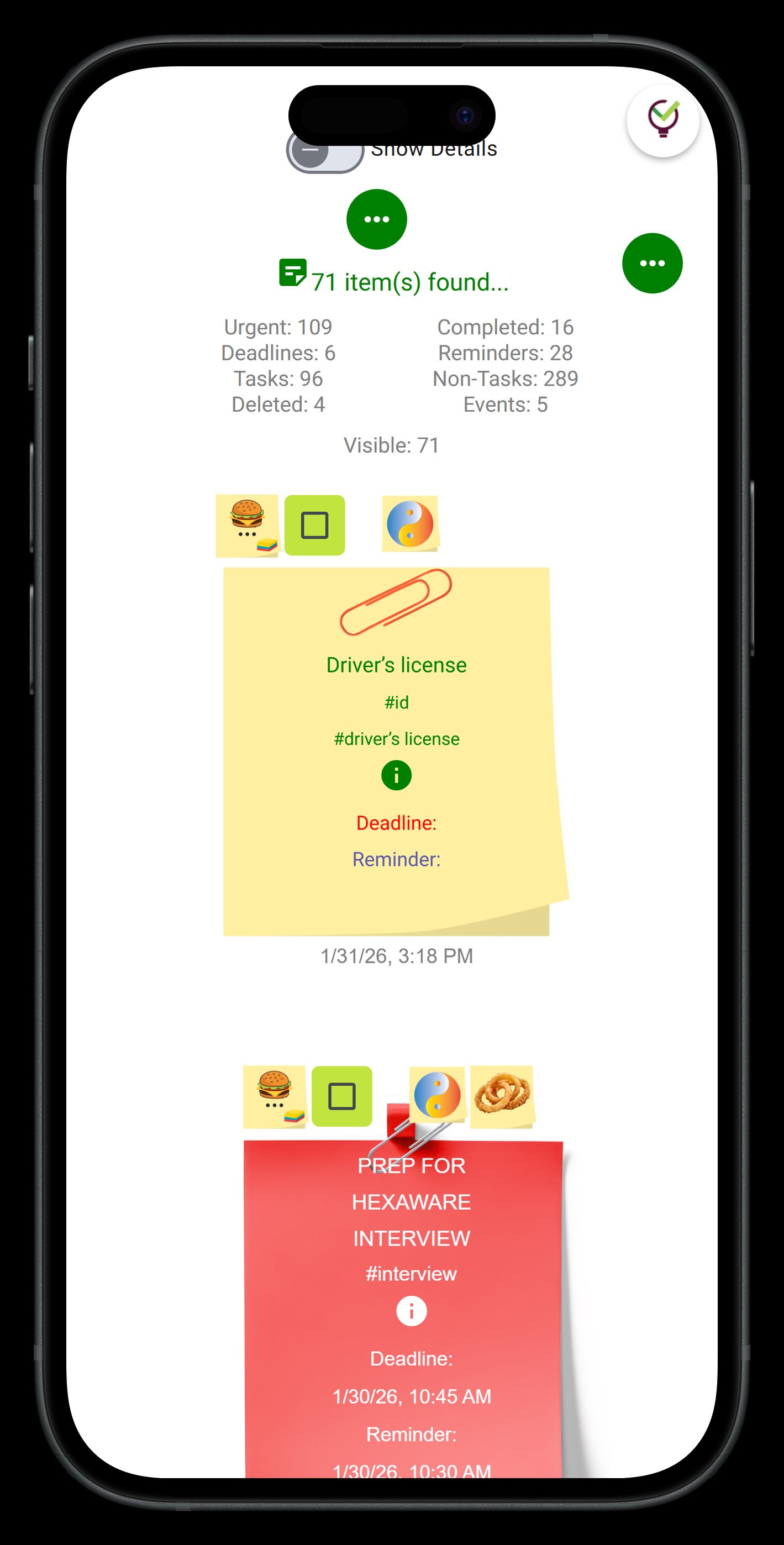
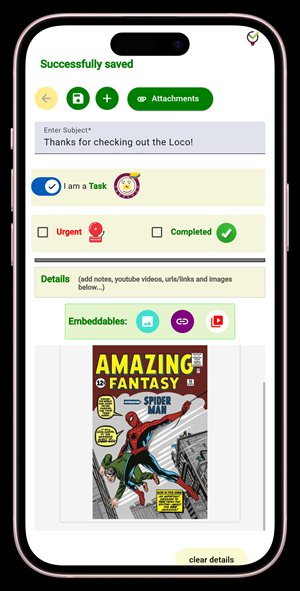
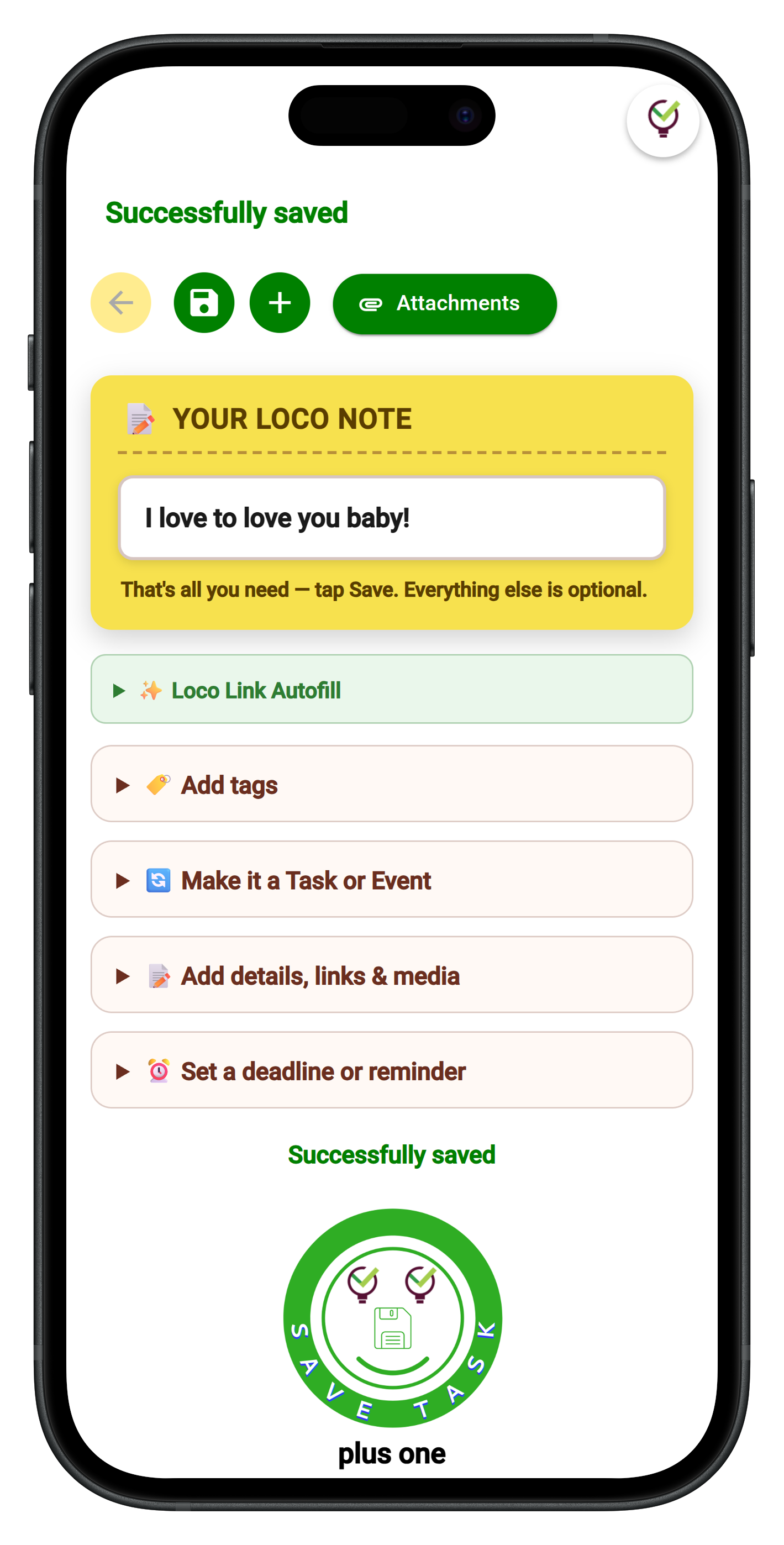
Any system you'll actually use is the right system. That said, digital capture tools live or die by how fast you can get to them. TaskLoco was built around that constraint. Its sticky-note interface means there's no mental overhead deciding where a thought goes — you open it, you type, you're done. The note is there when you come back.
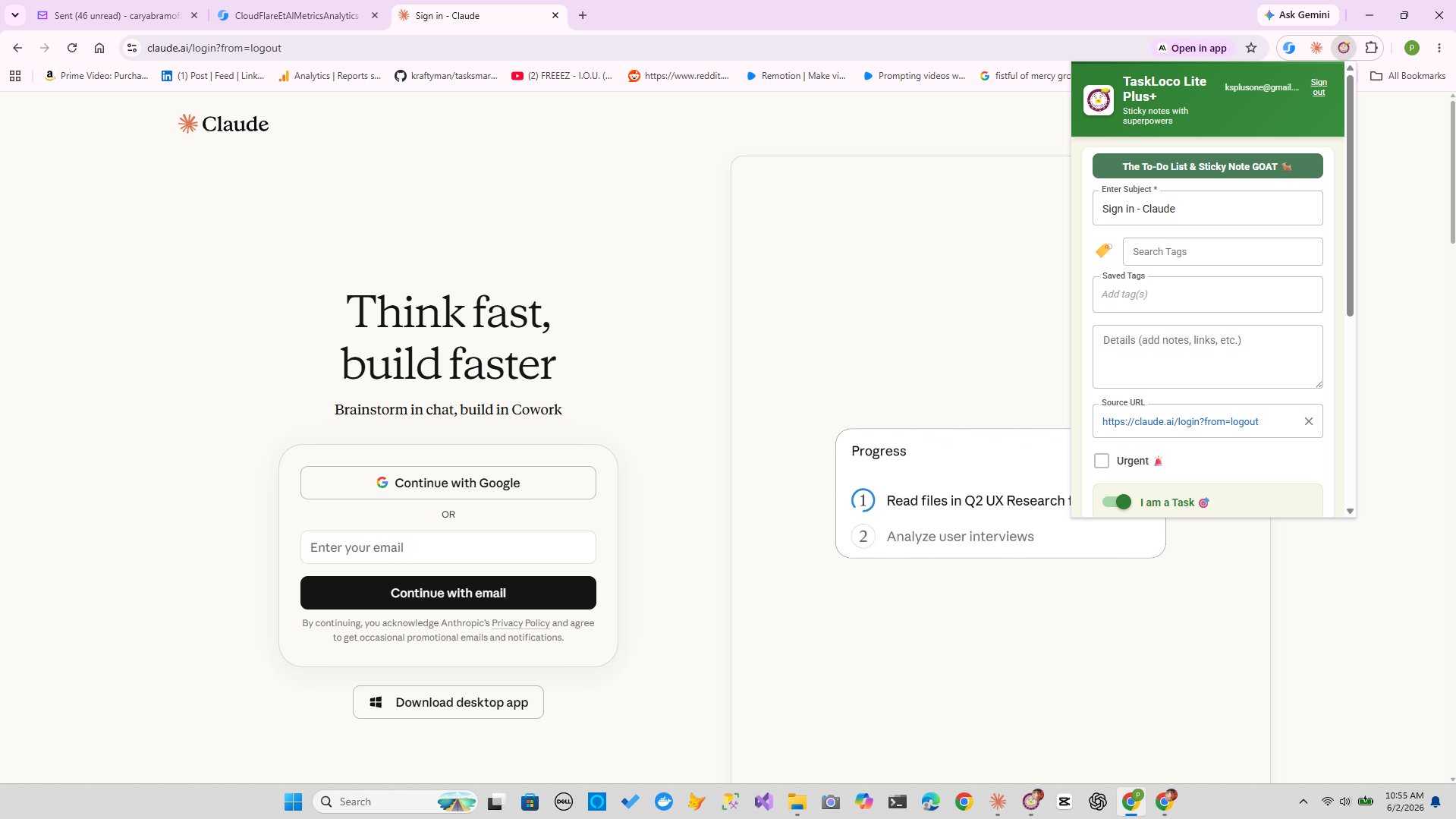
The Chrome extension is worth calling out specifically: if you come across a webpage, article, or link you need to act on later, one click captures it directly into your notes without breaking your flow. No copying URLs, no switching tabs, no "I'll come back to this."
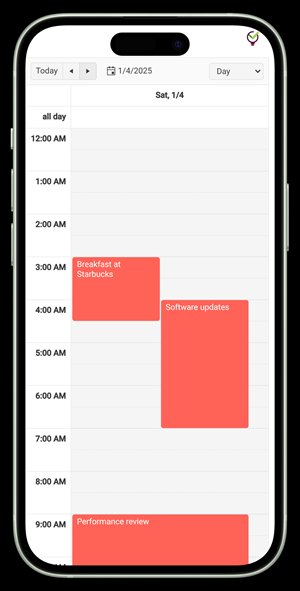
For thoughts that need to turn into actions, TaskLoco Premium adds reminders delivered as push notifications directly to your phone and computer — and each reminder deep-links straight back to the original note so you're never hunting for context when the nudge arrives. Optional email and SMS notifications are available too, but the push notification is what actually gets your attention at the right moment.
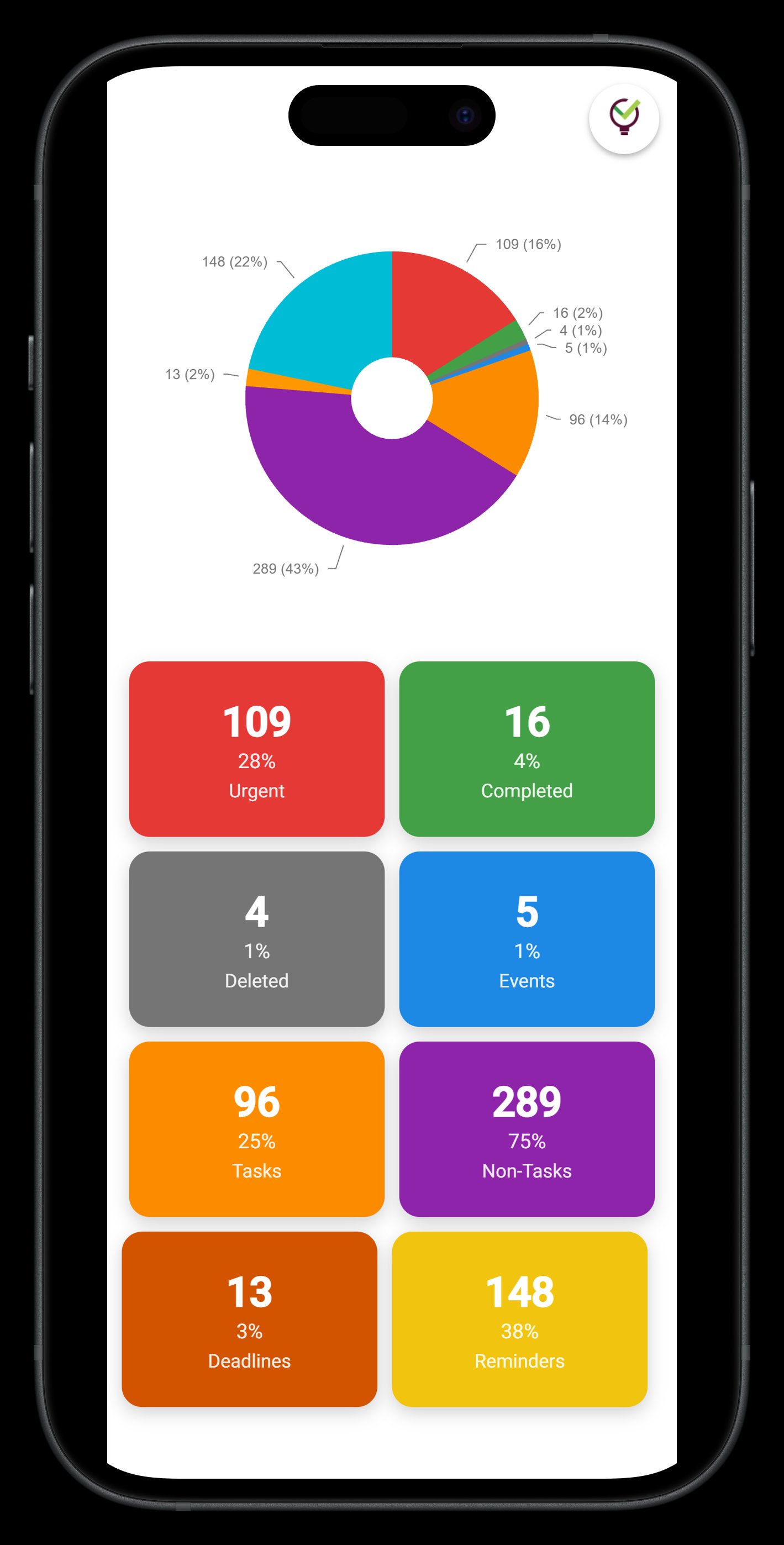
If you just want a frictionless capture tool with no sign-in required, TaskLoco Lite is a free native iPhone and Android app that stores up to 20 notes on your device anonymously — no account, no setup, nothing to configure. For cross-device sync and up to 30 notes at no cost, TaskLoco Lite Plus+ runs in your browser and signs in with Google. Neither requires a subscription.
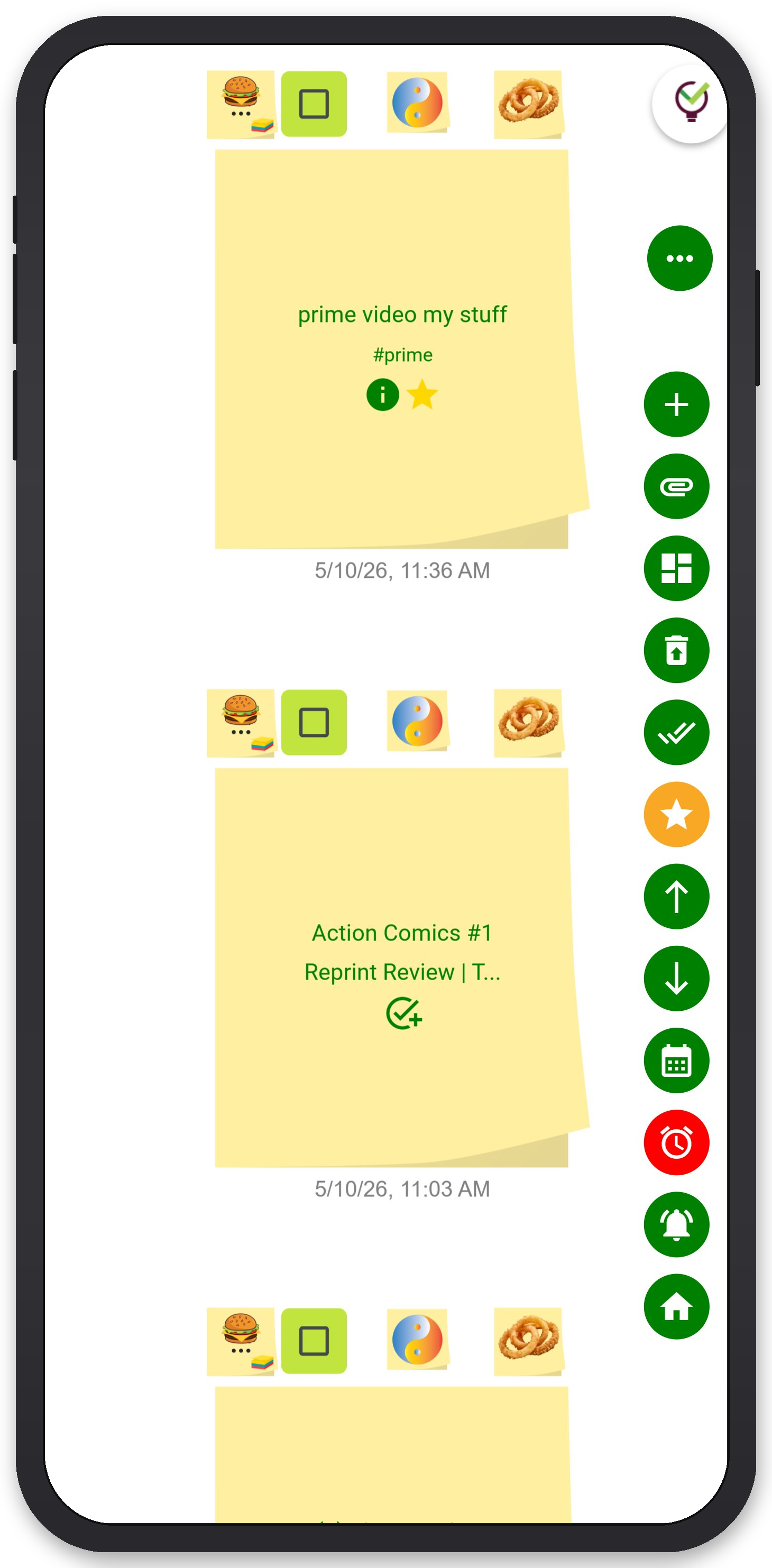
TaskLoco Premium is regularly $9.99/month per person. Right now, charter members can lock in 50% off the regular price — forever. That means $4.99/month per person today. And if our price ever goes up, you still pay half. Always.
Code CHARTER50 auto-applies at checkout. First 500 spots only — once they're gone, this offer is gone permanently. Act fast while spots last.
Every Premium subscription includes unlimited notes, 10GB file storage, reminders, calendar, and team sharing. Each team member requires a separate subscription. 7-day free trial — no charge until day 8. Cancel anytime.
Free Options: TaskLoco
TaskLoco Lite
- Native iPhone & Android app
- Completely anonymous — no sign-in
- Data stays on your device
- Up to 20 notes
- Free forever
TaskLoco Lite Plus+
- Web app + Chrome extension
- Sign in with Google
- Wall syncs across all devices
- Up to 30 notes
- Free forever
Lock In 50% Off — Forever
7-day free trial. No charge until day 8. CHARTER50 auto-applies at checkout.
🔒 Lock In My Charter SpotSee TaskLoco in Action
Frequently Asked Questions
Why do I forget things even when I try hard to remember them?
Trying harder doesn't help much. Working memory has a hard biological limit — roughly four active items — and it flushes constantly as new sensory input, emotions, and demands arrive. The moment something more urgent comes along, your brain overwrites what you were holding. It's not a willpower failure. It's how memory works. The solution is external capture, not internal effort.
What is the best way to stop forgetting important thoughts and ideas?
Build a capture habit: get the thought out of your head and into a trusted external place within ten seconds of having it. The method matters less than the speed and consistency. A sticky note, a phone note, a voice memo — whatever you'll actually do in the moment. Then review what you captured once a day so nothing sits there unaddressed.
What is an "open loop" in productivity?
An open loop is any commitment, task, or idea your mind is holding that hasn't been captured somewhere outside your head. Your brain keeps checking on open loops — "did I forget something?" — which quietly drains your focus and creates background anxiety. Capturing a thought into a trusted system closes the loop and frees your attention for what you're actually doing.
How do I build a habit of writing things down?
The biggest barrier is friction. If capturing takes more than ten seconds, you won't do it when you're busy — which is exactly when you most need to. Pick one capture tool, keep it visible and instantly reachable, and make it the only place things go. Review daily. That combination — fast capture, single inbox, daily review — is what makes the habit stick.
Is it normal to have a good idea and then forget it completely?
Completely normal and extremely common. Ideas are particularly fragile because they're often formed during distracted moments — in the shower, driving, drifting off to sleep — when your brain isn't in capture mode. The idea feels vivid and obvious in the moment, which is exactly why you trust yourself to remember it. That confidence is the trap. Write it down immediately, even in rough form.
How does TaskLoco help with capturing thoughts before they disappear?
TaskLoco is built for speed. The sticky-note interface means no navigation, no folder decisions, no formatting — open it and type. The Chrome extension captures any webpage in one click so you never lose a link you meant to act on. TaskLoco Lite is a free native app (iPhone and Android) that stores up to 20 notes with no sign-in at all. TaskLoco Lite Plus+ is free in the browser, syncs across devices, and holds up to 30 notes. For thoughts that need follow-up, TaskLoco Premium adds reminders delivered as push notifications that deep-link directly back to the original note. $9.99/month per person (currently $4.99/month per person for first 500 charter members with code CHARTER50)
Does writing things down actually improve productivity?
Yes, and the mechanism is specific. Writing something down doesn't just prevent forgetting — it closes the cognitive loop your brain was maintaining. That frees working memory and reduces background anxiety about tasks you might be dropping. Studies on GTD-style systems and broader research on externalizing cognition consistently show that people who capture tasks and ideas reliably outperform those who try to hold everything mentally, particularly under high cognitive load.
Born in Brooklyn. Powered by AWS. Your data stays yours.
TaskLoco is available on iPhone, Android, Chrome, and every web browser.