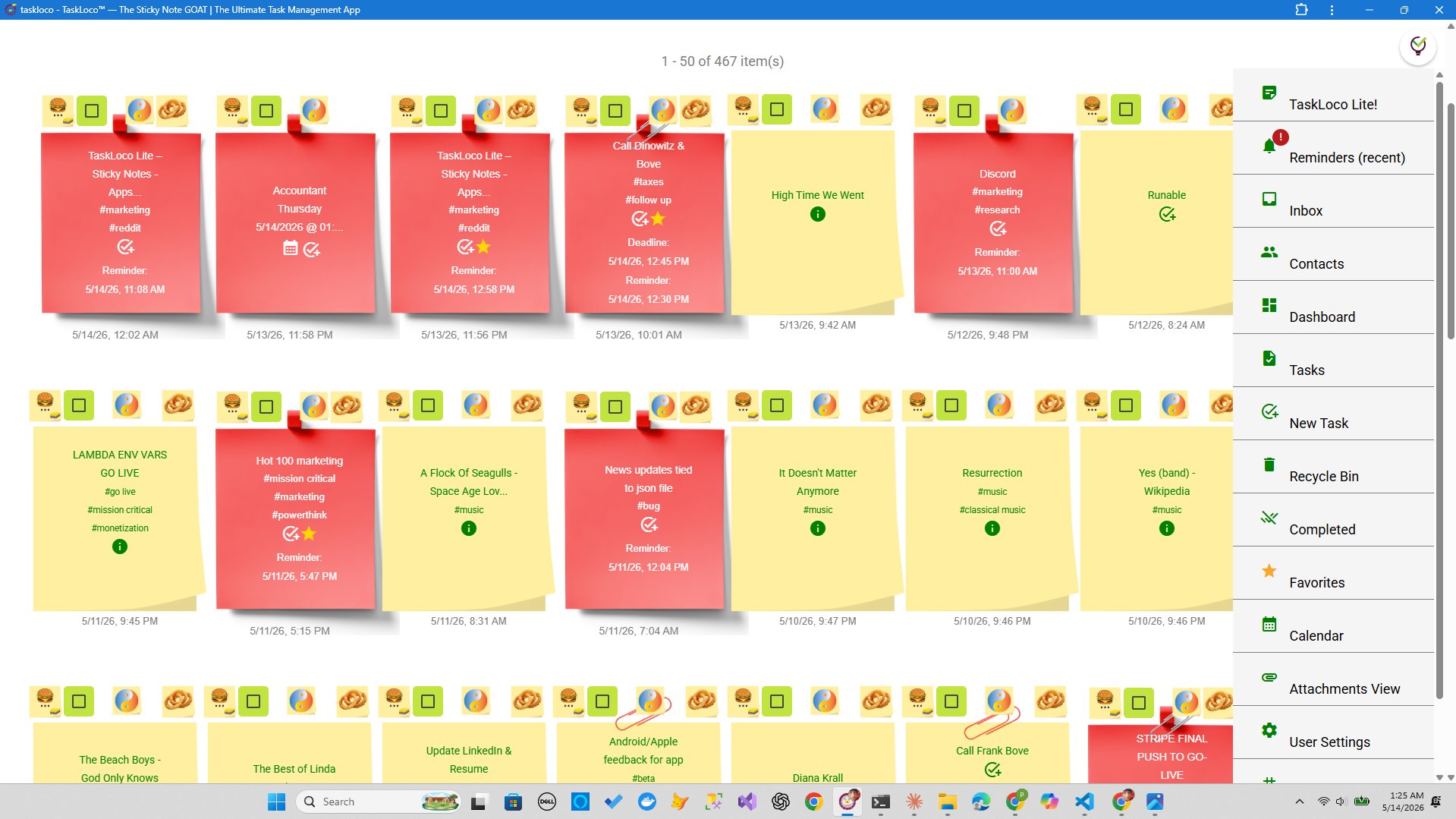
You sit down to work on one thing and end up doing six. By the end of the day you've touched everything and finished nothing, and you're more tired than if you'd run a 10K. That's not a willpower problem. That's your brain doing something it was never designed to do — and paying for it in glucose, focus, and time.
The word 'multitasking' was originally a computer term. It described how processors handle multiple operations by cycling between them in tiny slices of time. The problem is that human brains don't work like processors. We have a single attentional spotlight, and every time we redirect it, we pay a switching cost — in energy, in errors, and in the mental effort required to rebuild context from scratch. This article explains exactly what's happening inside your head when you try to do two things at once, why it leaves you so depleted, and what actually works instead.
What's Actually Happening in Your Brain When You Multitask
Neuroscientists have a more accurate term for what we call multitasking: task-switching. Unless you're doing something purely automatic — like walking while listening to music — you're not running two processes in parallel. You're rapidly toggling between them, and each toggle has a price tag.
Research from the American Psychological Association puts that price tag at roughly 40% of your productive time lost to switching costs when you frequently shift between complex tasks. Here's why: every time you disengage from one task to pick up another, your prefrontal cortex has to do two things simultaneously — disengage the rules and context of the previous task, and engage the rules and context of the new one. That overlap is called a cognitive switching cost, and it scales with how complex and dissimilar the two tasks are.
There's also a phenomenon called attention residue, identified by organizational psychologist Sophie Leroy. When you leave a task unfinished to move to another one, part of your working memory stays attached to the original task — still processing it in the background, still consuming resources. You're physically at the new task, but mentally you're split. That's why you finish a meeting feeling oddly drained even though you barely contributed: you were mentally chasing three other threads the whole time.
There's also the neurochemistry to consider. Every time you respond to a notification, check a different screen, or switch tabs, you get a small hit of dopamine — the brain's reward signal for novelty. Over time, this trains your brain to seek interruption, to feel restless during sustained focus, and to interpret depth as discomfort. The exhaustion isn't just from the switching. It's from the addiction to it.
The Real Cost: Errors, Memory, and Long-Term Cognitive Load
Exhaustion is the obvious symptom. But multitasking does quieter damage too.
Error rates go up significantly. A study published in PLOS ONE found that interruptions as brief as 2.8 seconds — barely enough time to glance at a phone notification — doubled error rates on cognitive tasks. The reason is that interruptions force your working memory to reload context, and that reload is imperfect. Details slip. Steps get skipped. You're sure you sent that email. You didn't.
Memory consolidation suffers. The hippocampus, which is responsible for encoding experiences into long-term memory, does its best work during focused, uninterrupted processing. When you're multitasking, you're essentially streaming information through a buffer that never gets written to disk. That's why the end of a fragmented day feels fuzzy — you were present for all of it and retained almost none of it.
Decision fatigue compounds the problem. Every task switch requires a micro-decision: what do I do next, what was I just doing, where was I in that thread? Those micro-decisions are invisible, but they count. By the time you get to the end of the day and need to make an actual important decision, the tank is already low.
The practical upshot: the people who seem to get the most done are almost never the people doing the most things simultaneously. They're doing fewer things, more completely, with more intentional transitions between them.
How to Stop the Cycle: Practical Methods That Actually Work
The goal isn't to never switch tasks — life doesn't work like that. The goal is to switch intentionally, with structure, so that your brain isn't constantly absorbing surprise context-shifts. Here's what the research and high-performance practitioners actually support:
- Time blocking: Assign specific blocks of time to specific task types. Not just "work" — granular categories like "writing," "email," "calls," "planning." When the block is for writing, nothing else exists. Knowing the block is bounded makes it easier to commit to it fully. This works because your brain stops generating anxiety about the other tasks — they have their own designated time.
- Capture everything immediately: One of the biggest sources of attention residue is the fear of forgetting. When a thought intrudes during focused work — a bill to pay, a message to send — capture it in a single trusted place immediately and return to the task. The act of writing it down tells your brain it's safe to let go.
- Structured transitions: Before leaving a task, spend 60 seconds writing down exactly where you are and what the next physical step is. This offloads the context your brain would otherwise keep holding in working memory. You can actually close the mental file.
- Notification scheduling: Turn off push notifications and check messages at set times — three to four times a day is the common recommendation. This eliminates the dopamine loop of constant interruption and trains your attention span back toward depth over time.
- The two-minute rule before switching: Before jumping to a new task, ask whether you can finish what you're currently doing in two minutes or less. If yes, finish it. Closure is cognitively cheap; reopening a task later is not.
None of these methods require any app. A notepad and a timer will get you most of the way there. What they do require is consistency — especially in the first two weeks when your brain is still craving the dopamine spike of constant switching.
How TaskLoco Supports Single-Tasking in Practice
If the "capture everything immediately" habit is the keystone, you need a capture system you'll actually use. The friction of writing things down needs to be as close to zero as possible, and the notes you capture need to be somewhere you trust — somewhere they won't get buried or forgotten until it's too late.
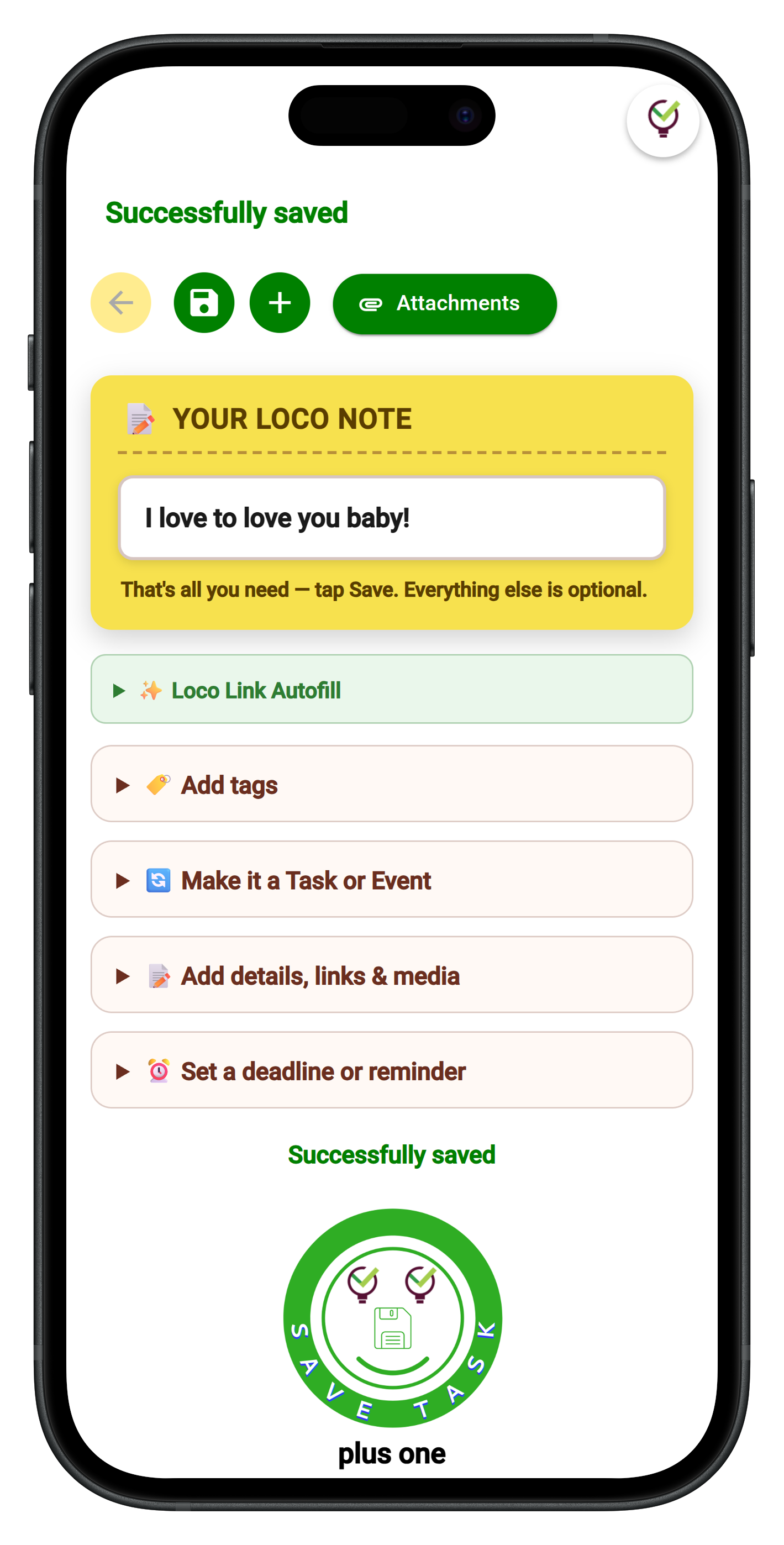
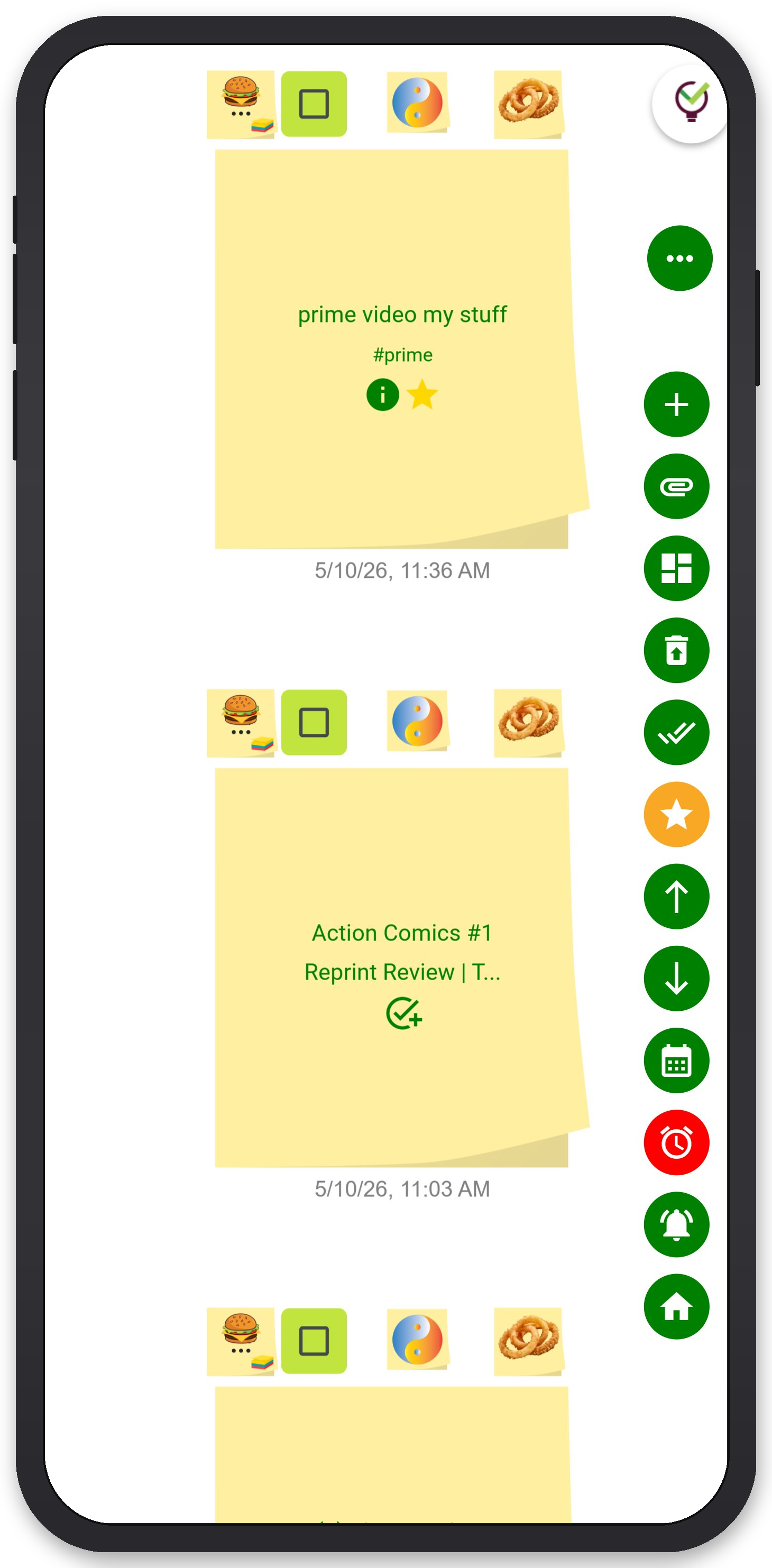
TaskLoco is built around the sticky note metaphor: one note, one thing. It's designed for fast capture and clear visibility, not project hierarchies and status fields. When a thought interrupts your focus, you open TaskLoco, write it down in seconds, and get back to work. The note stays exactly where you put it on your wall until you deal with it.
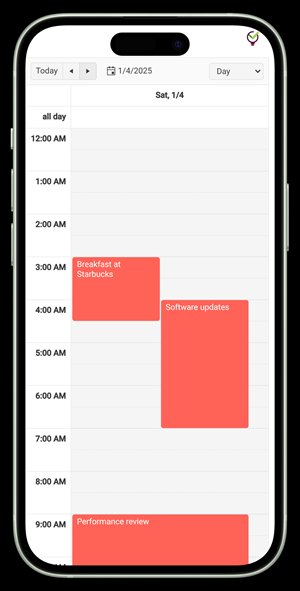
With TaskLoco Premium, each note can carry a reminder that delivers a push notification directly to your phone or computer — deep-linked back to the note itself, so when the time comes, you're not searching for context. Optional email and SMS channels are available too. That's the system working for you: you capture the thought now, the reminder surfaces it at the right time, and the deep-link puts you right back where you need to be. No hunting, no reconstructing context from scratch.
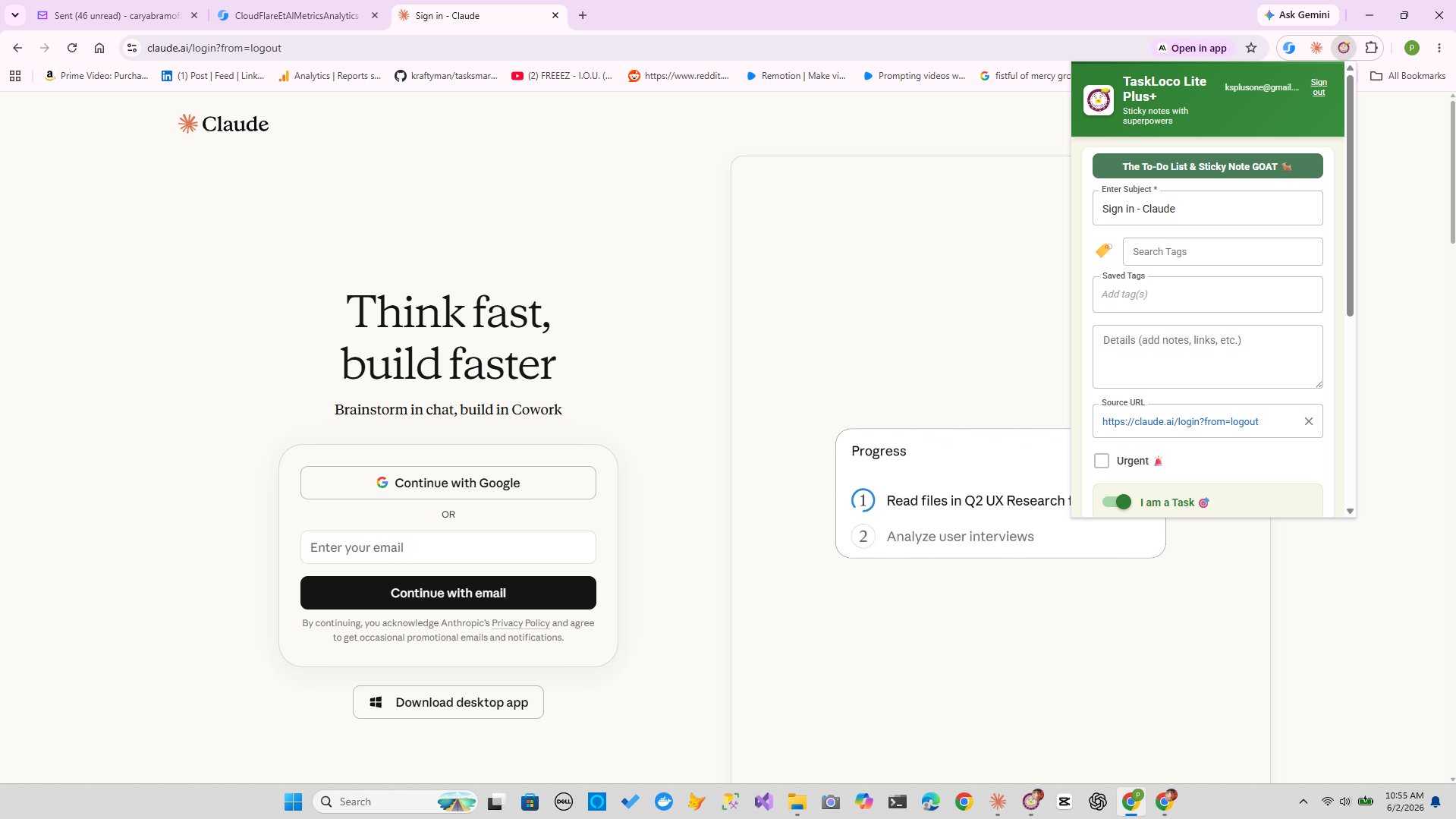
The Chrome extension extends this to your browser — one click captures any webpage as a note, which is useful when research rabbit holes threaten to derail a focused work block. Clip it, close the tab, return to what you were doing.
For teams, Premium includes shared notes that work like email: recipients can clone the shared note and make it entirely their own. No permissions to configure, no access levels to manage — just clean, simple handoffs.
TaskLoco Premium is regularly $9.99/month per person. Right now, charter members can lock in 50% off the regular price — forever. That means $4.99/month per person today. And if our price ever goes up, you still pay half. Always.
Code CHARTER50 auto-applies at checkout. First 500 spots only — once they're gone, this offer is gone permanently. Act fast while spots last.
Every Premium subscription includes unlimited notes, 10GB file storage, reminders, calendar, and team sharing. Each team member requires a separate subscription. 7-day free trial — no charge until day 8. Cancel anytime.
Free Options: TaskLoco
TaskLoco Lite
- Native iPhone & Android app
- Completely anonymous — no sign-in
- Data stays on your device
- Up to 20 notes
- Free forever
TaskLoco Lite Plus+
- Web app + Chrome extension
- Sign in with Google
- Wall syncs across all devices
- Up to 30 notes
- Free forever
Lock In 50% Off — Forever
7-day free trial. No charge until day 8. CHARTER50 auto-applies at checkout.
🔒 Lock In My Charter SpotSee TaskLoco in Action
Frequently Asked Questions
Does multitasking actually make you less productive?
Yes — and by a significant margin. Research consistently shows that frequent task-switching can reduce effective productivity by up to 40%. The reason is cognitive switching cost: every time your brain disengages from one task and re-engages with another, it burns time and energy rebuilding context. The perception of productivity — the feeling of being busy — goes up. Actual output goes down.
Why does multitasking make me feel so tired at the end of the day?
Your prefrontal cortex — the brain region responsible for focus, decision-making, and context management — runs primarily on glucose, and task-switching depletes it faster than sustained focused work. Each switch also generates micro-decisions and incomplete closures that accumulate across the day. By evening, the cognitive load of all those half-finished mental files adds up to genuine physical fatigue, even if you weren't doing anything strenuous.
Is multitasking ever okay, or is it always harmful?
It depends on the tasks. Combining one automatic or low-cognitive task with one demanding task is generally fine — walking while listening to a podcast, for instance. The harm comes when you try to run two cognitively demanding tasks in parallel, or when you're constantly context-switching between complex, dissimilar work. The more working memory a task requires, the more damage frequent switching does to it.
What is attention residue and how does it cause exhaustion?
Attention residue is what happens when you leave a task unfinished to move to another one. Part of your working memory stays attached to the original task — still processing it, still consuming resources — even as you try to engage with something new. You're physically present in the new task but mentally split. Psychologist Sophie Leroy's research shows that this residue degrades performance on the new task and compounds fatigue across the day, especially when tasks are left frequently incomplete.
What's the most effective technique for reducing multitasking?
Time blocking combined with immediate task capture is the most evidence-supported combination. Time blocking gives each category of work a dedicated window, so your brain stops generating anxiety about everything else. Immediate capture — writing down every interrupting thought the moment it surfaces — eliminates the attention residue that comes from trying to mentally hold multiple open loops. Together, they let you be genuinely present in whatever block you're in.
How do notifications contribute to multitasking exhaustion?
Every notification is a forced context switch. Even if you don't act on it, seeing a notification triggers a micro-interruption — your brain briefly shifts attention, evaluates relevance, and then has to rebuild focus on what it was doing. Research from the University of California Irvine found it takes an average of over 23 minutes to fully return to a task after an interruption. Multiply that by dozens of notifications per day and you have a significant fraction of your working day consumed by recovery rather than work.
Can an app actually help with focus, or is it just another distraction?
An app can help if it reduces the friction of the habits that support focus — particularly immediate capture and structured reminders. The risk is choosing a tool that's complex enough to become its own distraction. A simple, fast-capture note system that stays out of your way handles the "capture everything immediately" habit without demanding much attention itself. TaskLoco was built around exactly that constraint: one note, one thing, captured fast, surfaced at the right time via push notification reminders. $9.99/month per person (currently $4.99/month per person for first 500 charter members with code CHARTER50)
Born in Brooklyn. Powered by AWS. Your data stays yours.
TaskLoco is available on iPhone, Android, Chrome, and every web browser.