You have seventeen half-finished projects, four abandoned side hustles, and a to-do list that keeps growing at the top while nothing ever gets crossed off at the bottom. You're not lazy. You're not broken. You're experiencing one of the most well-documented quirks of human motivation — and almost every high-functioning person struggles with it.
The gap between starting and finishing isn't a character flaw. It's a structural problem with how your brain processes ambition versus effort. Once you understand the actual mechanics, you can build around them instead of blaming yourself every time another project quietly dies on the vine.
The Neuroscience Behind the Starting Rush
When you decide to start something new — a business, a novel, a fitness routine, a home renovation — your brain doesn't wait for results before rewarding you. It rewards you for the anticipation of results. Dopamine, the neurotransmitter most associated with motivation and reward, spikes at the moment of a new goal, not at the moment of completion.
Researchers call this reward prediction error. Your brain makes a prediction about how good the outcome will be, and if that prediction is optimistic enough, it floods you with the motivation to begin. The first few days of any new project feel electric because you're riding that dopamine wave. You're working on potential energy, not real energy.
The problem is that dopamine doesn't sustain at that level. As the novelty fades and the actual difficulty of the work becomes clear, your brain recalibrates. The reward prediction gets revised downward. Now finishing requires real effort without the chemical boost that made starting feel effortless.
There's also a secondary effect: starting a project creates what psychologists call a positive identity signal. Telling people you're writing a novel, launching a startup, or training for a marathon gives you social status before you've done the work. That signal fades once the project is underway. Nobody congratulates you for being on chapter four.
Why the Middle Is Where Projects Go to Die
Every project has three phases: the beginning (exciting), the end (satisfying), and the middle (brutal). The middle is where the romance of the idea meets the reality of execution. Researchers at Cornell University have documented what they call the mid-project slump — a predictable drop in motivation that occurs roughly halfway through any extended effort.
Several forces converge in the middle to make it so hard:
- Completion anxiety: As you get closer to finishing, the stakes feel higher. A finished product can be judged. An unfinished one is still safe — it still has potential. Many people unconsciously stall near the end to avoid the moment their idea gets tested against reality.
- The sunk cost trap: Partway through, you've already invested significant time. If the project isn't going as planned, it becomes psychologically painful to pivot or abandon it — but continuing a bad direction is just as painful. You get stuck in limbo.
- Decision fatigue: Early decisions are exciting (what should the product be?). Late decisions are exhausting (what font size? what error message? what refund policy?). The sheer volume of small decisions in the execution phase drains the cognitive energy that made early-stage work feel easy.
- Scope creep: What started as a simple project has quietly grown into something enormous. You didn't notice because it happened gradually, one small addition at a time. Now the finish line is nowhere near where you thought it was.
Understanding these forces isn't just intellectually interesting — it changes what you do about them. The fix for completion anxiety is different from the fix for scope creep. You need to diagnose accurately before you can intervene.
A Practical System for Actually Finishing Things
Motivation is unreliable. Systems aren't. The people who consistently finish things aren't more disciplined than you — they've built structures that make finishing the path of least resistance. Here's what actually works:
1. Define what done looks like before you start. Vague projects never end because there's no finish line. Before you begin anything, write one sentence that completes this phrase: This project is finished when ___. That sentence is your anchor. Everything that falls outside it is scope creep.
2. Work backward from the end. Start at the finish line and map backward to today. Don't plan forward — planning forward makes you optimistic about how much you can fit in. Planning backward forces you to be ruthless about what's actually necessary.
3. Create commitment devices. Tell someone your deadline. Book the launch date before you're ready. Submit the abstract before you've written the paper. External commitments change the psychological math — now not finishing has a social cost, which activates a different and more reliable motivational circuit than intrinsic enthusiasm.
4. Reduce the decision surface. Decision fatigue kills momentum. Wherever possible, make decisions in batches during high-energy periods so you can execute during low-energy ones. Decide what you're working on tomorrow the night before, never in the morning.
5. Name the almost-done trap. The final 10% of any project takes 90% of the time. This is so consistent it has its own name in software: the 90-90 rule. Recognizing that the last stretch is always harder than it looks prepares you psychologically for it instead of interpreting the extra difficulty as a sign that something is wrong.
6. Separate creating from editing. One of the most common finishing blockers is trying to perfect as you go. First drafts — of anything — are supposed to be rough. Give yourself explicit permission to produce low-quality work in early passes. The edit pass is where quality happens. Conflating the two phases buries you.
How TaskLoco Helps You Apply This in Practice
The system above works on paper, but it requires a place to live. The biggest finishing killer after motivation is fragmentation — your project definition is in one app, your tasks are in another, your files are somewhere else, and your reminders never actually connect back to the work they're supposed to trigger. You end up doing meta-work instead of real work.
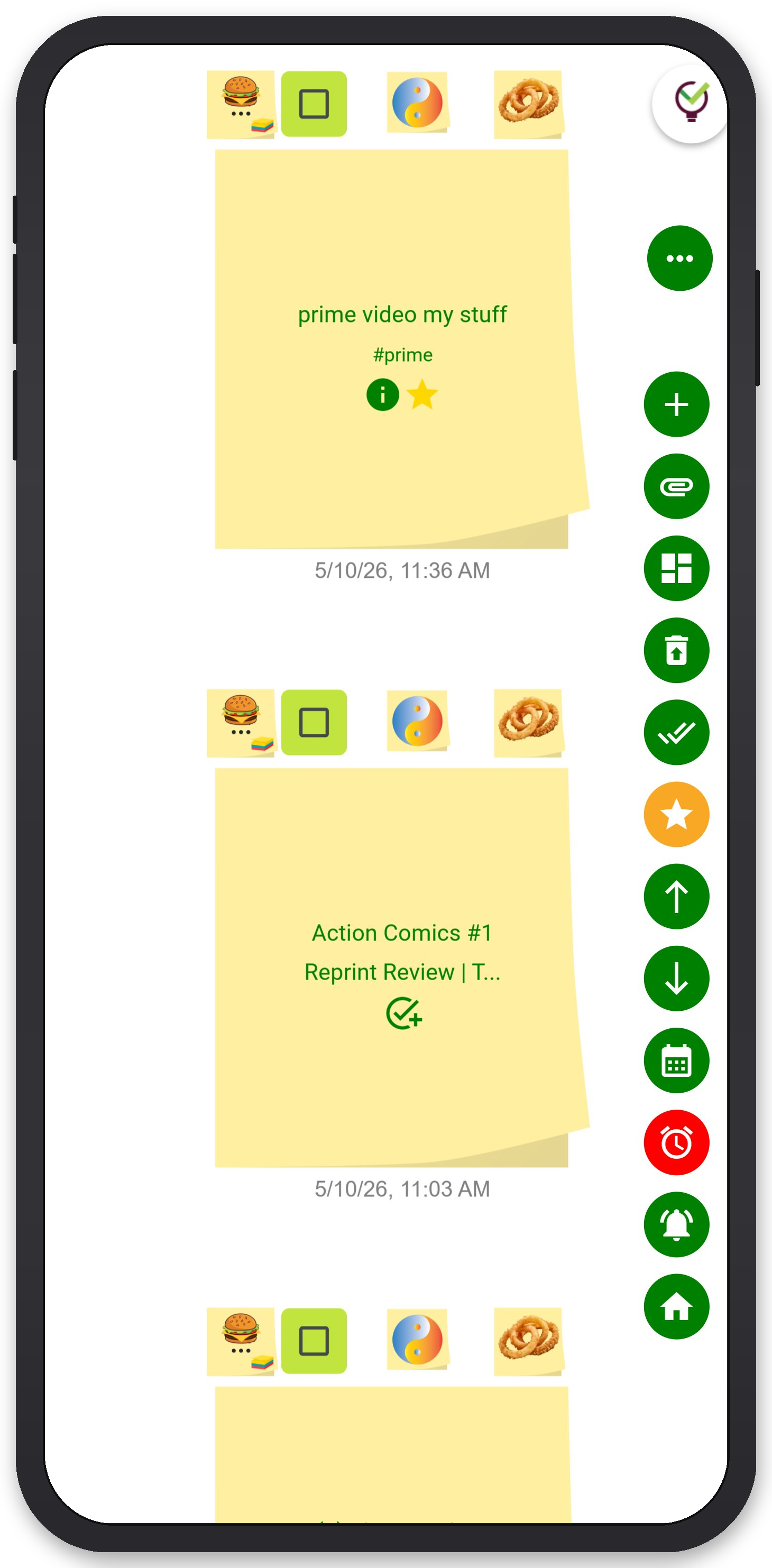
TaskLoco is built around sticky notes that become the actual unit of work — not just a label for it. You can write your "this project is done when" definition directly on the note, attach the relevant files to it, and set a reminder that deep-links back to that exact note when it fires. No hunting. No context-switching. The reminder drops you directly back into the work.
Team sharing works the way email does — when you share a note, the recipient can clone it and make it their own, which means your project definitions and task breakdowns stay intact even as work gets distributed. There's no permissions maze or access level configuration. It just works.
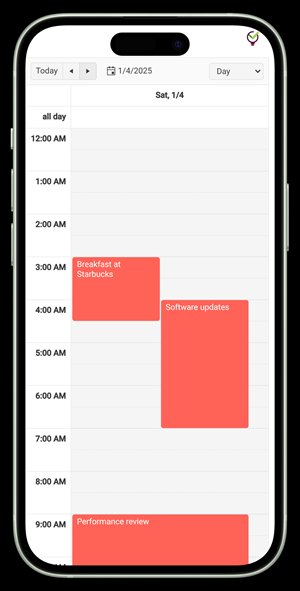
The calendar view in Premium lets you see your commitments laid out in time, which is where backward planning lives. Set your finish line date, work back through the calendar, and assign the milestones. It doesn't replace the thinking — but it removes the friction between the thinking and the tracking, which is usually enough to keep momentum alive through the brutal middle.
TaskLoco Premium is regularly $9.99/month per person. Right now, charter members can lock in 50% off the regular price — forever. That means $4.99/month per person today. And if our price ever goes up, you still pay half. Always.
Code CHARTER50 auto-applies at checkout. First 500 spots only — once they're gone, this offer is gone permanently. Act fast while spots last.
Every Premium subscription includes unlimited notes, 10GB file storage, reminders, calendar, and team sharing. Each team member requires a separate subscription. 7-day free trial — no charge until day 8. Cancel anytime.
Free Options: TaskLoco
TaskLoco Lite
- Native iPhone & Android app
- Completely anonymous — no sign-in
- Data stays on your device
- Up to 20 notes
- Free forever
TaskLoco Lite Plus+
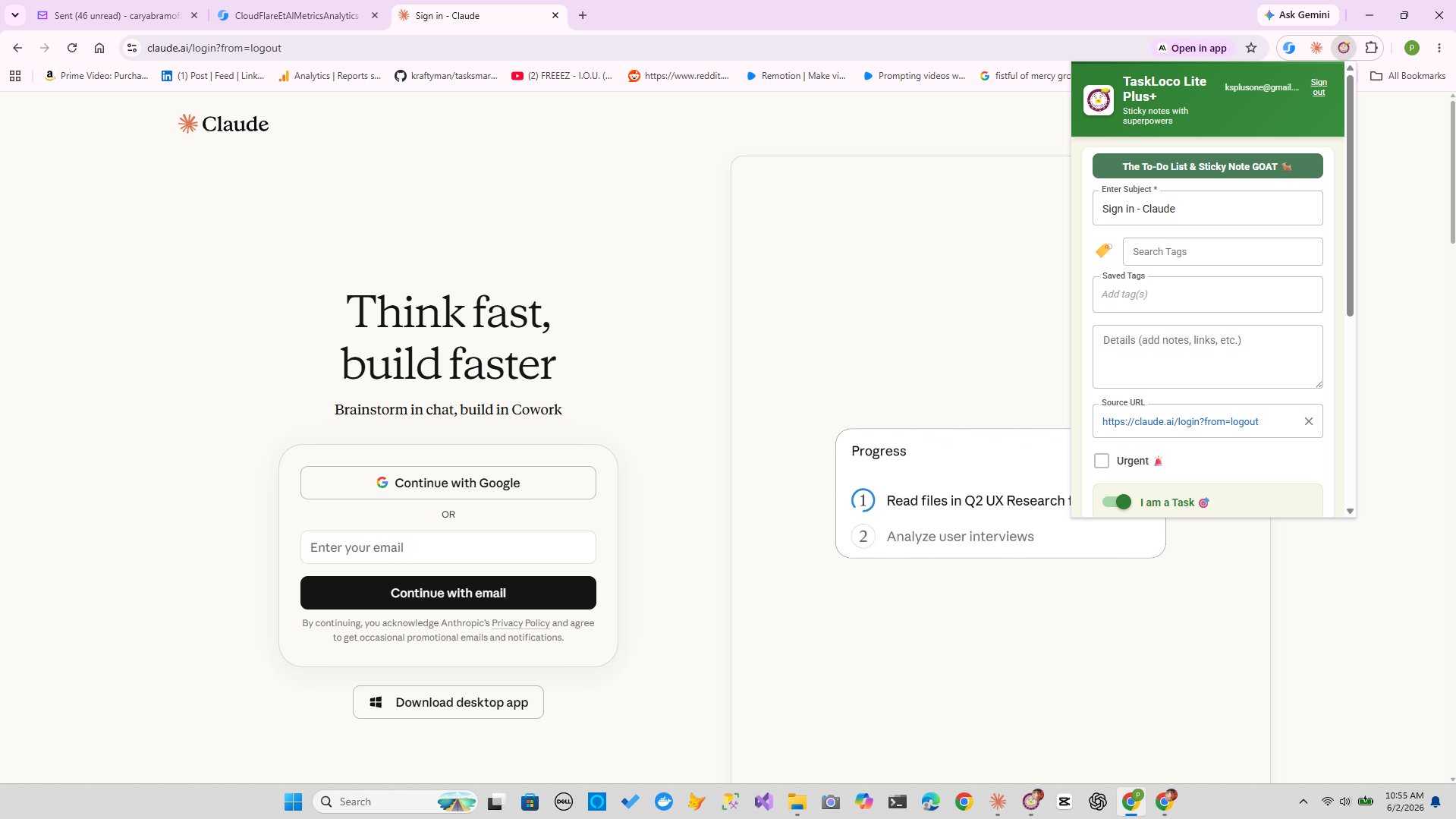
- Web app + Chrome extension
- Sign in with Google
- Wall syncs across all devices
- Up to 30 notes
- Free forever
Lock In 50% Off — Forever
7-day free trial. No charge until day 8. CHARTER50 auto-applies at checkout.
🔒 Lock In My Charter SpotSee TaskLoco in Action
Frequently Asked Questions
Why is it so easy to start things but hard to finish them?
Starting triggers a dopamine release tied to the anticipation of success — your brain rewards you before you've done any real work. That reward fades as novelty wears off and actual difficulty sets in. Finishing requires sustained effort without that initial chemical boost, which is why the middle of any project feels so much harder than the beginning.
What is the psychological term for not being able to finish things?
There isn't one single term, but several well-documented phenomena contribute: completion anxiety (fear of being judged once something is done), the Zeigarnik effect (unfinished tasks occupy mental bandwidth disproportionately), and decision fatigue (the exhaustion of execution-phase decisions). Together, they create the classic pattern of excited starts and stalled finishes.
How do I force myself to finish a project?
The most effective strategies are structural, not motivational: define what done looks like in one sentence before you start, plan backward from the deadline instead of forward from today, and create external commitment devices (tell someone, book a date, submit the abstract) so not finishing carries a social cost. Motivation is unreliable — systems that make finishing easier than stalling are what actually work.
Why do I start projects and never finish them?
Usually a combination of scope creep (the project grew larger than originally planned), vague definition of done (no clear finish line), and the natural mid-project slump that affects almost everyone. It's rarely about laziness or lack of discipline. The fix is structural: define the finish line precisely, keep scope locked, and expect the middle to be hard rather than being surprised by it.
What is the 90-90 rule in project completion?
The 90-90 rule is a principle from software development that says: the first 90% of a project takes 90% of the time, and the last 10% takes the other 90%. It's a joke, but it captures a real pattern — the final stretch of any project is almost always longer and harder than expected. Knowing this in advance prevents you from interpreting the extra difficulty as a sign something is wrong, which is often what causes people to abandon projects that were actually close to done.
Does TaskLoco help with project completion?
TaskLoco Premium gives you a single place for project definitions, tasks, file attachments, calendar planning, and reminders that deep-link directly back to the note they're attached to. That eliminates the fragmentation that kills momentum — when everything lives in one connected place, the friction of returning to work drops significantly. $9.99/month per person (currently $4.99/month per person for first 500 charter members with code CHARTER50)
What is completion anxiety and how do I overcome it?
Completion anxiety is the unconscious tendency to slow down or stall near the end of a project because a finished product can be judged, while an unfinished one still holds unlimited potential. The most effective counter is to separate the act of finishing from the act of evaluating — give yourself explicit permission to ship something imperfect, and treat the post-launch period as the next project rather than the verdict on the current one.
Born in Brooklyn. Powered by AWS. Your data stays yours.
TaskLoco is available on iPhone, Android, Chrome, and every web browser.