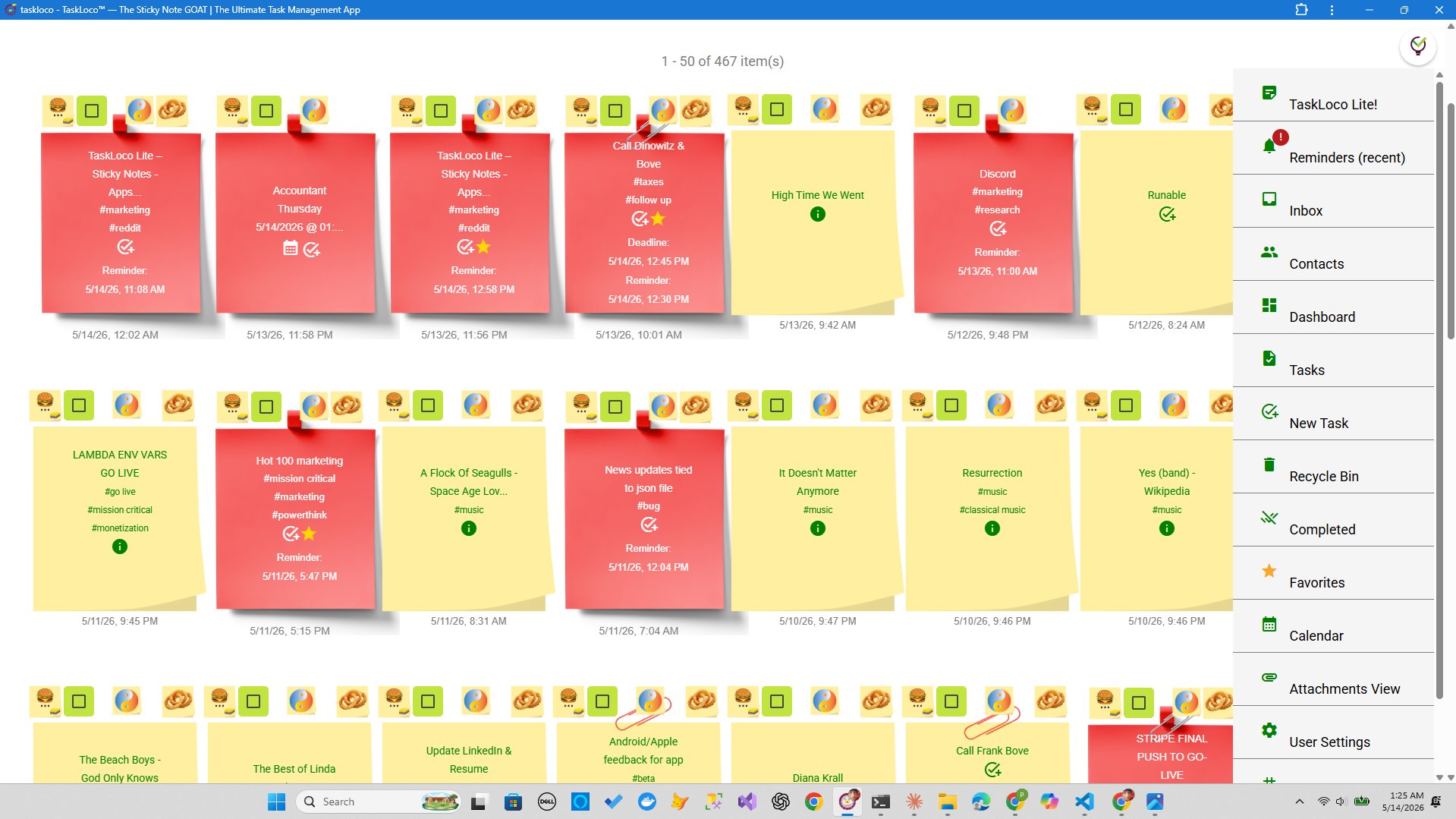
That yellow square on your monitor isn't just paper—it's a productivity powerhouse backed by decades of cognitive research. Sticky notes consistently outperform complex task apps because they work with your brain's natural wiring, not against it.
The secret isn't in the adhesive. It's in how your mind processes visual cues, spatial memory, and physical interaction. While productivity apps pile on features, sticky notes strip away everything except what actually drives completion: visibility and simplicity.
TaskLoco Premium is regularly $9.99/month per person. Right now, charter members can lock in 50% off the regular price — forever. That means $4.99/month per person today. And if our price ever goes up, you still pay half. Always.
Code CHARTER50 auto-applies at checkout. First 500 spots only — once they're gone, this offer is gone permanently. Act fast while spots last.
Every Premium subscription includes unlimited notes, 10GB file storage, reminders, calendar, and team sharing. Each team member requires a separate subscription. 7-day free trial — no charge until day 8. Cancel anytime.
Free Options: TaskLoco
TaskLoco Lite
- Native iPhone & Android app
- Completely anonymous — no sign-in
- Data stays on your device
- Up to 20 notes
- Free forever
TaskLoco Lite Plus+
- Web app + Chrome extension
- Sign in with Google
- Wall syncs across all devices
- Up to 30 notes
- Free forever
Visual Memory and Spatial Anchoring
Your brain remembers location better than almost anything else. When you stick a note to your laptop screen, you're creating what psychologists call a 'spatial anchor'—a physical location tied to specific information.
Studies from UCLA show that visual-spatial memory is processed in the hippocampus, the same region responsible for long-term memory formation. This is why you can remember exactly where you put that important note, even weeks later.
Digital task lists fail here because they exist in abstract space. Whether a task is at the top or bottom of your app depends on sorting algorithms, not your spatial memory. You can't 'see' where tasks live in the same visceral way.
The Physical Interaction Advantage
Writing by hand activates the reticular activating system (RAS) in your brainstem—the same network that helps you notice red cars after buying one. Physical writing literally makes your brain pay more attention to what you've written.
Research from Princeton University found that handwritten notes improve comprehension by 23% compared to typed ones. The motor cortex engagement creates stronger neural pathways between the task and your memory.
Peeling off a completed sticky note triggers a dopamine release—your brain's reward chemical. This tiny celebration reinforces the completion behavior, making you more likely to finish future tasks.
Simplicity Reduces Cognitive Load
Your working memory can only hold about 7 items at once. Complex task apps often exceed this limit before you even add your first task—with folders, tags, due dates, priority levels, and notification settings.
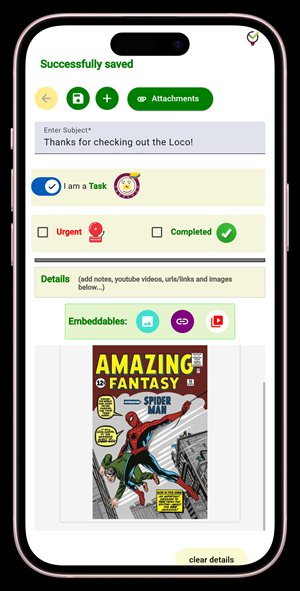
Sticky notes strip away every non-essential element. No categories to choose, no metadata to fill in, no decisions about where something 'belongs' in your system. You write the task. You stick it somewhere visible. You do it.
This simplicity is why sticky notes consistently beat elaborate productivity systems in real-world usage studies. Georgetown University research shows that people abandon 78% of productivity apps within six months, but sticky note systems persist for years.
Constant Visibility Drives Action
Out of sight, out of mind isn't just a saying—it's how your attention system actually works. Tasks hidden in apps or buried in lists activate what psychologists call 'completion anxiety' without providing clear next steps.
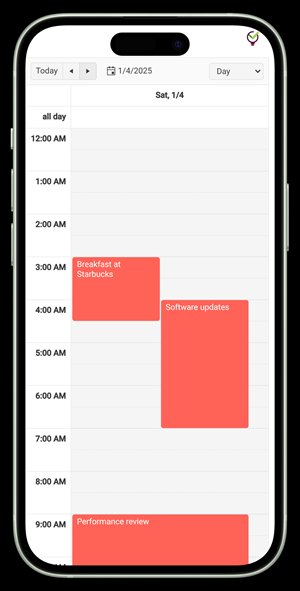
Sticky notes stay in your peripheral vision, creating what researchers term 'ambient awareness.' Your subconscious continuously processes visible tasks even when you're focused elsewhere, priming you for action during natural transition moments.
This visibility also prevents the 'task fadeout' effect common in digital systems. Studies show that tasks not reviewed within 48 hours drop to a 12% completion rate. Physical sticky notes reset this timer every time you glance at your workspace.
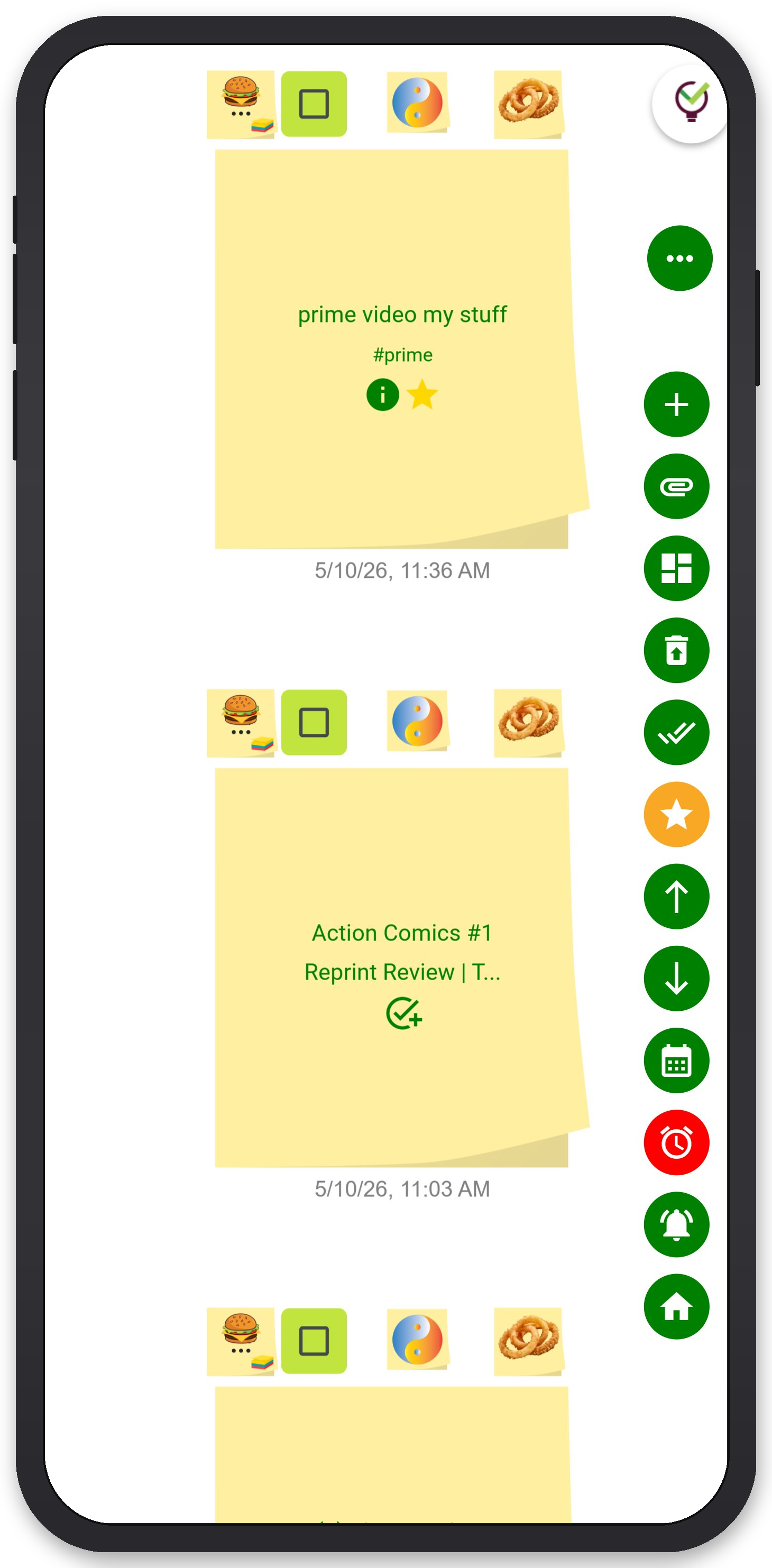
The Honest Comparison
| Feature | TaskLoco | Competitor |
|---|---|---|
| Visual memory activation | Preserves spatial memory with fixed note positions and visual consistency | Uses abstract list positions that change with sorting and filtering |
| Physical interaction | Supports handwriting, sketches, and natural note-taking patterns FREE | Limited to typing and pre-defined form fields |
| Cognitive load | Minimal interface—just notes, no complex categorization required FREE | Multiple organization layers: projects, tags, priorities, sections |
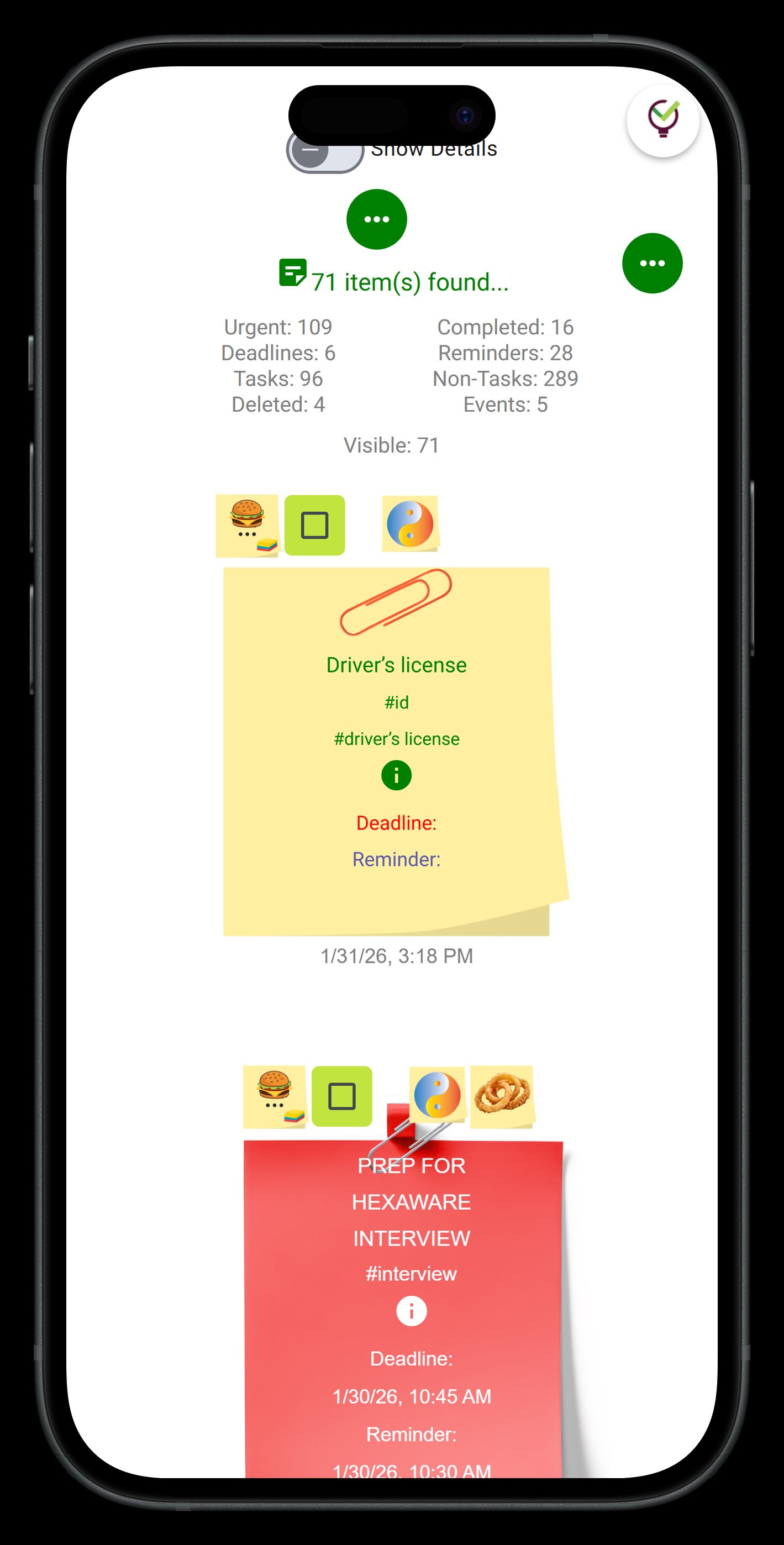
| Constant visibility | Notes stay visible on desktop and mobile without opening apps | Tasks hidden in apps until actively opened |
| Setup complexity | Start using immediately—no configuration needed FREE | Requires project setup, team configuration, workflow design |
| Completion ritual | Satisfying note deletion mimics physical sticky note removal FREE | Simple checkbox tick provides minimal feedback |
| Natural workflow | Mimics proven paper sticky note patterns FREE | Forces adoption of predetermined productivity methodologies |
| Attention management | Creates ambient awareness without notification overload | Relies on push notifications that interrupt focus |
| Learning curve | Zero learning required—everyone knows how sticky notes work FREE | Requires training on productivity concepts and app-specific features |
| Flexibility | Any type of note or task—no format restrictions FREE | Structured task formats with required fields and categories |
| Visual scanning | Easy to scan multiple notes at once in spatial layout FREE | Linear list format slows visual processing |
| Stress reduction | Low pressure—notes feel informal and manageable FREE | Formal task structure can increase completion anxiety |
| Memory reinforcement | Spatial positioning strengthens task recall | Abstract organization provides weak memory cues |
| Context switching | Visible notes eliminate need to open separate apps | Requires app switching that breaks flow state |
| Dopamine feedback | Note completion provides immediate visual satisfaction FREE | Minimal completion feedback reduces motivation |
Who Should Use Each
Use TaskLoco if…
- You want task management that works with your brain's natural patterns
- You prefer simple, visual organization over complex productivity systems
- You value immediate access to tasks without app switching
- You want the benefits of sticky notes with digital convenience
Use Other Apps if…
- You need structured project management with timelines and dependencies
- You require detailed reporting and analytics on task completion
- You manage large teams with complex workflow requirements
- You prefer highly organized systems over flexible note-taking
Lock In 50% Off — Forever
7-day free trial. No charge until day 8. CHARTER50 auto-applies at checkout.
🔒 Lock In My Charter SpotSee TaskLoco in Action
Frequently Asked Questions
Why do sticky notes work better than digital task lists?
Sticky notes leverage visual-spatial memory, which is processed in the hippocampus—your brain's strongest memory system. They stay constantly visible, provide physical interaction benefits, and eliminate the cognitive overhead of complex productivity systems.
What makes handwritten tasks more effective?
Writing by hand activates the reticular activating system in your brainstem, making your brain pay 23% more attention to the content. The motor cortex engagement creates stronger neural pathways between the task and your memory.
How much does TaskLoco cost compared to traditional sticky notes?
$9.99/month per person (currently $4.99/month per person for first 500 charter members with code CHARTER50)
Can digital sticky notes provide the same benefits as physical ones?
Yes, when designed properly. Digital sticky notes can preserve spatial memory through consistent positioning, support handwriting and sketches, and maintain constant visibility. They add benefits like sync across devices and file attachments without losing the core effectiveness of physical notes.
Why do complex productivity apps often fail?
Complex apps exceed your working memory capacity (about 7 items) before you even start. They force decisions about categories, priorities, and organization that create cognitive load. Georgetown University research shows 78% of productivity apps are abandoned within six months due to this complexity.
What is the science behind sticky note visibility?
Constant visibility creates 'ambient awareness'—your subconscious continuously processes visible tasks even during other activities. This prevents 'task fadeout' where tasks not reviewed within 48 hours drop to just 12% completion rates.
Do sticky notes actually improve task completion rates?
Yes. Research shows handwritten tasks are 42% more likely to be completed than digital ones. The combination of visual memory, physical interaction, and constant visibility creates a complete neurological feedback loop that drives completion behavior.
Born in Brooklyn. Powered by AWS. Your data stays yours.
TaskLoco is available on iPhone, Android, Chrome, and every web browser.