You had every intention of starting. You even opened the document. Then you spent forty-five minutes reorganizing your desktop, texting a friend, and reading an article about why people procrastinate — which is probably how you ended up here. That's not irony. That's the loop working exactly as designed.
Procrastination has been studied seriously since at least the 1980s, and the consensus from researchers like Piers Steel and Fuschia Sirois is clear: procrastination is not a character flaw. It is a coping mechanism. When a task feels threatening — too hard, too boring, too tied to your self-worth — your brain defaults to relief-seeking behavior instead. Understanding that mechanism is step one. Everything else follows from it.
The Real Reason You Keep Avoiding That Task
Most productivity advice treats procrastination as a scheduling problem. You just need a better to-do list, a tighter calendar, a stricter deadline. If that worked, you wouldn't be here. The actual problem is emotional, and it has a name: task aversion.
Psychologist Timothy Pychyl at Carleton University spent decades studying procrastination and found that people don't delay tasks because they misjudge how long the task will take — they delay because of how the task makes them feel right now. Anxiety about the outcome. Resentment about being assigned it. Boredom at the thought of doing it. Perfectionism that makes starting feel pointless unless you can do it perfectly. All of these are emotional signals telling your brain: this is a threat, avoid it.
Your brain's limbic system — the part handling emotion and immediate reward — is fighting your prefrontal cortex, the part that cares about future goals. In the short term, avoiding the task feels better than starting it. That temporary mood boost is the reward that reinforces the avoidance behavior. Next time, the loop fires faster.
This is also why self-criticism after procrastinating makes things worse. Studies by Sirois and others show that people who forgive themselves for procrastinating are less likely to do it again on a similar task. Shame deepens the aversion. Self-compassion reduces it.
The Six Most Common Triggers — and What to Do About Each
Not all procrastination is the same. Knowing which trigger is running the show changes what you do about it.
- Fear of failure. The task is tied to your identity or reputation. Starting means risking judgment. Fix: decouple the task from your self-worth. Your worth isn't on the line — a draft is. Write the bad version on purpose.
- Perfectionism. You won't start until conditions are right. Fix: set a deliberately low bar. 'I will write one terrible sentence.' The bar is so low you can't fail, and starting usually carries you past it.
- Overwhelm. The task is too large to see a starting point. Fix: decompose ruthlessly. Not 'write the report' — 'open the doc and write a title.' The first action should take under two minutes.
- Boredom. The task is genuinely unengaging. Fix: pair it with something mildly rewarding (a good playlist, a preferred location, a small treat after). Make the environment better, not the task.
- Resentment. You didn't choose this task and don't want to do it. Fix: find one true reason it matters to you — not to your boss, to you. Even a thin thread of personal meaning significantly reduces resistance.
- Decision fatigue. You have too many open loops and starting one more feels impossible. Fix: close open loops before you try to work. A brain dump — writing down everything unfinished — can drop the cognitive load enough to re-engage.
Most people are running two or three of these at once on the same task, which is why it feels so stuck. Identify the dominant trigger first. Treat that one.
Practical Techniques That Actually Work
These aren't abstract advice. They come from behavioral science and they work best when you pick one and apply it to a specific task you are currently avoiding — not tasks in general.
The Two-Minute Rule (David Allen): If the next action takes under two minutes, do it now. If it doesn't, shrink it until the first step does. The goal is to eliminate the gap between deciding and starting.
Temptation Bundling (Katherine Milkman): Only allow yourself to listen to a podcast you love, drink a specific coffee, or sit in your favorite spot while doing the avoided task. The pleasant thing becomes only available during the hard thing. This works because it directly addresses boredom and resentment triggers.
Implementation Intentions: Research by Peter Gollwitzer shows that forming a specific if-then plan dramatically increases follow-through. Not 'I'll work on the proposal this week' — 'When I sit down at my desk Monday at 9am, I will open the proposal doc and write the first sentence.' Specificity removes the decision-making friction at the moment of starting.
The Five-Minute Commitment: Agree only to work for five minutes. Set a timer. Most of the time you keep going — starting is the hardest part. But even if you stop at five minutes, you broke the avoidance pattern, which matters for next time.
Environment design: Put the thing you need to start on top. Literally. Phone in another room. Document already open. Chair facing away from the TV. Reduce the steps between you and starting to as close to zero as possible. Your environment is a more reliable behavior driver than willpower.
The brain dump: When overwhelm is the trigger, spend ten minutes writing down every open loop in your head — unfinished tasks, nagging worries, errands, half-formed ideas. Getting them out of working memory frees cognitive capacity. It feels like doing nothing. It's actually essential setup.
How TaskLoco Helps You Apply This in Practice
Understanding why you procrastinate is the first step. Having a frictionless place to capture, decompose, and track the work is the second. The irony of most productivity tools is that they add cognitive load — dashboards, statuses, nested hierarchies — which triggers the same overwhelm that caused procrastination in the first place.
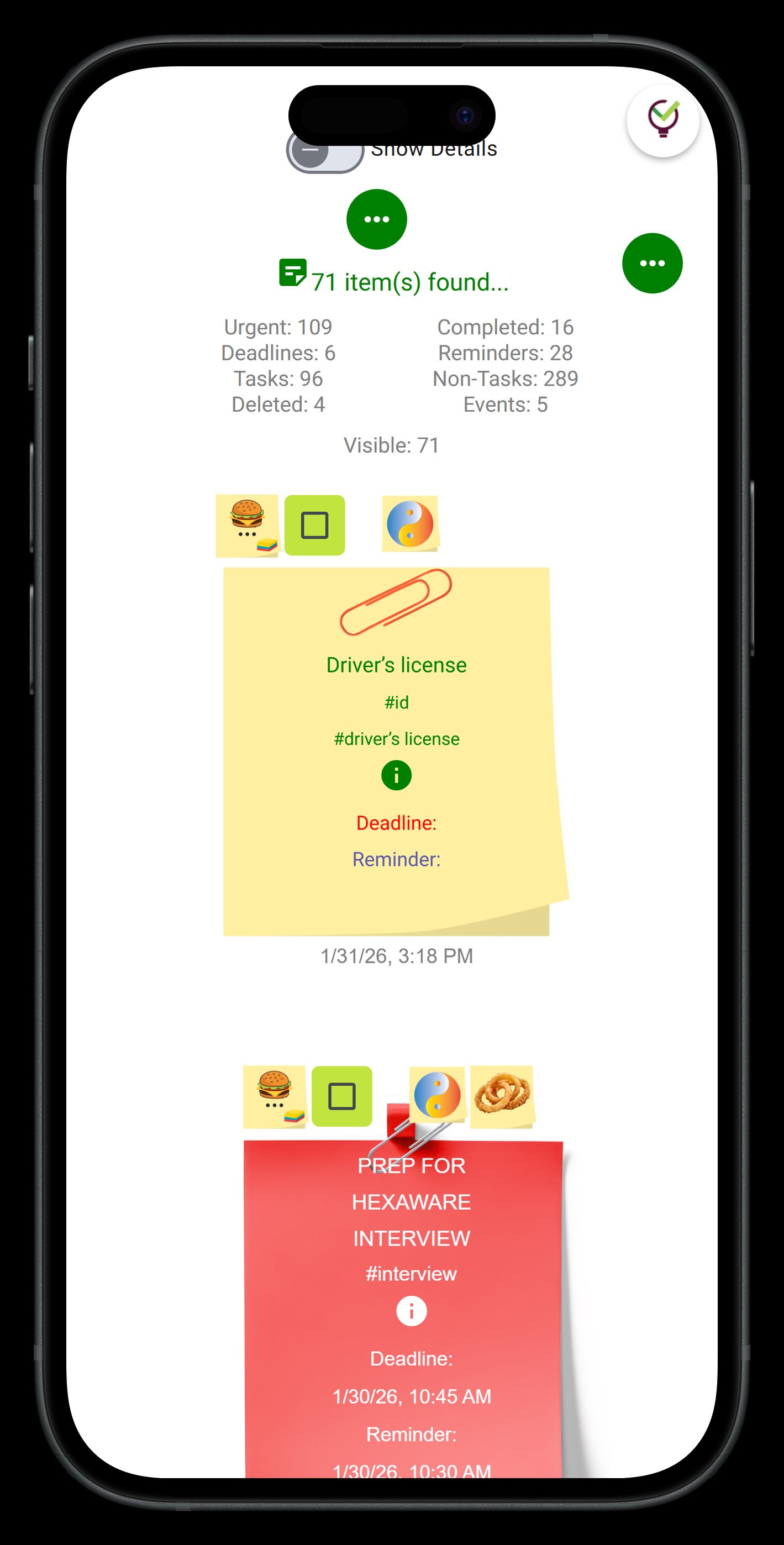
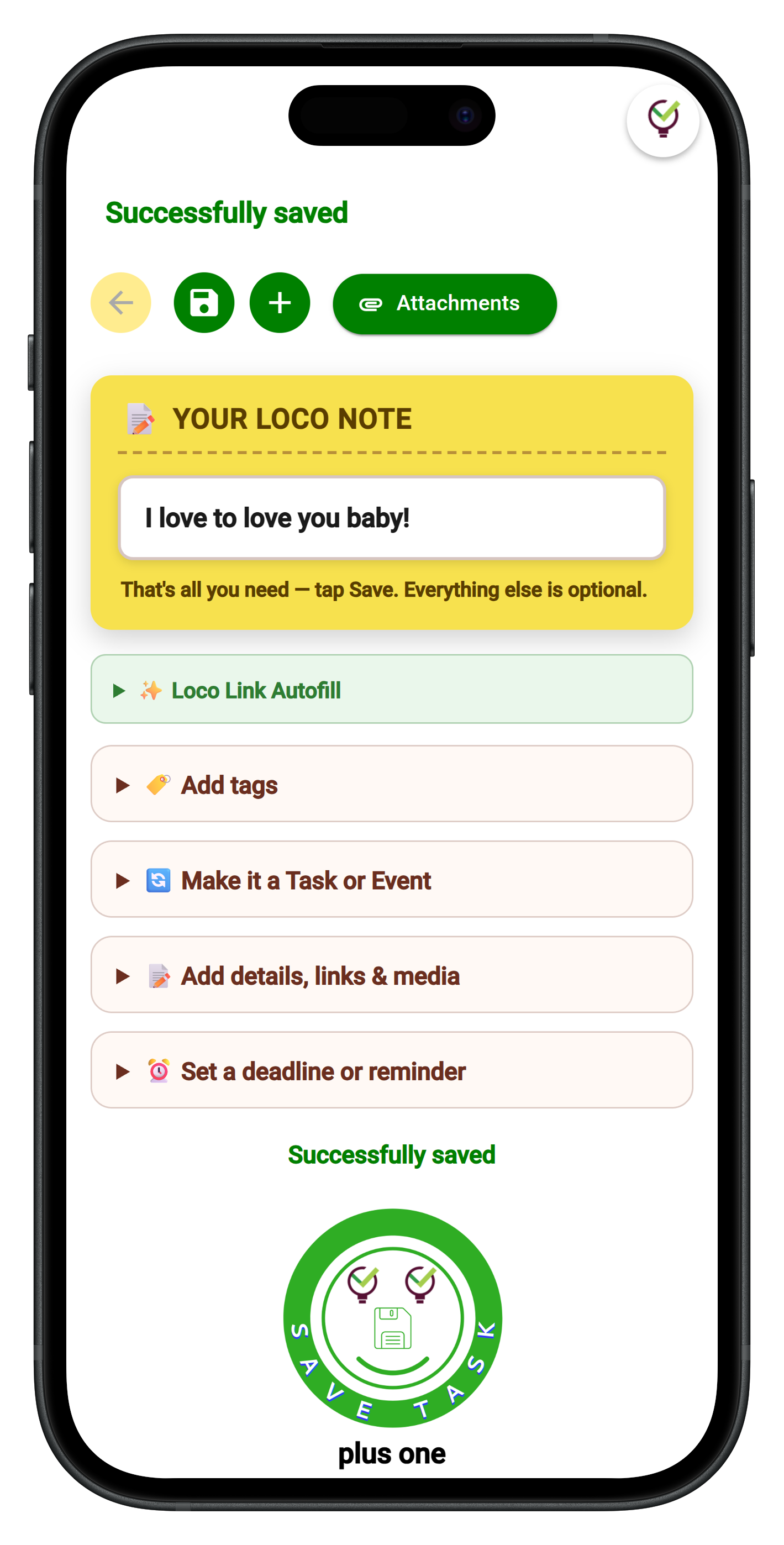
TaskLoco is built around sticky notes, which means the interface matches the way people actually think when they're trying to get unstuck: one note, one thought, one action. You can do a brain dump in seconds. You can break a large project into five small notes and arrange them in the order you'll tackle them. Nothing is buried in a sidebar or locked behind a setup wizard.
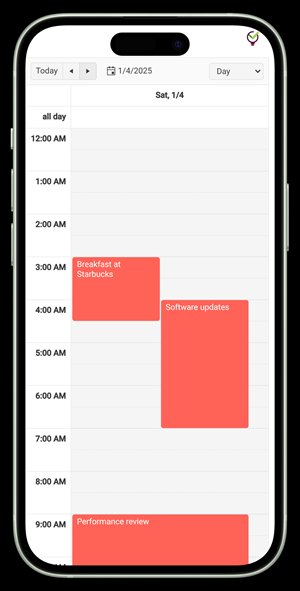
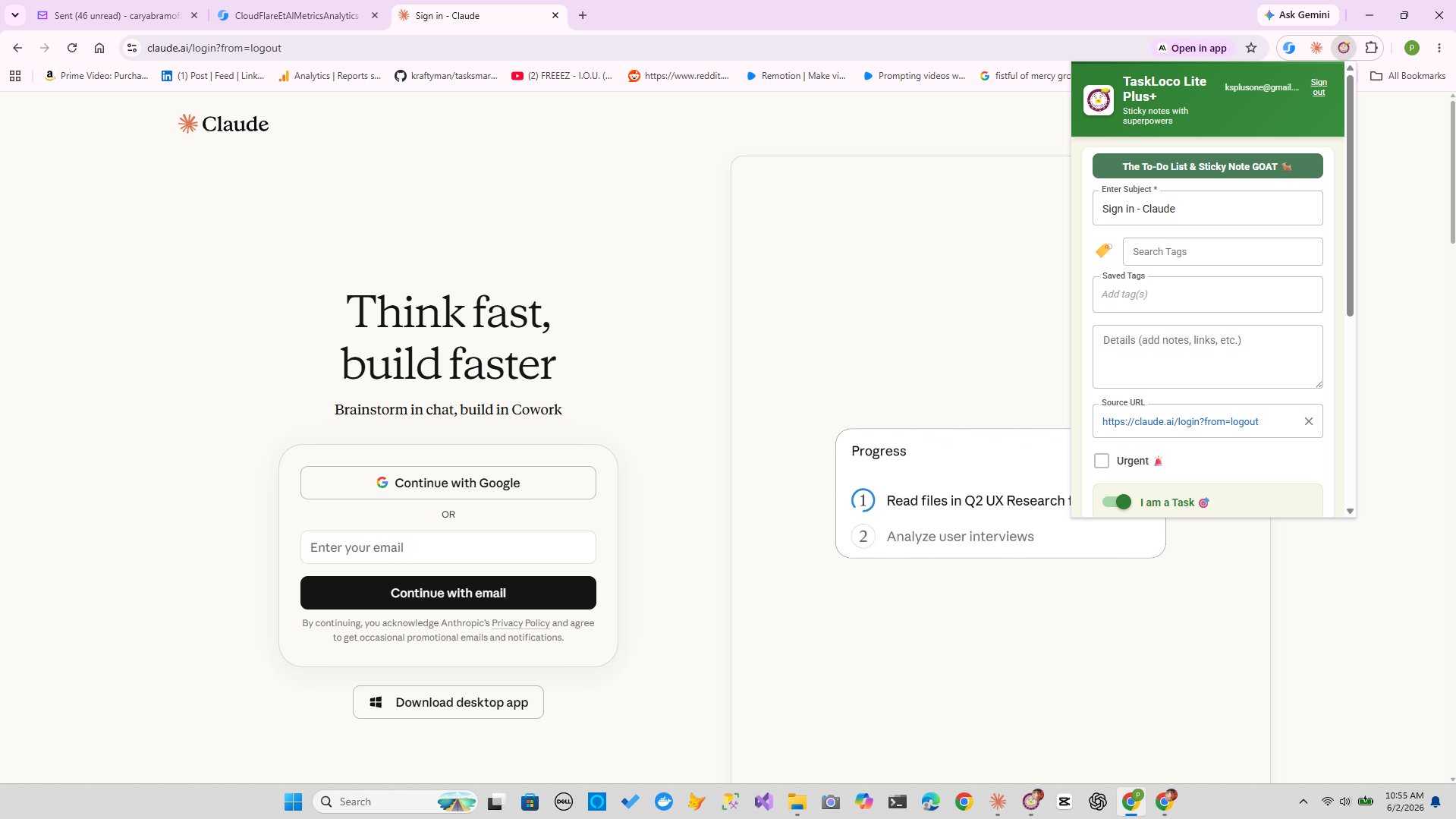
With TaskLoco Premium, reminders are delivered as push notifications directly to your phone and computer — and each reminder deep-links back to the original note so you're never hunting for context when the ping arrives. Optional email and SMS notifications are available as well. The calendar view lets you see everything with a due date in one place without building a project plan. And the Chrome extension lets you capture a task or idea from any webpage in one click — so the friction of 'I'll remember to add that later' disappears entirely.
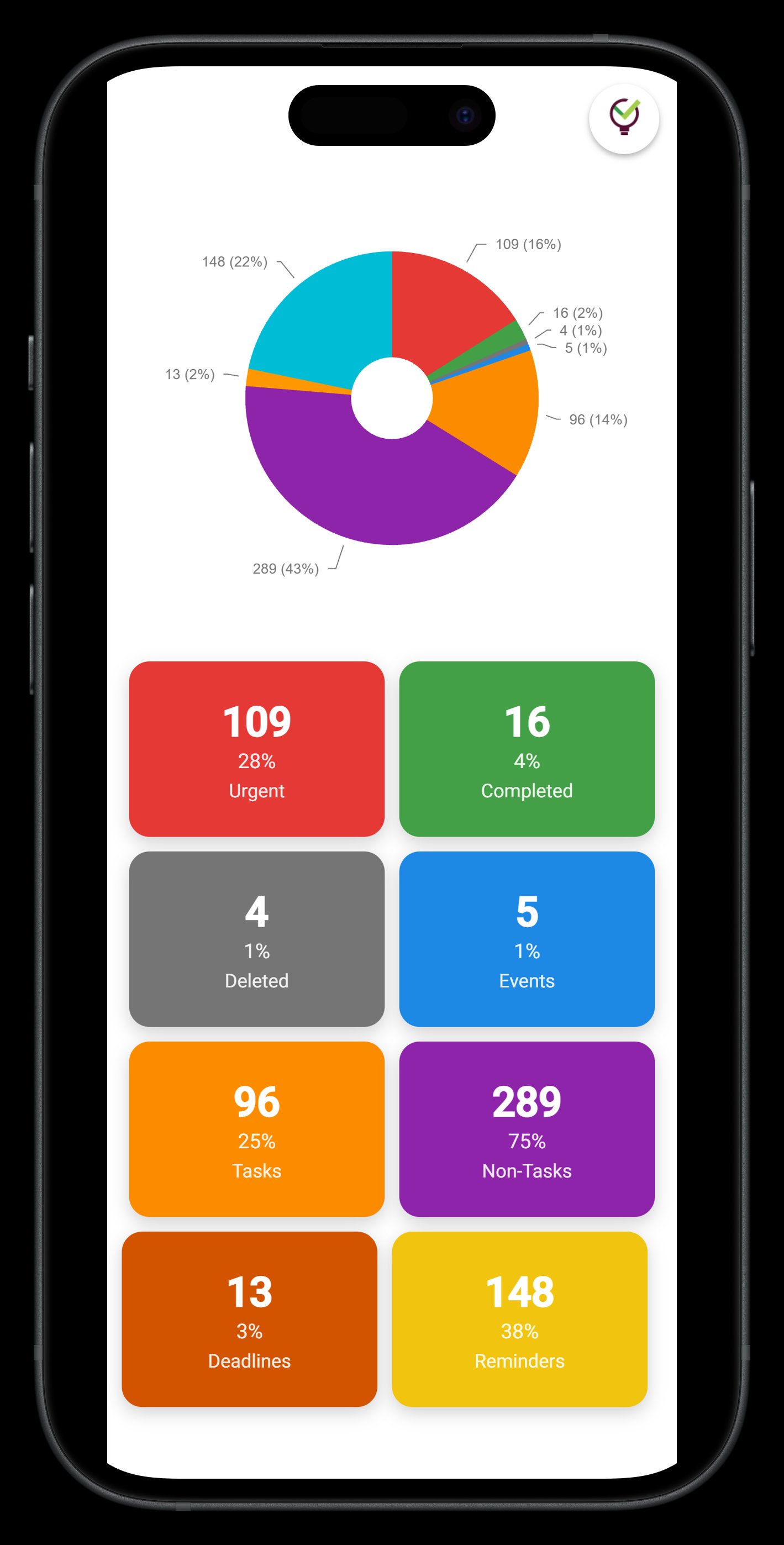
If you're just starting out and want zero commitment, TaskLoco Lite is a free, completely anonymous native app for iPhone and Android — no sign-in, no account, up to 20 notes stored on your device. Lite Plus+ is also free, syncs across all your devices, and adds up to 30 notes accessed through the web app and Chrome extension. Neither requires a credit card. Premium unlocks unlimited notes, file attachments, reminders, calendar, and team sharing — each person on a team needs their own subscription.
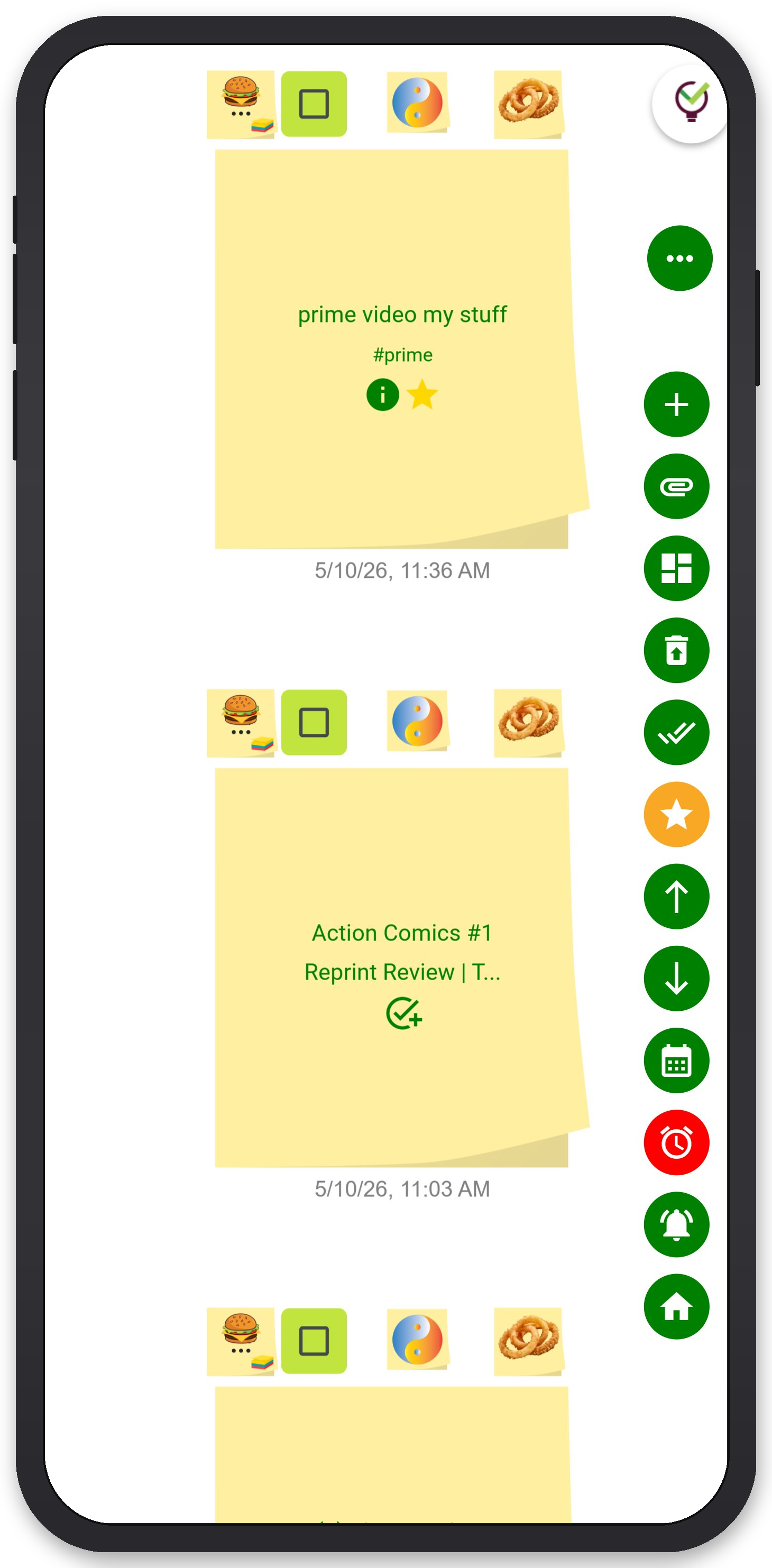
TaskLoco Premium is regularly $9.99/month per person. Right now, charter members can lock in 50% off the regular price — forever. That means $4.99/month per person today. And if our price ever goes up, you still pay half. Always.
Code CHARTER50 auto-applies at checkout. First 500 spots only — once they're gone, this offer is gone permanently. Act fast while spots last.
Every Premium subscription includes unlimited notes, 10GB file storage, reminders, calendar, and team sharing. Each team member requires a separate subscription. 7-day free trial — no charge until day 8. Cancel anytime.
Free Options: TaskLoco
TaskLoco Lite
- Native iPhone & Android app
- Completely anonymous — no sign-in
- Data stays on your device
- Up to 20 notes
- Free forever
TaskLoco Lite Plus+
- Web app + Chrome extension
- Sign in with Google
- Wall syncs across all devices
- Up to 30 notes
- Free forever
Lock In 50% Off — Forever
7-day free trial. No charge until day 8. CHARTER50 auto-applies at checkout.
🔒 Lock In My Charter SpotSee TaskLoco in Action
Frequently Asked Questions
Is procrastination a mental health issue?
Procrastination exists on a spectrum. Occasional procrastination is normal and doesn't indicate a disorder. But chronic, distressing procrastination that consistently interferes with work, relationships, or health can be a symptom of underlying anxiety, depression, ADHD, or perfectionism-driven OCD tendencies. If you find that procrastination is significantly disrupting your life despite your best efforts, speaking with a therapist — particularly one trained in CBT — is a legitimate and useful step, not an overreaction.
Why do I procrastinate even on things I want to do?
This confuses a lot of people. The trigger isn't always fear of failure — sometimes it's the pressure you put on something you care deeply about. The more meaningful a project, the higher the emotional stakes, and the more your brain can treat it as a threat. Writers block on the novel they love. Entrepreneurs stall on the business they're excited about. This is perfectionism and identity-threat working together. The fix is the same: lower the bar for the first action, separate the attempt from the outcome, and start with something you can't fail at.
What's the difference between procrastination and laziness?
They feel similar from the outside but are fundamentally different. Laziness is a lack of motivation or desire to do anything — a general low-energy state. Procrastination is active avoidance of a specific task, often by doing other things instead. Chronic procrastinators are frequently busy — just not on the thing they're supposed to be doing. The desire to complete the task is usually there; the emotional friction is what blocks it. Calling yourself lazy when you're procrastinating is both inaccurate and counterproductive — it increases shame, which increases avoidance.
Does breaking tasks into smaller steps really help?
Yes, and there's solid research behind it. Large tasks are cognitively abstract — your brain struggles to initiate action on something it can't picture completing. Small tasks are concrete and actionable. When you write 'work on the report' your brain doesn't know where to start. When you write 'open the doc and type the first sentence' it does. The decomposition isn't just motivational — it's neurological. Concrete next actions reduce the activation energy required to begin. The key is making the first step genuinely small, not just smaller.
Why does procrastination feel so hard to break even when I know I'm doing it?
Because awareness of the loop doesn't automatically override the loop. The emotional relief from avoidance is immediate and real. The consequences of procrastinating are abstract and future-facing. Your brain is wired to weight immediate experience heavily. Knowing that you're procrastinating helps intellectually, but it doesn't change the emotional calculus. That's why behavioral interventions — changing your environment, shrinking the first action, bundling the task with something rewarding — work better than insight alone. You have to make not-starting feel worse than starting, or make starting feel immediately better.
Can a productivity app actually help with procrastination?
It depends entirely on the app. An app that adds complexity — setup, hierarchy, statuses, dashboards — can itself become a procrastination tool. You spend time organizing instead of doing. An app that reduces friction, captures ideas instantly, and surfaces the next action clearly can genuinely help — not by fixing the emotional root cause, but by reducing the cognitive overhead that compounds it. The brain dump technique, decomposing tasks into small notes, and having reminders that push to you rather than waiting for you to check a list — those are genuine friction-reducers. TaskLoco's sticky-note model is specifically suited to this: low setup, fast capture, and reminders delivered as push notifications that deep-link you straight back to the note so nothing gets lost.
How does TaskLoco help reduce procrastination day to day?
TaskLoco Premium lets you capture tasks instantly — from the app or with the Chrome extension in one click — so the gap between 'I should do this' and 'it's written down' is nearly zero. Reminders are delivered as push notifications to your phone and computer, and they deep-link back to the original note, so when a reminder fires you land directly on the task with full context. The calendar view shows everything with a date in one place. And the sticky-note format keeps individual actions small and visible, which matches exactly how task decomposition is supposed to work. $9.99/month per person (currently $4.99/month per person for first 500 charter members with code CHARTER50)
Born in Brooklyn. Powered by AWS. Your data stays yours.
TaskLoco is available on iPhone, Android, Chrome, and every web browser.