Monday feels like a fresh slate. You write the list, you block the calendar, you mean it this time. By Wednesday morning you're avoiding the list entirely, doing busywork, and quietly renegotiating with yourself about what 'counts.' By Friday you've mentally filed this week under 'next week I'll really start.'
This isn't a character flaw. It's a predictable psychological pattern — and once you understand exactly why it happens at Wednesday specifically, you can design around it instead of white-knuckling through it.
The Real Reason It's Always Wednesday
Monday and Tuesday run on what psychologists call implementation intentions — the energizing feeling of a plan just made. Your brain releases dopamine not when you complete a goal, but when you first commit to one. That neurochemical burst carries you through day one and most of day two.
Wednesday is when the neurological novelty expires and the actual effort-to-reward ratio becomes undeniable. You've done some of the work, but the finish line is no closer in emotional terms than it was Monday. This is called the mid-goal slump, and research from the University of Chicago shows it's the most common dropout point in everything from fitness challenges to work projects.
There's a second force at work: your Monday plan was written by an optimistic version of you who hadn't yet felt Tuesday's friction. By Wednesday, you have real data — the task that seemed like 20 minutes took two hours, three items spawned five dependencies, and the original list is already obsolete. Instead of updating the plan, most people just abandon it, because updating feels like admitting failure.
The third factor is identity. A new habit or project is fragile because it isn't part of your self-concept yet. Missing one day on Monday would feel catastrophic — you'd recover immediately. Missing Wednesday feels like evidence. 'This is just who I am.' That narrative is easy to accept because it ends the discomfort of trying.
What Actually Works: The Anti-Wednesday System
The solution isn't a motivational speech. It's structural changes to how you plan and what you track. Here's what works:
1. Plan for Wednesday on Monday. When you write your weekly goals, explicitly ask: 'What will I do on Wednesday when I don't feel like this anymore?' Writing a reduced-effort version of each task — a 'minimum viable version' — gives Wednesday-you a real off-ramp instead of an all-or-nothing choice. A 20-minute workout beats skipping entirely. Three paragraphs beats zero. The minimum version keeps the streak alive.
2. Make progress visible, not just tasks. To-do lists show you what you haven't done. That's demoralizing on a Wednesday. Instead, track what you have completed — a simple running log of done items, crossed-off notes, or a count of completions this week. Visible progress fights the feeling that nothing is working.
3. Break Monday's plan by Tuesday night. Not abandon it — actively revise it with Tuesday's real data. When you schedule a 'plan review' at the end of day two, you turn Wednesday's realization ('this plan is broken') into an already-solved problem. Wednesday-you arrives to a realistic plan, not a failing one.
4. Shrink your daily commitment until it's embarrassingly small. The goal isn't to do more on Monday. It's to still be going on Thursday. A commitment you can keep in ten minutes per day, every day, compounds into more than a heroic Monday that collapses by Wednesday.
5. Use a reset ritual, not a restart. When you do slip on Wednesday, the standard move is to wait for next Monday to 'restart properly.' This is how weeks turn into months of delay. A reset ritual is a 5-minute action you take the same day — rewrite the note, set one reminder, do the minimum version — that signals to your brain the streak isn't broken, just bent. Restarts require a fresh start. Resets just require the next small step.
The Identity Piece Nobody Talks About
All the system design in the world won't stick if you're running it as 'someone who's trying to change' rather than 'someone who does this.' Identity precedes behavior — not the other way around.
James Clear's framing is useful here: every time you do the minimum version on a hard Wednesday, you cast a vote for the identity you want. Miss Wednesday and you cast a vote against it. Neither one vote wins or loses — but Wednesday votes are worth more than Monday votes, because they happen under real conditions rather than manufactured enthusiasm.
The practical implication: narrate your Wednesdays differently. 'I did the small version even when I didn't want to' is a more powerful identity statement than 'I crushed it on Monday.' Tell that story to yourself — out loud if it helps. The Wednesday completion is the data point that actually changes how you see yourself.
Another underrated move: separate your identity from your output. 'I'm a writer' is more durable than 'I'm someone who wrote 1,000 words today.' Output goals are fragile on Wednesdays. Process identity — I'm someone who shows up — survives them.
How TaskLoco Fits Into This
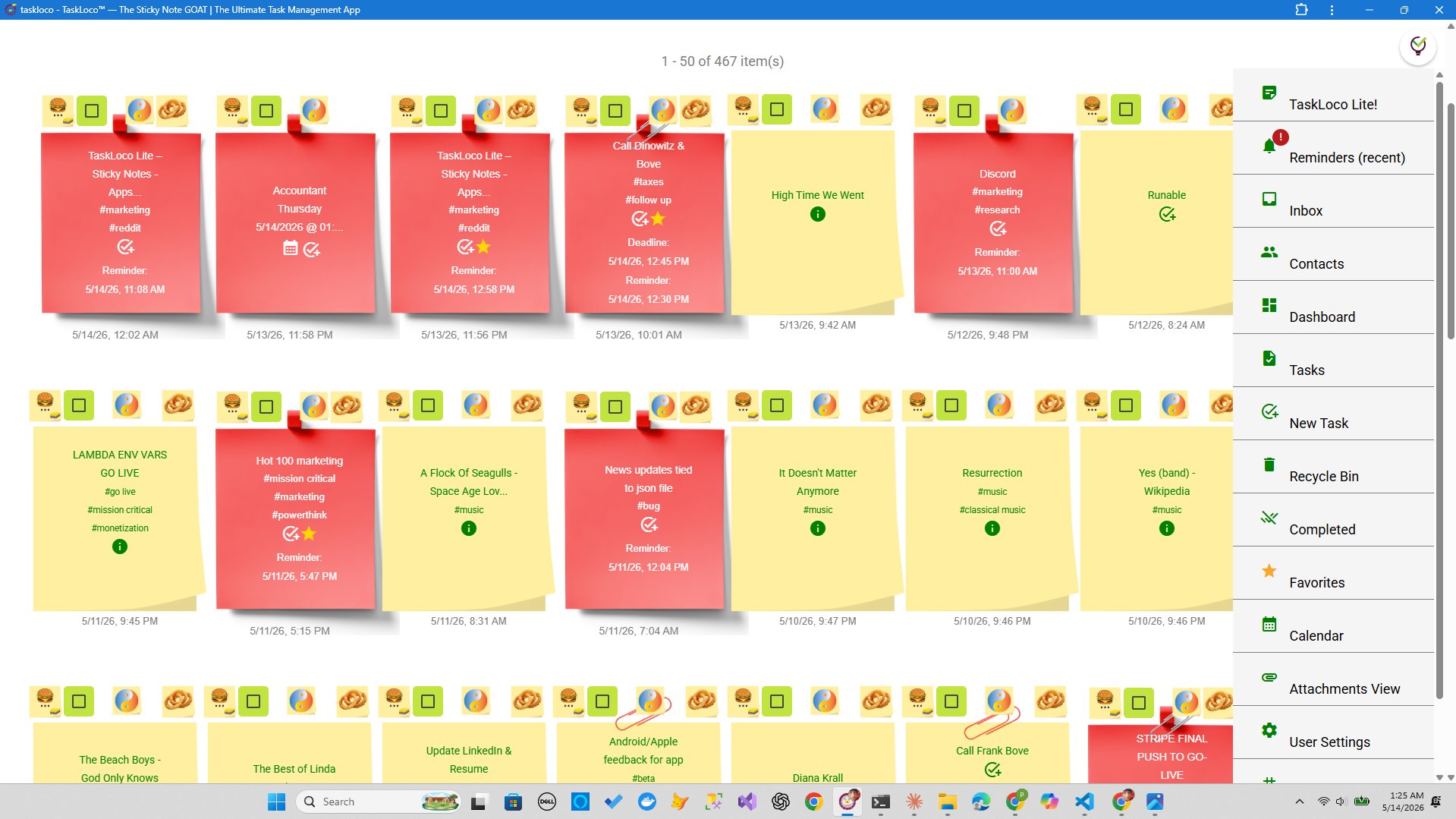
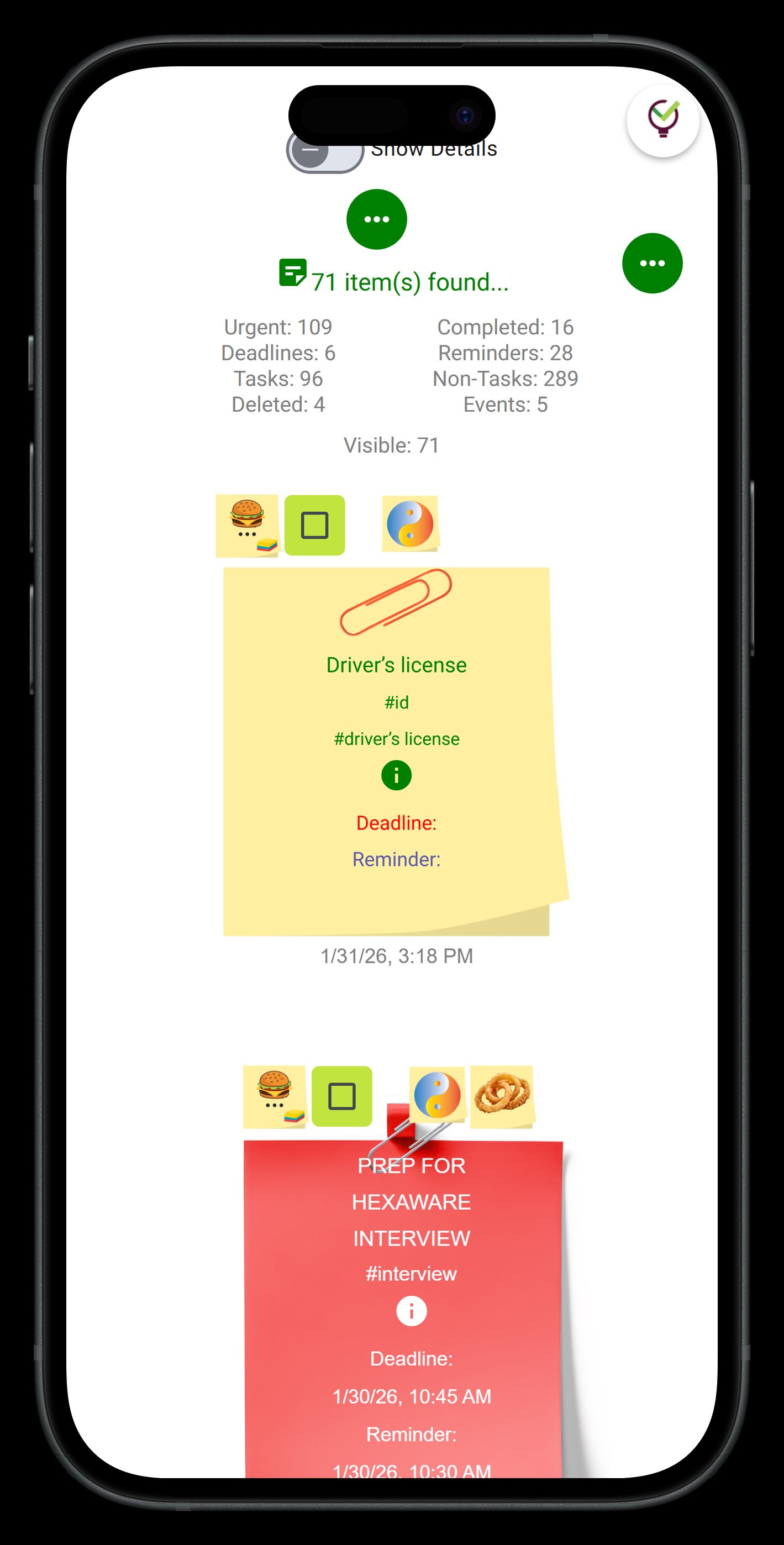
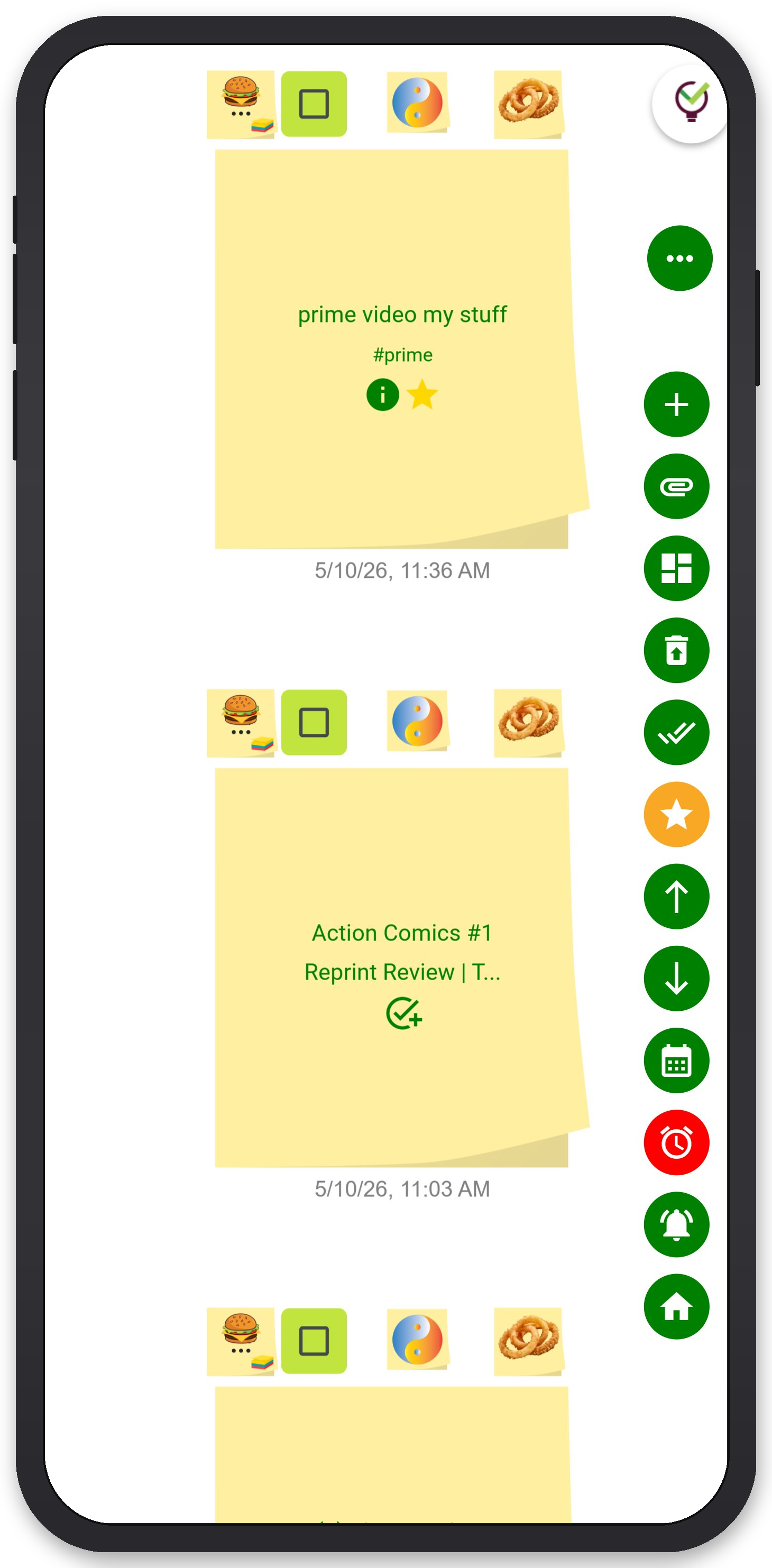
If you want a system that makes all of the above easier to maintain, TaskLoco is worth a look. The core of TaskLoco is sticky notes — which sounds simple, but the design choice matters. A sticky note is a commitment small enough to not be intimidating. You're not opening a project management suite. You're writing a note.
For the anti-Wednesday system specifically: you can keep a 'minimum viable version' note for each goal — the version you do when you don't feel like it. Your running progress log lives on a note right next to your task list, so you see what you've done, not just what's left. Set a reminder tied to your Tuesday-night plan review and it arrives as a push notification on your phone and computer, deep-linking straight back to the note so there's zero friction to open and update.
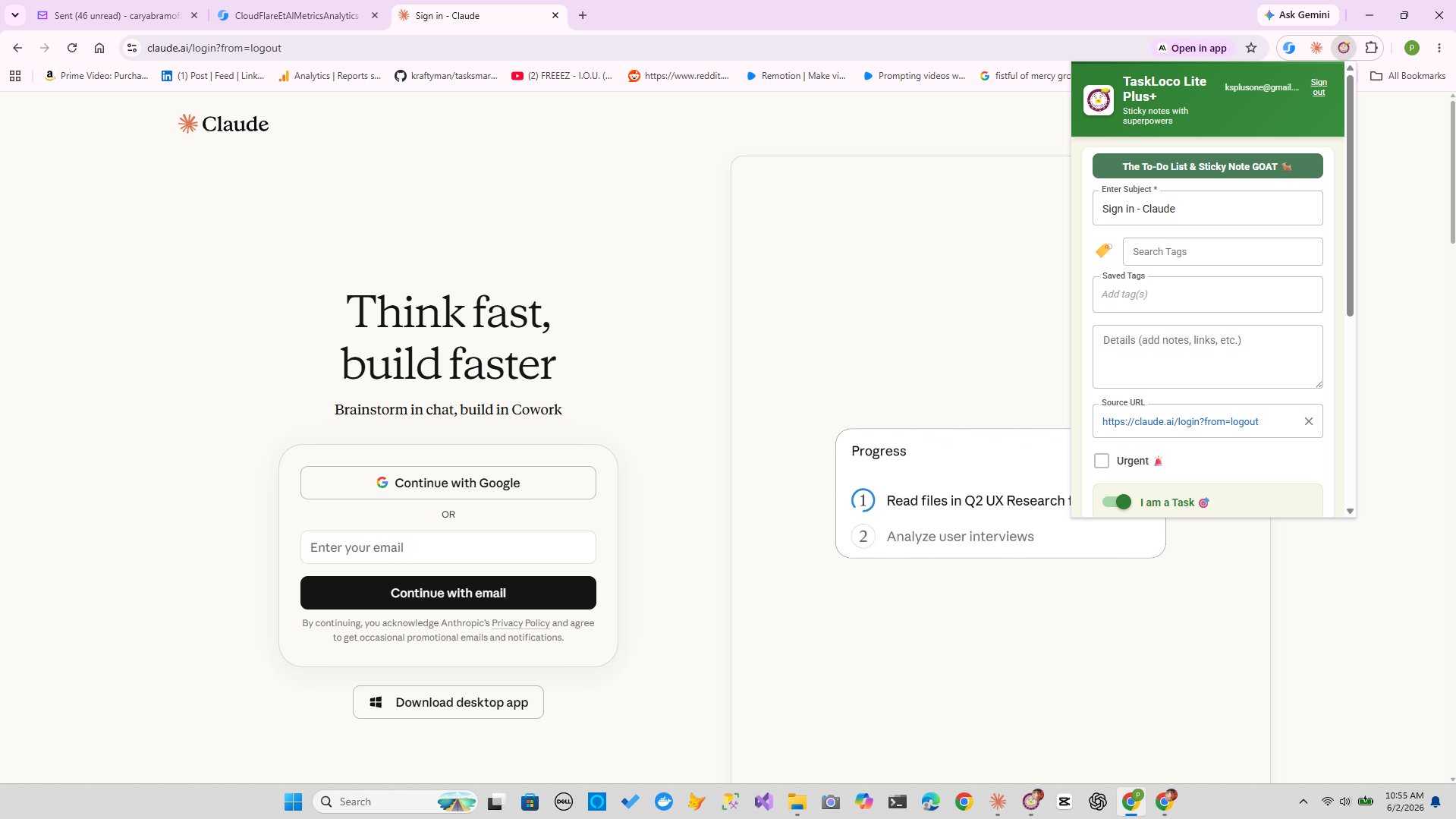
The TaskLoco Chrome extension is useful for the research-heavy stages — clip any webpage into a note in one click, so the accumulation of reference material doesn't become its own Wednesday-killing overwhelm. And team sharing works the way email does: share a note and the other person gets their own clone to work with, no permissions to configure.
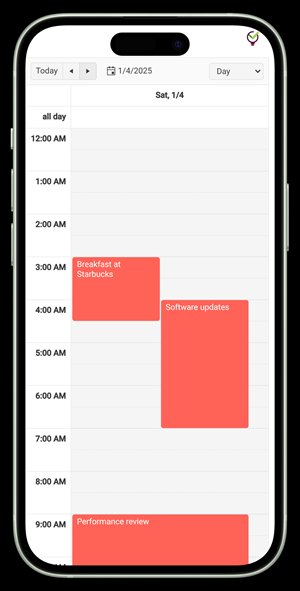
There's a free version — TaskLoco Lite Plus+ gives you up to 30 synced notes across all your devices with no sign-up beyond a Google login. For reminders, file attachments, unlimited notes, and calendar view, that's TaskLoco Premium.

TaskLoco Premium is regularly $9.99/month per person. Right now, charter members can lock in 50% off the regular price — forever. That means $4.99/month per person today. And if our price ever goes up, you still pay half. Always.
Code CHARTER50 auto-applies at checkout. First 500 spots only — once they're gone, this offer is gone permanently. Act fast while spots last.
Every Premium subscription includes unlimited notes, 10GB file storage, reminders, calendar, and team sharing. Each team member requires a separate subscription. 7-day free trial — no charge until day 8. Cancel anytime.
Free Options: TaskLoco
TaskLoco Lite
- Native iPhone & Android app
- Completely anonymous — no sign-in
- Data stays on your device
- Up to 20 notes
- Free forever
TaskLoco Lite Plus+
- Web app + Chrome extension
- Sign in with Google
- Wall syncs across all devices
- Up to 30 notes
- Free forever
Lock In 50% Off — Forever
7-day free trial. No charge until day 8. CHARTER50 auto-applies at checkout.
🔒 Lock In My Charter SpotSee TaskLoco in Action
Frequently Asked Questions
Why do I always lose motivation mid-week?
The dopamine hit of starting a new plan expires after one to two days. By Wednesday, the neurological novelty is gone and the real effort-to-reward ratio is undeniable. This is a predictable pattern called the mid-goal slump, not a personal failure. The fix is designing your plan to account for it — building in minimum viable versions and visible progress tracking before Wednesday arrives.
How do I stop quitting my habits after a few days?
The most effective technique is shrinking your daily commitment to the point where it would feel embarrassing to skip it. A 5-minute version of any habit kept consistently will outperform a 60-minute version that collapses by Wednesday. Add a reset ritual — a same-day small action you take when you miss — so you never need to wait for Monday to restart.
What is the Wednesday slump in productivity?
The Wednesday slump is the point at which the motivational energy of a new week runs out and the gap between the original optimistic plan and reality becomes undeniable. It's the most statistically common dropout point in goal-pursuit research. Understanding it in advance lets you plan specifically for it rather than being blindsided by it each week.
Does willpower actually help with mid-week motivation drops?
Willpower is a finite resource and a poor long-term strategy. Research consistently shows that people who rely on willpower for habit maintenance fail at higher rates than those who redesign their environment and commitments to reduce the need for willpower. The goal is to make the right action so easy that it doesn't require a decision — not to grit through a bad plan.
What's the best way to track habits without getting overwhelmed?
Track process, not just outcomes. A simple running log of completions — even just crossing off a note or adding a tally — is more motivating than a to-do list showing only what's undone. Keep the tracking system itself minimal: if the tracking takes more effort than the habit, you'll quit the tracking first and the habit second.
Can TaskLoco help me stay consistent with goals?
TaskLoco is built around sticky notes, which makes it naturally low-friction — you're not opening a complex project tool, just writing a note. You can keep a minimum viable version of each goal on its own note, track your progress log right alongside it, and set reminders that arrive as push notifications on your phone and computer, deep-linking back to the note itself. TaskLoco Lite Plus+ is free for up to 30 synced notes. For reminders, unlimited notes, and file attachments, TaskLoco Premium is available. $9.99/month per person (currently $4.99/month per person for first 500 charter members with code CHARTER50)
Is it normal to restart goals every Monday?
Extremely common, and there's a structural reason: the social and psychological permission to 'start fresh' is attached to Mondays, so quitting on Wednesday carries a lower immediate cost — you can always restart next Monday. Breaking this cycle requires replacing the restart ritual with a reset ritual: a small same-day action that keeps the streak alive instead of waiting for a clean-slate day that never really exists.
Born in Brooklyn. Powered by AWS. Your data stays yours.
TaskLoco is available on iPhone, Android, Chrome, and every web browser.