You haven't done anything yet. You opened your laptop, maybe poured a second coffee, and already you feel like you've been awake for six hours. Nothing on your to-do list is particularly hard. So why does everything feel so heavy?
It's not a sleep problem. It's not burnout — at least not in the clinical sense. It's a specific kind of pre-task exhaustion that researchers call anticipatory cognitive load: the mental energy your brain burns just thinking about what it has to do, rather than actually doing it. The good news is it has a real cause and a real fix. Understanding the mechanism is the first step to getting out from under it.
The Real Cause: Your Brain Is Already Working Overtime
Your brain doesn't distinguish between thinking about a task and doing a task the way you'd expect. When you sit down with a vague awareness that you have things to do but no clear first action, your prefrontal cortex starts running low-level simulations — cycling through unfinished items, weighing options, rehearsing conversations, pre-living outcomes. All of that burns glucose and cognitive resources the same way actual work does.
Psychologists call this the Zeigarnik effect: unfinished tasks create persistent mental tension. Your brain doesn't let them go. It keeps them running in the background like open browser tabs, consuming processing power even when you're not consciously thinking about them. By the time you sit down to start your actual work, you've already spent a significant portion of your mental energy on this invisible background processing.
Add to that the weight of unresolved micro-decisions — what to tackle first, whether to respond to that email now or later, whether a project is behind — and you have a recipe for feeling spent before you've typed a single word.
Four Specific Patterns That Drain You Before You Begin
Not all pre-task exhaustion is the same. These four patterns are the most common culprits — and each one has a direct solution.
- No clear first action. If your to-do list says "work on the report" instead of "write the opening paragraph," your brain stalls at the decision point every single time you look at it. Vague tasks force a planning decision every time — you never just start, you always have to figure out where to start first. Fix it by breaking every item down to its next physical action before you close out the day.
- Carrying your task list in your head. The human brain is not a storage device. It's a processing device. Every time you try to use it as a to-do list, you're forcing it to do two jobs simultaneously — remember things and process things. The result is that it does neither well. A written, trusted external system removes the memory burden entirely.
- Decision fatigue carried forward from yesterday. If you ended your previous day without deciding what tomorrow's priorities are, you wake up and immediately face a planning problem on top of an execution problem. Spending five minutes at the end of each day deciding your top three priorities for the next morning eliminates this cold-start penalty entirely.
- Perfectionism at the entry point. Many people feel tired before they start because starting means potentially failing. If your internal standard for beginning is "be ready," and ready never quite arrives, the exhaustion you feel is partly anxiety dressed up as fatigue. Lowering the bar to simply show up and make one move is often enough to break the loop.
The Practical Fix: Offload, Clarify, Commit
The solution to anticipatory fatigue is not to work less or rest more — it's to give your brain permission to stop holding on. That requires three things: a system you trust, tasks written at the right altitude, and a shutdown ritual that closes open loops.
Build a capture habit. Every time something enters your awareness — a task, an idea, a commitment — write it down immediately in one place. Not a dozen sticky notes. Not your inbox. One place. The goal is to make your brain believe it doesn't have to remember things, so it stops trying. This is the core insight behind David Allen's Getting Things Done methodology, and it holds up in practice: once you trust your system, the background hum of undone tasks goes quiet.
Process your capture list daily. Capturing alone isn't enough. If your list becomes a dumping ground you never revisit, your brain won't trust it, and it will keep holding things in working memory anyway. A five-minute daily review — does this have a next action? is that next action specific enough to act on without thinking? — is what makes the system work.
Do a shutdown ritual every evening. End each work session by deciding — not guessing, actually deciding — what the top three things are for tomorrow. Write them down. Close every open loop you can. Declare yourself done. Your brain responds to explicit closure. When you don't have a shutdown ritual, your brain treats every evening like an unfinished task and keeps spinning.
Protect your first hour. The first 60–90 minutes of your day are when your prefrontal cortex is freshest. Using that window for email, Slack, or reactive work is like filling your gas tank with water. Reserve it for one deep task — ideally the one you already decided on the night before. The momentum from one completed thing early in the day changes the entire emotional texture of the rest of it.
How TaskLoco Fits Into This System
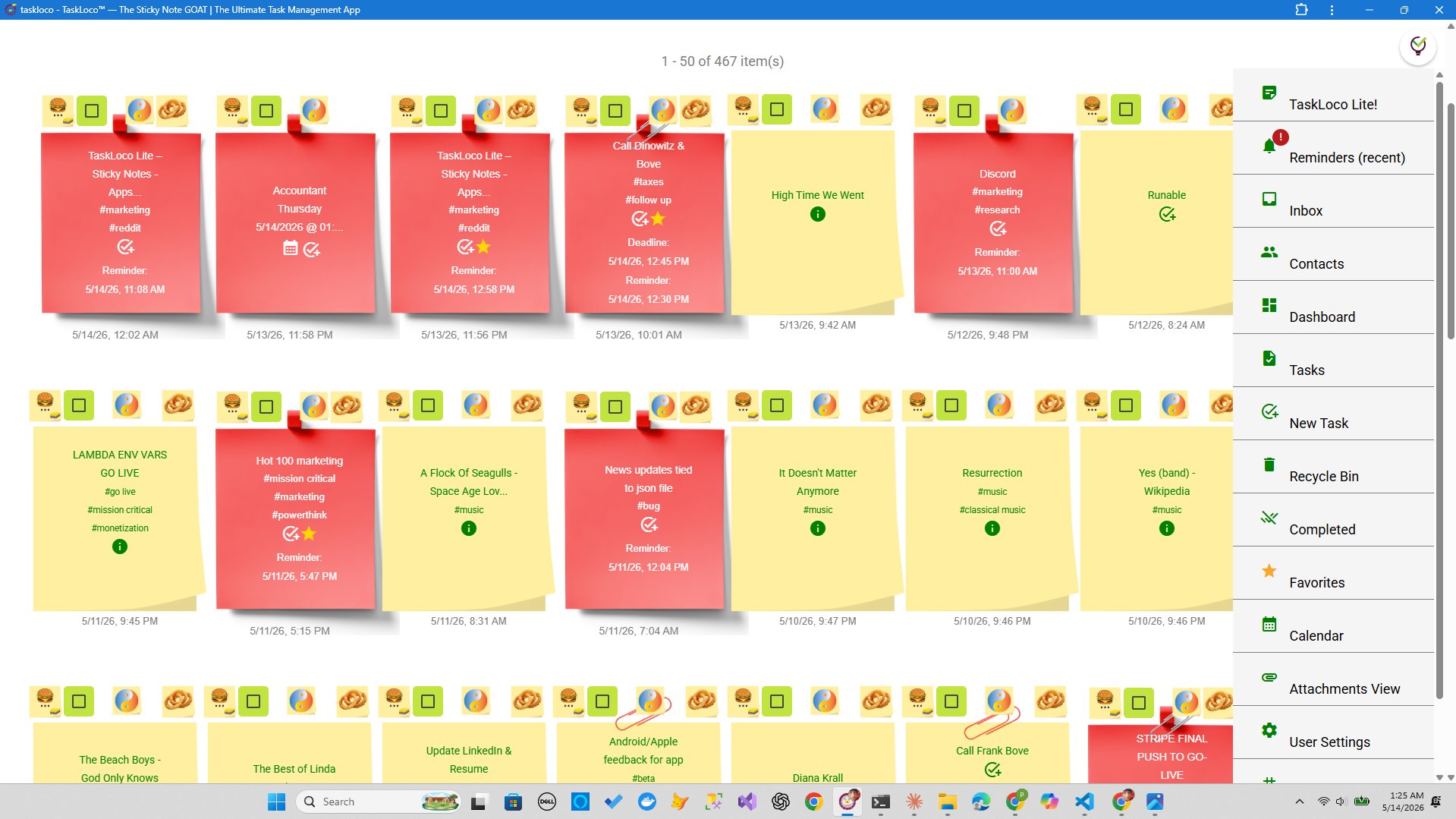
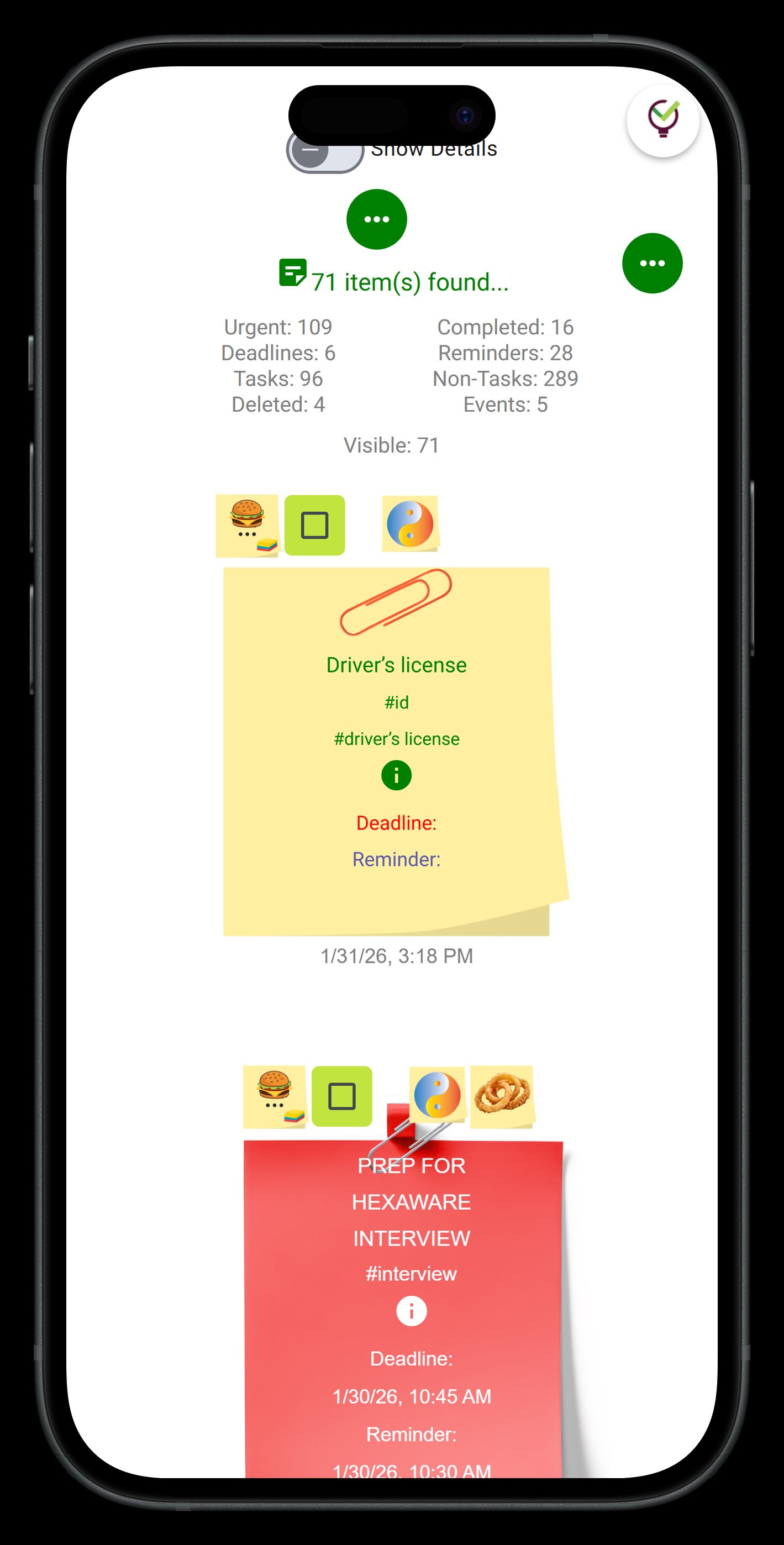
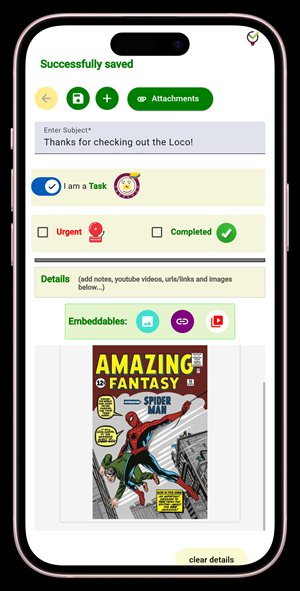
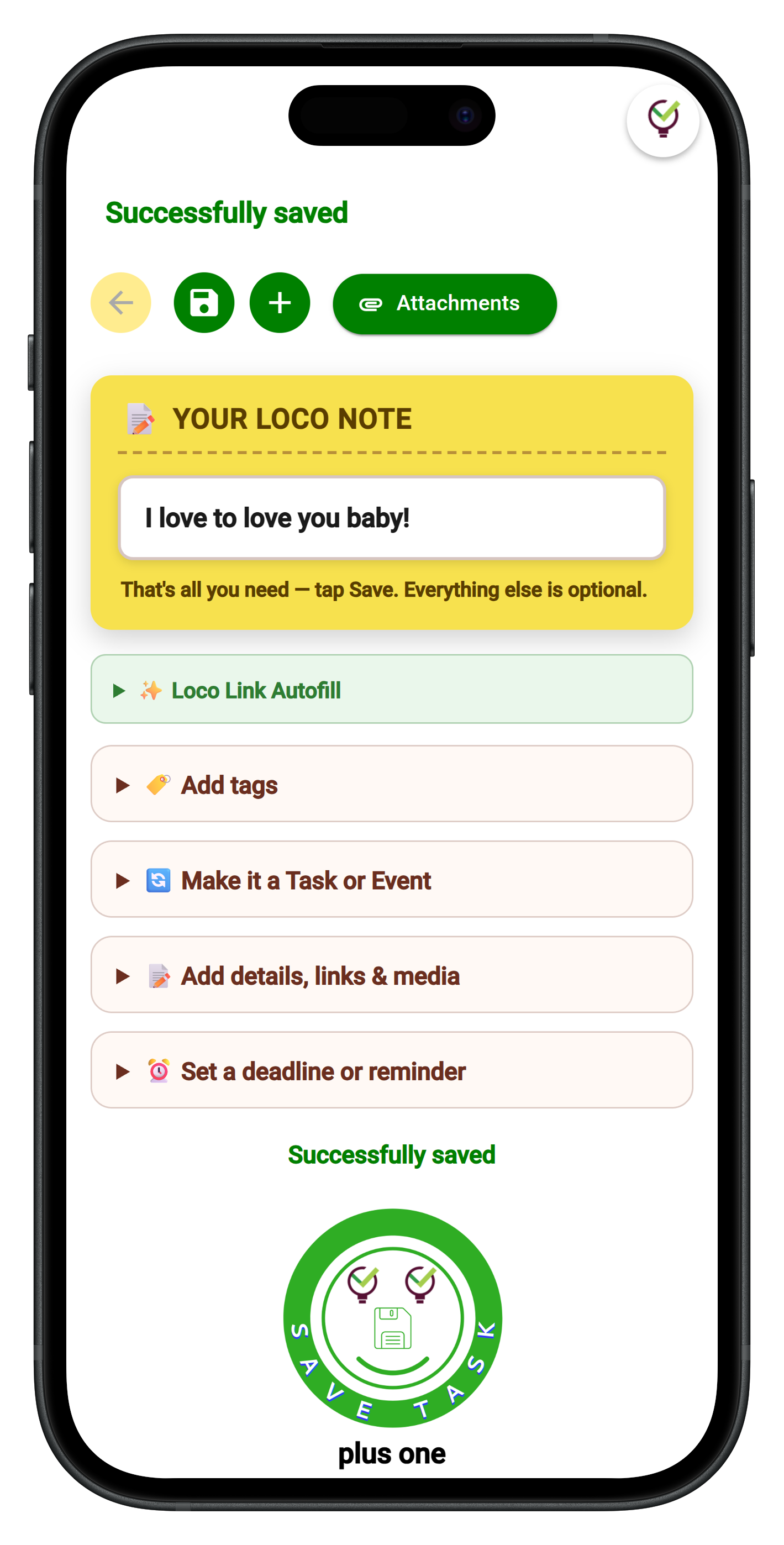
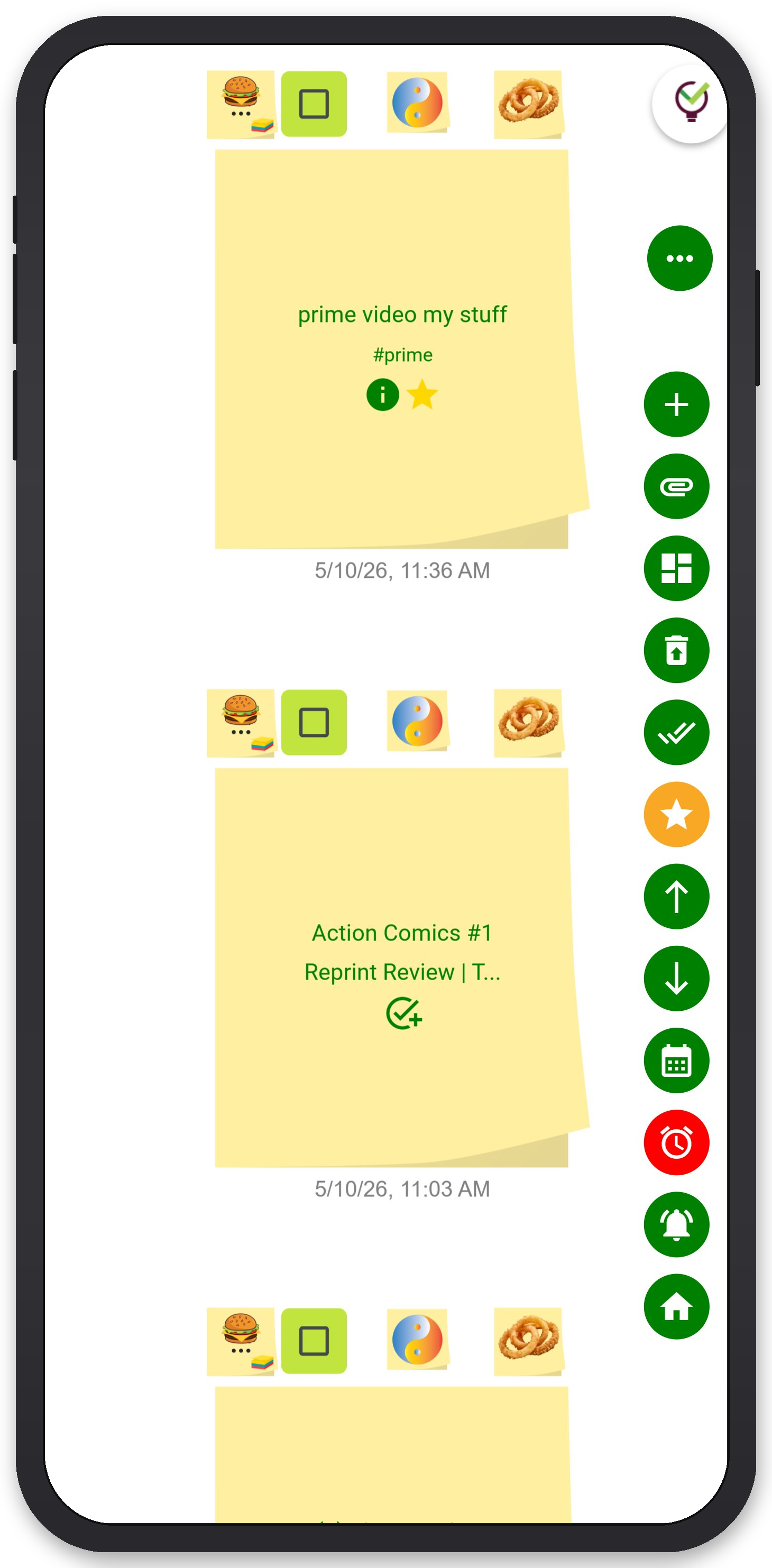
Everything described above — the capture habit, the daily review, the shutdown ritual — requires one thing: a place to put stuff that you'll actually use. Most productivity apps add more overhead than they remove. TaskLoco is built around sticky notes, which means the friction of capture is nearly zero. You open a note, write a thing, and close it. That's the whole interaction.
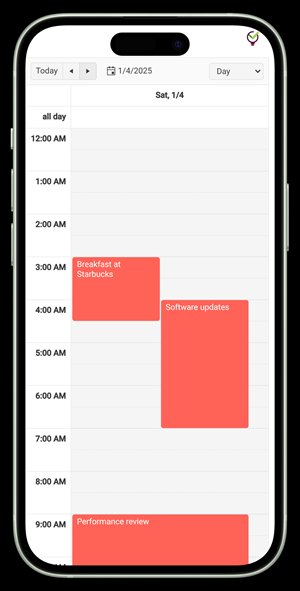
TaskLoco Premium adds the layer that makes it a real system rather than just a junk drawer. Reminders are delivered as push notifications directly to your phone and computer, deep-linking back to the original note so you land exactly where you need to be — no hunting. Optional email and SMS notifications are available if you want them, but the push notification is the default, and it works. The calendar view lets you see your week at a glance without switching tools. File attachments mean the reference material lives with the task, not in a separate folder you'll forget about.
The team sharing feature works the way actual sharing should: when you share a note with someone, they can clone it and make it their own. No permissions, no access levels, no one accidentally editing the original. It's built for how people actually collaborate — hand something off cleanly and move on.
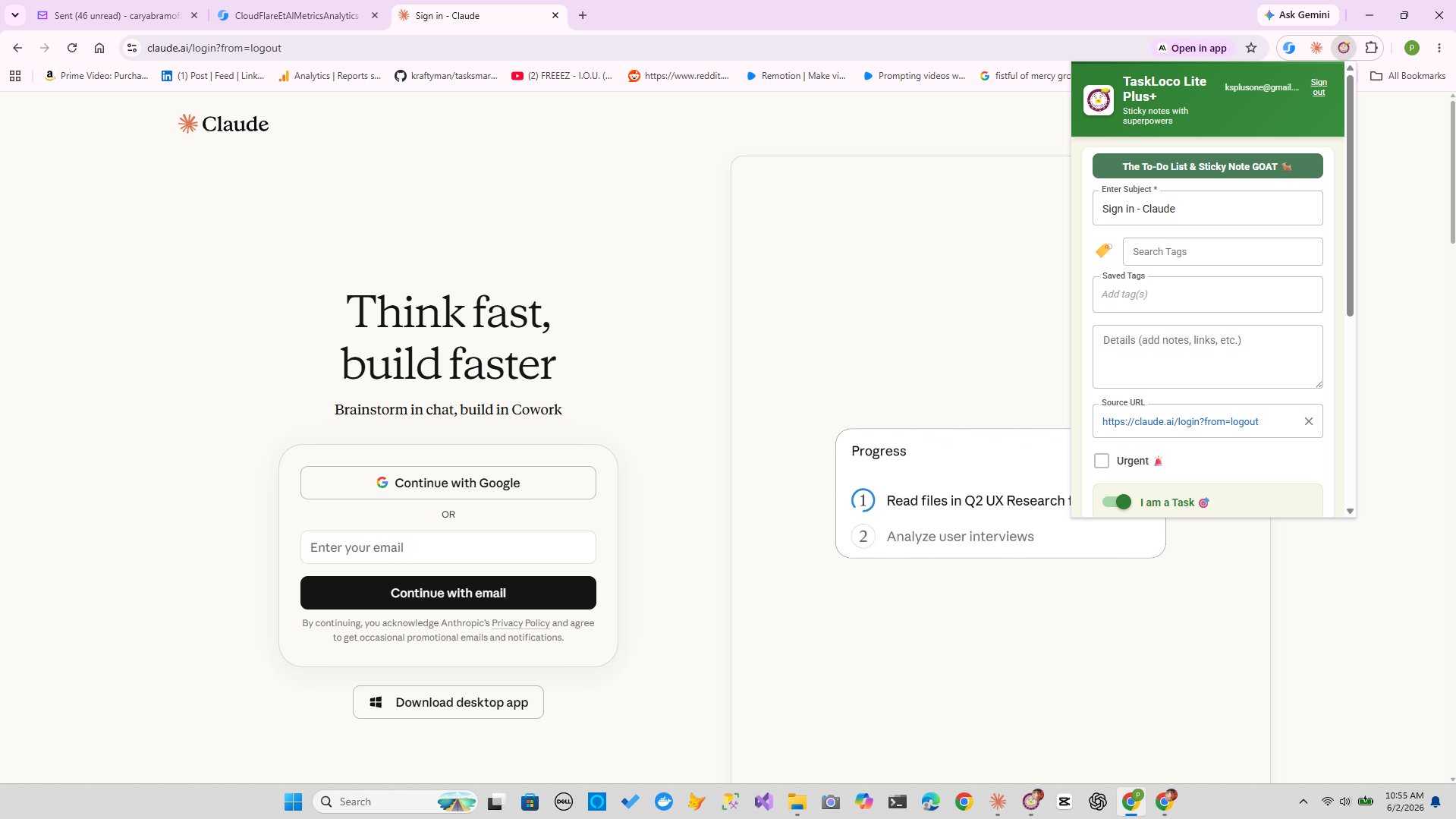
If you're not ready to commit, TaskLoco Lite is a completely free, anonymous native app on iPhone and Android — no account, no sign-in, up to 20 notes stored locally on your device. It won't sync or remind you, but it's a legitimate starting point for building the capture habit before you decide whether the full system is worth it. TaskLoco Lite Plus+ is free as well — sign in with Google, sync across all your devices, up to 30 notes, plus the Chrome extension that captures any webpage in one click.
TaskLoco Premium is regularly $9.99/month per person. Right now, charter members can lock in 50% off the regular price — forever. That means $4.99/month per person today. And if our price ever goes up, you still pay half. Always.
Code CHARTER50 auto-applies at checkout. First 500 spots only — once they're gone, this offer is gone permanently. Act fast while spots last.
Every Premium subscription includes unlimited notes, 10GB file storage, reminders, calendar, and team sharing. Each team member requires a separate subscription. 7-day free trial — no charge until day 8. Cancel anytime.
Free Options: TaskLoco
TaskLoco Lite
- Native iPhone & Android app
- Completely anonymous — no sign-in
- Data stays on your device
- Up to 20 notes
- Free forever
TaskLoco Lite Plus+
- Web app + Chrome extension
- Sign in with Google
- Wall syncs across all devices
- Up to 30 notes
- Free forever
Lock In 50% Off — Forever
7-day free trial. No charge until day 8. CHARTER50 auto-applies at checkout.
🔒 Lock In My Charter SpotSee TaskLoco in Action
Frequently Asked Questions
Is feeling tired before starting a task a sign of burnout?
Not necessarily. Burnout is a chronic state of exhaustion from prolonged stress, while pre-task fatigue is usually acute and cognitive — caused by unclear priorities, open mental loops, and the brain's background processing of unfinished commitments. If the fatigue lifts after you clarify your tasks and get moving, it's likely anticipatory cognitive load rather than clinical burnout. Persistent fatigue that doesn't improve with better systems and rest is worth discussing with a doctor.
Why do I feel exhausted just thinking about my to-do list?
Because your brain is already working on it. The Zeigarnik effect means unfinished tasks create persistent mental tension — your mind keeps cycling through them even when you're not consciously focused on them. If your to-do list is large, vague, or lacks clear next actions, your brain can't resolve that tension and keeps burning energy trying to. Writing tasks down in a trusted system with specific next actions is the most direct way to give your brain permission to let go.
What is anticipatory cognitive load?
Anticipatory cognitive load is the mental energy your brain expends thinking about, planning, and worrying about future tasks before you actually do them. Unlike the cognitive load of active work, anticipatory load often happens unconsciously — your brain runs low-level simulations of upcoming tasks, decisions, and potential outcomes in the background, consuming resources the same way real work does. Reducing it requires offloading tasks to an external system, clarifying next actions, and making explicit decisions about priorities so your brain stops having to hold them in working memory.
What is a shutdown ritual and why does it help?
A shutdown ritual is a brief, deliberate end-of-day routine where you review what you accomplished, process any open items in your capture system, decide your top priorities for the next day, and explicitly declare yourself done for the day. It works because your brain responds to explicit closure — without it, unfinished work stays active in working memory and can disrupt sleep, rest, and the following morning's startup. Even five minutes of shutdown ritual can significantly reduce next-morning fatigue by removing the cold-start decision cost.
How do I stop procrastinating when I feel overwhelmed before I start?
The most effective technique is to reduce the size of the entry point. Instead of asking yourself to "work on the project," ask yourself to do the smallest possible physical action — open the document, write one sentence, make one phone call. Overwhelm is almost always caused by the gap between where you are and where you think you need to be. Closing that gap to a single, concrete, two-minute action removes the activation energy barrier. Once you're in motion, continuation is much easier than initiation.
Does task capture actually reduce mental fatigue?
Yes — this is one of the better-supported findings in productivity research. When people offload tasks to a trusted external system, the brain's tendency to keep rehearsing unfinished items (the Zeigarnik effect) diminishes. The key word is trusted: if you write things down but never review the list, your brain learns not to trust the system and keeps holding things in working memory anyway. A regular review — even daily for five minutes — is what teaches your brain to let go.
Can a productivity app actually help with pre-task fatigue, or does it add more overhead?
It depends entirely on the app. Complex project management tools can add more cognitive load than they remove — if setting up a task takes longer than the task itself, the system is working against you. The right app for reducing anticipatory fatigue is one where capture is nearly instantaneous, review is easy, and reminders bring you back to the right place without hunting. TaskLoco is built around that principle: sticky-note-style capture with zero friction, push notification reminders that deep-link back to the original note, and a calendar view that shows your week without requiring you to maintain a separate system.
Born in Brooklyn. Powered by AWS. Your data stays yours.
TaskLoco is available on iPhone, Android, Chrome, and every web browser.