Open your notes app right now. Count the projects that have at least one unchecked item. If the number is embarrassing, you're not lazy — you're caught in a loop that most productivity advice never bothers to diagnose. The real culprit isn't distraction or poor time management. It's something structural, and once you see it, you can't unsee it.
Half-finished projects are a symptom of three overlapping failures: you started without a committed next action, your capture system made it too easy to add and too hard to finish, and every new shiny thing you opened created a context debt that silently raised the cost of returning to the old ones. This article breaks all three down — and gives you a concrete way out.
The Real Reason Projects Die: No Committed Next Action
Every project you've ever abandoned felt alive when you started it. The idea was exciting, the vision was clear, and for a day or two you made real progress. Then something happened — a meeting, a different priority, a bad night's sleep — and you stepped away. When you came back, you stared at the project and felt nothing except vague dread.
That dread has a name: activation energy. It's the mental effort required to re-enter a project you left without a clear handoff to your future self. Most people end a work session by saving their file and closing the tab. That's not a handoff. A handoff is a single, concrete, physical-world action written down before you stop — not "work on chapter 3" but "write the opening sentence of chapter 3's second paragraph."
David Allen's Getting Things Done called this the next action, and it remains one of the most underused ideas in personal productivity. The rule is simple: a project is not a project. A project is a list of next actions. If your project note contains goals and ideas but no verb-first, concrete task, it will stall every single time you leave it.
This is also why long project documents backfire. When everything lives in one massive note, the friction of finding where you left off is high enough that your brain chooses avoidance. Shorter, action-forward notes with a single clear next step win every time.
Context Debt: Why Every New Project Makes Old Ones Harder to Finish
Here's something no productivity app will tell you: every time you open a new project, you're taking on context debt. Context debt is the cognitive overhead required to maintain awareness of all your active projects simultaneously. It's finite. When it maxes out, your brain starts quietly abandoning the oldest items to make room.
Researchers studying task-switching have consistently found that the cost isn't the switch itself — it's the residual activation from the previous context bleeding into the new one. Every unfinished project is, in a very literal neurological sense, still running in the background. The more you have open, the more processing power they collectively consume, and the worse you perform on every individual one.
The practical implication is counterintuitive: finishing half your projects — even imperfectly — will make you better at the remaining ones. This is why weekly project audits matter. Not to plan more, but to deliberately kill things. An intentional kill is an explicit decision: "This project no longer serves a goal that matters." Once you make it, the context debt disappears. An abandoned project that just fades away keeps costing you indefinitely because you never closed the mental loop.
- Schedule a 20-minute weekly review. Look at everything open. Ask: is this still worth finishing? If no, archive it deliberately with a one-line note explaining why. If yes, confirm the next action is still valid.
- Set a personal WIP limit. Work-in-progress limits come from Kanban manufacturing, but they apply to personal projects too. Pick a number — five, seven, ten — and refuse to start anything new until something finishes or gets intentionally killed.
- Separate "someday" from "active." A project you might return to in three months is not an active project. Move it out of your working list entirely. It's not dead — it's just not costing you context debt while it waits.
Your Capture System Is Rewarding You for Starting, Not Finishing
There's a dopamine hit in capturing a new idea. Writing it down feels like progress. It isn't — not yet. But your brain treats capture and completion similarly, which means a system that makes capture frictionless but makes completion fuzzy will produce a beautiful archive of things you never finished.
Most productivity apps optimize for capture. One-tap to add a task. Quick entry shortcut. Email-to-task integrations. They're very good at getting things in. They're much worse at making it obvious what to work on right now, because "right now" requires judgment, and judgment is hard to automate.
The systems that actually produce finished work share three traits:
- A single trusted inbox. Not three apps, not a stack of sticky notes and a Notion page and a Slack DM to yourself. One place everything goes, reviewed on a predictable schedule.
- A distinction between capture and commitment. Getting something into your system doesn't mean you're doing it. The moment of commitment is when you assign it a next action and a context. Until then, it's just stored noise.
- A visible "doing" state. Most lists show everything: backlog, someday, waiting, active. When everything looks the same, prioritization is impossible. A system that visually separates what you're actively working on from everything else removes the daily "where do I even start" paralysis.
Paper still works remarkably well for this because it has natural friction — you can't add infinitely without running out of space. The discipline that forces creates is the same discipline that finishes projects. Whatever tool you use, build that friction in deliberately. Make starting a new project cost something. Make finishing one feel different than just archiving it.
How TaskLoco Fits This System
If you want a digital tool that maps cleanly onto what's described above, TaskLoco is worth a look — not because it automates the hard thinking, but because it doesn't get in the way of it.
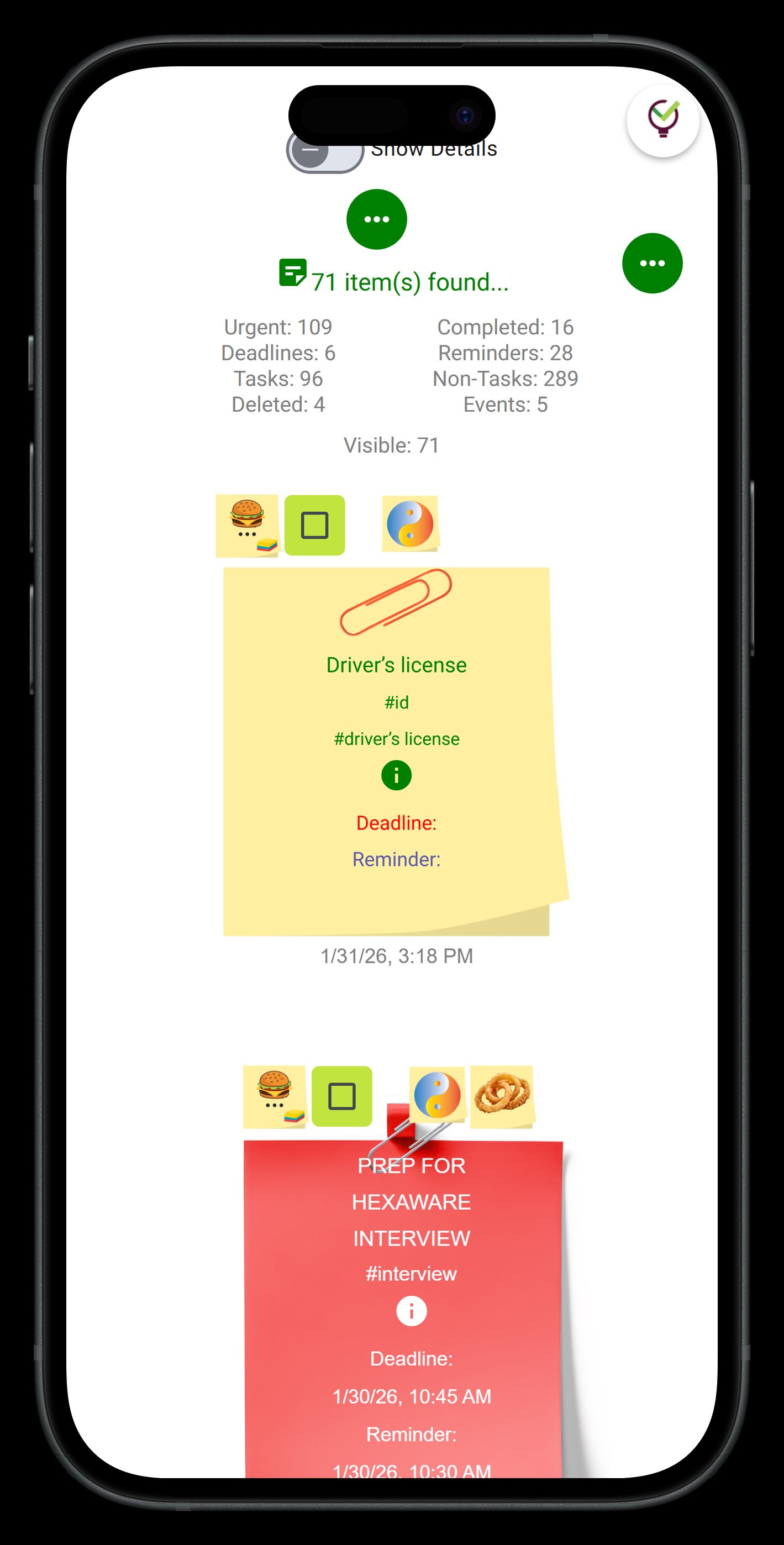
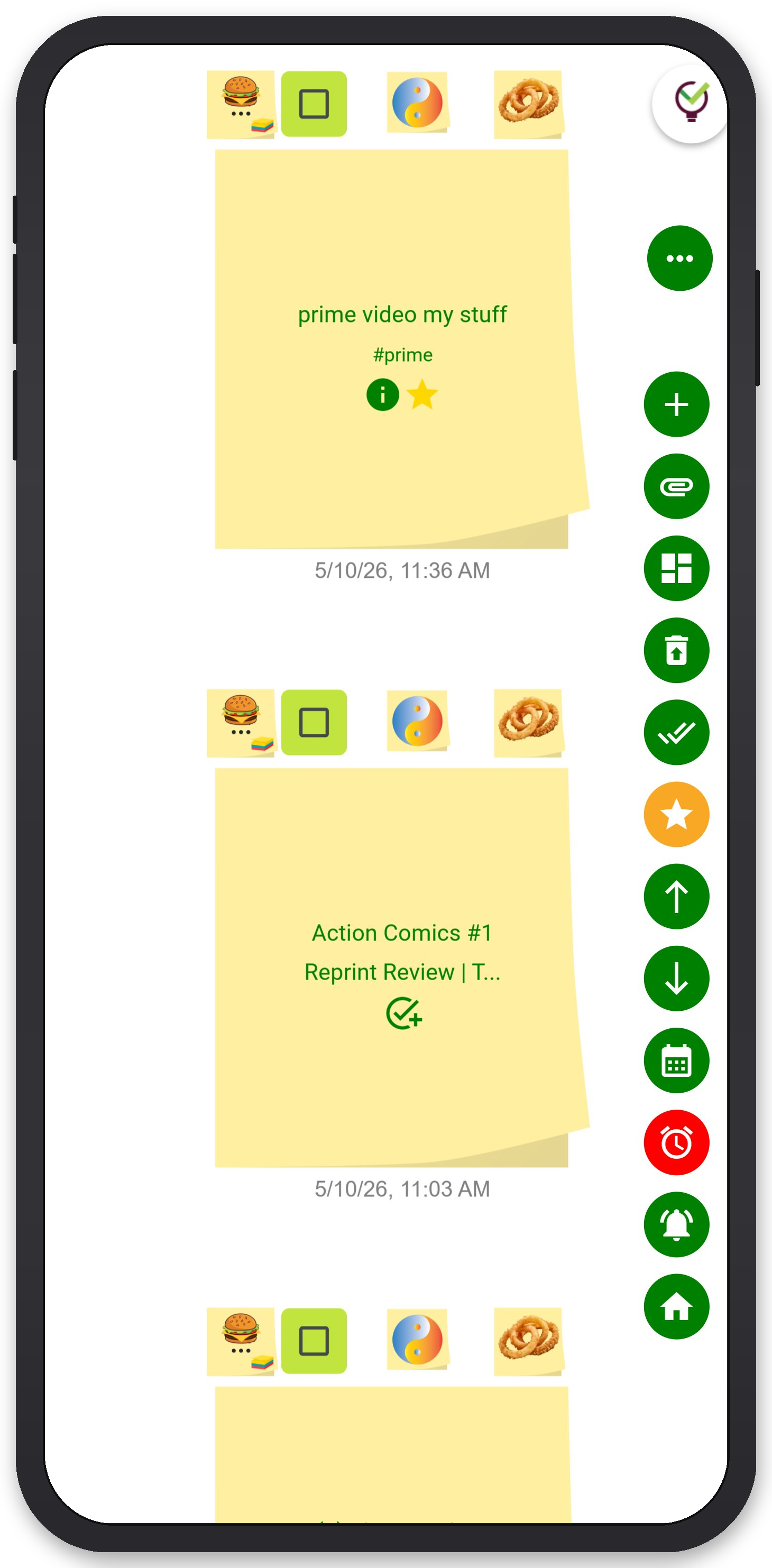
The sticky-note metaphor isn't just aesthetic. It imposes natural constraints. A note that's trying to contain an entire project is visually wrong — it looks like too much. That friction nudges you toward shorter, more action-specific notes, which is exactly the format that reduces activation energy on re-entry.
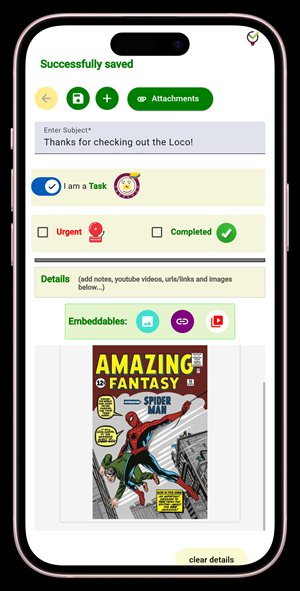
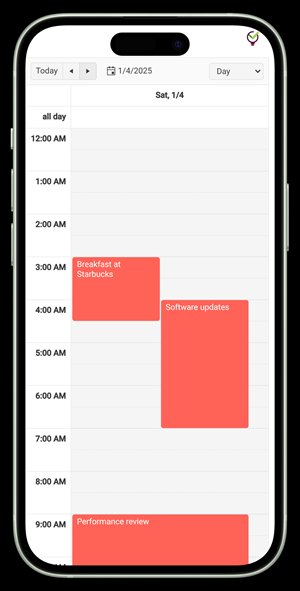
With TaskLoco Premium, reminders are delivered as push notifications to your phone and computer and deep-link directly back to the original note — so when a reminder fires, one tap puts you exactly where you need to be, with no searching, no re-orienting. Optional email and SMS notifications are available as add-ons if you want those channels too. The calendar view gives you the weekly review surface you need to audit what's active and what should be archived. Team sharing works the way email does — recipients can clone a shared note and make it their own, no permissions overhead required.
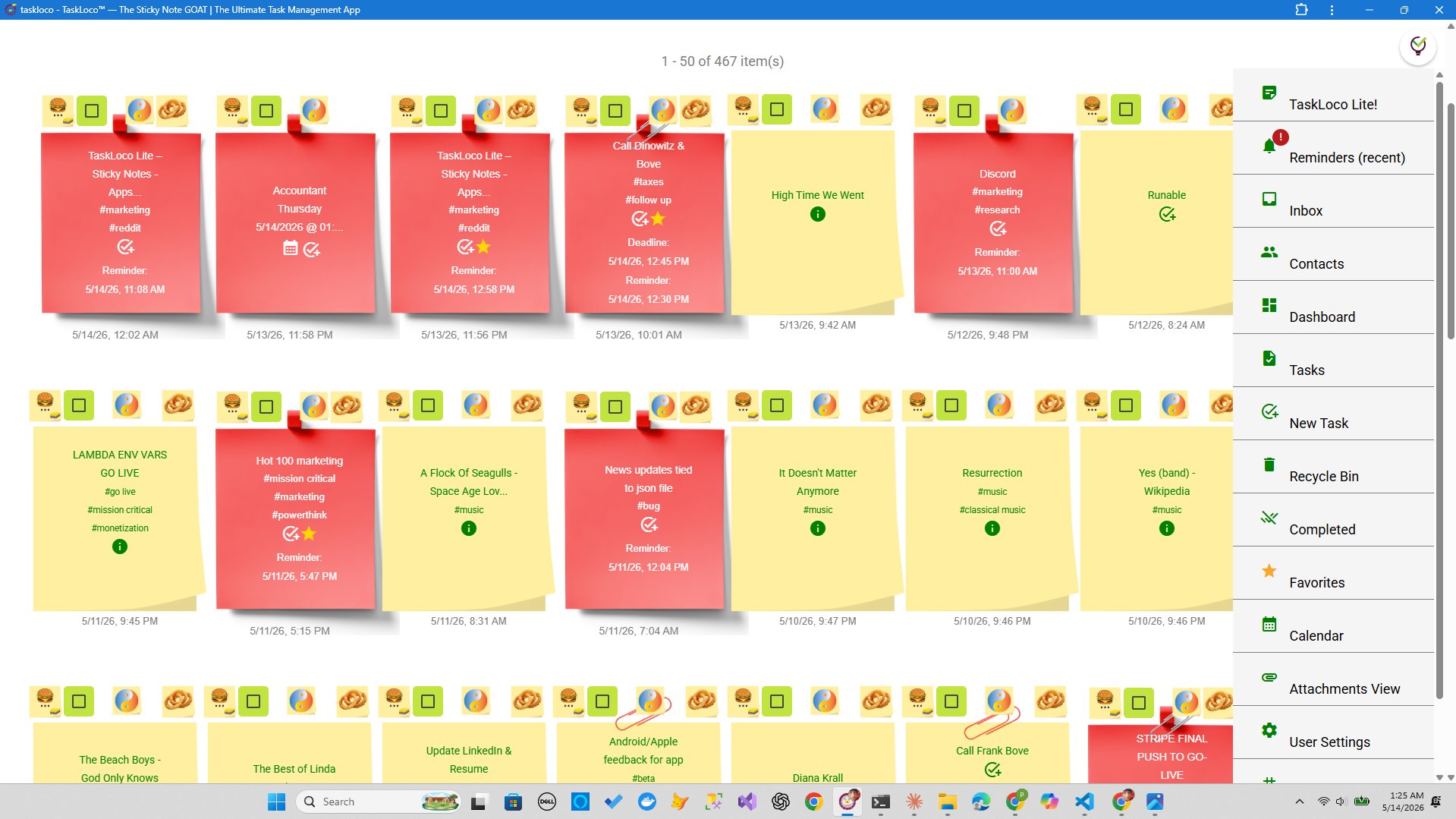
For the context-debt problem, the visual wall view makes your WIP limit tangible. When the board looks crowded, it is crowded. That's immediate feedback most list-based tools never give you.
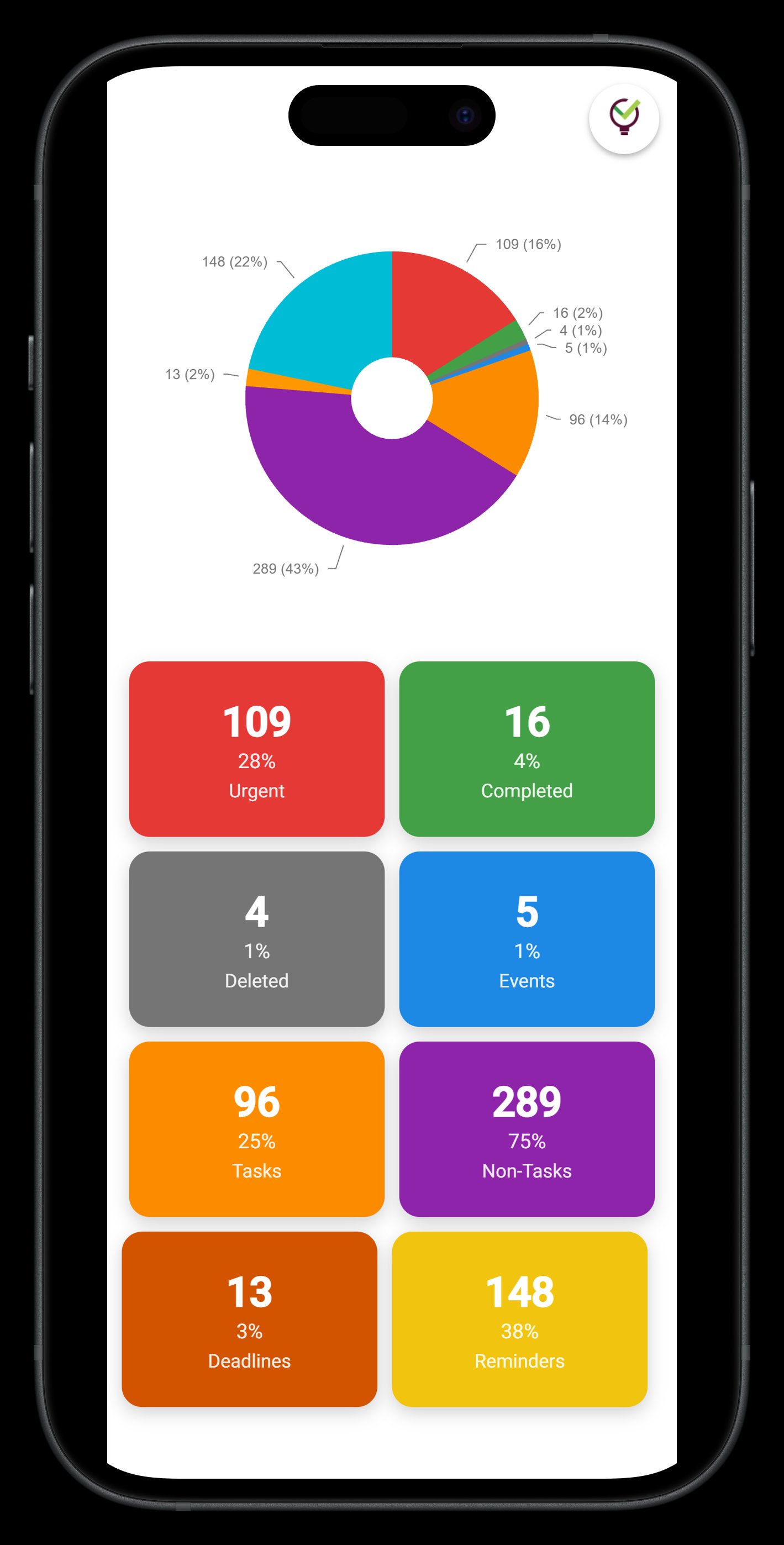
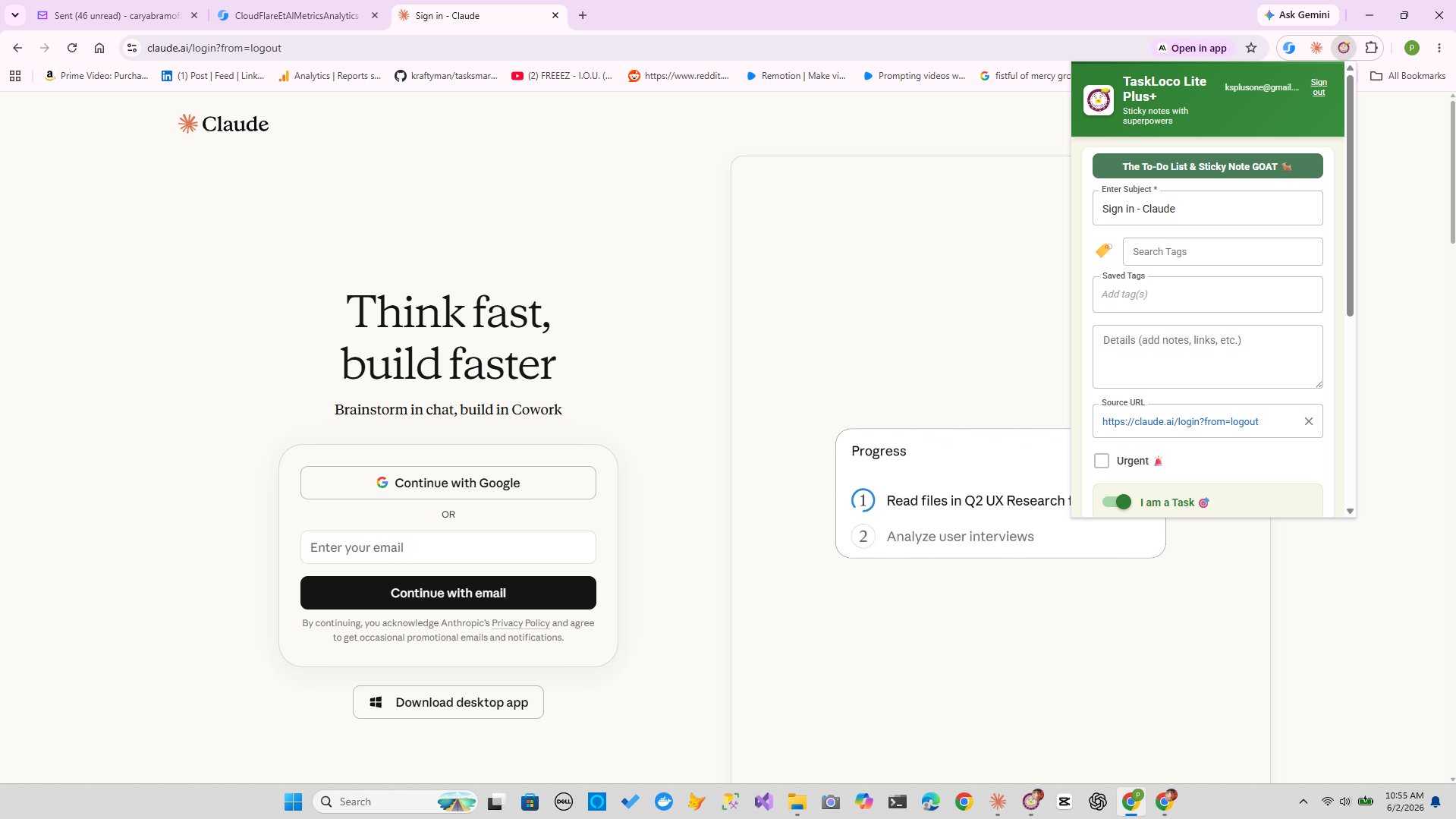
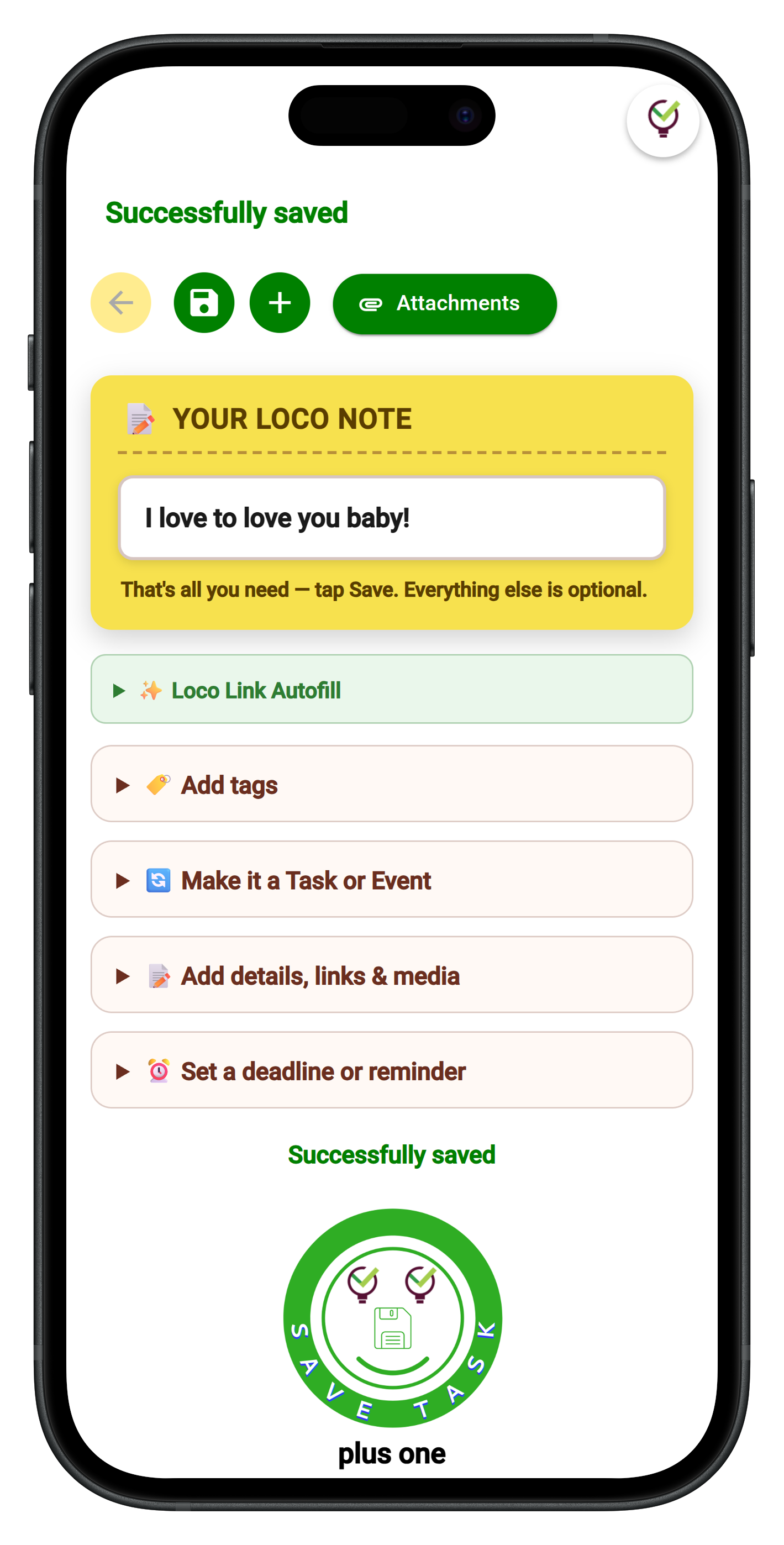
TaskLoco Premium is regularly $9.99/month per person. Right now, charter members can lock in 50% off the regular price — forever. That means $4.99/month per person today. And if our price ever goes up, you still pay half. Always.
Code CHARTER50 auto-applies at checkout. First 500 spots only — once they're gone, this offer is gone permanently. Act fast while spots last.
Every Premium subscription includes unlimited notes, 10GB file storage, reminders, calendar, and team sharing. Each team member requires a separate subscription. 7-day free trial — no charge until day 8. Cancel anytime.
Free Options: TaskLoco
TaskLoco Lite
- Native iPhone & Android app
- Completely anonymous — no sign-in
- Data stays on your device
- Up to 20 notes
- Free forever
TaskLoco Lite Plus+
- Web app + Chrome extension
- Sign in with Google
- Wall syncs across all devices
- Up to 30 notes
- Free forever
Lock In 50% Off — Forever
7-day free trial. No charge until day 8. CHARTER50 auto-applies at checkout.
🔒 Lock In My Charter SpotSee TaskLoco in Action
Frequently Asked Questions
Why do I keep starting new projects instead of finishing old ones?
Because starting is neurologically rewarding and finishing is hard. Every new project comes with a dopamine hit from the capture moment and the novelty of a blank slate. Old projects carry the activation energy cost of re-entry — especially if you didn't leave yourself a clear next action. The fix is structural: make returning to old projects cheaper by writing a committed next action before you stop, and make starting new projects more expensive by enforcing a personal WIP limit.
What is a 'next action' and why does it matter for finishing projects?
A next action is a single, concrete, verb-first task that represents the smallest possible step to move a project forward — not "work on the report" but "write the first bullet of the executive summary." It matters because re-entering a project requires activation energy proportional to how ambiguous the entry point is. A clear next action collapses that ambiguity to near zero, which means you actually start instead of staring at the project and feeling overwhelmed.
How many projects should I have active at once?
There's no universal number, but most people can maintain three to seven active projects before context debt starts degrading performance on all of them. The key is to distinguish between truly active projects — those with a next action scheduled this week — and everything else. Anything without an imminent next action belongs in a "someday" or "waiting" list, not your active working set. Review the boundary weekly.
Does doing a weekly review actually help, or is it just another productivity ritual?
It helps specifically because it closes open loops. Unfinished projects consume background processing whether you acknowledge them or not. A weekly review forces you to either confirm something is still worth doing (by updating its next action) or deliberately kill it (by archiving it with a reason). Both actions close the loop. The dread goes away. Without a regular review, loops accumulate silently and the whole system gets heavier until it collapses into avoidance.
Why does my productivity system feel like it's working against me?
Probably because it's optimized for capture rather than completion. Systems that make it easy to add things and hard to see what to work on right now will fill up with captured items that never move. The fix is to build in a visible "doing" state separate from your backlog, assign every active project a current next action, and create a physical weekly moment to audit what stays and what gets deliberately killed. The system should make finishing easier than adding — most don't.
Can a note-taking app really help me finish more projects?
Only if it's structured to reflect the system, not replace the thinking. The best tools make your WIP visible, make re-entry fast, and make the gap between "captured" and "committed" obvious. TaskLoco's wall view does this — crowded boards look crowded, short action-forward notes are easier to re-enter than giant project documents, and Premium reminders deep-link back to the exact note so one tap puts you back in context. But the discipline of next actions, WIP limits, and weekly reviews is yours to bring. $9.99/month per person (currently $4.99/month per person for first 500 charter members with code CHARTER50)
Is it okay to deliberately abandon a project?
Not only okay — often necessary. An intentional kill closes the mental loop. An abandoned project that just fades away keeps generating low-level cognitive overhead because you never made a decision about it. The distinction matters: "I've decided this no longer serves a goal that matters, and I'm archiving it" is psychologically complete. "I just haven't gotten around to it" is still running in the background. Kill deliberately, with a one-line note of why, and the context debt disappears immediately.
Born in Brooklyn. Powered by AWS. Your data stays yours.
TaskLoco is available on iPhone, Android, Chrome, and every web browser.