Sunday night rolls around and that familiar dread creeps in. You haven't done the weekly review you kept meaning to do. Your inbox is a mess. You can't remember what was urgent last Friday. You tell yourself you'll figure it out Monday morning — and Monday morning, you spend the first hour just figuring out where you are. Sound familiar?
This isn't a productivity failure. It's a design failure. Most people never build a system for ending the week — they just stop working and hope the next week sorts itself out. It doesn't. The feeling of never being ready is completely predictable when you're skipping the one ritual that actually works: the weekly review. This article breaks down exactly why that unready feeling happens and what to do about it, step by step.
The Real Reason You Feel Behind Before the Week Starts
Feeling unprepared on Monday morning almost never has anything to do with Monday. It's the residue of everything that didn't get closed, decided, or captured during the previous week. Your brain spent Friday afternoon in execution mode — finishing things, sending that last email, making it to the end. Nobody switches into planning mode at 4pm on a Friday. So the transition just never happens.
Psychologists call this the Zeigarnik effect: unfinished tasks occupy cognitive bandwidth. When you have five things that are technically 'done for the week' but not actually resolved — a decision still pending, a task you said you'd get to Monday, a conversation you need to have — your brain keeps those loops open. Over the weekend, they simmer. By Sunday night, you're anxious without knowing exactly why.
The other culprit is ambiguity. You don't actually know what next week looks like. You haven't looked at your calendar beyond 'I think I have a call Tuesday.' You haven't identified the one or two things that actually move the needle versus the twelve things that feel urgent but aren't. Without that clarity, your brain defaults to worst-case assumptions.
The Weekly Review: A Real Method You Can Run Right Now
The weekly review was popularized by David Allen in Getting Things Done, but the version most people describe online is so elaborate it never actually gets done. Here's a version that works in 20 minutes or less — no special tools required, just a notebook or whatever you already use to track tasks.
Step 1 — Clear the capture inboxes (5 minutes). Go through every place where undone things live: email inbox, notes app, physical notepad, browser tabs you meant to read, Slack threads, voicemails. You're not doing any of this stuff yet. You're just getting it out of its hiding places and into one list. Every open loop in your head, write it down.
Step 2 — Review last week (3 minutes). Look at what you said you'd do last week. What got done? What didn't? Don't judge it — just look. Anything incomplete either gets added to your list, deleted because it stopped mattering, or moved with intention to next week. If you skip this step, those incomplete items stay as invisible cognitive debt.
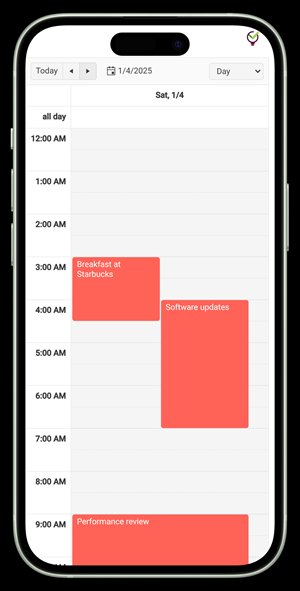
Step 3 — Look at the calendar (3 minutes). Scan the next two weeks. What's fixed? What's coming up that requires preparation you haven't done? Meetings you need to prep for, deadlines that are closer than they feel, travel that eats your focus days. Write a note for anything that needs action before it arrives.
Step 4 — Pick your weekly priorities (5 minutes). From everything you've captured, identify no more than three outcomes that — if they happened — would make the week feel like a success. Not a to-do list. Outcomes. 'Draft the proposal' is an outcome. 'Work on the proposal for a while' is noise. These three things go at the top of your planning for Monday morning.
Step 5 — Set up Monday (4 minutes). Block the first 60 to 90 minutes of Monday as untouchable deep work time. Write down the single first task for each of your three priorities so you don't have to make any decisions on Monday morning — you just start. Lay out any physical materials you'll need. Close your laptop. You're done.
Why Most People Abandon the Weekly Review (And How to Not Be Most People)
The weekly review fails for one reason: it's not protected. It lives in the mental category of 'good idea I should do sometime' rather than 'appointment that actually happens.' The research on habit formation is consistent here — a behavior without a specific trigger and a specific time doesn't survive contact with a busy week.
The fix is embarrassingly simple. Pick a day and time that has the same character every week — Friday at 4pm, Sunday at 5pm, Saturday morning before anything else. Block it on your calendar with an alert. Make it non-negotiable the same way a dentist appointment is non-negotiable. You don't ask yourself whether you feel like going to the dentist. You just go.
The second reason reviews fail is that they balloon. People start with 20 minutes and somehow spend 90 minutes reorganizing their entire task system. Set a timer. When it goes off, you're done. An imperfect review that actually happens beats a perfect review that you keep deferring to next weekend.
The third reason is scattered capture. If your tasks live in six different places — your email, a notes app, a sticky on your monitor, a text thread, a voice memo — you'll always miss something during the review and the system never feels trustworthy. Pick one place where everything lands. It doesn't matter what it is. Consistency matters more than the tool.
A note on Sunday anxiety specifically: if you're doing the review on Sunday and still feeling dread, the problem is usually not the review — it's that you're doing it too late to change anything. Try moving it to Friday afternoon. You leave the office (or close the laptop) with a clear head instead of carrying unresolved loops into the weekend. Saturday and Sunday feel different when you're not bracing for Monday.
How TaskLoco Makes the Weekly Review Faster
The method above works with a paper notebook, a plain text file, or any app you already trust. But if you want a digital home for your weekly review that doesn't make you context-switch between five different tools, TaskLoco is worth a look.
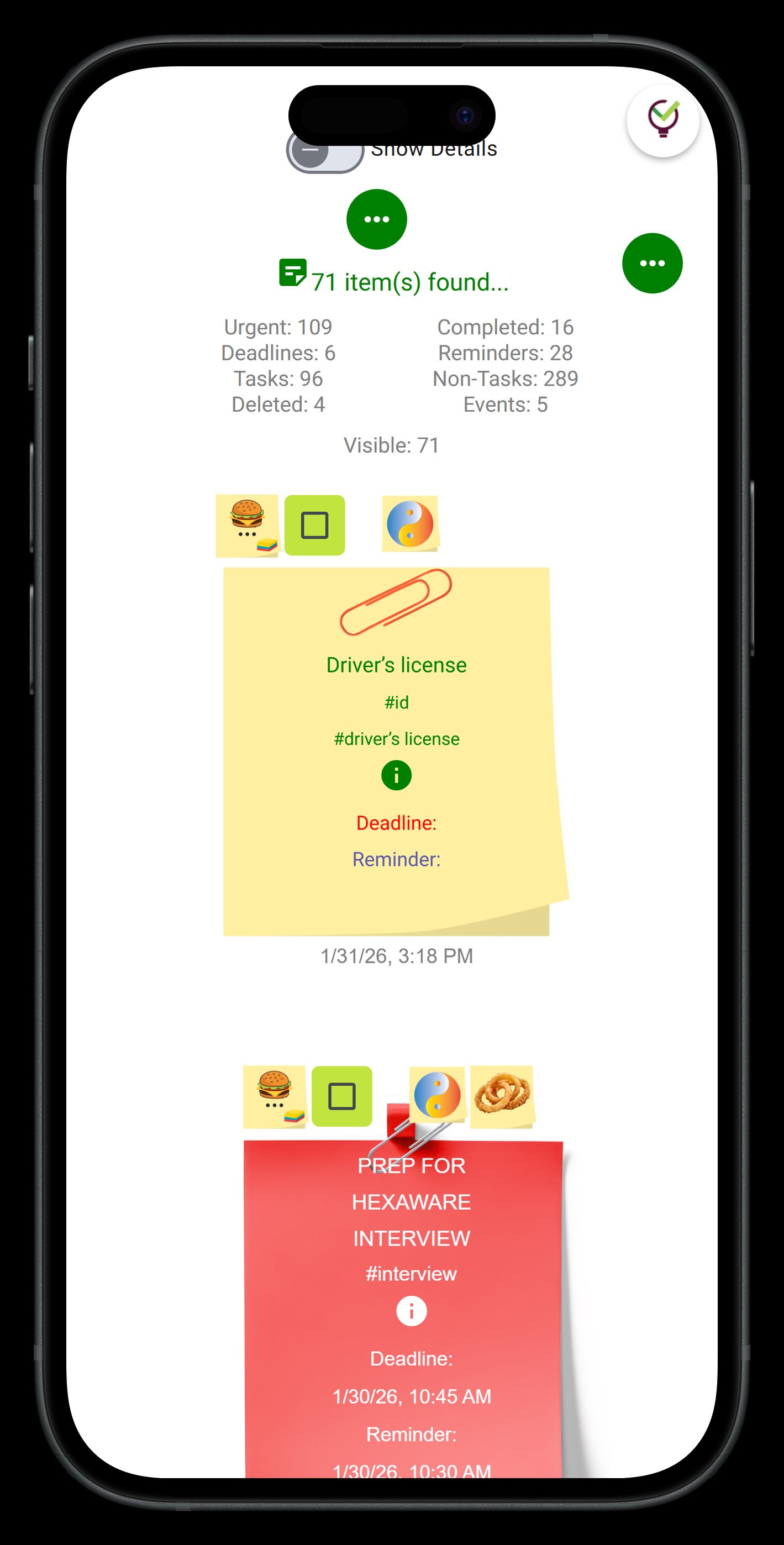
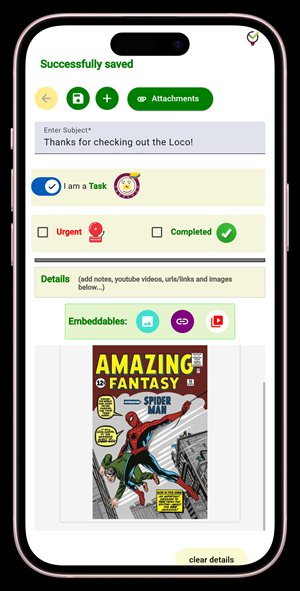
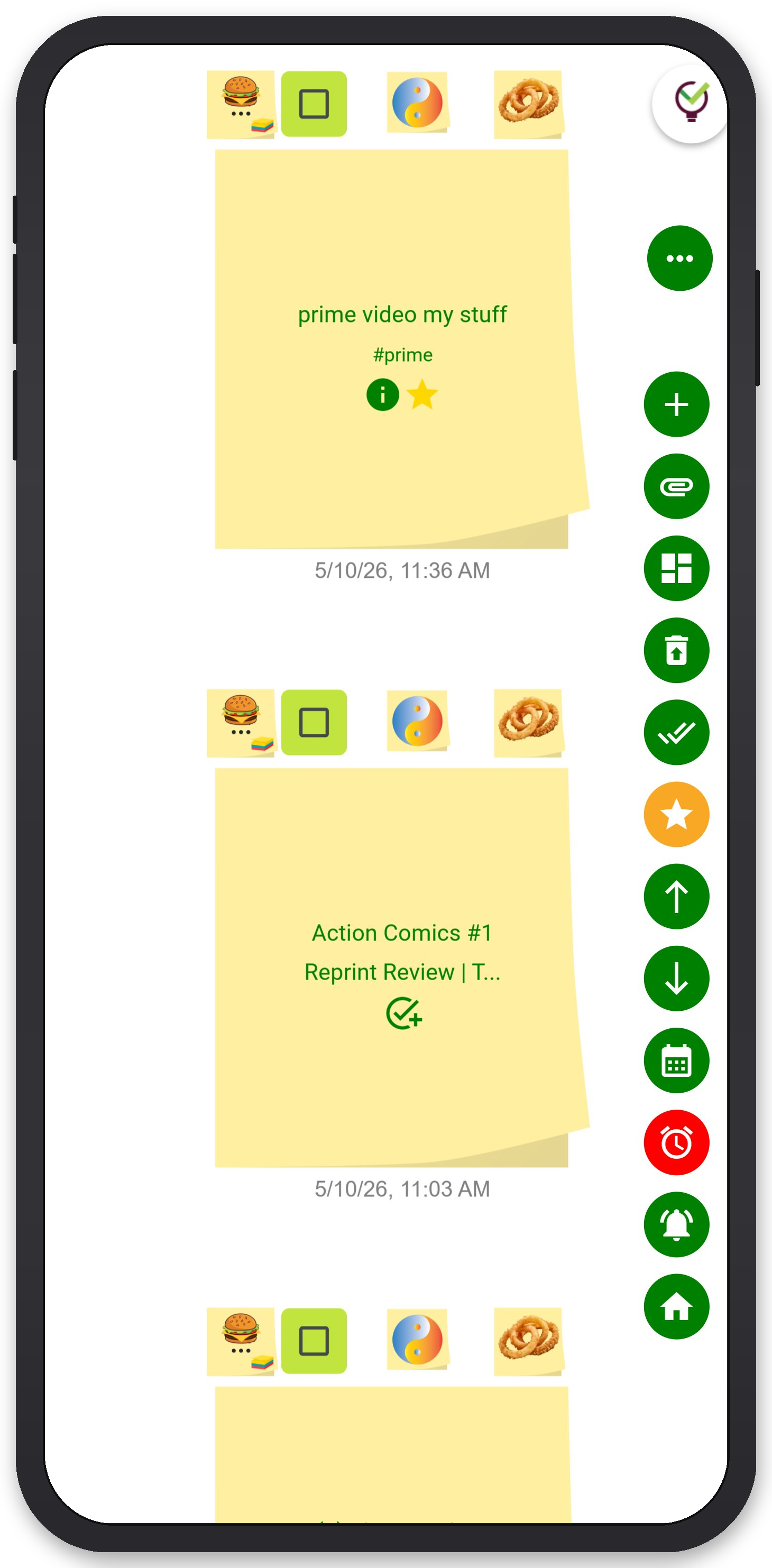
The core of TaskLoco is sticky notes — not in a gimmicky way, but as a genuinely fast way to capture and organize. During Step 1 of the review (clearing inboxes), you can dump every open loop onto individual notes in seconds. During Steps 2 through 4, you arrange them into your week, tag priorities, attach any relevant files (meeting docs, reference materials, drafts) directly to the note, and set push notification reminders that deep-link back to the specific note when they fire — so Monday morning you're not hunting for context, you're just clicking a notification and working.
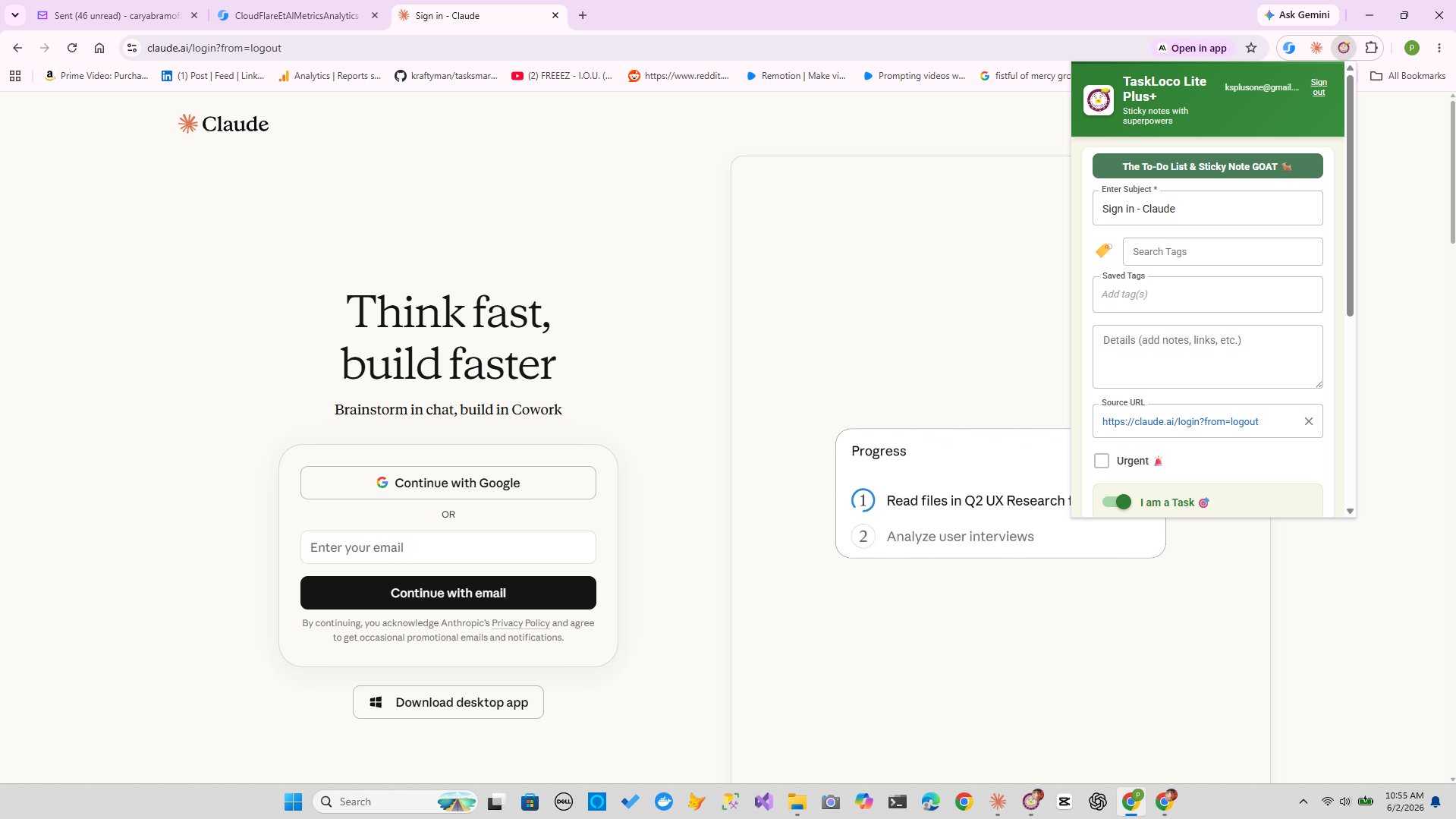
The Chrome extension is particularly useful for the 'browser tabs you meant to read' problem — one click captures any webpage as a note. No copy-pasting URLs, no saving-to-read-later app you'll never open. It just lands in your TaskLoco wall alongside everything else.
For teams, shared notes work the way email sharing should work: recipients can clone the shared note and make it their own, so everyone has their own copy rather than everyone trying to edit one document simultaneously. Weekly priorities can be shared with a team without creating a permissions mess.
TaskLoco Premium is regularly $9.99/month per person. Right now, charter members can lock in 50% off the regular price — forever. That means $4.99/month per person today. And if our price ever goes up, you still pay half. Always.
Code CHARTER50 auto-applies at checkout. First 500 spots only — once they're gone, this offer is gone permanently. Act fast while spots last.
Every Premium subscription includes unlimited notes, 10GB file storage, reminders, calendar, and team sharing. Each team member requires a separate subscription. 7-day free trial — no charge until day 8. Cancel anytime.
Free Options: TaskLoco
TaskLoco Lite
- Native iPhone & Android app
- Completely anonymous — no sign-in
- Data stays on your device
- Up to 20 notes
- Free forever
TaskLoco Lite Plus+
- Web app + Chrome extension
- Sign in with Google
- Wall syncs across all devices
- Up to 30 notes
- Free forever
Lock In 50% Off — Forever
7-day free trial. No charge until day 8. CHARTER50 auto-applies at checkout.
🔒 Lock In My Charter SpotSee TaskLoco in Action
Frequently Asked Questions
Why do I always feel behind at the start of the week?
Because you're starting Monday in reaction mode instead of planning mode. The work week ends and the cognitive load from incomplete tasks doesn't disappear — it carries over. Without a deliberate transition (a weekly review) that closes last week and sets up next week, your brain enters Monday in the same unresolved state it left Friday. The solution is a 20-minute review done before the weekend ends, not on Monday morning when it's already too late to benefit from it.
How long should a weekly review actually take?
20 to 30 minutes is the target. If yours is regularly taking 60 to 90 minutes, you're either doing a full system reorganization (unnecessary) or you're not doing small daily captures through the week, so everything piles up for the review. Daily capture — getting things out of your head and into a trusted system throughout the week — is what keeps the review fast. Set a timer for 25 minutes and stop when it goes off. Done is better than perfect.
What's the best day and time to do a weekly review?
Friday afternoon is the most effective time for most people — you close the week intentionally and the weekend actually feels like a break because you're not carrying open loops. Sunday evening is common but often produces anxiety instead of clarity because you're reviewing without the ability to do anything about it yet. Saturday morning works well for people with early-weekend energy. The best time is whichever one you'll actually protect with a calendar block and not cancel.
What should a weekly review include?
Five things: (1) Clear every capture inbox — email, notes, physical paper, open browser tabs, texts. (2) Review what you did and didn't finish last week. (3) Look at your calendar for the next two weeks to spot anything requiring preparation. (4) Pick three priority outcomes for the upcoming week. (5) Set up Monday specifically — write your first task for each priority so you don't have to make decisions when you sit down. That's it. Anything beyond this should be saved for a monthly or quarterly review.
Why does Sunday night anxiety happen even when the week wasn't that bad?
Sunday anxiety is almost always about ambiguity, not workload. When you don't know what next week looks like — when the upcoming week is a blur of 'I think I have some stuff due' — your brain fills in the gaps with threat. A weekly review eliminates the ambiguity: you know exactly what's on your plate, you've already decided your priorities, and Monday has a clear first step. The anxiety doesn't survive contact with a concrete plan.
How do I stop forgetting things between the weekly review and Monday?
The gap between 'I captured this during the review' and 'I remember to act on it Monday' is closed by two things: putting your priorities somewhere visible (not buried in an app you have to open) and using reminders. A reminder that fires on Monday morning and takes you directly back to the relevant note or task eliminates the 'I wrote it down somewhere' problem. TaskLoco's reminders work as push notifications that deep-link back to the exact note, so Monday morning you tap the notification and you're already looking at the work.
Can TaskLoco help with weekly planning?
Yes — it's well-suited to the weekly review workflow. You can capture open loops as individual notes during the review, attach relevant files directly to each priority note, set push notification reminders to fire at the right moments through the week, and share priority notes with teammates who can clone them and own their own version. The Chrome extension also helps during the inbox-clearing step: any browser tab you've been meaning to read becomes a note in one click. $9.99/month per person (currently $4.99/month per person for first 500 charter members with code CHARTER50)
Born in Brooklyn. Powered by AWS. Your data stays yours.
TaskLoco is available on iPhone, Android, Chrome, and every web browser.