You set a goal with total conviction. You meant it. A few weeks later, that same goal feels like something a different, more optimistic version of you decided — and now it's just quietly stressing you out from the corner of your mind. That's not weakness. That's what happens when goals are stored as intentions instead of systems.
The distance you feel isn't physical or even temporal. It's structural. Goals stay far away when there's no visible path from today to the finish line, no feedback loop telling you you're moving, and no daily moment where the goal actually shows up in your life. Fix the structure, and the goal stops feeling abstract. Here's how.
The Real Reason Goals Feel Distant
Most goal-setting advice focuses on motivation. But motivation is a side effect of progress, not a precondition for it. If your goal feels far away, the most likely culprits are psychological, not personal.
Abstraction. "Get healthy" or "grow the business" have no edges. Your brain can't measure progress on something shapeless, so it defaults to anxiety instead of action. The goal feels big precisely because it has no visible smaller version attached to it.
Temporal distance. Research in construal level theory shows that events far in the future are processed in high-level, abstract terms — the same way you think about other people's problems. Your six-month goal feels like someone else's life. The closer a deadline, the more concrete and personal it becomes.
No feedback signal. When you go to the gym, you feel something change. When you work toward a goal like "write a book" or "build savings," the feedback is invisible day to day. Without visible proof of movement, the brain doesn't register effort as progress — it just registers effort as expenditure.
The identity gap. Psychologist Peter Gollwitzer's research on implementation intentions shows that people who frame goals in terms of identity — "I am someone who writes daily" — are far more likely to follow through than those who frame them as outcomes. If the goal doesn't yet feel like part of who you are, it will always feel like something you're chasing rather than something you're becoming.
How to Close the Gap: A Method That Actually Works
You don't need a new app, a morning routine overhaul, or a motivational speaker. You need three structural changes that cost almost nothing and take about an hour to set up.
Step 1: Translate the goal into a milestone map. Take your big goal and work backward. If the goal is "launch a product in six months," what has to be true at month five? Month three? Month one? Write those milestones down with specific dates. Now you have a spine. Every week either moves you along the spine or tells you the spine needs to shift — either way, you're no longer guessing.
Step 2: Find your minimum viable daily action. Identify the single smallest action that, if done every day, keeps the goal alive. Not the action that would make you proud — the one you can do even on your worst day. For a writing goal, it's one sentence. For a fitness goal, it's putting on the shoes. The point isn't the action; it's the unbroken chain of showing up, which builds the identity signal your brain needs.
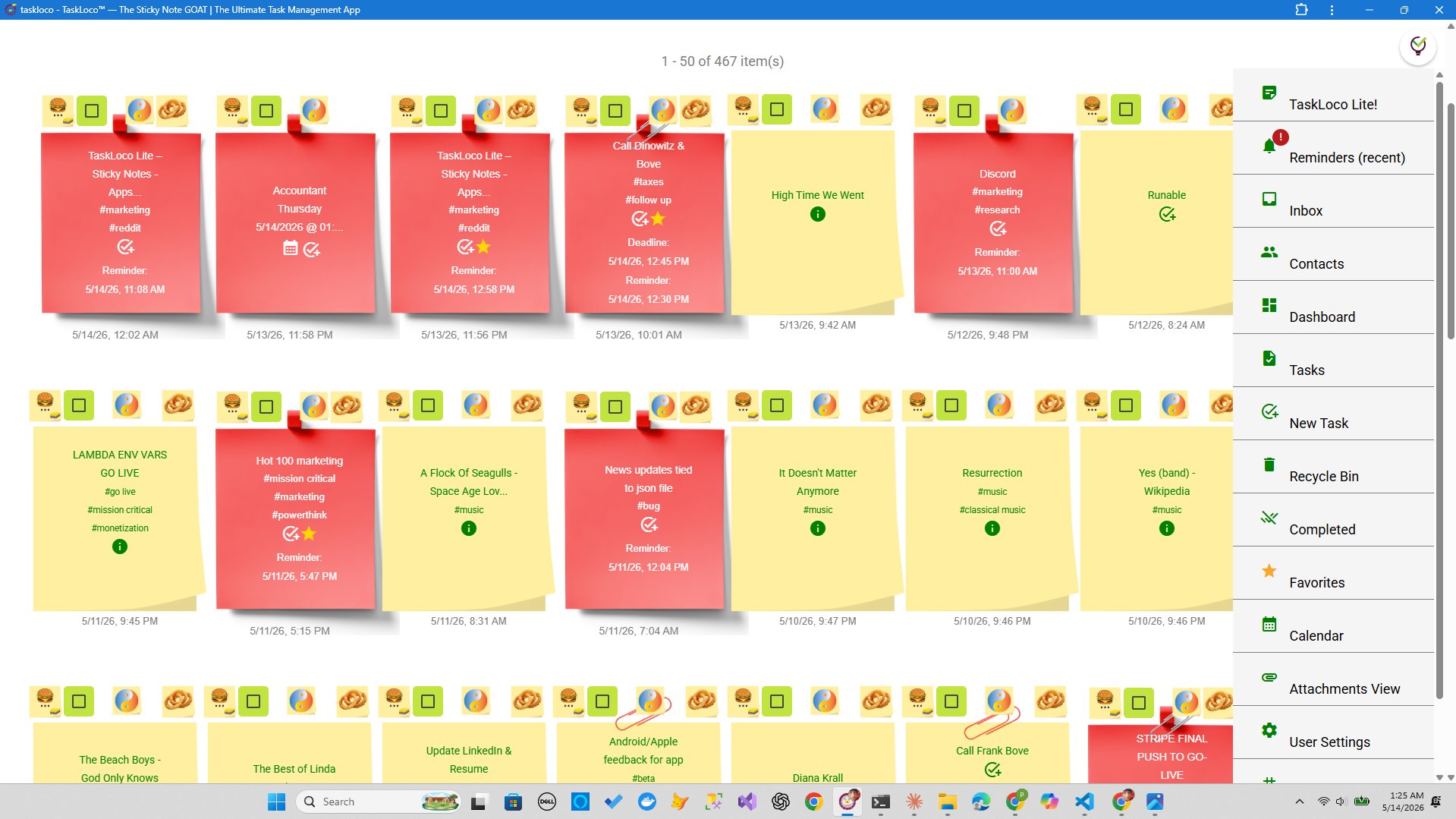
Step 3: Make the goal physically visible. This sounds too simple but the evidence is strong. Goals reviewed daily are dramatically more likely to be achieved than goals reviewed monthly. Write your goal somewhere you will actually see it — not buried in an app you open once a week. A sticky note on your monitor. A whiteboard in your eyeline. The medium matters less than the frequency of exposure.
Step 4: Run a weekly 15-minute review. Every week, ask three questions: What did I actually do? What's next on the milestone map? What's one obstacle I need to remove? That's it. This review is what transforms a list of intentions into a living system. Skip it and the milestone map turns into another thing you meant to do.
Why Writing It Down Isn't Enough — You Have to See It
There's a version of goal-tracking that feels productive but doesn't work: the elaborate system you built once, organized perfectly, and never opened again. A document buried three folders deep. A task manager with 200 items and no daily trigger to open it. A journal you filled for two weeks in January.
The problem isn't the tool. It's the friction between your goal and your daily line of sight. Research by Gail Matthews at Dominican University found that people who wrote down their goals, shared them with someone, and sent weekly progress reports achieved significantly more than those who only thought about their goals. The writing matters. The review matters. The visibility matters.
Sticky notes — physical or digital — have survived decades of productivity trends for a reason: they're hard to ignore. They exist in your visual field without requiring you to open anything, log in anywhere, or remember to check. When your goal is literally in front of you, the temporal distance collapses. It stops being a "someday" and starts being a "today."
Whatever medium you use — index cards, a whiteboard, a digital notes app — the test is simple: does your goal appear in your field of vision today? If yes, you're working. If no, it's drifting.
One Way to Keep Your Goals in View: TaskLoco
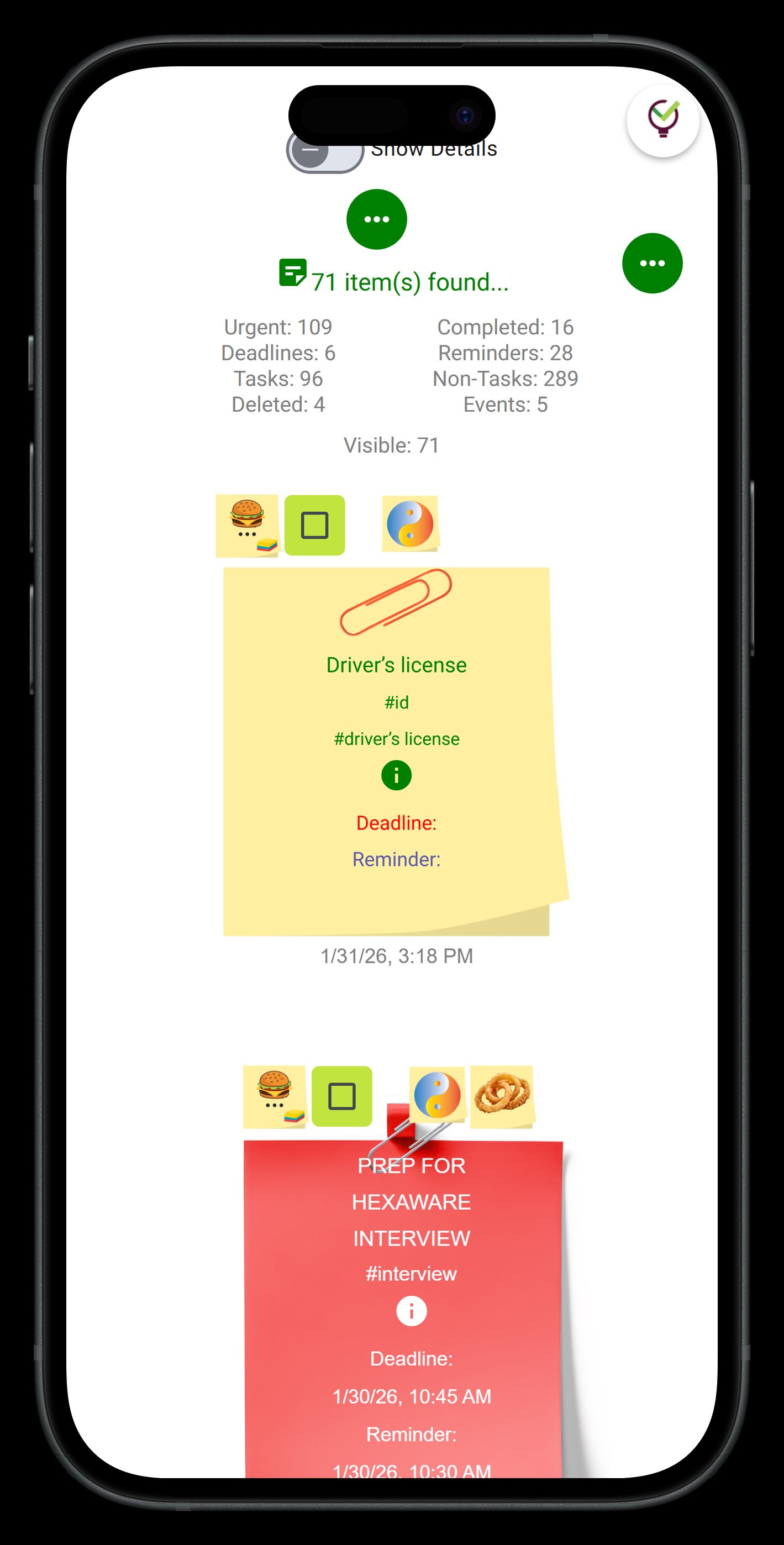
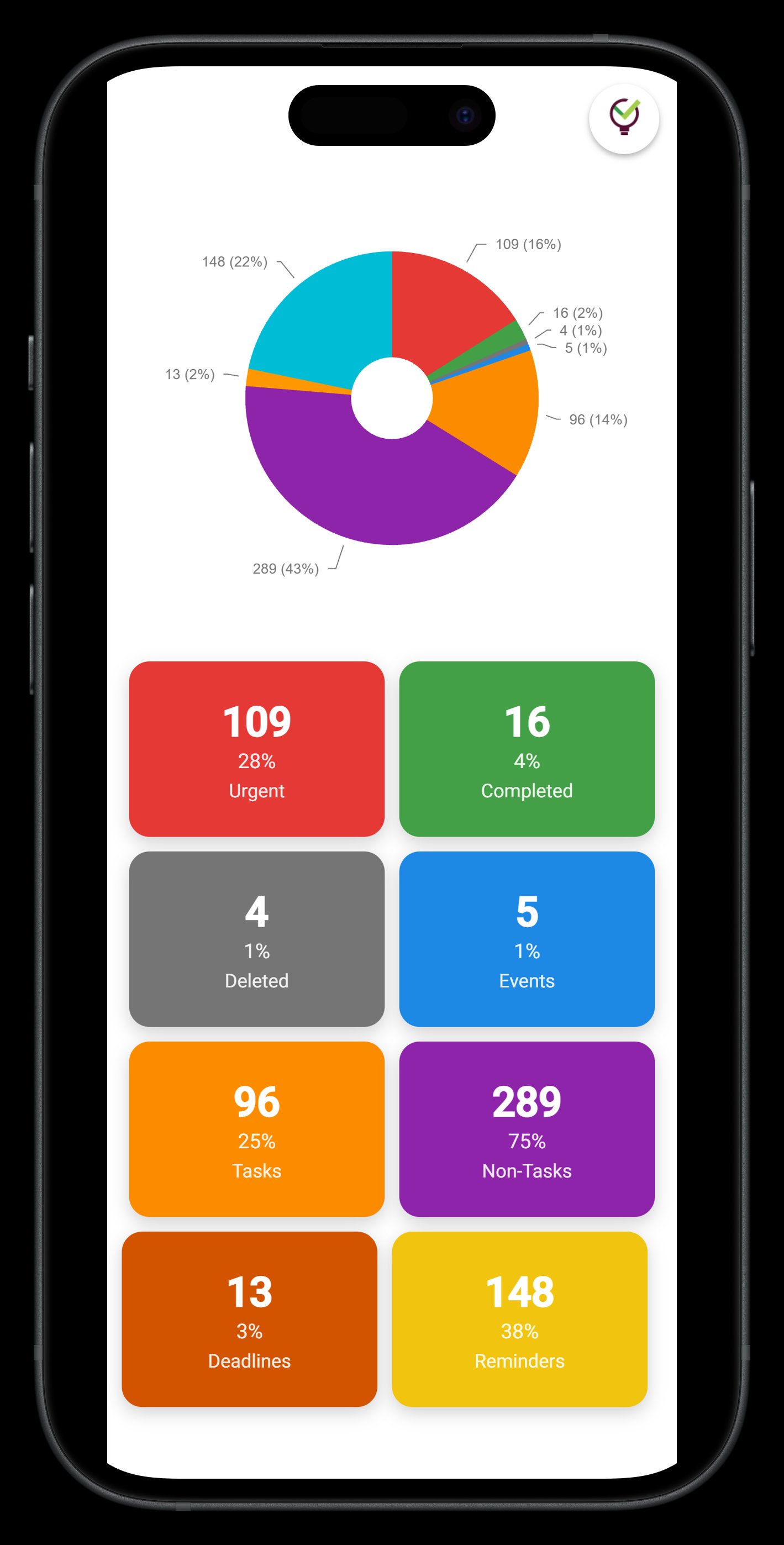
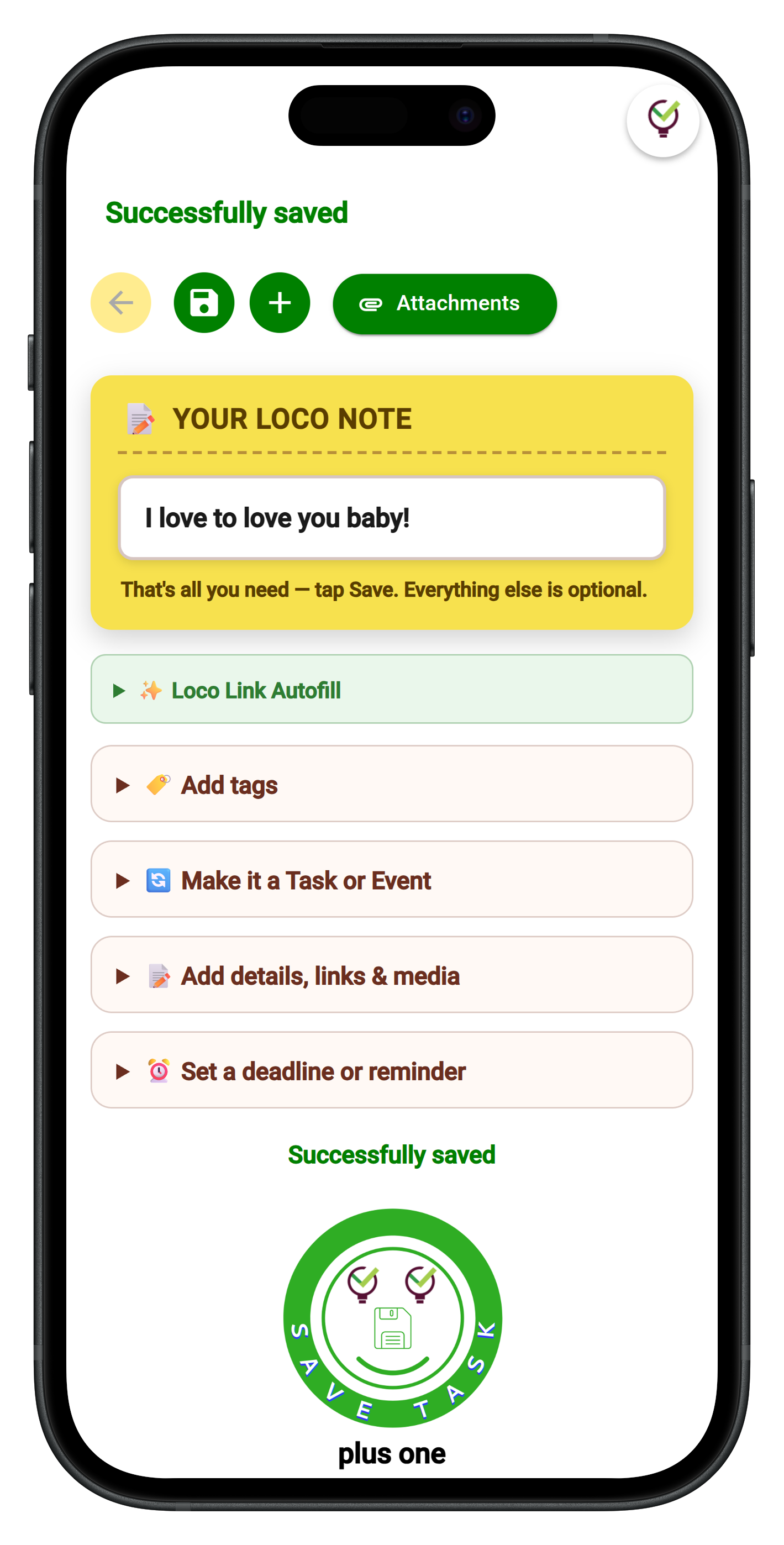
If you want a digital tool that applies the principles above — visibility, daily triggers, and structured notes — TaskLoco is worth trying. It's built around sticky notes that live on a visual board, which means your goals don't disappear into a task queue. They sit in front of you the same way a whiteboard does.
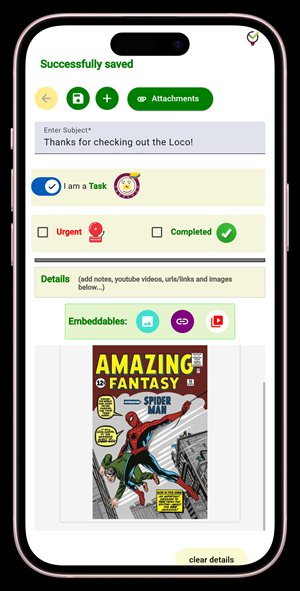
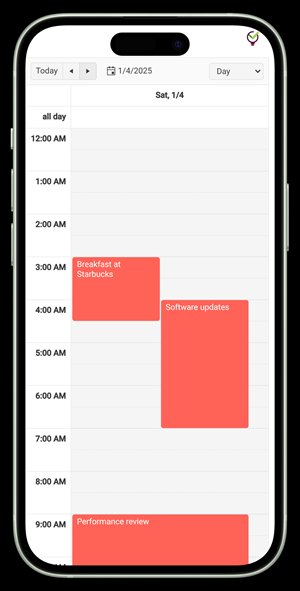
With TaskLoco Premium, you can attach your milestone map directly to a note, set a push notification reminder that deep-links back to that exact note when it fires, and use the calendar view to map your milestones onto real dates. You're not switching between a calendar, a notes app, and a reminder app — it's one surface. File attachments (10GB included) let you anchor reference material — research, inspiration, drafts — directly to the goal note they belong to.
For teams working toward shared goals, the team sharing feature works the way email does: you share a note, the recipient clones it and owns their version. No permission levels to configure, no access hierarchies. Just the note and the work.
There's a free tier — TaskLoco Lite Plus+ — that syncs across your devices with no cost and no credit card, good for getting started with up to 30 notes. Reminders and file attachments are Premium features.
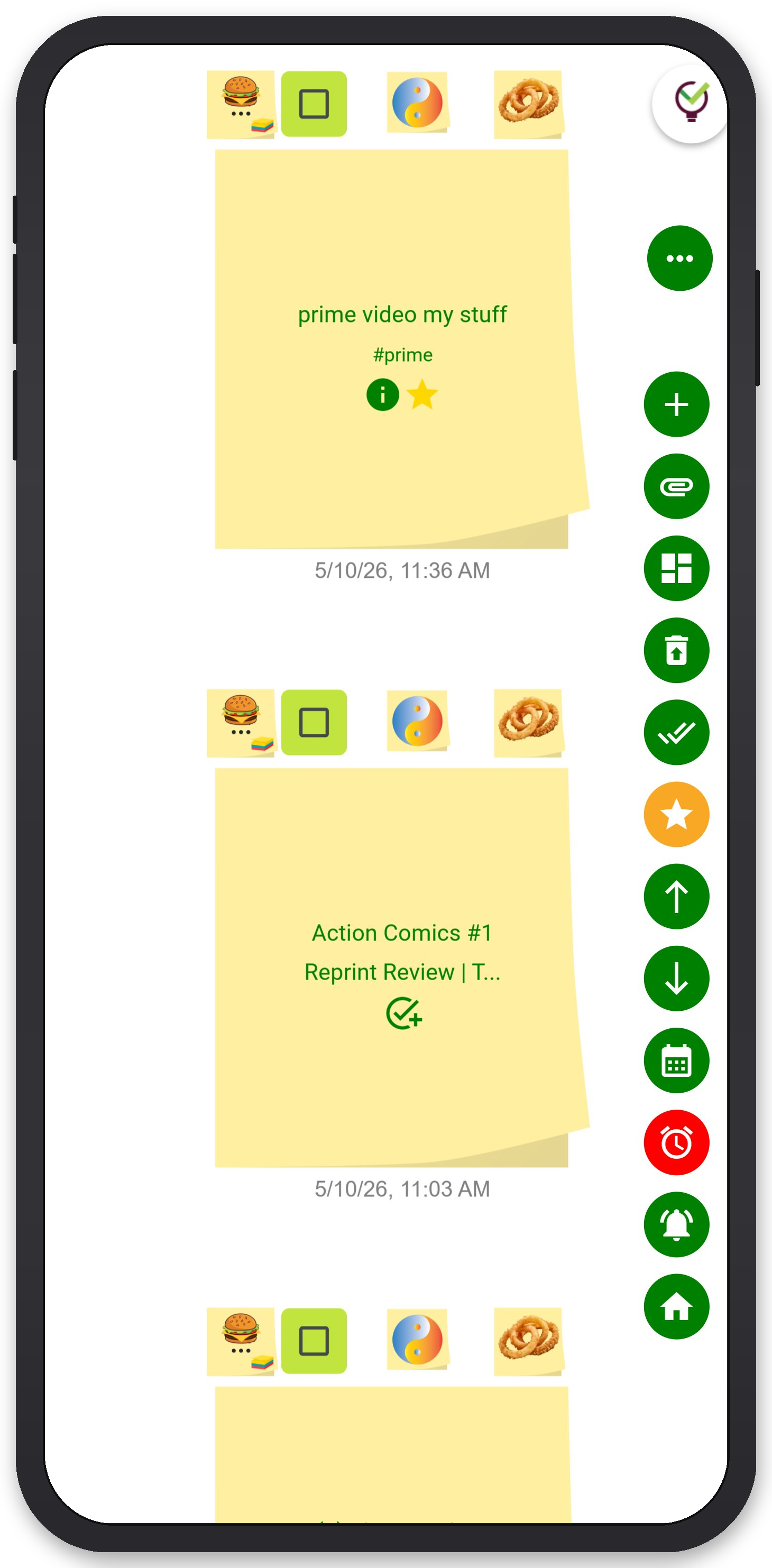
TaskLoco Premium is regularly $9.99/month per person. Right now, charter members can lock in 50% off the regular price — forever. That means $4.99/month per person today. And if our price ever goes up, you still pay half. Always.
Code CHARTER50 auto-applies at checkout. First 500 spots only — once they're gone, this offer is gone permanently. Act fast while spots last.
Every Premium subscription includes unlimited notes, 10GB file storage, reminders, calendar, and team sharing. Each team member requires a separate subscription. 7-day free trial — no charge until day 8. Cancel anytime.
Free Options: TaskLoco
TaskLoco Lite
- Native iPhone & Android app
- Completely anonymous — no sign-in
- Data stays on your device
- Up to 20 notes
- Free forever
TaskLoco Lite Plus+
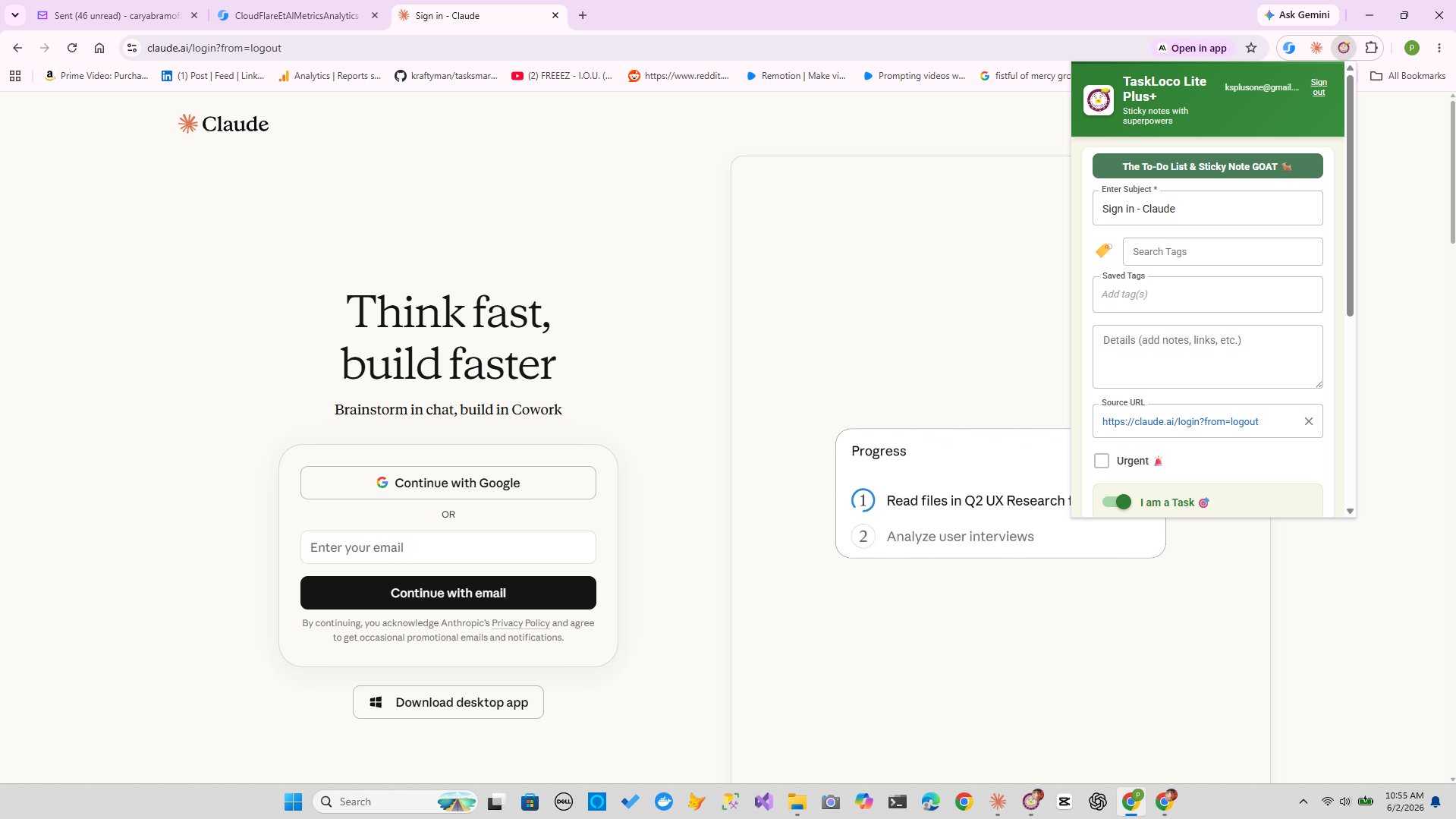
- Web app + Chrome extension
- Sign in with Google
- Wall syncs across all devices
- Up to 30 notes
- Free forever
Lock In 50% Off — Forever
7-day free trial. No charge until day 8. CHARTER50 auto-applies at checkout.
🔒 Lock In My Charter SpotSee TaskLoco in Action
Frequently Asked Questions
Why do my goals always feel out of reach?
Usually because they're abstract and invisible. A goal stored only in your head has no edges — your brain can't measure progress on something shapeless, so it defaults to low-level anxiety rather than daily action. The fix is to translate the goal into specific milestones with dates, then put those milestones somewhere you'll see them every day.
Is lack of motivation why I'm not achieving my goals?
Rarely. Motivation follows progress — it doesn't precede it. If you're waiting to feel motivated before starting, you've reversed the causality. Start with the smallest possible action, build a visible streak, and motivation tends to show up on its own. The structural problem (no milestones, no visibility, no review loop) is almost always more to blame than motivation.
How do I make my goals feel more real and achievable?
Three moves: (1) Break the goal into dated milestones so it has a visible shape. (2) Identify one minimum action you can do every day, no matter what. (3) Put the goal somewhere you'll physically see it daily — a sticky note, a whiteboard, a pinned reminder. Temporal distance collapses when the goal is in your daily line of sight.
What is an implementation intention and does it actually work?
An implementation intention is a specific "when-then" commitment: "When it is Tuesday at 8am, I will spend 20 minutes on X." It works because it pre-decides the decision — you're not relying on willpower in the moment. Psychologist Peter Gollwitzer's research shows this format roughly doubles follow-through compared to simply intending to do something.
How often should I review my goals?
Weekly is the sweet spot for most people. Monthly is too infrequent — a whole month can drift before you catch it. Daily reviews work for some but can create anxiety if progress is slow. A 15-minute weekly check — what did I do, what's next, what's blocking me — is enough to keep a goal alive and moving.
Can TaskLoco help me track goals?
Yes. TaskLoco is built around sticky notes on a visual board, so your goals stay visible rather than buried in a task queue. Premium adds push notification reminders that deep-link back to the exact note they're tied to, a calendar view for mapping milestones to dates, and file attachments for reference material. $9.99/month per person (currently $4.99/month per person for first 500 charter members with code CHARTER50)
What's the difference between a goal and a system?
A goal is an outcome you want — "run a marathon." A system is the daily or weekly behavior that makes that outcome likely — "run four times a week, add one mile every two weeks." Goals without systems tend to feel distant because there's no mechanism connecting today's actions to the future result. Building the system first makes the goal feel like a byproduct of the process rather than a prize you're chasing.
Born in Brooklyn. Powered by AWS. Your data stays yours.
TaskLoco is available on iPhone, Android, Chrome, and every web browser.